Why Cathodic Protection Test Stations Fail Before the Pipeline Does
A cathodic protection system can be working correctly and still get diagnosed as failing. The reason is usually not the anode, the…
Why Cathodic Protection Test Stations Fail Before the Pipeline Does
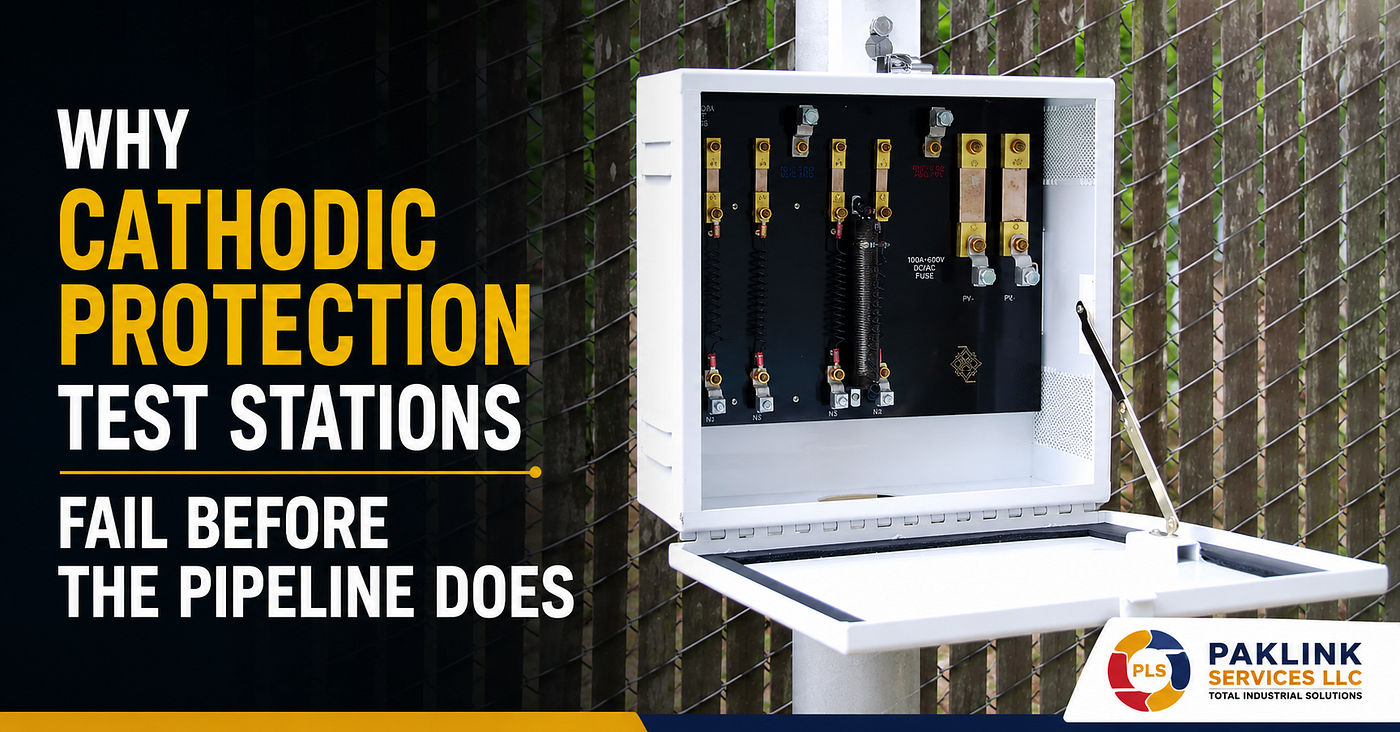
anode junction box
A cathodic protection system can be working correctly and still get diagnosed as failing. The reason is usually not the anode, the rectifier, or the pipeline coating. The reason is the test station.
A cathodic protection test station is the access point technicians use to take structure-to-soil potential readings without excavating the pipeline. If the test station is corroded, mislabeled, or built from the wrong material for the site, the readings it produces are unreliable — and an unreliable reading gets treated the same as a real fault. Engineers schedule unnecessary excavation. Budgets get spent chasing a problem that doesn’t exist. The actual system keeps running fine underground the whole time.
What a Test Station Actually Does
A test station terminates cables from the pipeline structure at a single external point. A technician connects a voltmeter to that point and reads the structure-to-soil potential — the standard measurement used to confirm cathodic protection is holding the pipeline within its protected range. Some test stations also carry a current shunt, which lets technicians measure the actual current flowing through a bond or anode circuit, not just the voltage.
An anode junction box does a related but different job. It routes power from a rectifier to multiple anodes, holds the wiring for that circuit in one enclosure, and gives technicians a single location to isolate or test an individual anode without disturbing the rest of the array.
Both components are simple by design. That simplicity is exactly why they get under-specified — they look like a commodity part until the enclosure fails in the field.
Where Test Stations Actually Fail
Material mismatch with the soil or coastal environment. A painted steel enclosure holds up fine inland. On a coastal pipeline route or an offshore platform tie-in, chloride exposure corrodes the enclosure itself within a few years, long before the cathodic protection system it monitors shows any real degradation. Stainless steel (AISI 304 or 316) or glass-reinforced polyester resists that corrosion. Choosing painted steel for a coastal GCC site is the single most common material mistake in test station procurement.
Corroded or loose external terminals. The external terminal is the actual measurement point. If it corrodes, oxidizes, or loosens, every reading taken from it becomes suspect — the resistance at a bad terminal connection distorts the voltage reading enough to look like a real cathodic protection fault. Brass or stainless steel terminal posts resist this far longer than plated steel.
No ventilation around shunts and resistors. A junction box housing a current shunt or a resistor generates heat under load. Without airflow or a heat sink, that heat shortens component life and can drift shunt readings over time — which again shows up as a false fault signal rather than an enclosure problem.
Poor labeling and undocumented wiring. This is the least technical failure and the most common one. A technician arriving at an unlabeled test station has no fast way to confirm which structure, which anode circuit, or which bond a given terminal belongs to. Misreads and misdiagnoses follow directly from that ambiguity, not from any electrical fault.
Why This Matters More in the Gulf
Soil resistivity, groundwater salinity, and coastal chloride exposure across UAE and wider GCC pipeline routes are aggressive compared to the conditions most standard cathodic protection hardware is designed around. A test station enclosure rated for a temperate, low-salinity environment is working in a harsher environment here from day one. Combine that with high ambient temperatures accelerating any corrosion that does start, and an enclosure with even a small material mismatch reaches failure years earlier than the same part would elsewhere.
This is also why hazardous area classification matters at the specification stage, not after installation. Pipeline routes through classified zones — tank farms, petrochemical sites, offshore platforms — need explosion-proof junction box variants specified up front. Retrofitting that requirement after a standard enclosure is already installed means replacing the unit, not upgrading it.
What a Properly Specified Test Station Looks Like
- Material matched to the site — stainless steel or GRP for coastal and marine routes, painted steel acceptable inland, aluminum where weight is the constraint.
- External terminals in corrosion-resistant metal — brass or stainless, not plated steel.
- Ventilation or heat sinks wherever a shunt or resistor is enclosed.
- Clear, durable labeling tied to as-built drawings, not just a handwritten tag.
- Hazardous area rating specified at order time for any classified zone installation.
- Room left for telemetry — even if remote monitoring isn’t planned now, leaving cabling paths for SCADA or sensor integration avoids a full enclosure swap later.
None of this changes the basic function of a test station. It changes whether the readings it produces can be trusted for the next fifteen years of pipeline operation instead of the first three.
Paklink supplies test stations and anode junction boxes built to these specifications for UAE and GCC pipeline, tank farm, and marine cathodic protection projects — full material and configuration options here.
메타데이터
- post_id
- 94e2cc445e8e
- slug
- why-cathodic-protection-test-stations-fail-before-the-pipeline-does-94e2cc445e8e
- url
- https://medium.com/@paklinkuae1/why-cathodic-protection-test-stations-fail-before-the-pipeline-does-94e2cc445e8e
- canonical_url
- https://medium.com/@paklinkuae1/why-cathodic-protection-test-stations-fail-before-the-pipeline-does-94e2cc445e8e
- author_url
- https://medium.com/@paklinkuae1
- status
- ok
- fetched_at
- 2026-08-11 19:16:36