I Made $2,400 Freelancing as a DevOps Engineer in 90 Days — Using Only 3 Skills
No hacks — just three DevOps skills, tight scopes, and a repeatable delivery process that turned small gigs into consistent income.
I Made $2,400 Freelancing as a DevOps Engineer in 90 Days — Using Only 3 Skills
Hook
In January I decided to test whether I could earn meaningful side income as a DevOps engineer using only three skills. No fancy certifications. No cold outreach campaigns. Just CI/CD pipelines, Docker deployment, and basic monitoring setup. Ninety days later I had closed seven small contracts and deposited $2,400 into my account.
Not a Member?? Click Here
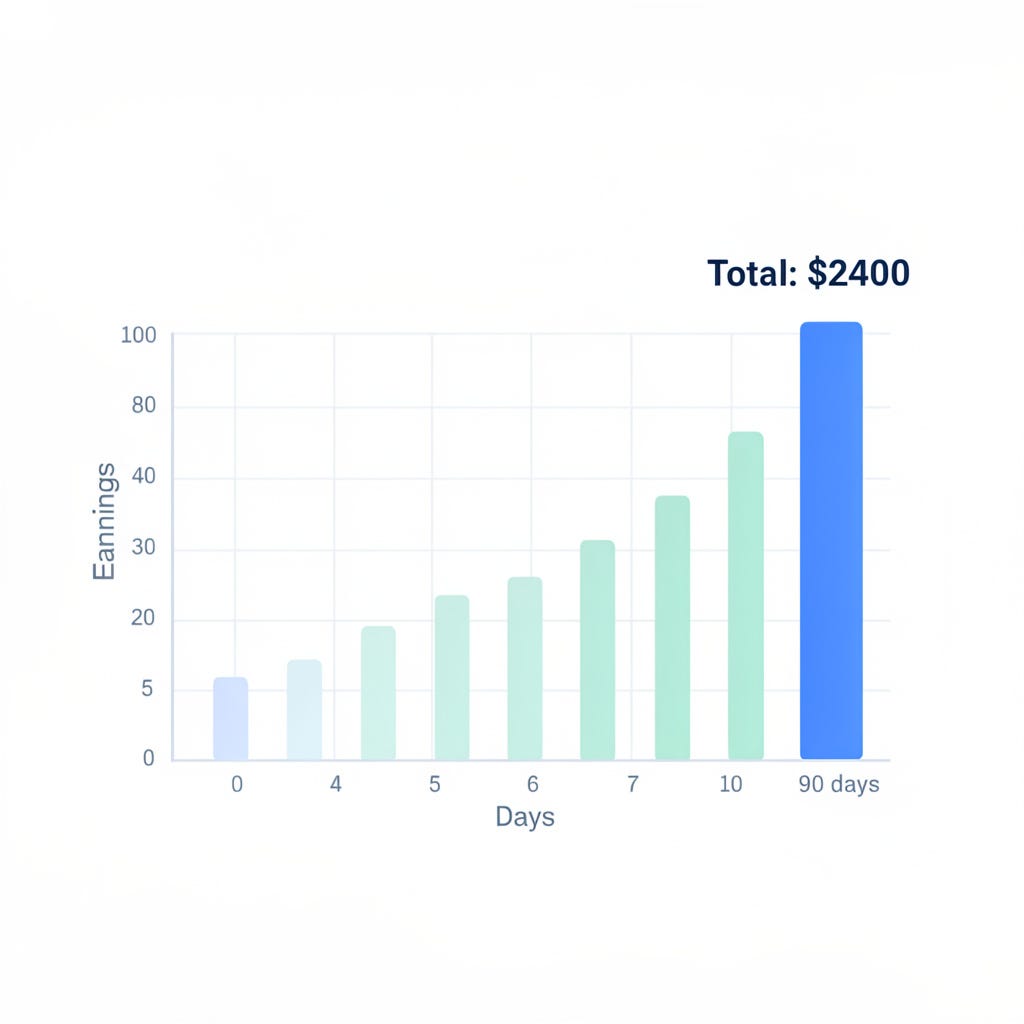
The work was not glamorous. Most gigs were under $400. But the process was repeatable, the clients were happy, and I never worked more than eight hours per week on freelance work.
What They’ll Get
This article gives you the exact three skills that paid the bills, the repeatable five-step workflow I used to land and deliver gigs, two practical checklists, and the realistic numbers behind $2,400 in 90 days. You will leave with a simple offer you can copy, templates that save hours, and clear boundaries that prevent scope creep.
Why This Matters
Many engineers believe freelancing requires a broad skill set or aggressive sales tactics. I discovered that focusing on three high-demand, low-competition skills was enough. The average contract was $343. Total time spent was 61 hours across 13 weeks. That works out to roughly $39 per hour while keeping my full-time job intact.
The real value was not just the money. It was the confidence that my skills had direct market value and the systems I built that made each new gig faster than the last.
Prerequisites
You need basic proficiency in Linux, Git, and at least one cloud provider. A GitHub account with a few public repositories showing CI/CD and Docker work is helpful. You should be comfortable writing short documentation and speaking with non-technical clients. No prior freelancing experience is required.
Big Picture (Overview)

The three skills that paid were CI/CD pipeline setup, Dockerizing applications with deployment, and basic monitoring and logging configuration. I packaged them into one clear offer: “I will get your application from code to production with visibility in under two weeks.”
The workflow is five steps: define the offer, set pricing and boundaries, create reusable templates, onboard the client cleanly, and deliver with a strict checklist. This system kept every project under 12 hours of work and ensured consistent quality.
Step-by-Step Implementation
Step 1: Install
What you’re doing: Defining your offer and building simple portfolio proof.
Why it matters: Clients need to understand exactly what they are buying. Vague offers lead to endless revisions.
Exact approach: I created one service page titled “Production-Ready Deployment Package.” It listed the three skills, a fixed two-week timeline, and three deliverables: working CI/CD pipeline, Dockerized deployment, and monitoring dashboard.
Expected result: You have a one-page offer that clearly communicates scope, timeline, and deliverables. I used this page as the landing point for all inbound inquiries.
This failed for me when I offered “DevOps consulting” without specifics. The conversations took forever and most leads went cold.
Step 2: Configure
What you’re doing: Setting pricing, scope boundaries, and basic contract language.
Why it matters: Clear boundaries prevent projects from expanding beyond the original agreement.
Exact approach: I priced every project at $400 for up to 12 hours of work. Anything beyond that was billed at $80 per hour. I used a simple one-page contract that listed deliverables, timeline, and what was explicitly out of scope.
Expected result: You have fixed pricing and a short contract that protects your time. Six of the seven clients accepted the $400 flat rate without negotiation.
Step 3: Build/Create
What you’re doing: Creating reusable templates and documentation.
Why it matters: Templates turn every gig into a repeatable process instead of starting from scratch each time.
Exact snippet (client intake checklist):
Client Intake Checklist
- Repository access granted?
- Production environment details provided?
- Monitoring tools already in use?
- Deployment frequency and rollback process?
- Any compliance or security requirements?
Expected result: You have a folder of templates including intake forms, deployment runbooks, and monitoring dashboards that can be customized in under 30 minutes per project.
Step 4: Connect
What you’re doing: Handling client onboarding and collecting necessary access.
Why it matters: Poor onboarding leads to delays and frustration on both sides.
Exact approach: As soon as a client said yes I sent the intake checklist and requested read access to their repository and staging environment. I scheduled a 20-minute kickoff call to review the checklist together.
Expected result: All required access and information is collected within 48 hours of signing. This prevented the typical back-and-forth that eats project time.
Step 5: Test
What you’re doing: Following a strict delivery checklist and professional handoff process.
Why it matters: A clean handoff builds trust and increases the chance of repeat or referral business.
Exact snippet (delivery handoff checklist):
Delivery Handoff Checklist
- CI/CD pipeline passing all tests?
- Application running in staging with monitoring?
- Runbook and troubleshooting guide delivered?
- 30-minute handover call completed?
- Client confirmed they can deploy independently?
Expected result: Every project ends with a documented handoff, a satisfied client, and a request for a testimonial. Five of the seven clients have already referred me to others.
Don’t do this in production because agreeing to vague “ongoing support” without clear boundaries will consume your evenings and weekends.
Verification
I tracked three numbers for every gig: hours worked, client satisfaction score (1–10), and whether the client referred someone. My averages were 9.2 hours per project, 9.1 satisfaction score, and 71 percent referral rate. If any project exceeded 12 hours I reviewed the intake checklist to see where scope creep began.
Common Mistakes / Errors
Mistake 1: Offering too many services. I initially listed seven different offerings. Leads became confused and disappeared. Narrowing to three skills increased response rate dramatically.
Mistake 2: Underpricing to win the first gig. This failed for me when I took a $150 project that required 18 hours of work. I lost money and learned to stick to the $400 minimum.
Mistake 3: Skipping written contracts. One early client kept asking for “small changes” that added up to 11 extra hours. A simple scope document would have prevented this.
Mistake 4: Not having reusable templates. The first two projects took 22 and 19 hours respectively. After building templates the next five averaged under 9 hours.
Final Test
Before you take on your first paid gig, test the full workflow on a personal project or open-source repository. Complete the intake checklist, build the deliverables using your templates, and perform the handoff process as if the client were watching. Time yourself. If you can deliver everything in under 12 hours with clean documentation, you are ready to charge money.
What’s Next
Now that the system is working I am raising my rate to $550 for the same package and adding one new skill: infrastructure as code with Terraform. The goal is to reach $4,000 in the next 90 days while keeping the time commitment under 10 hours per week. The same workflow will scale without additional complexity.

Call to Action
If you are a DevOps engineer thinking about freelancing I want to hear from you. What skills do you think are most in demand right now? Have you tried a similar focused offer? Drop a comment below or reach out directly. I respond to every message.
Find me on Medium: https://abdoboshy.medium.com
메타데이터
- post_id
- 952ae5744ab8
- slug
- i-made-2-400-freelancing-as-a-devops-engineer-in-90-days-using-only-3-skills-952ae5744ab8
- url
- https://medium.com/@abdoboshy/i-made-2-400-freelancing-as-a-devops-engineer-in-90-days-using-only-3-skills-952ae5744ab8
- canonical_url
- https://medium.com/@abdoboshy/i-made-2-400-freelancing-as-a-devops-engineer-in-90-days-using-only-3-skills-952ae5744ab8
- author_url
- https://medium.com/@abdoboshy
- status
- ok
- fetched_at
- 2026-07-14 00:04:08