The Next AI Breakthrough Won’t Be Smarter Models
For three years, AI’s bottleneck was intelligence. Now, for most businesses running it in production, the bottleneck is the bill.
The Next AI Breakthrough Won’t Be Smarter Models
For three years, AI’s bottleneck was intelligence. Now, for most businesses running it in production, the bottleneck is the bill.
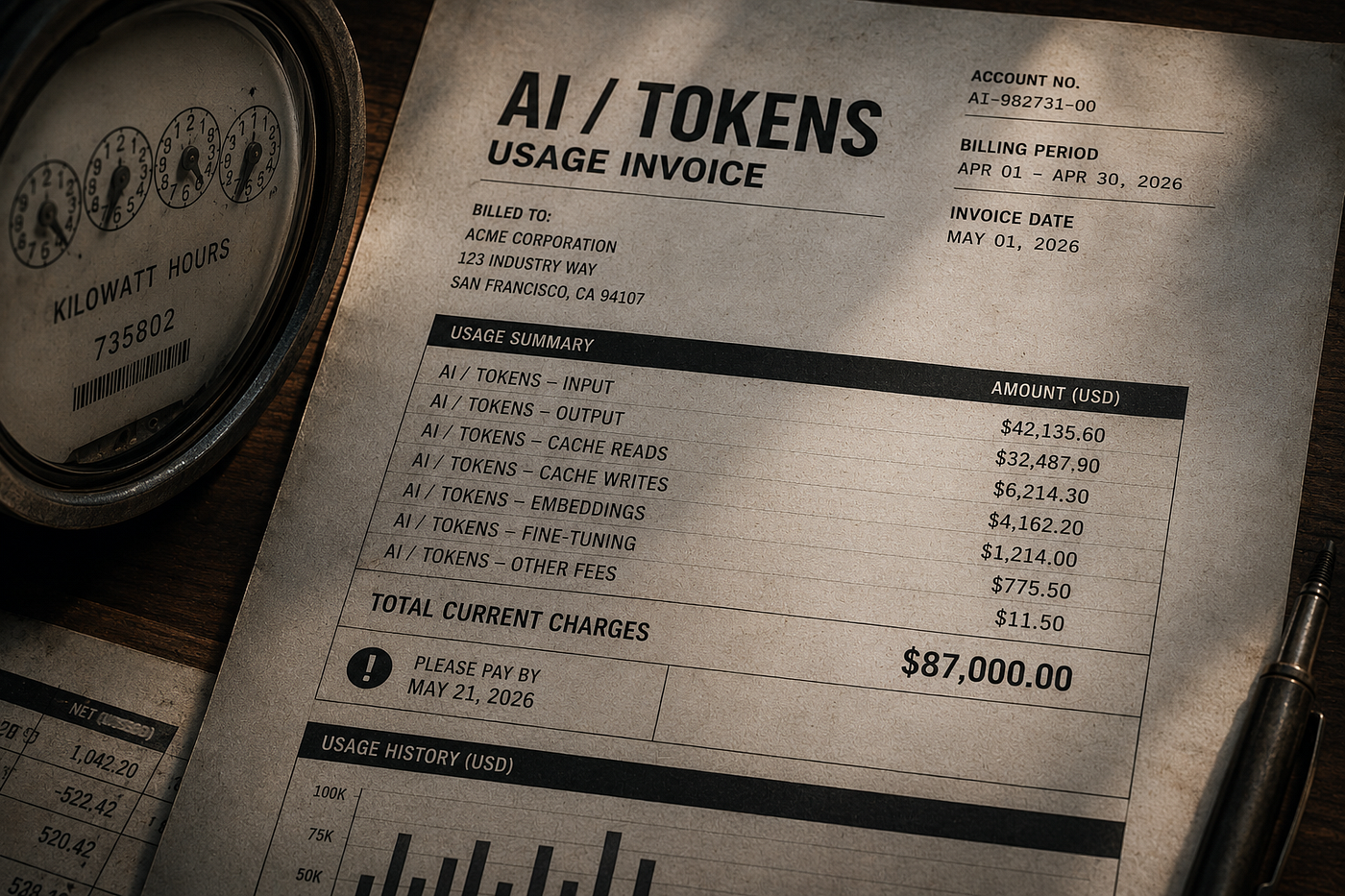
AI is starting to look less like software and more like a utility bill.
On a Tuesday morning in April, an engineering lead at a 35-person SaaS company opened the month’s AI invoice and found $87,000 on it. Nothing had gone wrong. The coding agents were shipping features ahead of the roadmap. A support agent was closing tickets in under four minutes. Customers, when asked, said the product had never felt more responsive. Every dashboard the company tracked was green.
That was the problem. The system was working exactly as designed, and working-as-designed now cost more than two senior engineers’ salaries, every month, paid out in tokens instead of payroll. Within five weeks the company had cut that bill by 72%, down to roughly $24,000. They didn’t pull a single AI tool out of production. They didn’t downgrade a feature customers had come to rely on. What changed was less glamorous than a new model and far more consequential: they stopped treating AI as an intelligence problem and started treating it as a cost problem — the same way a factory treats its power bill, or a fleet operator treats fuel.
That shift — not a smarter model, just a different question being asked about the same model — is becoming the defining story of enterprise AI in 2026.
The 2022–2025 era when intelligence was the whole story
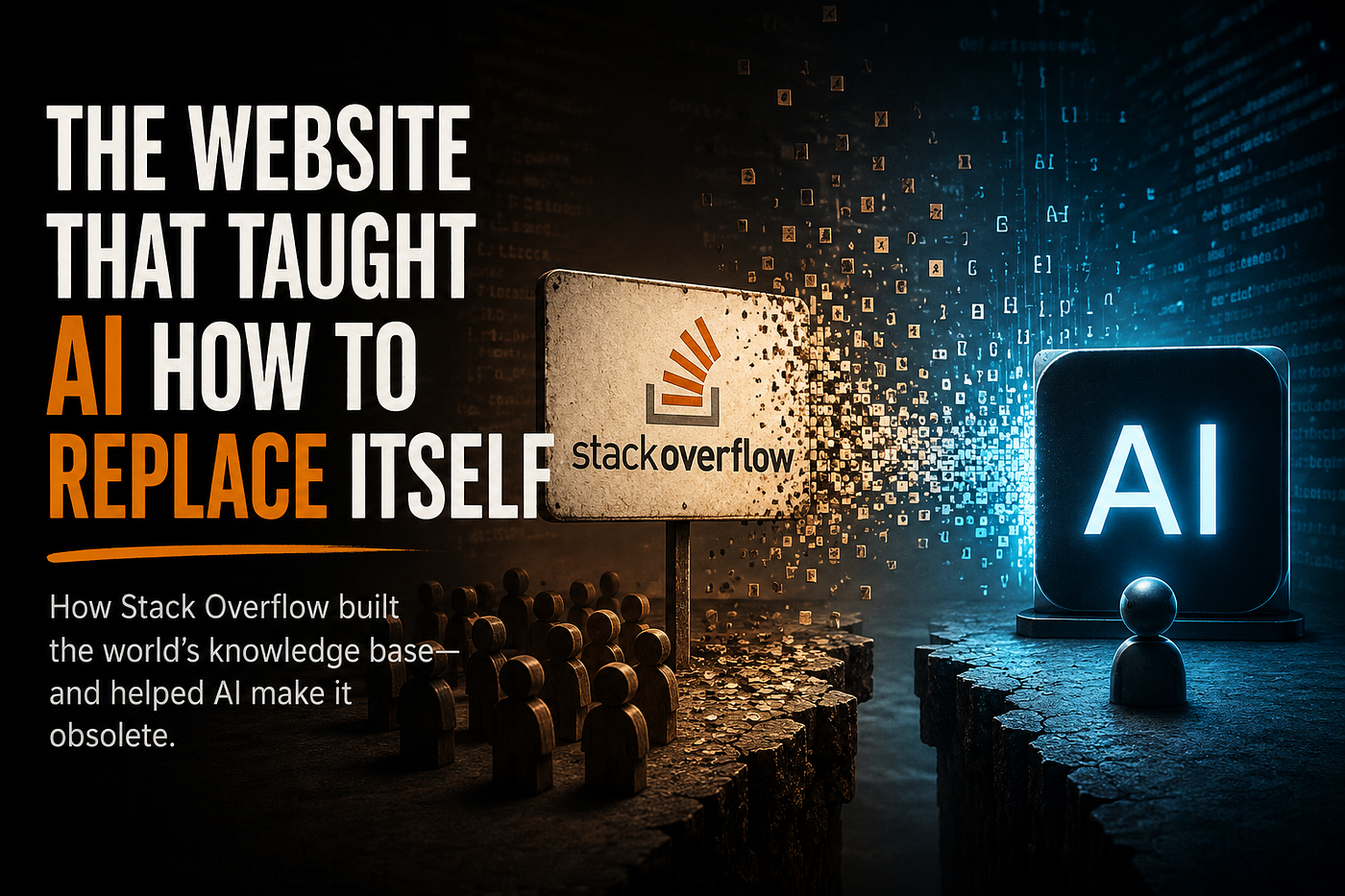
For three years, nearly every serious conversation about AI orbited one question: can the model get better? Better at reasoning, better at code, better at holding a plan together across twenty steps without losing the thread. Capability was the bottleneck, and the labs treated it that way — each release cycle measured in benchmark points, each benchmark point treated as the whole ballgame.
People answered that question with their attention, in numbers with no real precedent in consumer software. ChatGPT went from a research preview to 100 million monthly users in about two months after its November 2022 launch — a faster climb than Instagram or TikTok managed in their first years. By February 2026, weekly active users had passed 900 million, and OpenAI’s annualized revenue had crossed $25 billion.
The same pattern shows up in the tools built on top of these models. GitHub Copilot reached roughly 20 million users and is deployed at 90% of Fortune 100 companies. Cursor, a much smaller and younger company, crossed $2 billion in annualized revenue in February 2026 — at one point doubling roughly every two months. Claude Code hit 18% adoption among developers within about a year of launch and posted the highest satisfaction score of any coding tool surveyed by JetBrains in 2026.
Put all of that together and one thing becomes hard to argue with: demand was never the constraint. People wanted this software the moment it crossed a usefulness threshold, and they kept wanting more of it. The bottleneck, for three years, sat entirely on the supply side — in labs, in training runs, in benchmark scores.
The paradox that changed everything
Sometime around the end of 2025, the conversation inside finance and engineering teams started to change — even as the labs kept shipping smarter models on schedule. The shift wasn’t that models stopped improving. It’s that they’d crossed from “interesting” to “good enough” for most of what businesses actually needed: drafting code, summarizing contracts, handling first-line support, running internal pipelines. Good enough, not perfect.
And once a tool is good enough, people don’t use it once and stop. They wire it into loops. They give it tools of its own to call. They let it plan, retry, check its own work, and try again. Here is the result, in its starkest form:
AI got cheaper. Companies responded by using far more of it. AI became simultaneously cheaper and more expensive — cheaper per token, more expensive per company, both at once, both true.
The history of technology is full of products that failed because they were too expensive. AI may become the first major technology that succeeds because it’s too cheap.

The cost of intelligence is collapsing. The cost of consuming intelligence is exploding.
GPT-4-equivalent performance now costs roughly $0.40 per million tokens, down from around $20 per million tokens in late 2022 — a 98% collapse in unit price. By the normal logic of technology, that should make running AI dramatically cheaper. Instead, the average enterprise AI budget has grown from about $1.2 million a year in 2024 to roughly $7 million in 2026 — an estimated 320% rise in total spend, even as the price of the underlying resource fell off a cliff. A simple, single-turn AI workflow in 2023 cost about four cents per interaction. An orchestrated agentic system in 2026 — the kind that plans, calls tools, checks its own output and retries on failure — costs roughly $1.20 per interaction, about thirty times more, built from tokens that are dramatically cheaper than they were three years ago.
Nobody designed this outcome. It’s just what happens when you make something radically cheaper without changing how badly people want to consume it. They don’t bank the savings. They spend them, and then some.
The intelligence trap
For most of computing history, better technology meant higher costs, full stop. Faster servers cost more. Better databases cost more. More storage cost more. The price of capability and the price of running it moved in the same direction, so the bill was at least predictable — you paid for power, and you got power.
AI breaks that relationship. Intelligence itself is becoming abundant and embarrassingly cheap, available by the trillion-token slice. But the cost of consuming it has decoupled entirely from the cost of accessing it, because nothing stops a system from calling a model ten times instead of once, or letting an agent retry a failed plan until it gives up. The constraint companies are running into in 2026 was never “can we get intelligence.” It’s “how much of it did our own systems decide to consume while we weren’t watching.” That’s not a procurement problem. It’s a governance problem wearing a procurement problem’s clothes.
Six invoices, one story
By early 2026, a specific, recognizable genre of story had started showing up across engineering and finance teams: the AI rollout that worked too well.
Microsoft rolled Claude Code out to roughly 5,000 engineers in its Windows and Microsoft 365 division; adoption climbed to 84–95% within months, per-engineer costs reached $500–$2,000 a month, and the company cancelled most of the licenses, ordering a migration to GitHub Copilot CLI by June 30, 2026. One healthcare enterprise consumed a trillion tokens over six months, producing more than $6 million in unplanned cost before its finance team identified what was driving the number. The same shape shows up everywhere finance teams have looked closely: Uber burned through its entire $3.4 billion 2026 AI coding budget in four months; Meta capped usage for 6,000 employees after an internal token-consumption leaderboard backfired; GitHub Copilot’s own shift to usage-based billing sent one developer’s projected monthly bill from €67 to €966 overnight. And the FinOps Foundation’s 2026 State of FinOps report found that 73% of enterprises said their AI costs exceeded original projections — common enough that the Linux Foundation launched a dedicated Tokenomics Foundation this year just to standardize how companies track the spend.
At first, these look like separate stories — an overspent budget here, a cancelled deployment there. But look closely and they’re all the same story, told six times. None of these companies had a model that underperformed. None of them had an adoption problem. AI wasn’t failing in any of these rooms. It was succeeding faster than the companies running it had learned to pay for it.
Companies aren’t reducing AI usage because it doesn’t work. They’re reducing it because it works too often.
There’s a second layer to the cost curve worth being precise about, because it complicates the simple story of “newer model, more expensive.” Reasoning models — the kind that think before they answer — bill that thinking. A model working through a hard problem can generate thousands of invisible “reasoning tokens” before it writes a single visible word, and those tokens are charged at the most expensive line on the invoice, the output rate. One team running a routine support-classification workload through a frontier reasoning model found itself paying roughly $3,825 a month for work a lighter, non-reasoning model handled for about $788 — nearly five times the cost, for output that didn’t measurably improve. Sticker price isn’t a reliable guide either: in one documented case, a model priced 78% cheaper per token than a competitor still ended up costing 22% more in practice, because it needed far more tokens to reach the same answer.
The model’s price tag tells you what a token costs. It says nothing about what the task costs.
How the SaaS company actually got from $87K to $24K
Back to the company from the opening. Their fix wasn’t a single switch — it was four ordinary, well-documented levers, applied together, none of them requiring a new model or a worse product:
- Model routing — moved routine triage, file-navigation, and first-pass support replies off the frontier model onto a cheaper tier (−38%)
- Prompt caching — stopped re-paying for repeated system prompts and long-lived context on every call (−16%)
- Batch processing — shifted non-urgent jobs, like test generation and document summaries, to the async, half-price queue (−11%)
- Context pruning — stopped resending full conversation history on every turn of every agent loop (−7%)

No model breakthrough. No feature cuts. Just better economics.
None of these levers are exotic. Routing alone — sending the bulk of traffic to a fast, cheap model and reserving the expensive one for the slice of work that actually needs it — is documented across dozens of production deployments to cut bills 40–85% on its own, depending on traffic mix. A common pattern now is a roughly 70/20/10 split across cheap, mid-tier, and frontier models, which on typical workloads more than halves total API cost without a measurable quality drop. Stack caching and batch discounts on top of that, and a 72% reduction stops looking unusual. It starts looking like the median outcome for any team that finally read its own invoice line by line.
The next battle is economics, not IQ
Most people still assume AI labs are competing purely on intelligence — and on the frontier, they are. Anthropic, OpenAI, and Google keep shipping models that beat their predecessors on every benchmark that matters. But underneath that race, a second competition has become just as decisive: which model is smart enough, at a tenth of the cost.
That’s why Anthropic now ships four tiers instead of one. Haiku 4.5 runs at $1 / $5 per million tokens, Sonnet 4.6 at $3 / $15, Opus 4.7 at $5 / $25 — a deliberate fivefold spread, built for routing rather than for show. OpenAI runs the same play with Mini and Nano variants; Google with Flash. None of these companies are claiming their cheapest model is their smartest. They’re acknowledging that for most of what gets asked of an LLM in production, “smartest” was never actually the constraint.
Open-weight models have pushed this further and faster than most labs expected. DeepSeek and Alibaba’s Qwen went from a combined 1% of global AI usage in January 2025 to roughly 15% a year later — among the fastest adoption curves recorded in the industry.
The threat to frontier labs isn’t necessarily a smarter competitor. It’s a competitor that’s 90% as good at 10% of the cost.
DeepSeek’s V4 Flash prices output tokens at $0.28 per million, more than a hundred times cheaper than a frontier reasoning model’s $30. Pinterest’s CTO has said the company fine-tuned an open Qwen model on its own data and reached frontier-level quality at roughly a 90% cost reduction versus its prior closed-model setup.
This already happened once, with a different wire
It’s worth zooming out here, because the pattern underneath AI’s cost crisis isn’t new. It might be the oldest pattern in industrial technology.
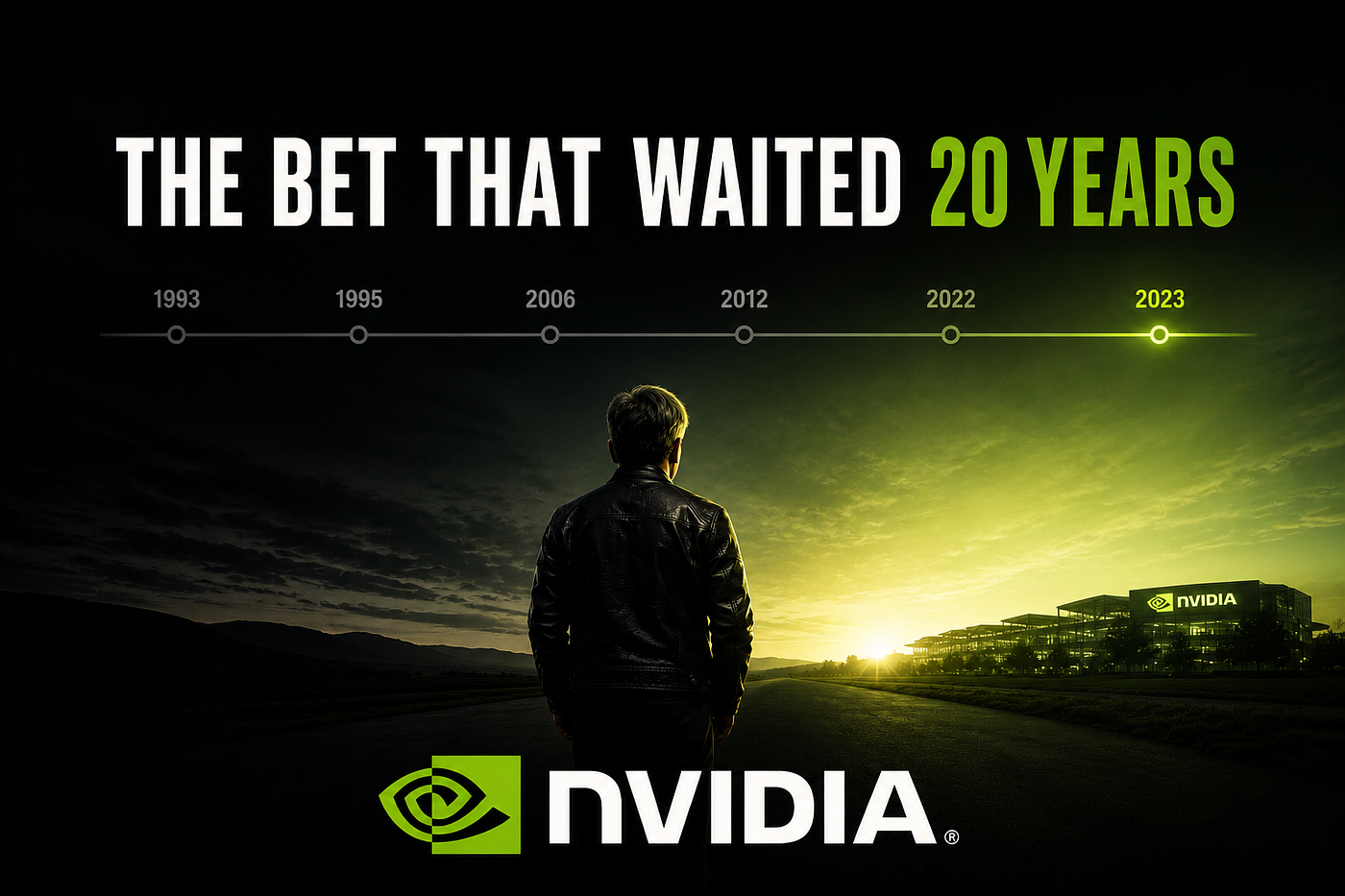
When electric light first reached factories and city blocks in the 1880s, it was treated as a marvel — something a wealthy building owner installed to be talked about. The question everyone asked was simply, can we get this? It took roughly another four decades, and a buildout of generation, transmission, and metering infrastructure that almost no end user ever saw, before the question changed to what does this cost per kilowatt-hour, and how do we use less of it. Electricity didn’t become civilization-changing the moment it became possible. It became civilization-changing once it got cheap, standardized, and metered down to the decimal — boring enough to disappear into the wall.
The technologies that reshape an economy are almost never the most capable version available at launch. They’re the cheapest useful version, multiplied by everyone who can suddenly afford to run it every day.

Every transformative technology eventually becomes an infrastructure story.
Back in April, the SaaS company that opened an $87,000 AI invoice didn’t discover a broken model. They discovered a new bottleneck.
For three years, the AI industry treated intelligence as the scarce resource. Increasingly, intelligence is abundant. The scarce resource now is the ability to deploy it economically.
The next breakthrough won’t be a model that thinks better.
It’ll be the moment intelligence becomes cheap enough that nobody notices they’re using it.
메타데이터
- post_id
- 958a64a4e138
- slug
- the-next-ai-breakthrough-wont-be-smarter-models-958a64a4e138
- url
- https://ai.gopubby.com/the-next-ai-breakthrough-wont-be-smarter-models-958a64a4e138
- canonical_url
- https://ai.gopubby.com/the-next-ai-breakthrough-wont-be-smarter-models-958a64a4e138
- author_url
- https://medium.com/@zaid.writes
- status
- ok
- fetched_at
- 2026-06-22 17:31:34