Ukraine Update June 10, 2026
Russia Is Adapting — But It May Already Be Too Late
Ukraine Update June 10, 2026
Russia Is Adapting — But It May Already Be Too Late

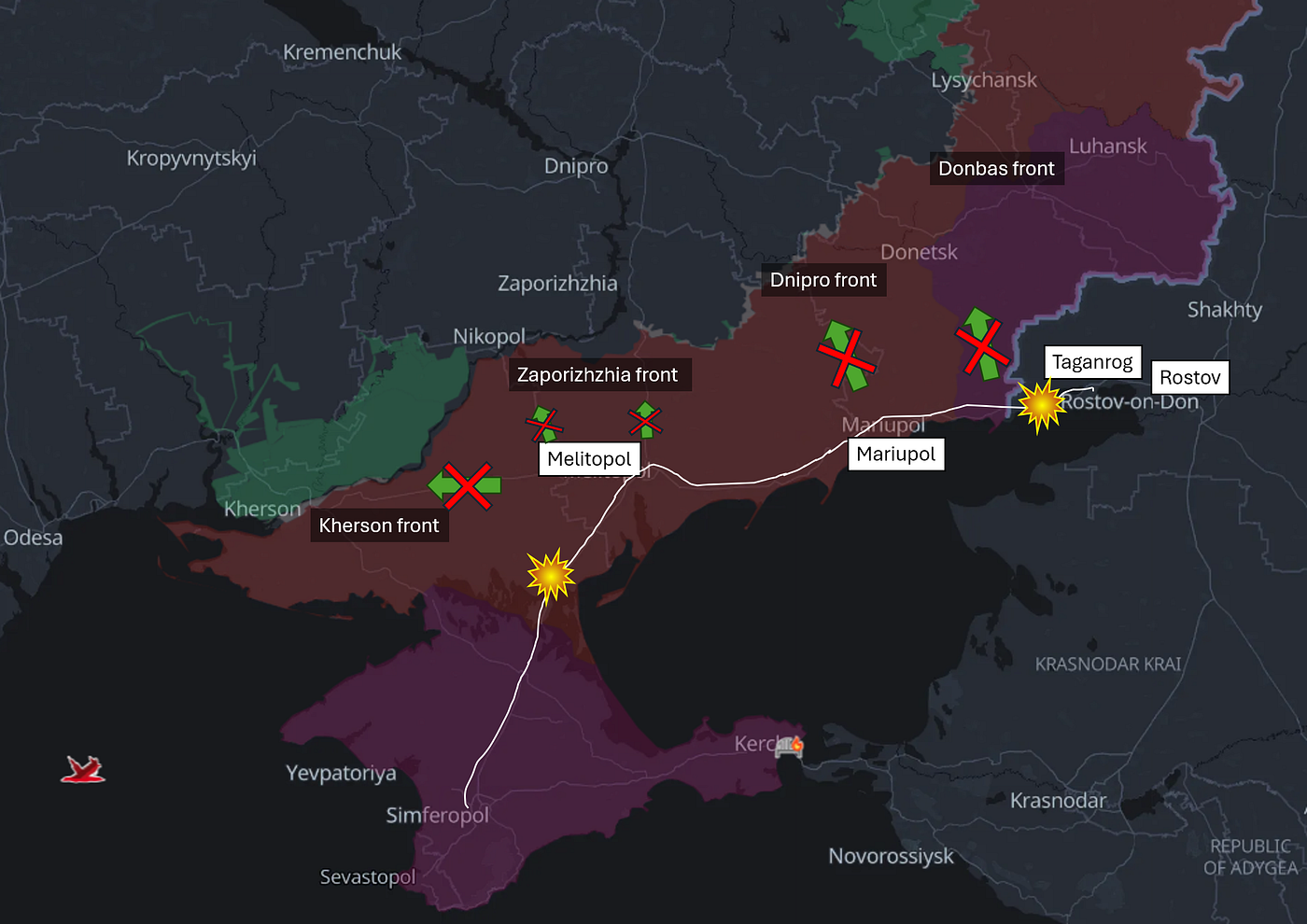
Something strange has been happening on the front lines lately. Russia, the country that was supposed to overwhelm Ukraine in seventy-two hours back in 2022, is now losing territory faster than it can steal it.
The army that was eating up nine square miles of Ukrainian land every single day a year ago is now clawing at less than three.
The same army has started sending soldiers in on motorbikes and quad bikes — not because this is a brilliant strategy, but because every tank and armoured vehicle that moves near the front gets spotted and destroyed within minutes.
Russia is adapting. That much is true. But here is the question that keeps nagging at me: what if the adaptation is just a slower way of losing?
Battlefield Reality
image
Let’s start with what the numbers actually say, because they’re brutal.
Russian forces seized an average of 2.9 square kilometres per day in the first third of 2026, compared with an average of 9.76 square kilometres per day during the same period in 2025. That is a two-thirds collapse in the rate of advance. And it gets worse.
In May 2026, Ukrainian forces regained control of or cleared Russian sabotage groups from about 250 square kilometres of territory, while Russian troops captured only 130 square kilometres over the same period. Read that again slowly. Ukraine took back more ground than Russia captured. For the first time in nearly three years. That is not a blip. That is a trend that should terrify Moscow.
So what happened? Russia adapted, but in ways that reveal weakness rather than strength.
Russian forces now typically attack in small groups of five or six — on foot or on motorbikes or quad bikes — in an attempt to expose Ukrainian positions by drawing their fire and then launching drone strikes at them. This tactic makes a brutal kind of sense in a drone-saturated battlefield. But it also tells you something. When a military that had over a million men starts sneaking around in groups of six on quad bikes, that is not tactical genius. That is an army that has bled out its ability to mass and push.
ISW previously assessed that Russian forces have substantially improved their ability to strike moving targets with precision due to recent drone adaptations and improved reconnaissance capabilities. This part matters. Russia has gotten meaningfully better at drone warfare. Russian forces struck Ukrainian railway infrastructure and rolling stock 541 times during the first quarter of 2026, damaging 1,718 railway facilities, causing approximately $178 million in losses, and decreasing freight transportation volumes by 6.4 percent.
That rail campaign is actually clever. Ukraine’s ability to move Western weapons and supplies depends heavily on rail. Hitting it repeatedly is not random destruction — it is a deliberate attempt to strangle the logistics chain before any summer push.
But here’s the problem with all of this cleverness: Russia keeps losing the headline number. Russia’s performance since December shows it can contest territory but cannot hold it, according to battlefield observers. You can adapt your tactics all you want, but if you are still bleeding 35,000 soldiers a month while losing ground, adaptation is not saving you. It is just making you better at a fight you are still losing.
What do I think comes next on the battlefield? Russia will keep the rail strikes going. Expect more precision drone use through the summer. But the Donetsk fortress cities – Sloviansk, Kramatorsk, and Kostiantynivka – are where the real test is coming. Russia has been pointing at them for a year. Taking even one would change the narrative dramatically. And right now, they do not look capable of it.
Russia’s Economic Pressure
image
Here is something the nightly news tends to skip over: Russia’s economy is not collapsing — but it is quietly rotting.
Russia sharply downgraded its economic growth forecast for 2026, with the government now expecting GDP to grow by just 0.4 per cent, down from a previous forecast of 1.3 per cent. The economy actually contracted by 0.3 per cent in the first quarter.
Think about what that means. Russia has been on a wartime spending binge for four years. Military factories running round the clock, soldiers getting paid multiples of normal wages, state contracts everywhere. That should be generating growth — and for a while, it was. After two years of expansion of more than 4 per cent, GDP growth for 2025 slowed to around 1 per cent or lower, with the same headwinds likely to persist into 2026. The earlier sugar rush from wartime military spending is now fading.
The sugar rush is over. What’s left is the hangover.
Food prices increased by 21 per cent in early 2026, services by 14 percent, and even fuel prices rose 11 per cent following refinery disruptions. This decline in inflation has only been achieved through crippling interest rates of 16 per cent, up from just 4 per cent in 2021.
Sixteen per cent interest rates. To put that in context: the last time the UK ran rates anywhere near that level, it triggered a housing market crash and a deep recession. Russia is doing this while simultaneously funding a war. The average Russian family is quietly getting squeezed — groceries cost more, borrowing costs more, real wages are barely keeping up.
India’s share of Russian oil imports has already fallen from 40 per cent in 2024 to 25 per cent by early 2026. Further declines would deal another blow to Russia’s economy. Russia’s whole economic war strategy rests on selling oil to whoever will buy it at a discount. If India keeps stepping back, the numbers get ugly fast.
The National Wealth Fund’s liquid assets have shrunk from 9.738 trillion rubles as of March 2022 to 3.889 trillion rubles as of April 2026 — a decline of more than two and a half times. That is the rainy day fund. Russia has spent more than half of it keeping this war going. At current burn rates, it is not an inexhaustible reserve — it is a countdown.
Here is my read on this: Russia is not going broke next month. But the economic headroom that let Putin shrug off sanctions in 2022 and 2023 is narrowing. The war can continue. But it gets harder to sustain the longer it runs. Every quarter of stagnation is another quarter where the Russian public gets a little quieter about groceries they cannot afford.
Propaganda & Information War
Russia’s propaganda machine is still running — but it has shifted its storyline in ways that give things away.
For the first two years of the war, Russian state TV was selling victory. Now it is selling endurance. The message inside Russia has quietly moved from “we are winning” to “this is a long civilizational struggle and we must hold firm.” That is not a sign of confidence. That is what you say when the quick win narrative has expired.
Russia’s techniques for spreading narratives included the use of fake accounts, manipulated imagery like deepfakes, forged documents, and videos with fake news tickers purporting to be from respected brands like the BBC or Al Jazeera. In other cases, operatives simply aimed to increase mistrust in foreign audiences about the credibility of Ukraine’s government.
The foreign information war is less about convincing anyone Russia is winning — fewer people believe that now — and more about fracturing Western resolve. The goal is not persuasion. It is exhaustion. Make enough people in enough Western countries feel like this is complicated, endless, and not their problem. That is actually a strategy with some legs, especially in countries where support for Ukraine was never deep.
In summer 2025, Russian propagandists focused on undermining Ukrainian-Polish relations and accusing the EU of prolonging the war, as well as promoting false stories about alleged plans to divide Ukraine between Russia, the US, and EU member states. Notice the target here. Not Western governments — Western publics. Specifically, making ordinary people feel like their leaders are hiding something sinister. That kind of narrative does not need to be believed. It just needs to create enough doubt that people stop paying attention.
Ukraine’s counter-narrative, meanwhile, has gotten sharper. Kyiv has learned that raw footage of Russian military failures travels further than press releases. Every viral video of a botched Russian drone strike or a captured soldier’s confused interview does more information work than a formal briefing. That is a real asymmetry in Ukraine’s favour.
Politics & Global Reactions
The diplomacy around this war has become its own kind of theatre, and I say that with genuine frustration.
Trump announced a three-day ceasefire for May 9 through 11, 2026, which Russia and Ukraine agreed to. The ceasefire included a suspension of all kinetic activity and an exchange of prisoners. And then, predictably, Russia had announced a ceasefire for Friday and Saturday, but it quickly unravelled, with both sides blaming the other for the continued fighting.
A three-day ceasefire that unravels is not a step toward peace. It is a photo opportunity that trains both sides to treat ceasefire proposals as negotiating theatre.
At the tactical level, Russia demonstrates engagement sufficient to satisfy Trump administration requirements while trying to position itself favourably in the international media. At the strategic level — where substantive resolution would require real compromise — Moscow exhibits zero flexibility, transforming negotiations into a cognitive warfare instrument rather than a peace process.
That is about as clean a description of what is happening as you will find anywhere. Russia is not negotiating. Russia is managing the optics of negotiating. There is a difference.
The latest sticking point in the stalled peace talks is Ukraine’s eastern Donetsk region, around three-quarters of which is controlled by Russia. Moscow has demanded that Kyiv withdraw its troops from parts of the region that Russian forces have failed to capture. Think about what Russia is actually asking for here. They want Ukraine to abandon the parts of Donetsk that Russia could not take militarily. It is negotiating for battlefield gains that the battlefield refused to give them.
Europe is watching this closely. NATO members who spent the early years of the war debating red lines are now moving faster on direct military support. Germany’s delivery of Patriot systems, France’s continued training commitments, Finland’s quiet but firm support — these are not gestures. They are an acknowledgement that a negotiated settlement where Russia keeps its gains is not a stable end state.
The question hanging over everything is what Trump does if peace talks fail entirely past his self-imposed deadline. Walking away from Ukraine diplomatically would change the calculus for everyone.
Strange, Ironic or Darkly Funny Moment
Russia held its grandiose Victory Day parade on May 9 – the one where it rolls out missiles and tanks to remind the world of its military power. This year, the same week, Ukrainian forces liberated more ground than Russia captured all month. The Kremlin’s spokesman, when asked about Zelenskyy publicly dismissing the parade as irrelevant, called it a “silly joke". A country currently losing territory faster than it gains it, calling its enemy’s commentary a silly joke. Self-awareness is truly something.
What Happens Next?
The biggest risk right now is that both sides lock into a slow attrition that bleeds Ukraine white even as Russia’s gains dry up. Russia does not need to win dramatically. It just needs Ukraine to run out of people and ammunition before the West runs out of patience. That is still a viable Russian strategy, even with all these economic problems and battlefield setbacks.
The biggest opportunity belongs to Ukraine. For the first time since 2023, the territorial math has flipped in Kyiv’s favour. If that holds through the summer — if Russia genuinely cannot mount a meaningful offensive push toward the Donetsk fortress cities — then the narrative shifts. Western support is easier to sustain when Ukraine is visibly not losing.
Watch three things over the next three to four weeks. First, whether Russia can reset its infiltration tactics after Ukraine started picking them apart in June. Second, whether India actually cuts its Russian oil purchases further — that matters more than most headlines will suggest. Third, and most important: whether Trump’s frustration with stalled diplomacy translates into pressure on Russia, pressure on Ukraine, or just quiet disengagement.
The war is not ending soon. But something is shifting in the math. Russia adapted. It is hitting rail lines, flying better drones, and sending men in on motorbikes. And it is still losing ground.
That says something.
메타데이터
- post_id
- 959a2d2e19d5
- slug
- ukraine-update-june-10-2026-959a2d2e19d5
- url
- https://medium.com/the-observers-pen/ukraine-update-june-10-2026-959a2d2e19d5
- canonical_url
- https://medium.com/the-observers-pen/ukraine-update-june-10-2026-959a2d2e19d5
- author_url
- https://medium.com/@shivjadon1234
- status
- ok
- fetched_at
- 2026-06-14 11:28:49