What is social accessibility? designing beyond ramps and screens
A guide for ux designers to foster inclusion through human interaction
What is social accessibility? designing beyond ramps and screens
A guide for ux designers to foster inclusion through human interaction
Understanding accessibility in all contexts
Accessibility is the design of products, services, environments, or facilities, and is a matter of degree so we say things like ‘good accessibility’ or ‘high accessibility.’ Depending on the context, the phrase ‘good accessibility’ means that everyone including individuals with disabilities, older adults, and those often excluded from information can use them without discrimination.
In fact, accessibility has been treated for years as something to consider when building physical elements like stairs or ramps, but it’s been expanded in this digitized society. Now it’s applied to websites, apps, and general digital materials. Let’s take a look at BBC’s Accessibility First Commitment statement.
Accessibility First Commitment We need a BBC that is accessible for all, where no one is excluded. However, we know that this isn’t the case, and that disabled people in particular have faced significant barriers. We will continue to focus on how we can better reach, recruit and retain disabled talent by reviewing processes, tackling barriers and building an accessible and welcoming culture and environment.
It clearly states why accessibility is so important, and it paves the way that BBC is heading to. If you search any major companies or organizations with ‘accessibility’ at the end, you’d be able to find their dedicated pages which explain policies and company wise directions in detail. From all this practice, we can see how important accessibility is.
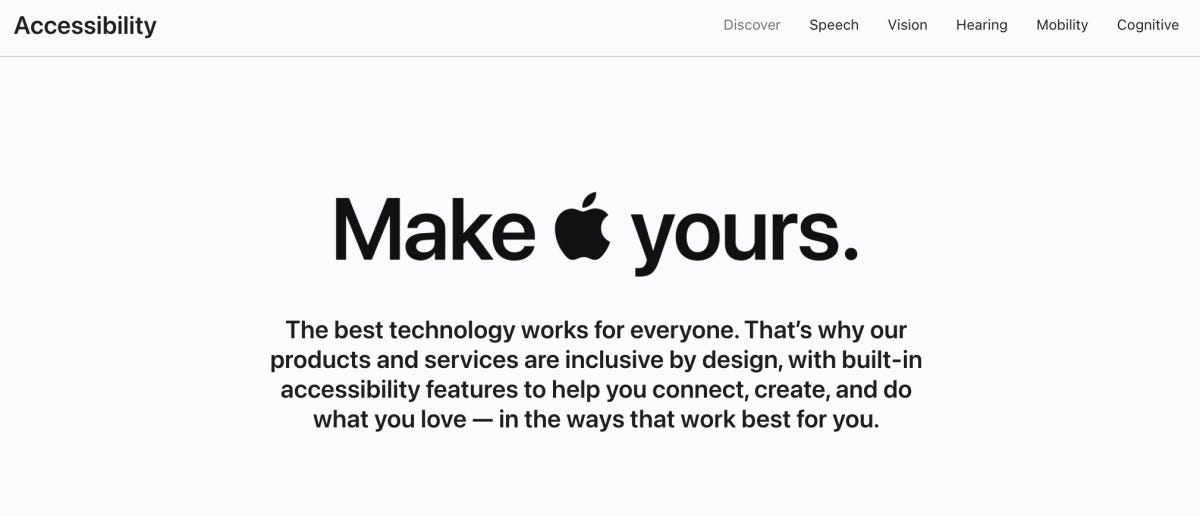
Apple accessibility page ©Apple

Microsoft accessibility page ©Microsoft
What is social accessibility?

An accessibility guide book for Sweden libraries, <A Library Without Obstacles>, emphasizes social accessibility. ©Malmö City Library
But then, what does ‘social accessibility’ mean? It can offer slightly different perspectives depending on which aspect we emphasize. For example, if we emphasize the ‘public’ aspect of the word ‘social,’ then it refers to the degree to which people can access public services or facilities. On the other hand, if we highlight the relational aspect, social accessibility shifts its focus to human interaction or interpersonal relationships.
When we take them altogether, social accessibility means the degree to which people can engage in interaction and social participation. It includes providing opportunities for marginalized groups like people with disabilities to participate in various social activities. Public social infrastructures where anyone can access are good examples. Also, making sure every single user interacts and participates without discrimination on social media platforms is included.
Interpersonal accessibility : Say hello to everyone
Karin Larrson, an accessibility specialist at the Malmö City Library in Sweden and author of a library guide book <A Library Without Obstacles>, also mentioned the importance of social accessibility, saying that libraries should meet visitors ‘on their level.’
As we can see from the phrase ‘Having a good conversation every time’ in the book, the guideline emphasizes the beginning with hospitality. It’s about the attitude of librarians and staff who are ready to have a good conversation with anyone at any time. This implies two very important assumptions. Firstly, everyone is different. Secondly, because of these differences, we must approach individuals with respect from their own perspective. So, it is crucially important to understand invisible disabilities or psychological circumstances. For example, someone may want to avoid eye contact because of a traumatic event or family conflict. For someone with cognitive disability, communicating with writing or drawing might be easier than verbal conversation.
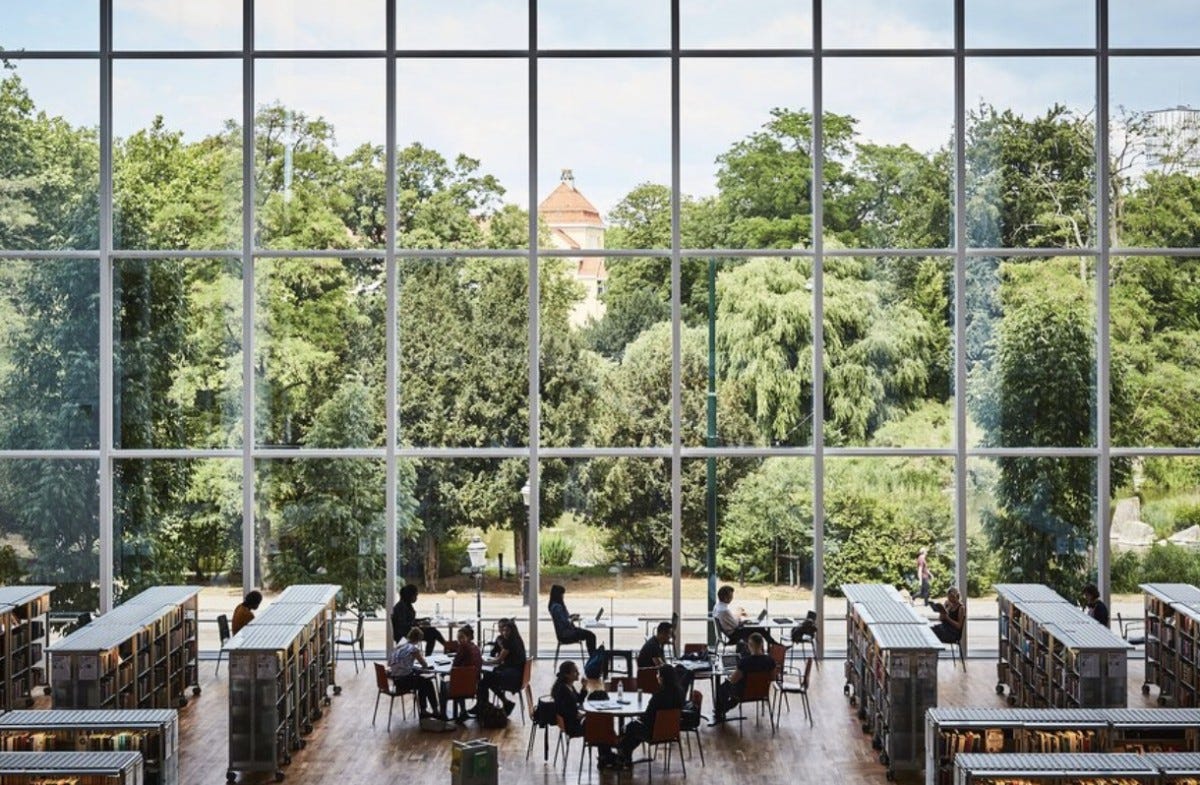
The Malmö City Library, also known as Calendar of light, was built in 1997 by Danish architect Henning Larsen. It was nominated one of 12 most beautiful libraries in the world by IFLA (International Federation of Library Associations and Institutions). ©architectmagazine

The one on the far left is the Malmö City Library built in 1946. The one in the middle and the right are new buildings in 1997. They are bridging the old and the new. ©Johan Kalen

According to Karin, this guide is being updated constantly, and ver. 2.1 is now available online. ©Malmö City Library
Low psychological barrier, High social accessibility

© Katie Moum
Why is it important to focus on hospitality for improving social accessibility? Because it helps lower psychological barriers. Imagine there are two hospitals: one where the receptionist remembers you and greets you kindly, asking how you’re doing, or one where they barely look at you and take your information. Which hospital would you like to go to? The same applies to transportation. Imagine a wheelchair user getting on and off. In one scenario, the driver and passengers wait and exchange conversation brightly, but, in the other, they shout “Why are you taking so long?” annoyingly. In which environment do you think encourage more wheelchair users to take the bus? It’s a no-brainer. Even if physical accessibility is somewhat lacking (excluding places that are entirely inaccessible), people are more likely to go to places where they feel welcomed.
Epilogue : First touch-point is important
Our conversation and gestures in face-to-face interactions involve a complex mix of facial expressions, tone, overall atmosphere. So, in hospitality, the character of a greeter is very influential. However, it’s not only the human presence that creates a welcoming atmosphere. I believe the initial point of contact a user has with a product, service, or place is important. I’d like to call it ‘First Touch-point.’
A user feels welcomed at the ‘First Touch-point’ with a positive user experience. They become calm psychologically. This first touch-point could be a multi-lingual welcome message, a clearly marked sign guiding a wheelchair user to accessible restrooms and moving routes, or a notice board that invites visitors to reach out freely if they need assistance. There is no single right way to do this, but consider a message like this.
“Everyone is welcomed here. If you have a disability or need assistance from a member of staff, please don’t hesitate to call the number below. We’ll come to you wherever you are.”
All my articles are grounded in real-world insights drawn from recent projects. Each piece is carefully crafted by me and thoughtfully edited by Andy Taekhyung Kim in the UK. By reading and sharing my stories, you’re supporting a genuine human effort to make the world a more inclusive place.
If you’re interested in insights on inclusive UX and accessibility, particularly in South Korea, the UK, or Southeast Asia, feel free to reach out (hello@missionit.co). I’d love to connect.
메타데이터
- post_id
- 95d8aafa2b2f
- slug
- what-is-social-accessibility-designing-beyond-ramps-and-screens-95d8aafa2b2f
- url
- https://medium.com/design-bootcamp/what-is-social-accessibility-designing-beyond-ramps-and-screens-95d8aafa2b2f
- canonical_url
- https://medium.com/design-bootcamp/what-is-social-accessibility-designing-beyond-ramps-and-screens-95d8aafa2b2f
- author_url
- https://medium.com/@hello_37058
- status
- ok
- fetched_at
- 2026-08-19 06:38:02