How Does the “Balanced View” Deceive Us?
The Trap of Alphabetical Planning
How Does the “Balanced View” Deceive Us? — The Illusion of Alphabetical Planning and Strategic Frameworks
The Trap of Alphabetical Planning
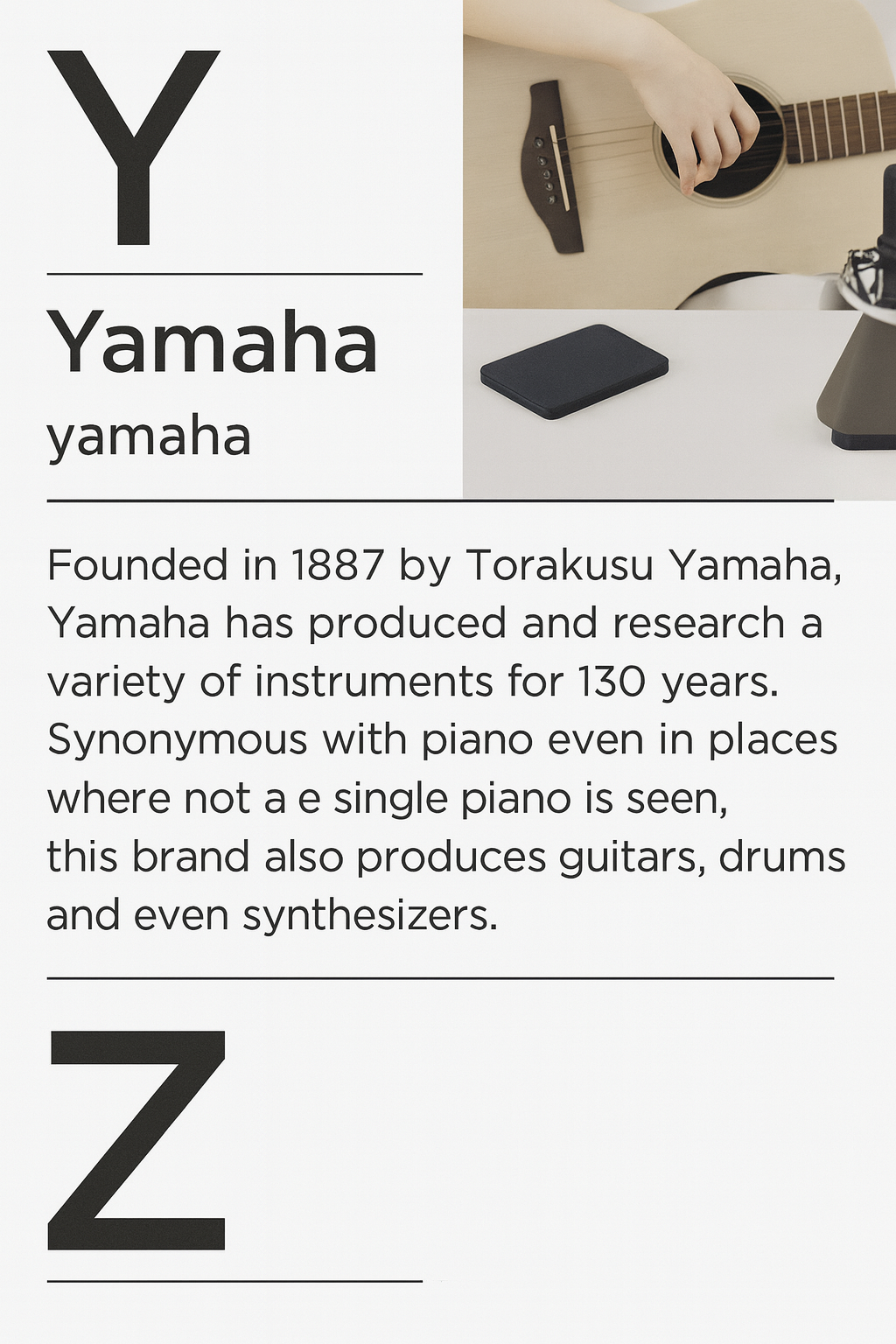
In magazines or trend articles, one often encounters what could be called “alphabetical planning.” It is the method of introducing trend keywords by choosing one word for each letter from A to Z. At first glance it looks neat, balanced, and sophisticated, but in fact it produces serious distortions of information. The distribution of words in language is inherently uneven. A, C, and S are crowded with possible words, while Z, Y, and X have very few. As a result, core concepts get excluded, trivial words get inflated, and readers are presented with a distorted map of knowledge.
This is a textbook case showing how emphasizing “fairness” in a tilted playing field can actually yield more distorted outcomes. After all, every artifact of civilization is a tilted playing field: accumulated circumstances pile up into uneven landscapes. If we insist on slicing everything evenly, from A to Z, under the banner of fairness, we paradoxically create a more unequal world.
The Trap of Strategic Frameworks
A similar phenomenon happens in the field of strategy development. Consultants typically follow steps like these when they build what they call a strategic framework. This is only a simplified example; in practice it is adapted in far more creative ways.
- Choose the axes. First, they pick the criteria. A common combination is (demand) market attractiveness × (supply) internal capability. At this stage, the decision already defines what issues will be highlighted and which will be hidden.
- Draw the matrix. They cross the two axes to create a 2×2 grid. Each quadrant is given a label like “Core Investment,” “Capability Building,” “Efficiency Limit,” or “Exit.”
- Fill the boxes. Each box is then forced to contain two or three initiatives. For example, “Core Investment” might be filled with a “digital innovation platform,” while “Exit” might be filled with “support for one-off events.”
- Re-prioritize. They then re-sort these items by influence and feasibility into “Quick Wins,” “Major Bets,” and “Long-Term Options.”
- Package the final report. The end result is a polished picture titled something like “Four Strategic Domains, Twelve Core Initiatives.” Senior management feels reassured that everything has been considered.
The problem is that this process erases the uneven weight of reality. Some boxes should in fact remain empty, but once the pressure to balance the grid leads to stuffing in words, minor issues get dressed up as strategy. The most damaging consequence is the illusion of a balanced view. Important challenges get diluted, while trivial ones get inflated. The choice of axes is itself biased, yet the outcome appears like an objective diagnosis. In the final report, anything outside the framework disappears entirely. This is essentially the same as cramming words like Z or Y into the alphabetical list just to make it complete. For the sake of symmetry, substance gets distorted.
Escaping the Trap of the “Balanced View”
Avoiding this trap requires a practice of discovery without hypotheses. In scientific research, a hypothesis is an explicit assumption set by the researcher — for example, “Factor A influences B.” Service design, by contrast, emphasizes observing the real experiences of users and redefining the problem itself. Discovery without hypotheses does not mean starting from an absolute blank slate. Humans always bring background knowledge and bias when looking at problems. What matters is maintaining a stance that resists being dragged along by the assumptions and pre-set frames already built by organizations or experts.
As long as that stance is maintained, service design can surface the issues that conventional frameworks conceal or delete, capturing uneven reality as it actually is. However, if service designers carry conventional frameworks or theories too heavily in their minds, they risk missing the subtle signals or unspoken pleas hidden in interviews. Methods may be open, but if the designer’s gaze is closed, the same patterns will be repeated. That is why service design is not merely the technical use of a toolkit, but also a posture of emptying the frame and immersing in the user’s context.
For example, when a local government sets its axes as “traffic congestion × feasibility of infrastructure investment,” problems such as pedestrian safety, anxiety about night travel, or accessibility for the elderly never even enter the frame. In one city, strategies were drawn up around bus route restructuring, but in resident interviews the recurring voices were: “Bus stops are dark and I feel unsafe at night,” “There’s no guidance when transferring and I get lost,” and “Stairs make it impossible for older people to use the bus.” These experiences were excluded at the outset because they existed outside the chosen framework, but only became agenda items through a service design approach.
Strategic frameworks that look balanced often manufacture the illusion of balance. They are not neutral mirrors of reality, but devices that slice the world according to already chosen criteria. What truly deserves our attention is the experience that users go through on the ground. Stepping out of the safe zone of literature reviews and pre-established models, we need to collect problems through discovery without hypotheses, and from there build new strategies. That is the only way to escape the illusion of a balanced view and move toward fairness that is more just and substantive.
So we must ask: Is the balance we see really balance? Or is it only an illusion packaged to look good?
2025.10.4. Seongwon Yoon
메타데이터
- post_id
- 95ea74f0dbcb
- slug
- how-does-the-balanced-view-deceive-us-95ea74f0dbcb
- url
- https://medium.com/@usable/how-does-the-balanced-view-deceive-us-95ea74f0dbcb
- canonical_url
- https://medium.com/@usable/how-does-the-balanced-view-deceive-us-95ea74f0dbcb
- author_url
- https://medium.com/@usable
- status
- ok
- fetched_at
- 2026-06-18 07:02:39