Strategic Framework for Cybersecurity Stakeholder Communication
1. The Strategic Imperative of Communication in Cybersecurity
Strategic Framework for Cybersecurity Stakeholder Communication
Photo by Adi Goldstein on Unsplash
1. The Strategic Imperative of Communication in Cybersecurity
In the contemporary threat landscape, communication serves as the vital bridge between technical detection and organizational resilience. While advanced tools allow us to identify vulnerabilities and anomalies, it is the speed and clarity of communication that determines an organization’s ability to withstand a crisis. As a cybersecurity professional, your responsibility extends far beyond technical remediation; you are a primary guardian of business continuity. By translating technical event logs — often analyzed through sophisticated tools like NotebookLM — into actionable strategic intelligence, you ensure that the organization can respond with unity and precision.
Central to this framework is the concept of “Security as a Mindset.” Security is not a static checkbox or a siloed technical function; it is a pervasive organizational philosophy that prioritizes the protection of assets at every level of operation. This mindset informs our communication standards by mandating transparency, accountability, and proactivity. When security is integrated into the cultural fabric of a company, communication becomes the mechanism through which risks are mitigated and standards are upheld. This proactive posture ensures that every stakeholder, from the server room to the boardroom, understands their role in maintaining the digital perimeter.
This mindset transitions our focus from abstract theory to the practical, rigorous protection of the organization’s most valuable data and physical assets.
2. Foundations of Protection: Data and Asset Classification
Strategic communication is predicated on an intimate understanding of what is being protected. Data and asset classification is the process of categorizing an organization’s infrastructure and information based on its criticality and sensitivity. By defining the “what,” a security professional can effectively dictate the “how” and “when” of the communication lifecycle. Without rigorous classification, communication lacks direction, potentially leading to the catastrophic under-reporting of high-stakes incidents.
To minimize organizational impact during a security event, professionals must categorize assets based on their functional value:
- Highly Sensitive Data: Information such as PII or proprietary intellectual property that requires immediate, high-level escalation protocols.
- Operational Assets: Hardware and software systems essential for the day-to-day functions of the business.
- Internal Information: Data intended for employee use which, if compromised, requires internal notification but may not trigger external legal protocols.
- Public-Facing Assets: Information and systems intended for general consumption that require integrity monitoring to prevent reputational damage.
Your impact on data protection is defined by your ability to accurately classify and defend these categories. Failing to do so results in severe consequences for the organization’s security posture:
- Compromised Data Integrity: Lack of classification leads to undetected unauthorized changes.
- Operational Paralysis: Improperly identified assets cause delays in detection, leading to prolonged system downtime.
- Legal and Financial Liability: Failure to protect sensitive data categories often results in regulatory non-compliance and heavy penalties.
- Erosion of Stakeholder Trust: An organization that cannot demonstrate an understanding of its protected assets quickly loses its professional reputation.
The precise classification of these assets acts as the essential trigger for a structured escalation process.
3. The Escalation Protocol: Prioritization and Operational Safety
Incident escalation is a strategic maneuver designed to move critical information to decision-makers with speed and accuracy. It is a vital tool for maintaining operational safety, ensuring that the security team is not bogged down by “noise” while high-impact threats remain unaddressed. A structured protocol transforms a chaotic event into a managed process, safeguarding business continuity through disciplined reporting.
The core of escalation is prioritization. Security professionals must evaluate the severity of an incident against established standards to determine its potential impact on operations. This decision-making process is the hallmark of a high-standard professional, balancing the urgency of a response with the accuracy of the report.
The following escalation steps and their “So What?” impacts define our operational excellence:
Event Identification and Classification
- Action: Detect the event and categorize it based on the affected asset’s classification.
- So What? Proper execution prevents “alert fatigue” by filtering out false positives; failure to do this allows critical threats to be lost in technical noise.
Impact Prioritization
- Action: Assign a severity level based on the risk to business operations and data sensitivity.
- So What? Correct prioritization ensures that resources are deployed to the most dangerous threats first; ignoring this allows high-impact attacks to dwell longer in the environment.
Strategic Notification
- Action: Formally escalate the incident to the relevant stakeholders according to the severity level.
- So What? Timely notification triggers legal, technical, and business responses that limit liability; failure here leads to organizational paralysis and increased recovery costs.
Effective internal escalation naturally leads to the necessity of engaging broader stakeholder groups to manage the organizational outcome.
4. Stakeholder Architecture: Defining Roles and Security Responsibilities
Identifying stakeholders early — well before an incident occurs — is a strategic imperative. Stakeholders are individuals or groups with a vested interest in the organization’s security posture or who are impacted by security decisions. Understanding their specific roles ensures that communication is targeted, efficient, and influential.
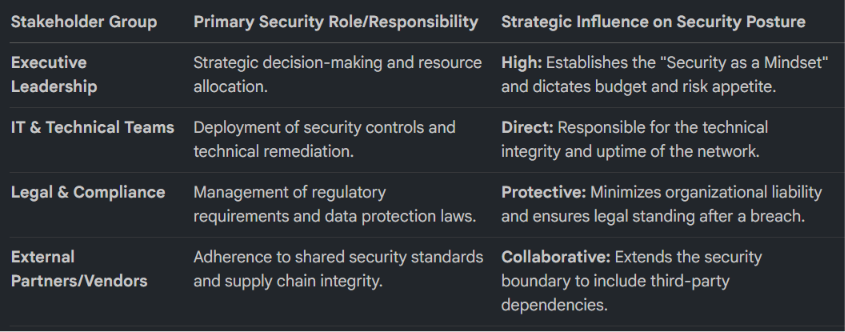
To influence organizational safety, use the following checklist to identify and engage stakeholder roles:
- [ ] Map Impact: Determine which stakeholders are affected by the compromise of specific asset classes.
- [ ] Identify Authority: Establish who has the ultimate authority to authorize operational shutdowns or public disclosures.
- [ ] Confirm Channels: Pre-verify the most effective communication methods for reaching each group (e.g., encrypted messaging, formal briefings).
- [ ] Verify Dependencies: Understand how the actions of one stakeholder group (e.g., Legal) influence the timeline of another (e.g., Communications).
Identifying the correct stakeholders provides the target; the next requirement is perfecting the message to influence their decision-making.
5. Messaging Excellence: Clarity, Conciseness, and Influence
In the heat of a security event, technical noise can overwhelm leadership. High-quality messaging is essential to reduce this noise and facilitate rapid, accurate decision-making. Clear and concise communication removes ambiguity, ensuring that stakeholders spend their time taking action rather than deciphering complex technical jargon.
Professional Standards for Cybersecurity Messaging:
- Clarity Above All: Use plain, professional language to describe the situation. Avoid specialized technical terms that may confuse non-technical stakeholders.
- Conciseness for Decision Speed: Prioritize the “Bottom Line Up Front.” Deliver the status, the impact, and the recommended actions immediately.
- Tailored Audience Perspective: Adapt the narrative to the recipient. A technical lead needs remediation steps; an executive needs business impact and recovery timelines.
- Action-Oriented Content: Every communication must include a clear “call to action” or a specific summary of the current defensive steps being taken.
The “So What?” of messaging excellence is the direct strengthening of our security posture. When every party understands the situation and their required response, the organization moves from a state of crisis to a state of managed recovery. This clarity is the differentiator between a resilient organization and one that suffers total operational failure.
Refined messaging is the lifeblood of resilience, ensuring that recovery and continuity efforts remain synchronized.
6. Resilience and Recovery: Maintaining Operations During Crisis
Disaster recovery and business continuity are the twin pillars of organizational resilience. Communication frameworks support these functions by ensuring the organization remains functional during and after a security event. Without a robust communication plan, technical restoration occurs in a vacuum, often conflicting with the immediate needs of the business.
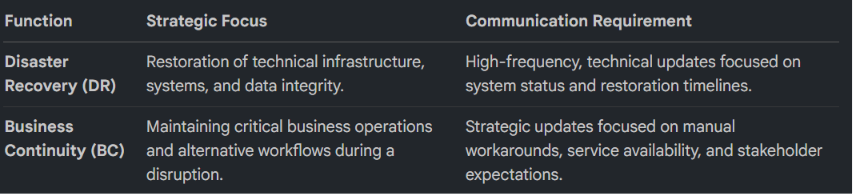
The security professional acts as the central node in these phases. Timely communication prevents a security event from becoming a permanent failure by aligning technical restoration with the organization’s operational requirements. By managing this information flow, the professional ensures the organization emerges with its integrity and reputation intact.
Long-term resilience is further bolstered by active engagement with the global security community and the integration of technical evolutions.
7. Strategic Evolution: Community Engagement and AI Integration
The cybersecurity field is in a state of constant evolution. Staying current is not merely a career goal; it is a strategic necessity for maintaining effective communication and defense capabilities. Engaging with the broader security community and adopting emerging technologies like Artificial Intelligence (AI) enhances our ability to predict, detect, and communicate modern threats.
To maintain a high standard of professional excellence, the following resources are vital:
- Cybersecurity Community: A primary venue for expanding professional networks and discussing shared challenges.
- Career Journeys: Engaging with the documented experiences of peers to understand evolving roles and threat responses.
- Professional Trend Monitoring: Utilizing career-aligned resources to stay ahead of defensive strategies and emerging vulnerabilities.
Future-Proofing through AI Integration: Artificial Intelligence is a force multiplier for the modern security professional. Tools such as Gemini and NotebookLM are revolutionizing workflows by:
- Optimizing Workflows: Automating repetitive security tasks and data entry, allowing professionals to focus on strategic stakeholder influence.
- Streamlining Communication: AI can analyze massive volumes of log data and summarize events into clear, actionable reports for non-technical leadership.
- Predictive Analysis: Uncovering patterns in event data to anticipate and mitigate threats before they require high-level escalation.
By integrating these advanced tools and community insights, the security professional ensures their communication framework remains as dynamic and resilient as the threats they are sworn to defeat. The ultimate goal remains constant: ensuring organizational security through professional, high-standard communication that informs, influences, and protects.

메타데이터
- post_id
- 95f538fdfd94
- slug
- strategic-framework-for-cybersecurity-stakeholder-communication-95f538fdfd94
- url
- https://medium.com/@tatankavenkat_19803/strategic-framework-for-cybersecurity-stakeholder-communication-95f538fdfd94
- canonical_url
- https://medium.com/@tatankavenkat_19803/strategic-framework-for-cybersecurity-stakeholder-communication-95f538fdfd94
- author_url
- https://medium.com/@tatankavenkat_19803
- status
- ok
- fetched_at
- 2026-08-12 18:09:30