Four Uncommon Brilliant Books I Read with Long Titles
Not so common books blog series — Article 2
Four Uncommon Brilliant Books I Read with Long Titles
Not so common books blog series — Article 2
Collage of Book Covers from Goodreads
Missed Series 1? You can find it here: Four Books I Never Saw Coming — And Now Can’t Stop Thinking About
There is something unusually absurd about a book with a long title.
Short titles carry a kind of confidence. Meditations. Sapiens. Dune.
They don’t need to explain themselves. But a long title has something different going on.
It is making a promise up front. It is telling you, before you’ve read a single page, what the territory looks like and what you might find there.
The four books I’m writing here all have long titles. Each has something to declare, a question it is already asking, a character it is already introducing, a journey it has already begun.
And each one delivers on that promise in ways I did not expect.
This is Series 2 of Not So Common Books.
The rule remains the same: these are not the books being talked about in every newsletter this week. They are books that earned their place through what they actually did to me when I read them.
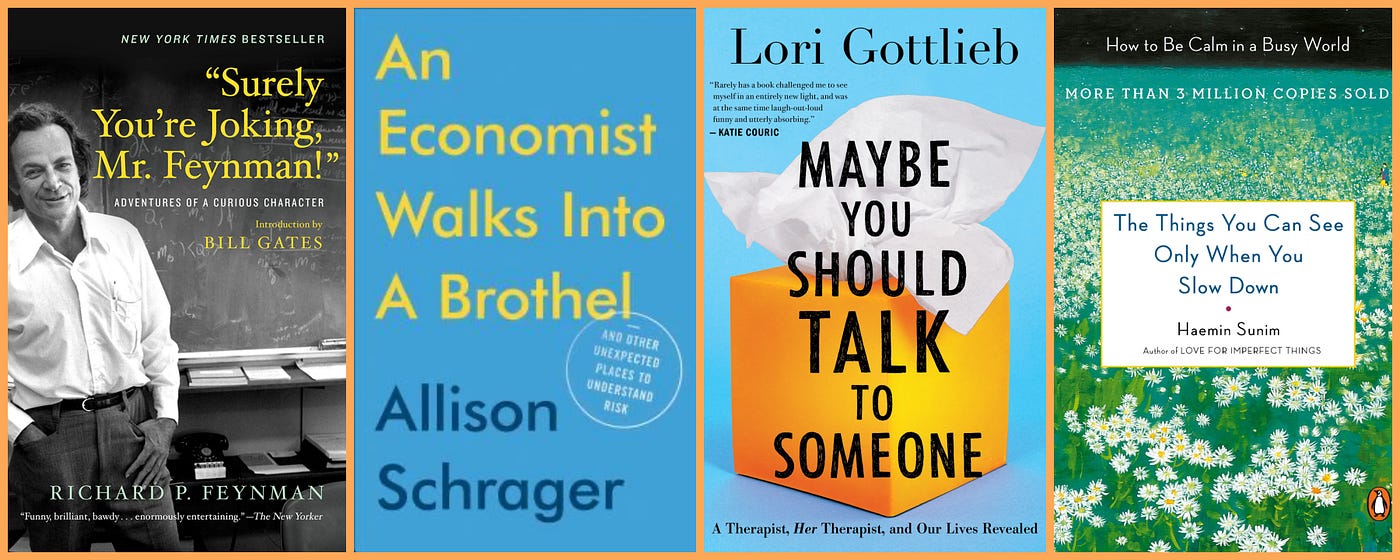
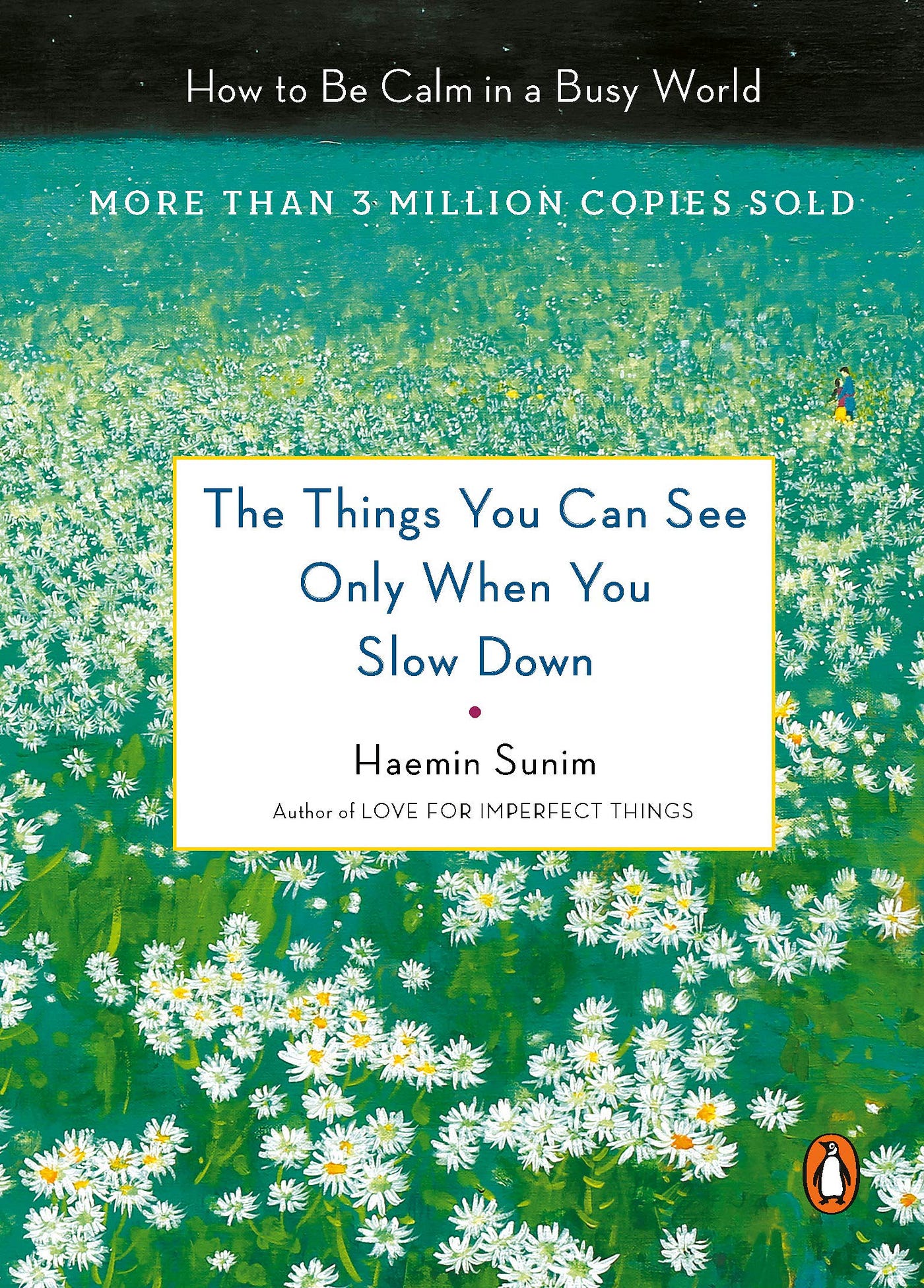
The Things You Can See Only When You Slow Down — Haemin Sunim
Philosophy · Mindfulness
Book Cover from GoodReads
The title of this book is almost too honest. It tells you exactly what you will get. And yet the experience of reading it feels like something you could not have been told about in advance.
Haemin Sunim is a Korean Zen Buddhist monk who studied at Berkeley, Harvard, and Princeton before returning to teach and to write. That combination, contemplative practice sitting alongside rigorous Western education, gives this book a quality you don’t often find in books of this genre.
It is warm without being vague. It is spiritual without requiring you to believe anything specific.
The book is structured around eight areas of life: rest, mindfulness, passion, relationships, love, life, the future, and spirituality. Each section opens with a short reflective essay and then offers a series of short passages, a line or two at most, that you read slowly or you miss entirely.
What struck me most was the central question the book refuses to let go of: is it the world that is busy, or is it the mind?
It sounds like a simple question, but isn’t. Most of us move through our days as though the busyness is happening to us, as though the relentlessness is external and we are just trying to keep up. Sunim gently, persistently turns that assumption around.
He suggests that when the mind rests, the world rests with it, that the frenzy we experience is at least partly something we are generating from the inside.
I almost felt like reading it was like getting a hug in the form of a book. The subtle effect of meeting the reader where they are, without insisting they go anywhere in particular, is the book’s greatest skill.
There are passages where his advice can feel a little gentle for those dealing with real difficulty. That is a fair criticism. But I think it reflects what the book actually is: not a solution, but a pause.
A chance to remember that the ordinary hours of life, the commute, the queue, the quiet evening, contain more than we usually allow ourselves to notice.
The book has been translated into more than thirty-five languages and sold in the millions. That reach tells you something. In a world that has accelerated past the point where most people feel they can breathe, there is something here that people badly need to find.
Read if: You are moving too fast and you know it. This book will not judge you for that. It will just sit with you until you slow down.
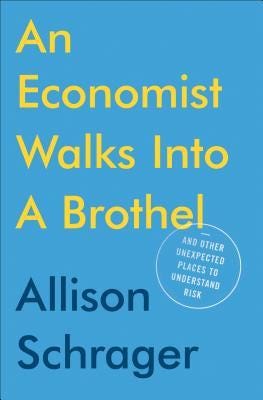
An Economist Walks into a Brothel: And Other Unexpected Places to Understand Risk — Allison Schrager
Economics · Nonfiction
Book Cover from GoodReads
The title is doing a lot of work here, and it knows it.
You pick the book up. You wonder whether it is serious. Then you read the first chapter and realise that the title is not a provocation but a method statement.
Allison Schrager, an economist with a PhD from Columbia, walked into an actual brothel in Nevada, sat down with the people who work and manage there, and used what she found to explain one of the most universally misunderstood forces shaping every decision we make: risk.
The insight driving the book is deceptively simple. Workers at legal Nevada brothels earn roughly half of what they could earn operating independently. On the surface, that looks like a raw deal.
Look at it as an economist, and it looks completely different. What they are paying for, with that income reduction, is the elimination of a specific category of risk: physical danger, legal exposure, and the unpredictability of working alone.
They are, in the language of finance, buying insurance. The price is real but so is what they receive in return.
Schrager’s great skill is in showing that this logic, risk traded against reward, measured, managed, and sometimes deliberately taken on, operates across virtually every domain of human activity. She takes it to a professional poker player who explains how to stay rational when the stakes are high.
To a paparazzo who has developed a finely calibrated sense for distinguishing different kinds of risk in a single frame. To Kentucky horse breeders whose entire business is built around managing the genetic lottery of inheritance.
To a military general who has learned to distinguish between what can be planned for and what cannot.
The central distinction the book teaches is the one between risk and uncertainty. Risk is what you can measure. Uncertainty is what you cannot see coming.
Every serious decision involves both, and the mistake most of us make is treating them as though they are the same thing, planning for uncertainty as though it were just risk you haven’t modelled yet, or dismissing risk as though it were just uncertainty dressed up in numbers.
What makes this book genuinely worth your time, even if you know the financial principles already, is the vividness of the examples and the clarity with which Schrager connects them to decisions that actually matter.
The difference between who succeeds and who fails is not who takes the boldest risks, she argues. It is those who take the smartest ones. That sounds obvious.
But the framework she builds around it changes how you see almost every significant choice you face, in your career, your investments, your relationships, even your daily calendar.
The book will not satisfy readers looking for advanced financial theory. It is not trying to. It is trying to give people who have never thought systematically about risk a vocabulary and a set of principles for doing so, through stories that make those principles feel real rather than abstract.
For that purpose, it succeeds well.
One question worth pondering after you finish it: in your own life, which risks have you been avoiding because they feel dangerous when they are actually measurable and manageable?
And which uncertainties have you been treating as though you could plan them away?
Read if: You make decisions under uncertainty every day, which is to say, if you are alive, and you want a framework that is both rigorous enough to be useful and human enough to actually apply.
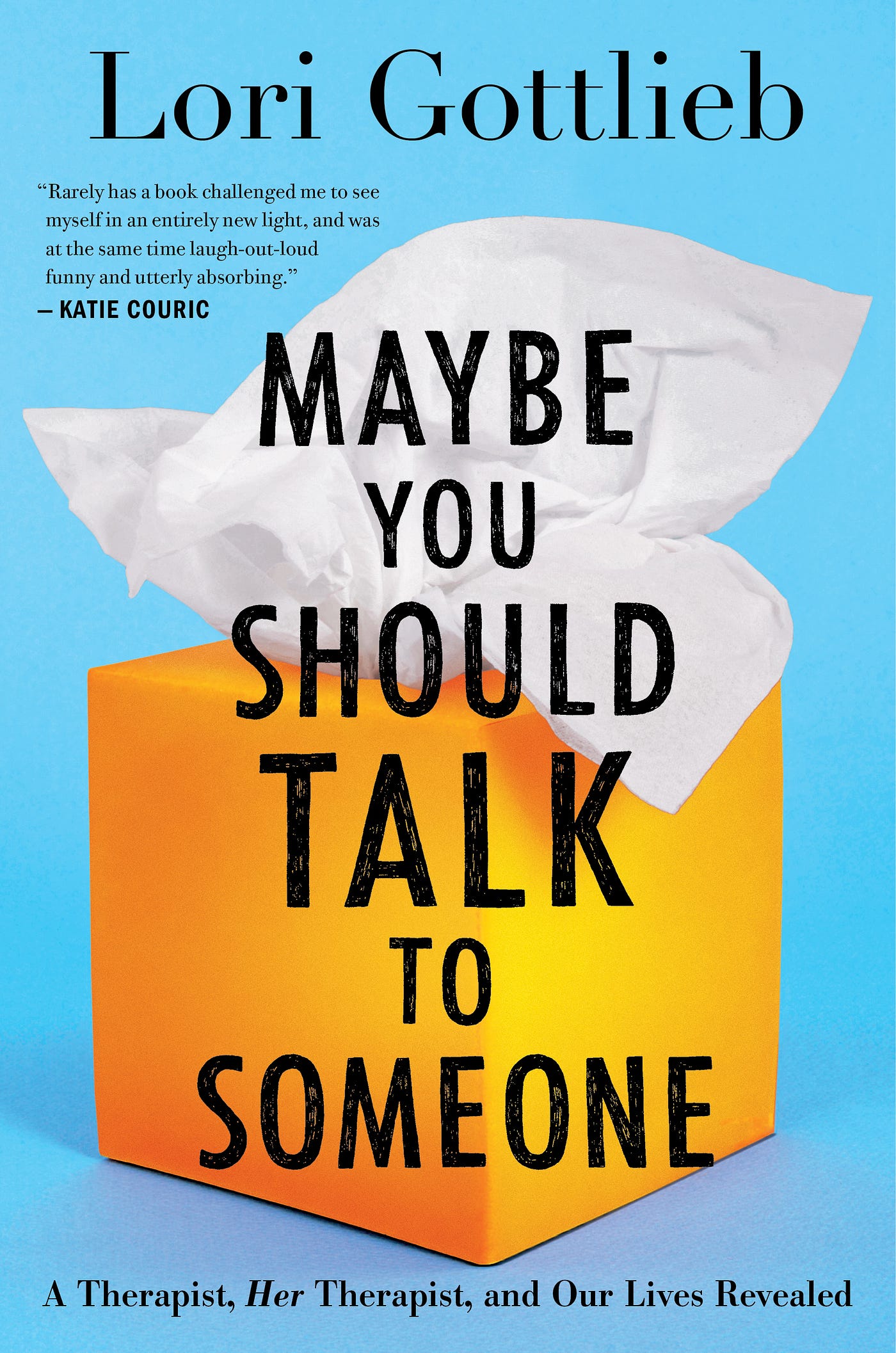
Maybe You Should Talk to Someone: A Therapist, Her Therapist, and Our Lives Revealed — Lori Gottlieb
Memoir · Psychology
Book Cover from GoodReads
The premise of this book is almost too neat to be real.
Lori Gottlieb is a psychotherapist in Los Angeles. Her world collapses when her partner ends their relationship abruptly and without explanation. She does what she tells her own patients to do: she finds a therapist.
What she does not expect is how much she does not know about herself.
The book moves between two tracks simultaneously. In one, Gottlieb is sitting across from Wendell, her therapist, working through layers of grief and self-deception that she thought, as a professional who understands these things, she would have caught long before.
In the other, she is sitting across from her own patients: a self-absorbed Hollywood producer who believes everyone around him is the problem; a young woman who cannot stop choosing relationships that damage her; an elderly woman who has made a pact with herself that if life does not improve before her next birthday, she will end it; and a young woman recently diagnosed with a terminal illness who is working out what it means to live consciously in the time she has left.
The weaving of these threads is the book’s great structural achievement. As Gottlieb begins to understand her own patterns with Wendell, she sees them more clearly in her patients.
As she witnesses her patients’ breakthroughs, she is pushed toward her own. The two rooms, the one where she is the professional and the one where she is the patient, turn out to have the same walls.
What the book does that very few books in this space manage is to demystify therapy without diminishing it.
It shows the actual texture of the work: the silences, the resistance, the moments when a patient suddenly understands something they have been avoiding for years, the equal moments when they immediately find a way to explain it away.
Gottlieb does not pretend that insight automatically produces change. She is too honest a writer for that.
Some passages will impact differently depending on where you are in your life.
If you have ever used anger as a shield over grief, if you have ever chosen a story about your past that absolved you from having to change, if you have ever been the most competent person in the room and the most lost, this book will find you.
One of its most quietly devastating lines: that we often stay in our suffering not because we don’t know it’s suffering, but because it is familiar, and the unknown on the other side of it feels more frightening than the pain we already know.
Some books are best encountered alone, in the quiet, when you have nowhere to be.
Read if: You are curious about what actually happens in therapy, on both sides of the room. Or if some part of your life has started to feel like a story you have been telling yourself for too long.
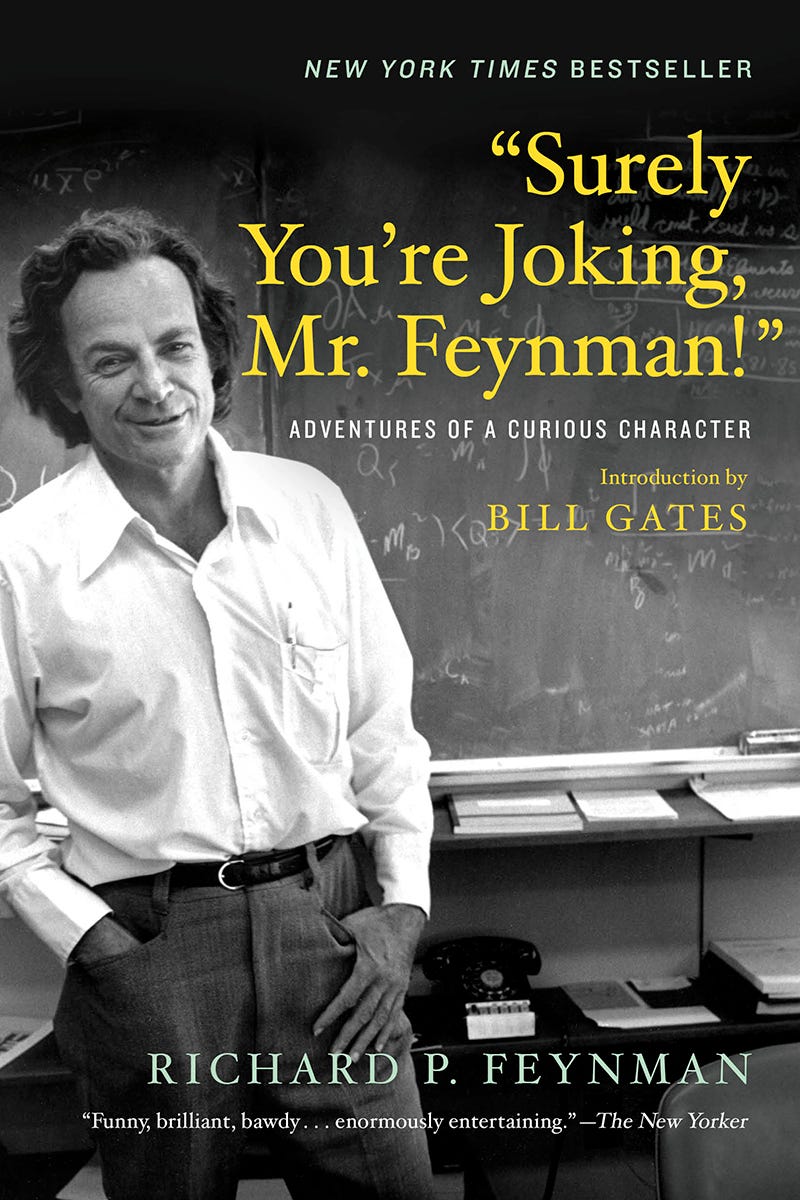
“Surely You’re Joking, Mr Feynman!”: Adventures of a Curious Character — Richard P. Feynman
Memoir · Science
Book Cover from GoodReads
This book will do one of two things to you.
It will either make you want to immediately pick up a new skill, crack a safe, learn an instrument, study something you have no business studying, and generally attack the world with unreasonable curiosity.
Or it will irritate you profoundly, because Feynman is not a modest man, and he tells you about himself at great length and with great enjoyment.
Both reactions are completely understandable. I have had both.
Richard Feynman won the Nobel Prize in Physics in 1965 for his work on quantum electrodynamics.
He was also a bongo player, a safecracker, a painter of nudes, a student of Mayan hieroglyphics, a translator of Brazilian culture, and a teller of stories that make you wonder whether any single human life was meant to contain this much incident.
The book is a collection of anecdotes, told in his own voice, loosely chronological, covering everything from his childhood fixing radios in Far Rockaway to his years at Los Alamos working on the Manhattan Project to his teaching at Caltech to his travels in Japan and Brazil.
The voice is unmistakable: casual, direct, a little boastful, often very funny, and underneath all of it, driven by a curiosity that never seems to have rested for a single day of his life.
What makes the book genuinely worth your time, beyond the entertainment, is what it reveals about how a certain kind of mind engages with the world. Feynman is constitutionally unable to accept received wisdom.
He tests everything himself. He distrusts authority not out of cynicism but out of genuine intellectual habit. He would rather find out than be told. His ability to crack safes at Los Alamos did not come from knowing anything about safes.
It came from the same principle that governed everything else in his life: assume nothing is as fixed as it appears, look at the actual mechanism, and see for yourself.
His commentary on the Brazilian education system, which taught students to memorise formulas without understanding the principles beneath them, lands with the force of something written last week.
His account of sitting on a committee to evaluate mathematics textbooks for California schools and discovering that most of the committee had not actually read the books they were evaluating is both hilarious and quietly horrifying.
The book is not without its flaws, and they are worth naming. Some of his stories about women reflect attitudes that belong to a specific era and cannot simply be waved away.
He was a man of enormous intellectual honesty who was considerably less self-aware in certain other directions. You will notice it. Decide for yourself whether the rest of the book is worth the discomfort.
For me, what remains after all of that is a portrait of what radical curiosity looks like when it is taken seriously across an entire life.
Feynman did not turn his curiosity on and off depending on whether it was his field. He turned it on everything. The bongos, the ants, the art, the safe, the Nobel lecture he wasn’t sure he wanted. It was all equally, genuinely interesting to him.
That is rarer than it sounds.
Read if: You want to spend time with a mind that approached the world as a collection of problems worth solving, puzzles worth cracking, and mysteries worth chasing, because not knowing was never a reason to stop.
In Summary:
What do these four books have in common, beyond titles that require a breath to say out loud?
Each one takes you somewhere you cannot reach by staying where you are.
- Sunim asks you to stop moving long enough to see what is actually around you.
- Haddon asks you to step inside a mind entirely unlike your own and find, surprisingly, that you recognise it.
- Gottlieb asks you to look honestly at the stories you tell about yourself, and consider whether they are serving you or protecting you.
- Feynman asks you to treat the world as endlessly interesting rather than endlessly threatening, and to find out for yourself rather than simply be told.
None of these books will appear on next week’s trending lists. That is fine.
The books that change something in you rarely make noise when they arrive.
This is Series 2 of Not So Common Books.
The first article, covering four books across philosophy, Indian nonfiction, American history, and Buddhist wisdom, is here: Four Books I Never Saw Coming — And Now Can’t Stop Thinking About
More coming in Series 3. If any of these resonated with you, or if you have a not-so-common book worth talking about, I would love to hear about it.
메타데이터
- post_id
- 9622c36cf3b4
- slug
- four-uncommon-brilliant-books-i-read-with-long-titles-9622c36cf3b4
- url
- https://baos.pub/four-uncommon-brilliant-books-i-read-with-long-titles-9622c36cf3b4
- canonical_url
- https://baos.pub/four-uncommon-brilliant-books-i-read-with-long-titles-9622c36cf3b4
- author_url
- https://medium.com/@hetal.sonpal
- status
- ok
- fetched_at
- 2026-06-21 20:33:08