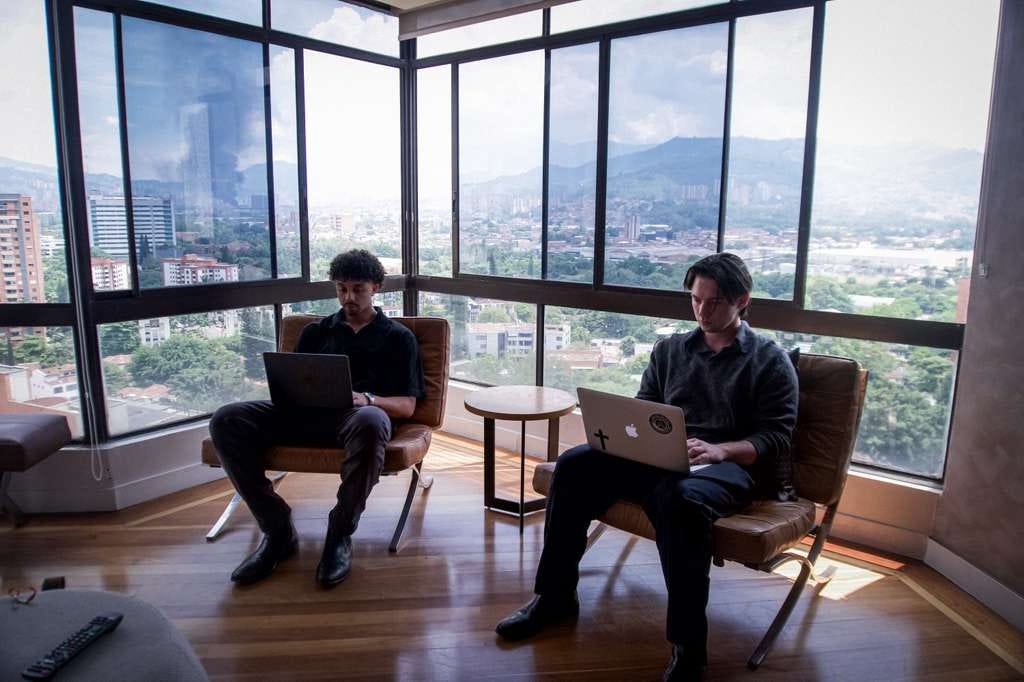
Naunas on the Part of Automation Most Founders Get Wrong
He is building growth systems around the belief that efficiency only works when it knows where to stop.
Naunas on the Part of Automation Most Founders Get Wrong
He is building growth systems around the belief that efficiency only works when it knows where to stop.

AI has made it easier to confuse automation with progress.
A business can now connect tools, generate proposals, summarize calls, route leads, trigger emails, and build workflows that look sophisticated from a distance. The temptation is to keep going. If one process can be automated, why not ten? If one conversation can be handed to AI, why not all of them?
That is where the category starts to become strange.
The more AI enters the market, the more valuable the human parts of a business may become. Not because the tools are weak. Because the tools are strong enough to be misused at scale.
Naunas is building inside that tension.
He is a 22-year-old computer science student in the UK, working in what he describes as AI automation and growth operations. He uses growth operations because the job is not just to automate tasks. It is to understand where the business is leaking time, attention, or revenue. He is not interested in selling isolated bots or attaching AI to a business because the market expects the word to appear somewhere.
He wants to look at the whole operating system.
Where are leads coming from? Where do they leak? What happens after a call? What happens after a no-show? What gets followed up late, forgotten, repeated, or handled manually because nobody has had time to rebuild the process?
The work is technical.
The philosophy is more restrained.
“AI should only be in the background,” he says.
That line sets up the tension running through the rest of his work. Naunas is not building an AI business by trying to make everything feel artificial. He is building one around the opposite idea: the more automated a business becomes, the more carefully it has to protect the places where humans still belong.
The strongest automation is often the least visible
The easiest version of an AI automation business is the obvious one.
Build a chatbot. Build an AI receptionist. Build a content machine. Show the demo. Sell the novelty.
Naunas does not seem especially interested in that version.
“I’m not making an AI receptionist,” he says.
He says it with the impatience of someone who has been placed in the wrong category too many times. The term AI automation, for him, has become too small. It makes people think of one-off tools: a bot here, a workflow there, a piece of software that performs a visible trick.
Growth operations is a more accurate description because it starts with the business, not the tool.
In one example, he describes a digital marketing agency with leads coming from Meta ads, landing pages, content, and other channels. The old way is familiar. Leads enter the system. Someone qualifies them. Someone remembers to follow up. Someone prepares for the sales call. Someone sends the invoice, contract, onboarding form, Slack invite, Google Drive folder, WhatsApp group, testimonial request, referral ask, and upsell sequence.
Some of it happens.
Some of it does not.
Naunas’s system tries to turn that scattered sequence into a connected loop. Cold leads receive one nurture path. Warm leads receive another. Hot leads are nudged toward a meeting. Before the call, the system gathers information about the prospect. After the call, it uses the transcript to determine the next step: won, lost, no-show, reschedule.
Then the rest follows.
Contracts. Invoices. Onboarding. Client documents. Follow-ups. Testimonials. Referrals. Daily tasks.
The point is not to replace the business owner’s judgment. It is to stop making the owner remember every small motion that should already have a place to go.
He found tech by leaving the wrong path
Naunas did not begin as the person who always knew he belonged in computer science.
He first went to university for chemistry.
That choice did not last long. Within weeks, he realized the subject and the professional path around it were wrong for him. The available routes felt too narrow, too academic, too disconnected from the kind of future he wanted. So he made a fast decision and switched into computer science.
Even then, the fit was not immediate.
He had not studied maths or computer science at A-level, so he had to take a foundation year. For a while, he was physically in the course but not fully engaged with it. The early period was less revelation than drift.
Then, in his second year, something changed.
He started paying attention. He started doing the work. More importantly, he started enjoying the ability to build solutions directly.
With software, a problem did not have to remain theoretical. If something annoyed him, he could make a tool for it. If a process was clumsy, he could rebuild it. If an idea appeared, he could test it without waiting for permission from a larger institution.
That is what pulled him in.
Not the prestige of tech. Not a childhood identity as a coder. The practical power of being able to make a thing work.
You can hear that builder’s instinct in the way he talks about AI. He likes the leverage, but he does not treat it as a replacement for understanding.
The shortcut still needs a foundation
There is a new impatience in technical work.
Vibe coding has made software feel more accessible to people who might never have entered the field otherwise. Naunas sees the upside in that. More people can prototype. More people can play with ideas. More people can experience the strange satisfaction of making something real.
But he is also clear about the danger.
A prototype is not a production system. An app that works once is not the same as an app that can survive users, errors, edge cases, security risks, exposed keys, broken credentials, failed API calls, or growth.
“You don’t even know what you don’t know,” he says.
Shortcuts create their own kind of blindness. They can move someone past the boring early steps before the person understands why those steps existed.
Naunas does not think everyone needs a computer science degree. He is not romantic about university. In fact, he is openly skeptical of degrees pursued only because someone wants a job at the end of them. But he does believe the foundation has to come from somewhere.
System design. Infrastructure. Security. Error handling. Fallbacks. The hidden parts that make software less fragile.
His line is simple.
“Stop trying to skip the start.”
That sentence belongs beyond software. A lot of the current AI market is built around the promise of skipping. Skip the learning curve. Skip the technical barrier. Skip the team. Skip the slow part. Skip the boring part.
Some of that is real leverage.
Some of it is just fragility disguised as speed.
The business became real when the job became optional
One moment pulls the business into focus.
Around December or January, he was close to signing a graduate role. The path was sensible. Finish university, enter work, take the job, move into the next expected stage.
Then he stopped.
He wanted to grow the business instead.
A few weeks later, he sold his system to the same business he had nearly joined as an employee.
That kind of moment is easy to overstate. It was not a major award. It was not a funding announcement. It did not prove the company would become large.
But it changed the meaning of the work.
The thing he might have entered as a worker became something he could serve as a business owner. The company that could have bought his time bought his system instead.
For a young founder still in university, that is a different kind of validation.
“I don’t think there’s an award that can give you that gratification,” he says.
There is still uncertainty around the business. He is a one-man team for now. He has final exams to finish. He plans to expand after graduation, with people who can help on fulfillment, cold calls, and SDR work. He has started a small mentorship and is considering a Skool community. He has not yet pushed heavily into ads.
The story is early.
That is part of what makes it useful. It has not been polished into inevitability yet.
The company he wants is deliberately human
Naunas talks about the future in terms of freedom.
He wants freedom of movement, freedom of time, and the ability to travel without pausing his income each time he leaves the country. He wants a business that can keep working while he moves through the world, meets people, and decides where he wants to be.
“Just multiply and live,” he says.
That could sound like standard online-business language. In his case, it connects back to something more specific: he does not want the system, his parents, or the expected path to decide the shape of his life for him.
His advice to his younger self is brief.
“Be brave.”
But the more interesting part is what he wants his company to feel like if it grows. He does not describe a cold technical culture. He talks about energy, social people, positivity, creativity, and a team that feels alive.
That might sound soft until placed beside the business he is building.
A company that sells automation has to decide what kind of automation culture it wants internally. It can become obsessed with optimizing every human texture out of the work. Or it can use systems to remove the drag while leaving space for the parts that should still feel human.
Naunas is aiming for the second version.
He calls it “a human team,” even inside an AI business.
His work is easier to misread as a simple AI-founder story. Not that he is young and building with AI. Many people are. Not that he rejected the corporate path before graduation. Many people want to.
He seems more interested in the contradiction sitting underneath the market.
AI will keep entering the background of business. It will prepare, summarize, route, remind, generate, classify, and connect. It will make the administrative layer thinner. It will make the manual layer smaller.
But if every business uses it to sound less human, the advantage will move elsewhere.
Toward the person who still knows when to pick up the call.
Toward the system that remembers without pretending to care.
Toward the founder who can automate the process without automating the relationship out of it.
Naunas’s business is still young. What makes it worth paying attention to is not its size yet, but the way he thinks about the work.
It is the restraint.
He is building with AI in a market that often treats AI as the visible product. His better instinct is to make it disappear into the machinery, where it can do its work without becoming the whole personality of the company.
The future he is chasing is automated enough to create freedom.
It still has to feel human when someone arrives.
메타데이터
- post_id
- 964e616f3fd6
- slug
- naunas-on-the-part-of-automation-most-founders-get-wrong-964e616f3fd6
- url
- https://medium.com/@aminzayd/naunas-on-the-part-of-automation-most-founders-get-wrong-964e616f3fd6
- canonical_url
- https://medium.com/@aminzayd/naunas-on-the-part-of-automation-most-founders-get-wrong-964e616f3fd6
- author_url
- https://medium.com/@aminzayd
- status
- ok
- fetched_at
- 2026-06-17 08:20:12