Drones in Ukraine: Is Air Superiority Important?
Neither side in Ukraine has air superiority so are the lessons there transferrable to other potential major conflicts?
Ukraine War and Military Strategy
Drones in Ukraine: Is Air Superiority Important?
Neither side in Ukraine has air superiority so are the lessons there transferrable to other potential major conflicts?
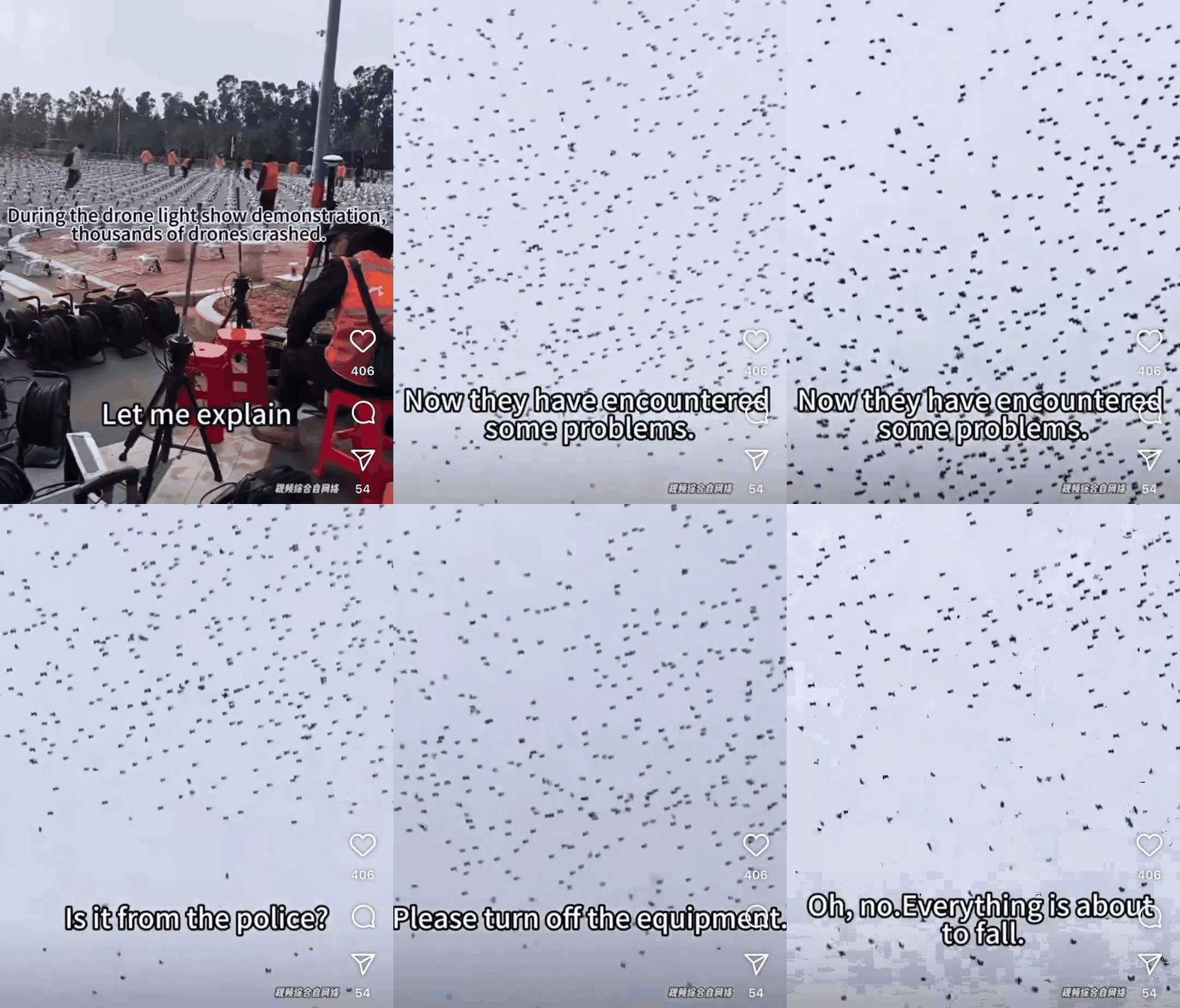
Drone jamming at a Chinese drone show. Social media.
I recently wrote questioning the effectiveness of Western aerial drones in Ukraine using the word ‘worthless’. And I got some reaction.
Exploring the notion that conventional, often more expensive, Western drone systems, which were primarily conceived for different operational contexts and confronted considerable challenges in the Ukrainian theatre provoked some reader reaction that the Ukraine drone war scenario was unique; that it was non-transferrable because neither side holds overwhelming air superiority.
It’s a fair point and so I thought I’d dig a bit deeper.
Context
Jamming issues
Western systems were commonly designed for scenarios where air superiority was assumed, and the enemy’s electronic warfare (EW) capabilities were either less pervasive or less sophisticated than those encountered in Ukraine. Consequently, some these drones perform poorly in the intense electronic jamming and signal spoofing enviroment created by Russian forces.
Procurement and adaptation
The comparatively slow pace of Western defence procurement processes, in contrast to the rapid innovations occurring on the battlefield, means that by the time advanced Western drones are deployed, effective countermeasures may already be in place, or new, more affordable alternatives may have emerged.
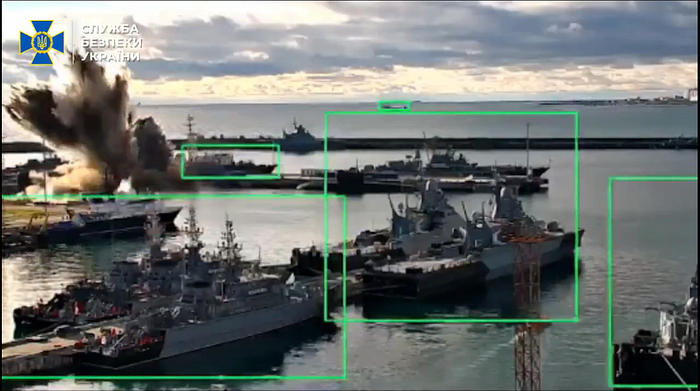
This is reinforced by the high attrition rate of drones in Ukraine, irrespective of their origin, attributable to the density of electronic warfare and air defence systems. Even commercially available or more rudimentary drones, often procured and adapted by Ukraine in substantial quantities, experience considerable losses.
In this context, the argument is that if a costly, sophisticated Western drone is lost at a rate comparable to a far cheaper, mass-produced equivalent, its cost-effectiveness becomes questionable.
The quality of quantity
This has led to an emphasis on the principle that “quantity has a quality all its own,” suggesting that a large number of inexpensive, adaptable drones, even with significant attrition, can achieve a greater overall effect than a limited number of high-value assets.
Ukraine now has the capacity to produce at least 5 million drones per annum and some sources say 10 million.
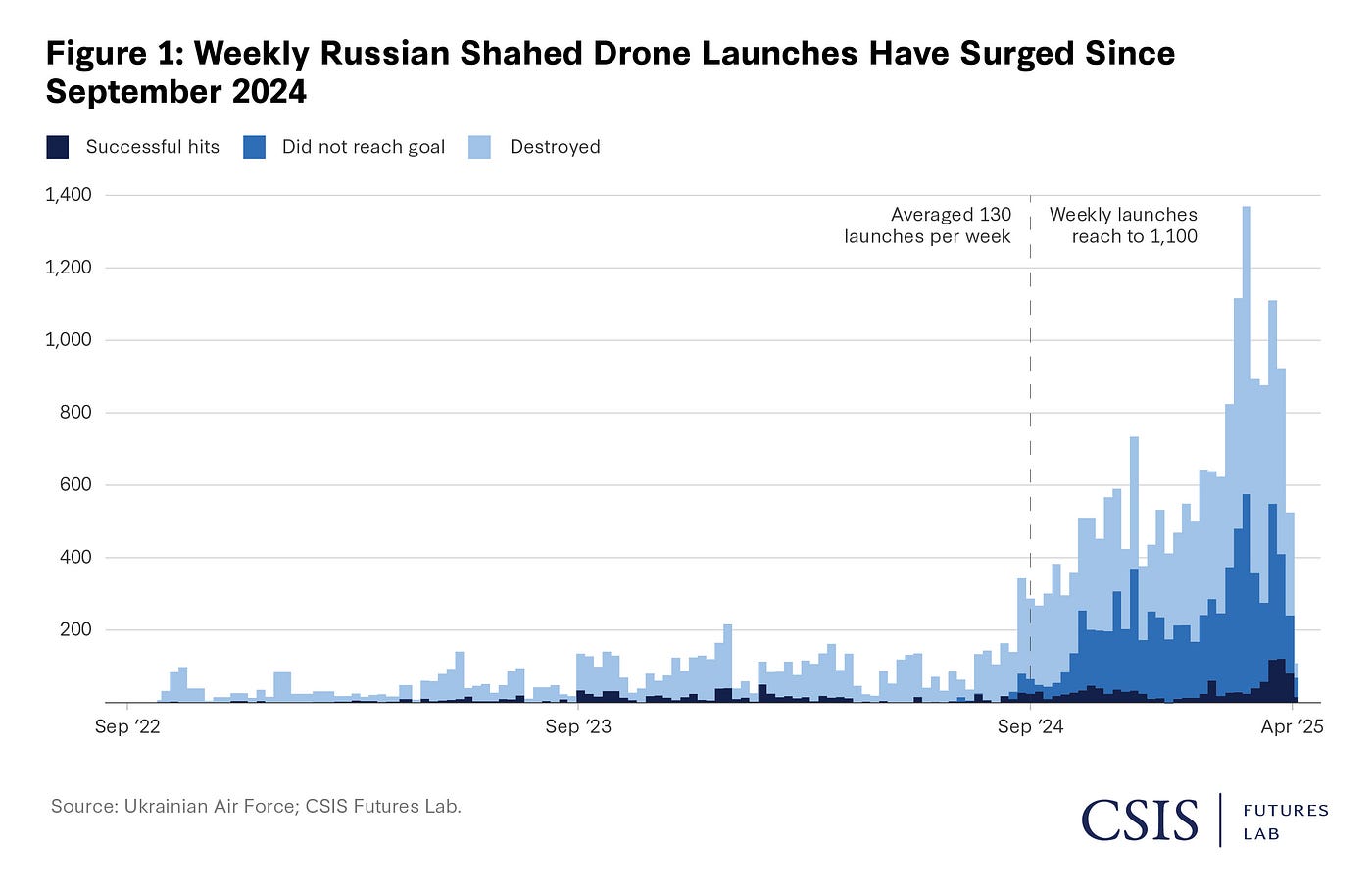
Drone usage trends in Ukraine
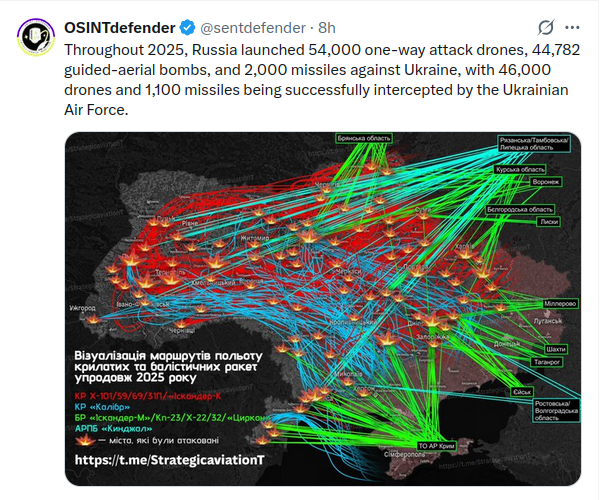
The following chart cuts off at April 2025, but the trends are obvious. Note that this covers only Shahed drones launched by Russia. Ukraine drone launches and both sides’ FPV drone launches are additional.
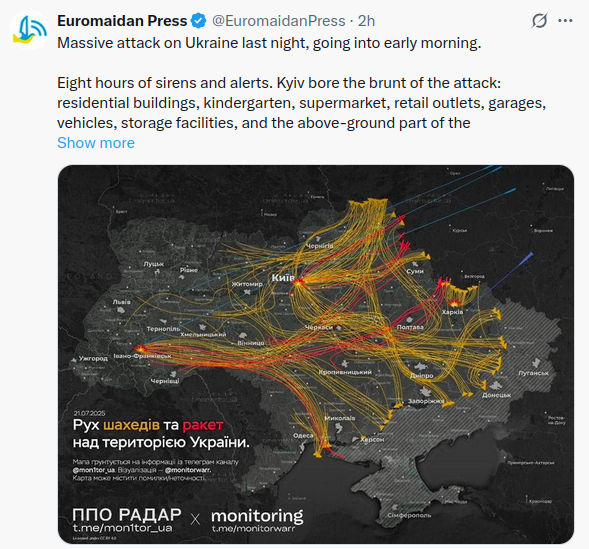
As I write, the US’s General Kellogg has just left Kyiv. During his visit there were no Russian drone attacks on the city, but now they have ramped up again.
Air superiority — the relevance
In Ukraine, where neither side has achieved air superiority. In a traditional military scenario where air superiority is firmly established by one force, the operational environment for drones would be fundamentally different.
A dominant air force, having neutralised enemy air defences and controlled the skies, would enable larger, more sophisticated drones to operate with reduced risk, extending their range, endurance, and sensor capabilities. This would allow them to conduct sustained reconnaissance, direct precision strikes, and operate as integrated assets within a comprehensive air campaign.
The current high attrition rates and reliance on expendable FPV drones in Ukraine are thus a direct consequence of this contested aerial domain.
That’s one view.
However, a crucial counter-argument is that even with total air superiority, the operational viability of small FPV drones by the opposing side would very probably persist.
This is attributed to the “air littoral” — the extremely low-altitude airspace where these drones operate. FPV drones’ small size, often composite construction, low flight altitude, and relatively modest speeds make them exceptionally challenging for conventional radars, which are optimised for larger, faster targets.
Furthermore, the economic disparity between a high-value manned interceptor and a low-cost FPV drone makes traditional interception methods prohibitively expensive as I have discussed in previous articles.
FPV drones are also decentralised and can be launched from diverse, concealed locations, rendering their command and control difficult to target.
Their strength lies in “affordable mass,” allowing a vast quantity of expendable units to be deployed (think of Ukraine producing 10 million a year and goodness knows what China is capable of), potentially overwhelming defences and achieving tactical effects despite high attrition.
This will drive the development of new counter-drone solutions, such as short-range kinetic or directed energy systems, as traditional air superiority tools are not efficient against this pervasive threat.
Non-Ukraine theatres
Let’s look at a couple of potential theatres.
Suwalki Gap
A hypothetical Russian attack on the Suwałki Gap involving NATO would see the Alliance prioritising air superiority, which is a basic NATO doctrine.
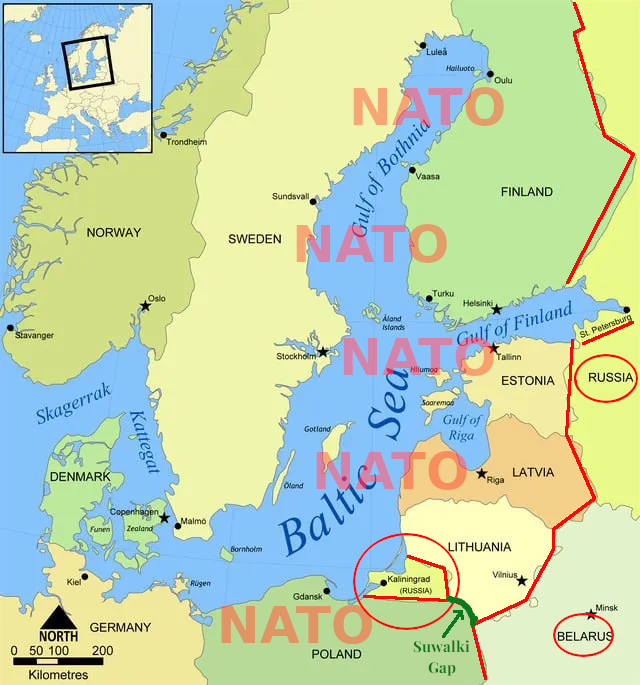
Suwalki Gap. Image source: Telegram, author overlays
NATO’s unquestioned air power (even without the USA) would aim to suppress Russian air defences, creating a permissive environment for its advanced ISR and strike drones. In this scenario, Western drones, often deemed vulnerable in Ukraine, would operate within their designed parameters, supporting ground operations.
Yet, the persistent threat from small Russian FPV drones, even from residual or asymmetric forces, would remain a factor in the air littoral.
Taiwan
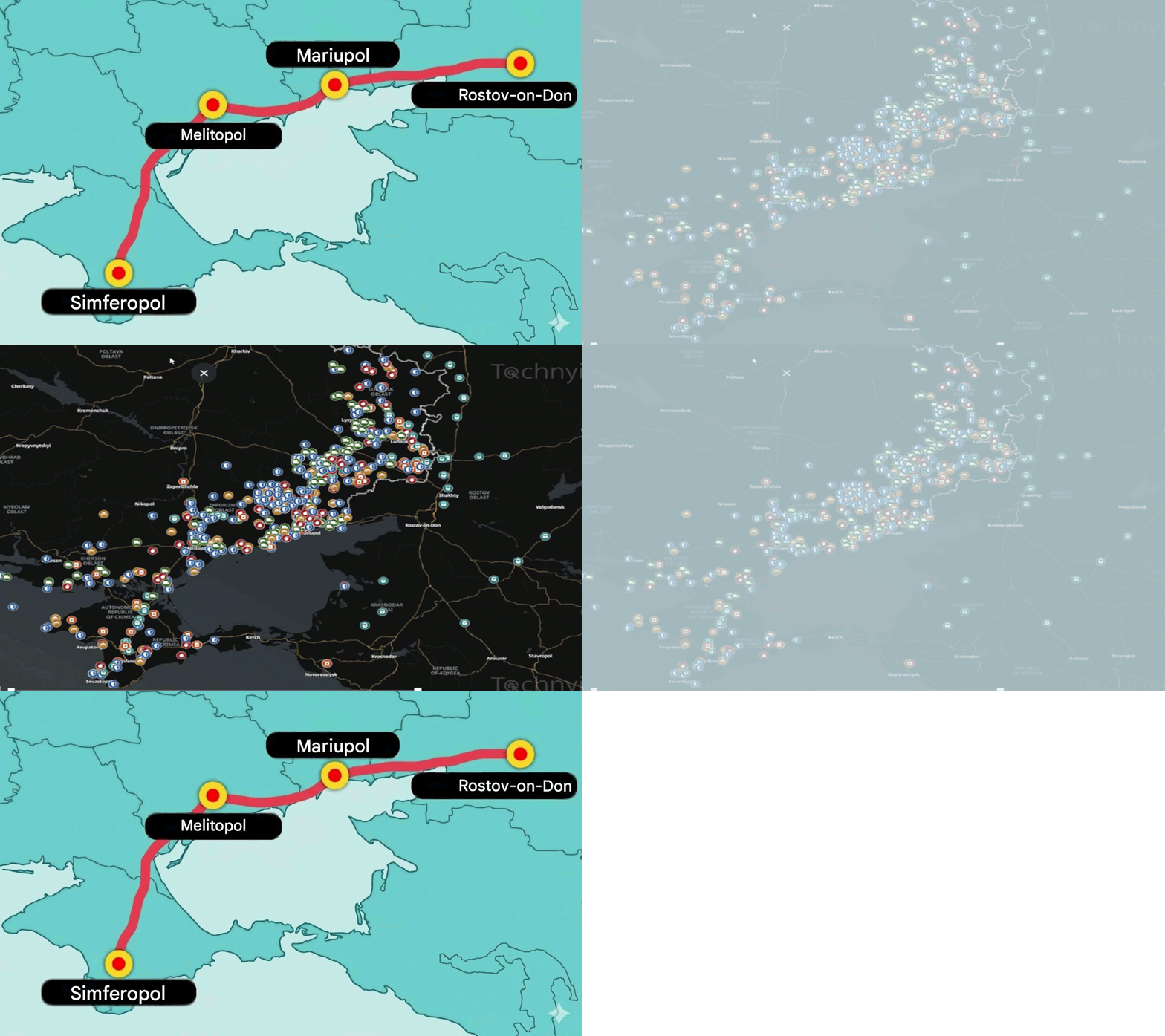
Similarly, in a Chinese attack on Taiwan, China would seek to establish air superiority to cover an amphibious landing with the the invasion fleet having a 97 miles sea crossing to contend with. This is a markedly different scenario to a Suwalki Gap attack.
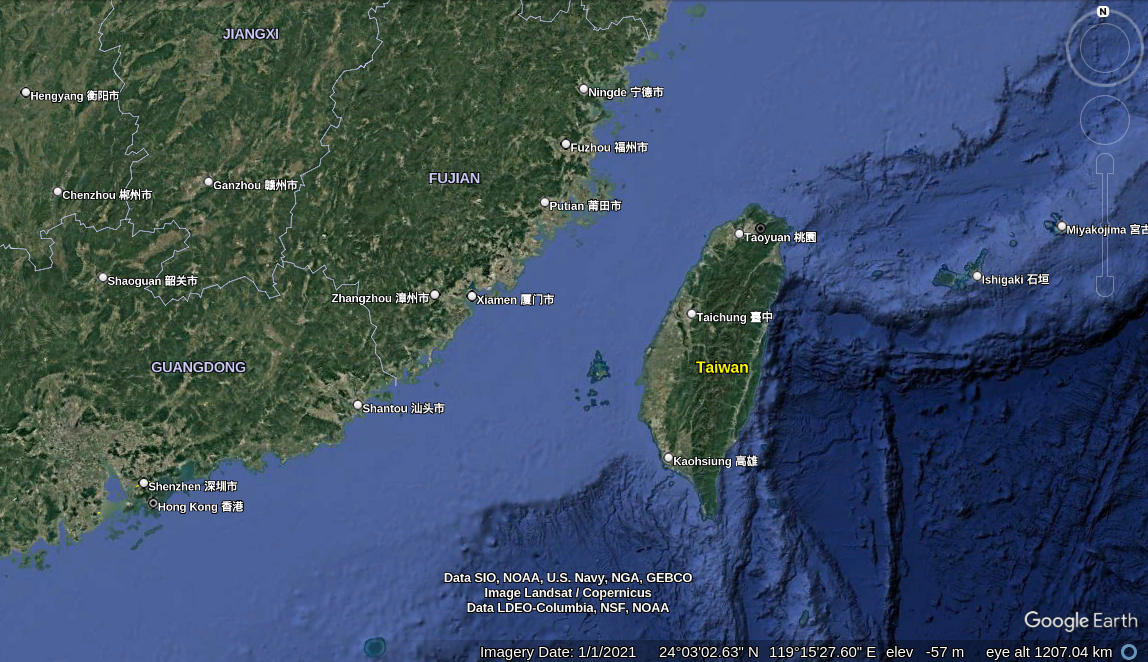
Credit: Google Earth
The initial phase would involve intense aerial and missile operations. While large-scale drone operations would occur from both sides, particularly for maritime targeting, the extent of air superiority would dictate the operational viability of different drone types.
A highly contested air environment would see a crucial role of numerous, expendable drones for swarm attacks and situational awareness, akin to aspects of the Ukrainian conflict but adapted for a maritime domain. Drones would be launched in thousands very probably operating in AI-controlled swarms.
Conclusions
The performance and perceived value of drone systems are intrinsically linked to the broader air superiority context of a conflict.
The Ukrainian experience of a persistent lack of decisive air superiority for either side has indeed shaped drone employment, favouring expendability and rapid adaptation.
However, the emergence of affordable, mass-producible FPV drones introduces a new dimension, suggesting that even in scenarios of traditional air superiority, the lower echelons of airspace will remain contested, compelling a re-evaluation of what constitutes true aerial control in contemporary warfare.
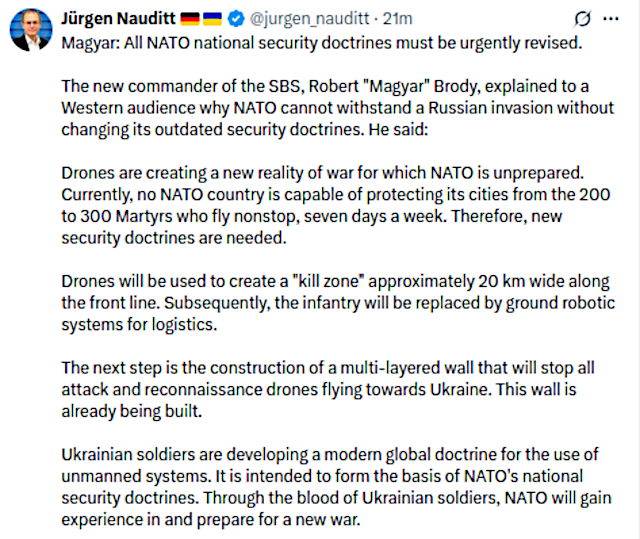
The lessons for the West are that large scale production of very cheap FPV drones needs to be accelerated; the doctrine of overwhelming air superiority has limits that need to be understood - the idea that aircraft and missiles can clear the way for a large scale armoured assault has been shown to have weaknesses. As indeed do swarms of drones…
[embed]
Sources:
https://www.airandspaceforces.com/small-drones-force-new-thinking-on-air-superiority-slife-says/
https://droneii.com/fpv-drones-military-use
https://isdp.eu/publication/limitations-of-drones-and-the-future-of-american-air-superiority/
https://www.nationalsecurityjournal.org/post/ukraine-could-become-the-ai-drone-war
https://smallwarsjournal.com/jrnl/art/toward-new-understanding-air-dominance
메타데이터
- post_id
- 966175a2c540
- slug
- drones-in-ukraine-is-air-superiority-important-966175a2c540
- url
- https://medium.com/the-dock-on-the-bay/drones-in-ukraine-is-air-superiority-important-966175a2c540
- canonical_url
- https://medium.com/the-dock-on-the-bay/drones-in-ukraine-is-air-superiority-important-966175a2c540
- author_url
- https://medium.com/@james-marinero
- status
- ok
- fetched_at
- 2026-06-21 19:25:17