Google’s 2026 FAQ Cut Forces an Answer Page Budget Test
With FAQ rich results gone May 7, Search Console support drops expose which pages still reduce crawl waste, tickets, or kgCO2e.
Answer Carrying Cost
Google’s 2026 FAQ Cut Forces an Answer Page Budget Test
With FAQ rich results gone May 7, Search Console support drops expose which pages still reduce crawl waste, tickets, or kgCO2e.
Share free access to this member-only story with a friend: Read it free here.
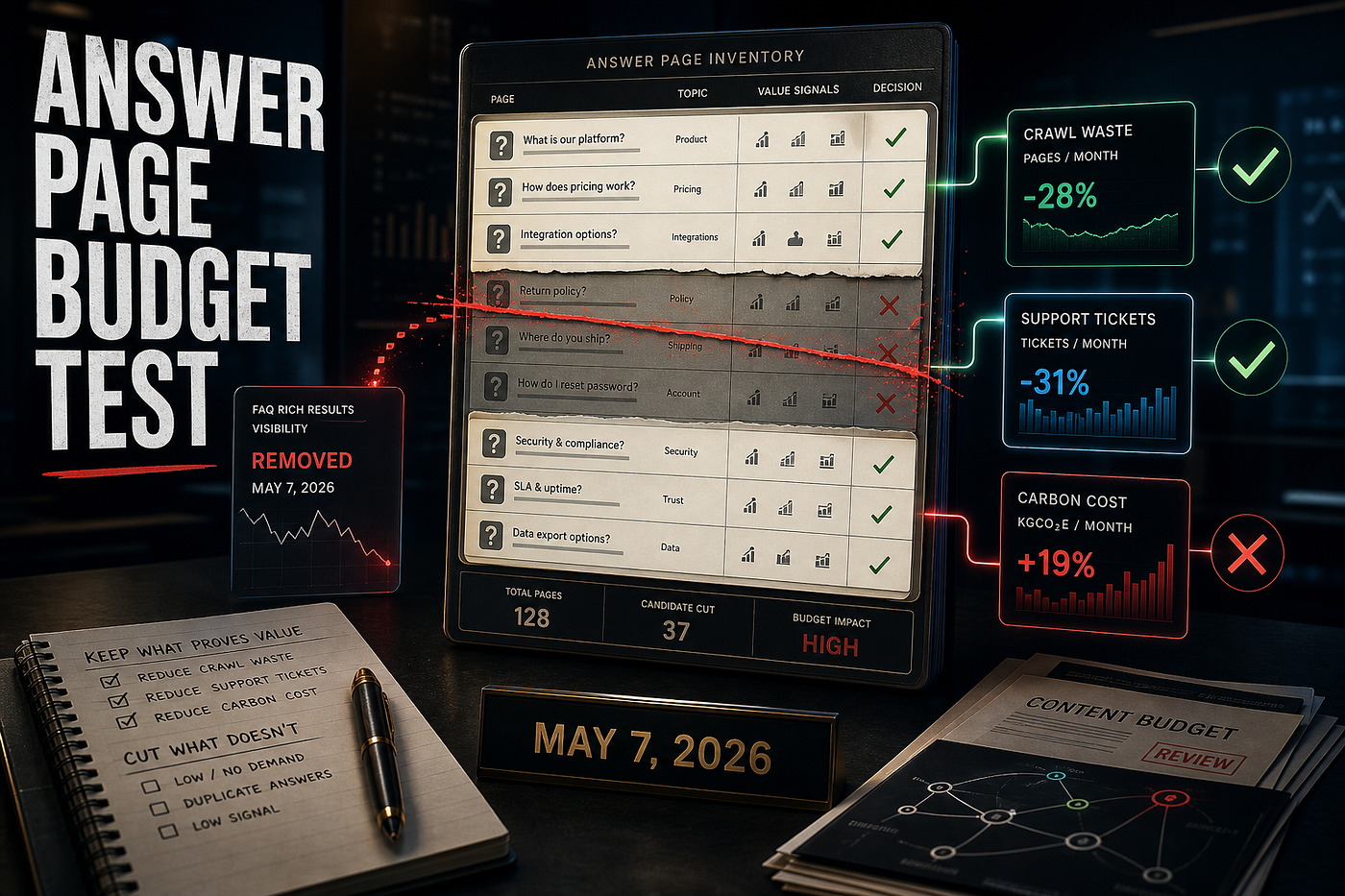
Figure 1. Google’s 2026 FAQ Cut Forces an Answer Page Budget Test. Image created by the author with diffusion-synthesis and Python post-processing.
Google’s Search Central FAQPage document now sits in a browser tab like a budget knife. If a B2B founder approves another batch of answer pages after May 7, 2026, the wrong call can open up cost, crawl waste, support backlog, and carbon-reporting questions no blue accordion will cover.
The coupon has expired in public.
The proof fits in one line: Google’s FAQPage documentation says FAQ rich results stopped appearing in Google Search on May 7, 2026. The same note says Search Console’s FAQ appearance, rich-result report, and Rich Results Test support drop in June 2026, with Search Console API support removed in August.
For CEOs, founders, and marketing leads still funding hundreds of answer pages because they feel cheap, this is not a minor schema update but an inventory count. An FAQ page can still help a buyer, deflect a ticket, or become reusable proof. It just has to earn that job without free search-result real estate.
May 7 Ended the Free Display
Google did not swing the axe without warning. On August 8, 2023, a Google Search Central post said FAQPage rich results would only be shown for well-known, authoritative government and health websites. For everyone else, the rich result would no longer appear regularly.
That 2023 note also carried the line many teams used as a sleeping pill: unused structured data does not cause problems for Search. True enough. But “does not cause problems for Search” is not the same as “deserves budget.”
That distinction matters now. When the visible FAQ feature existed, the incentive game was easy to understand. Publish another answer.
Add markup. Hope for a bigger search listing. If it worked, the page got more screen space.
If it did not, the cost looked tiny enough to ignore.
The May 2026 change removes that subsidy. A valid FAQPage block can still describe visible Q&A content, and good structured data still has uses. But the old business case, “this could win a rich result,” no longer covers the invoice.
That is where the operating consequence begins. A team with 300 FAQ pages now has 300 little claims on attention: CMS maintenance, legal review, product accuracy, analytics cleanup, internal search quality, sitemap noise, and customer trust. None of those costs need to be dramatic to become expensive.
They only need to survive long enough without an owner.
Cheap Pages Became Hidden Inventory
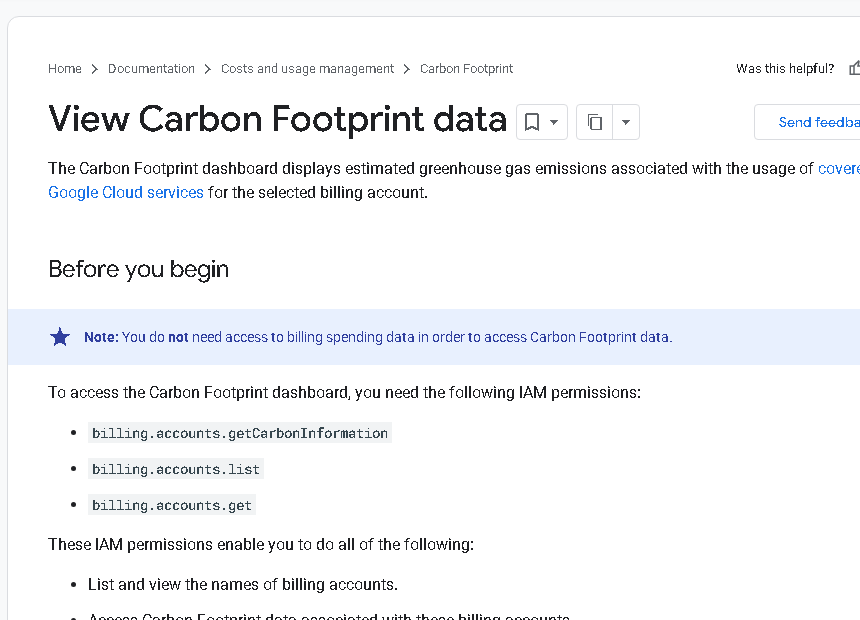
Figure 2. Proof of operating detail: The cited source, Carbon Footprint documentation, gives the article the implementation surface teams must design around. Source: Google Cloud
FAQ libraries are sneaky because they are rarely approved as one large bet. They arrive as harmless additions. One sales objection here.
One support answer there. One agency sprint where every product page gets six questions because someone read a schema tutorial in 2021 and nobody wanted to be the person who said no.
This is how cheap content wins. The payoff of adding a page is local. The cost of clutter is shared.
Product gets coverage. SEO gets a deliverable. Support gets a place to point.
Sales gets a link. The buyer gets a page that answers half a question in the voice of a software license agreement.
History has seen this movie with tag pages, thin comparison pages, doorway-style location pages, and resource-center PDFs that aged into digital cardboard. Nobody defends them individually. Nobody funds the cleanup until an outside platform changes the math.
The budget backdrop makes the cleanup harder to dodge. Content Marketing Institute’s 2026 B2B Content and Marketing Trends report, published from a survey of 1,015 B2B marketers, found that 32% planned to increase investment in owned media in 2026. AI-powered marketing tools led at 45%, and events followed at 33%.
So old FAQ pages are not sitting outside the budget fight. They are inside it, quietly eating from the same plate as product evidence, comparison pages, demos, customer education, and sales enablement.
CMI also reported familiar pain points: 40% of B2B marketers named creating content that prompts action as a top challenge, 39% named resource constraints, and 33% named measuring effectiveness. A dead FAQ page makes all three worse. It does not prompt action.
It consumes resources. It muddies measurement.
Pull the URL export. Add owner, last-reviewed date, monthly organic entrances, internal search clicks, support-ticket topic, sales-objection match, and conversion assist. If a page has no owner, no buyer question, no support deflection, and no proof value, it is not a low-cost asset.
It is a small liability wearing a helpful hat.
Carbon Makes Waste Harder to Shrug Off
Carbon accounting should not turn this into theater. A single FAQ page does not deserve a fake decimal point of moral drama. Do not claim page-level emissions unless your infrastructure data can support it.
But Google Cloud has made the broader reporting lens much harder to wave away. Its Carbon Footprint documentation says the dashboard displays estimated greenhouse gas emissions for covered Google Cloud services tied to a selected billing account. The UI shows metric tons of CO2e, while exports use kilograms of CO2e.
Previous-month data can take up to 21 days to appear.
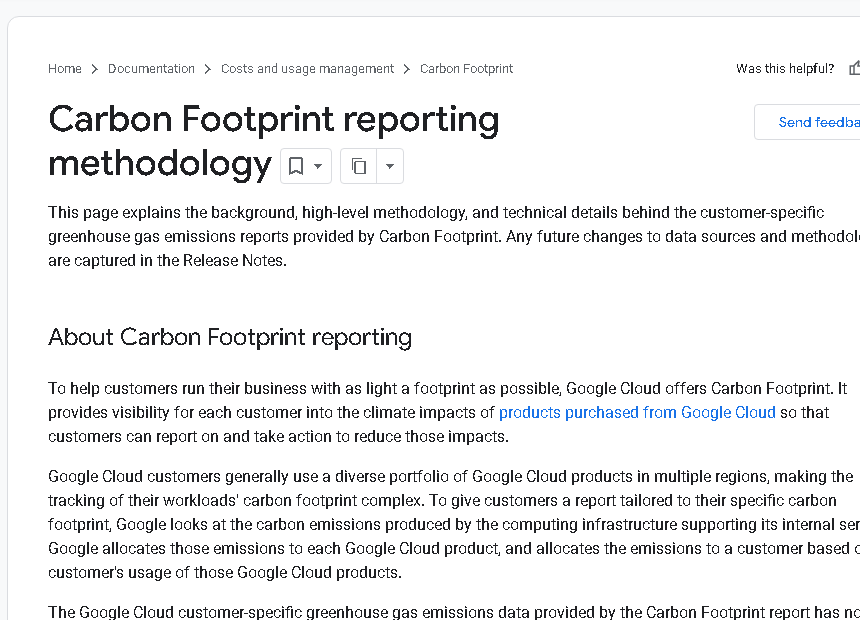
Figure 3. Proof of operating detail: The cited source, Carbon Footprint methodology, gives the article the implementation surface teams must design around. Source: Google Cloud
The useful lesson is not that every stale FAQ has a neat carbon tag. The useful lesson is that waste now has more places to become visible.
Google Cloud’s docs break emissions into market-based and location-based views. They also show location-based breakdowns by project and product. The same page notes an integration with Active Assist Unattended Project Recommender, which flags projects that can be reclaimed or shut down to reduce both cost and emissions.
That is the right mental model for content sprawl. Not panic. Reclamation.
Google’s Carbon Footprint methodology goes deeper into the mechanics. It describes hourly records for internal services and machine power, dynamic power allocation tied to CPU usage, idle power allocated from reserved resources, and customer allocation using purchased SKUs. This is not a marketing metaphor.
It is a reminder that idle things still consume accounting space.
Waste now has a dashboard.
A forgotten FAQ library touches hosting, builds, analytics, bot traffic, site search, redirects, backups, previews, monitoring, and crawl attention. Each touch is small. That is why the waste survives.
When finance, sustainability, and infrastructure teams start asking for cleaner reporting, “the page was cheap to publish” stops sounding like an answer.
Use the Keep, Merge, Kill Test
The fix is not to delete FAQs because Google changed a search interface. That is the panicked version. The useful version is colder: keep the answers that perform a business job, merge the duplicates, kill the ownerless pages, and promote the few that deserve to become stronger proof.
Start with two objects on the table: the FAQ URL export and the Search Console report. Then bring in support tickets, sales notes, product docs, and your help-center search terms. For each URL, write the one fear it reduces.
If nobody can name the fear, the page is already losing.
Use the test this way:
-
Keep the FAQ when it answers a real buyer objection, points to current evidence, and has an owner who can update it after product or policy changes.
-
Merge the FAQ when several pages repeat the same answer with tiny wording changes, because duplicate certainty is still clutter.
-
Kill the FAQ when it has no meaningful entrances, no support-ticket match, no sales use, no owner, and no current source of truth.
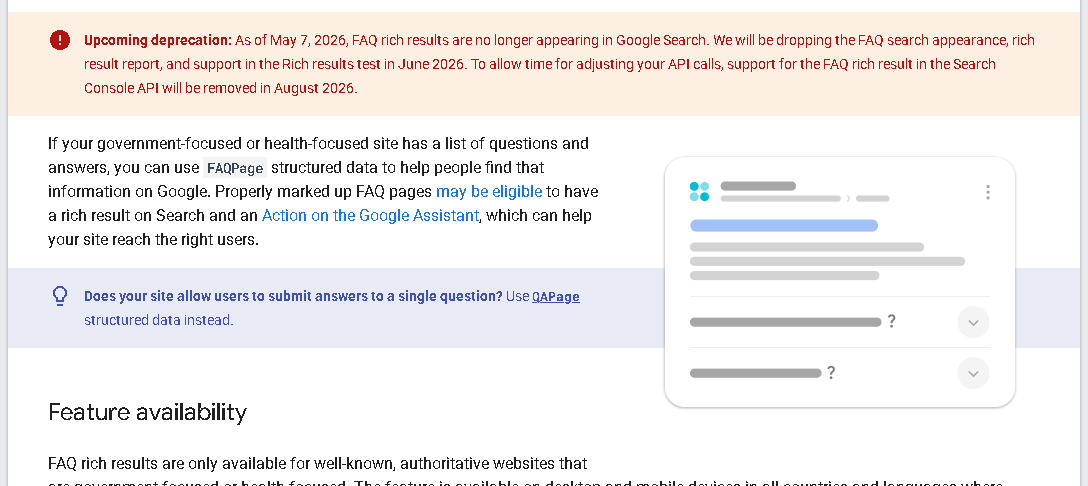
Figure 4. Proof of operating detail: The cited source, Google’s FAQPage documentation, gives the article the implementation surface teams must design around. Source: Google
- Promote the FAQ when it is doing more than FAQ work, such as proving security posture, implementation speed, integration depth, refund policy, uptime commitments, or procurement readiness.
The best FAQ pages do not feel like SEO residue. They feel like a buyer asked a nervous question and someone competent answered with a receipt.
That receipt can be a product screenshot, a current policy page, a security document, a customer support article, a changelog, or a sales-approved explanation. “Can I cancel?” should point to the policy. “Do you encrypt data?” should point to the security page.
“Does this integrate with Salesforce?” should show the integration path, not a fog machine with nouns.
Structured data can remain where the visible content deserves structure. Google did not say every Q&A format became poison. The change is simpler and more brutal: the markup cannot be the reason the page exists.
Decision Day Is Smaller Than It Looks
The portfolio move is not grand. It is a spreadsheet, a browser tab, a support export, and one uncomfortable meeting where the cheap pages finally have to speak.
Sort first by pages with no owner, no sales reference, no support-ticket match, no meaningful entrances, and an old review date. Those lose first. Sort next by duplicate questions across product pages, help-center articles, and blog posts.
Consolidate the answer into the strongest source, redirect the weaker URLs where it makes sense, and make the surviving page easier to trust.
Then look for the winners hiding in the pile. The best FAQ answers often point to real buying friction before the team has named it. A pricing FAQ that keeps getting searched is not just an answer.
It is a product-marketing signal. A security FAQ that sales keeps sending is not filler. It is procurement proof waiting for a better page.
That is the second-order effect Google created. By removing the old rich-result reward, it forces teams to ask whether the answer has value away from the search listing. Some do.
Many do not. The valuable ones become clearer once the decorative ones are gone.
Google’s May 7 note gives the deadline. Google Cloud’s carbon docs give waste a reporting vocabulary. CMI’s 2026 survey gives the budget context: owned media is still being funded, but measurement and resources are still under pressure.
That combination changes the decision. The question is no longer, “Can we publish another FAQ cheaply?” The question is, “Would we defend this answer if it appeared on a budget line, a support dashboard, a crawl report, and a buyer’s procurement screen?”
The screen did not just lose an accordion. It made every cheap answer page stand in line with payroll, infrastructure, carbon reports, and buyer trust. Thanks to the teams willing to make cheap pages earn their keep.
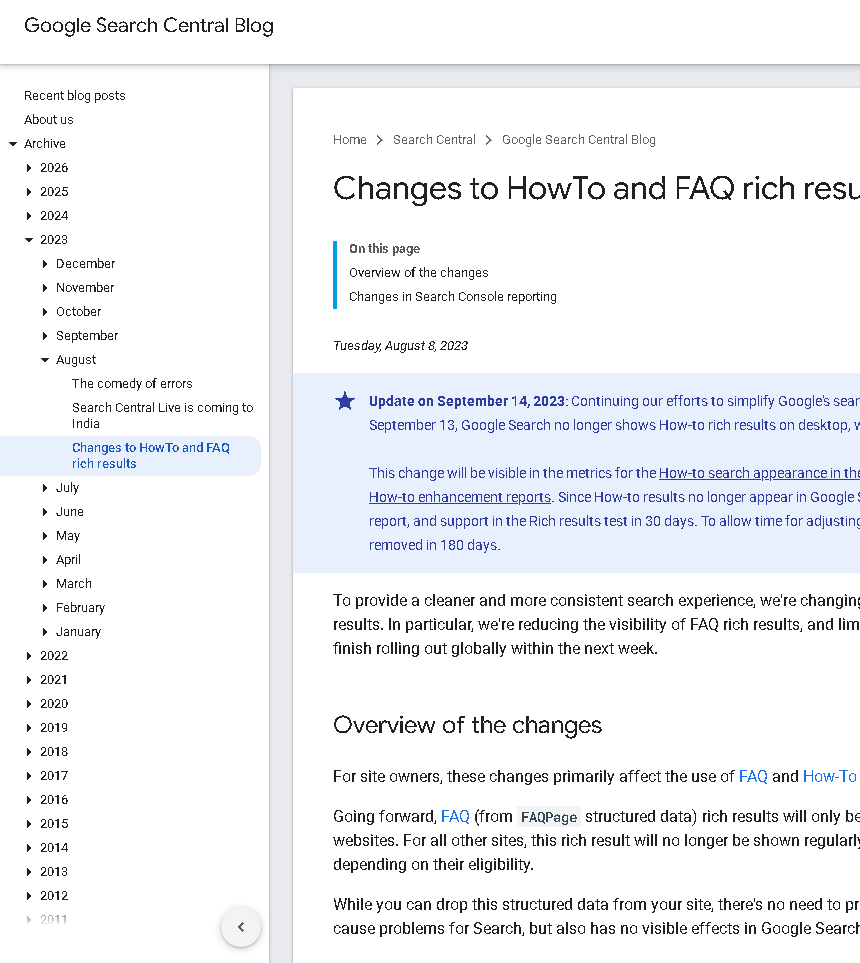
Figure 5. Proof of source-backed strategy: The cited source, Google Search Central post, gives the article a primary source readers can inspect. Source: Google
A parallel version of the same pressure shows up in Klarna’s Google Pay Button Turns Checkout Speed Into Credit Risk.
Related reading
메타데이터
- post_id
- 96c265344493
- slug
- googles-2026-faq-cut-forces-an-answer-page-budget-test-96c265344493
- url
- https://medium.com/kairi-ai/googles-2026-faq-cut-forces-an-answer-page-budget-test-96c265344493
- canonical_url
- https://medium.com/kairi-ai/googles-2026-faq-cut-forces-an-answer-page-budget-test-96c265344493
- author_url
- https://medium.com/@james.kuhman
- status
- ok
- fetched_at
- 2026-06-25 12:15:08