Only Breast Milk? The Truth That Surprised Millions of Parents
What Every New Parent Should Know Before Making Feeding Decisions
Only Breast Milk? The Truth That Surprised Millions of Parents
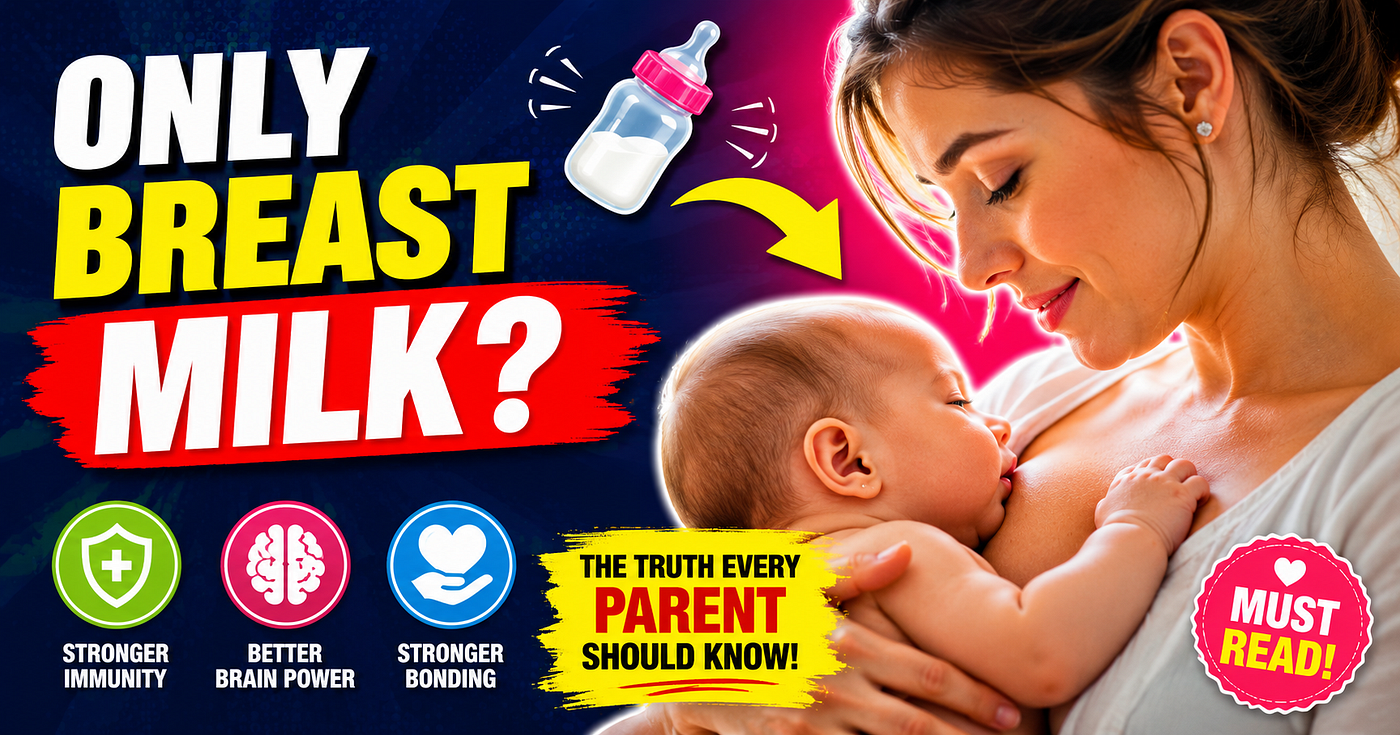
What Every New Parent Should Know Before Making Feeding Decisions
The moment a baby is born, one question seems to appear from every direction:
“Are you breastfeeding?”
Family members ask it. Friends ask it. Doctors ask it. Social media has an opinion. Parenting forums are filled with endless debates.
Some people insist breast milk is the only healthy option. Others say formula has become so advanced that the difference hardly matters.
So what’s the truth?
The answer is more interesting — and more surprising — than most headlines suggest.
This article isn’t about judging parents. It’s about understanding what science actually says, why breast milk is often called “liquid gold,” and why millions of healthy babies around the world thrive in different situations.
Let’s separate facts from myths.
The Incredible First Drops
Many parents don’t realize that the first milk produced after birth isn’t ordinary milk.
It’s called colostrum.
Although produced in small amounts, colostrum is packed with nutrients and protective compounds that help a newborn adapt to life outside the womb.
Researchers often describe it as a baby’s “first vaccine” because it contains antibodies that help protect against infections during the earliest days of life.
For a newborn whose immune system is still developing, this early protection can be incredibly valuable.
Why Breast Milk Is Different Every Single Day
One of the most fascinating facts about breastfeeding is that breast milk isn’t a fixed recipe.
It changes.
Morning milk differs from evening milk.
Milk produced for a premature baby differs from milk made for a full-term baby.
Even during a single feeding, the composition changes from beginning to end.
Scientists have discovered that breast milk adjusts over time to meet a baby’s changing nutritional needs.
Few natural foods are this dynamic.
More Than Just Food
Many people think breast milk is simply nutrition.
It isn’t.
Breast milk contains the following:
- Antibodies
- Living immune cells
- Beneficial bacteria
- Enzymes
- Hormones
- Growth factors
- Vitamins
- Healthy fats
- Proteins
- Carbohydrates
Together, these components help support growth while also strengthening the baby’s developing immune system.
That’s one reason breastfeeding has been linked with lower risks of certain infections during infancy.
Can Breastfeeding Make Babies Smarter?
This question has sparked debate for years.
Some studies suggest that breastfeeding may be associated with small improvements in cognitive development.
However, scientists also point out that many other factors influence a child’s learning, including:
- Home environment
- Education
- Genetics
- Nutrition after infancy
- Sleep
- Emotional support
In other words, breastfeeding may offer benefits, but it isn’t a guarantee of intelligence.
A loving, supportive environment remains one of the biggest predictors of healthy development.
The Hidden Benefits for Mothers
Conversations often focus only on babies.
But breastfeeding may also benefit mothers.
Research suggests breastfeeding can help:
- Support recovery after childbirth
- Reduce postpartum bleeding
- Burn additional calories
- Lower the risk of certain breast cancers
- Lower the risk of some ovarian cancers
- Reduce the likelihood of developing type 2 diabetes later in life for some women
These benefits vary from person to person, but they demonstrate that breastfeeding can positively affect both mother and baby.
The Emotional Connection
One reason many mothers describe breastfeeding as unforgettable isn’t nutrition.
It’s connection.
Skin-to-skin contact during feeding encourages closeness and comfort.
Hormones released during breastfeeding, including oxytocin, can promote relaxation and bonding.
That emotional connection is difficult to measure with numbers, yet many families describe it as one of the most meaningful parts of early parenthood.
The Pressure No One Talks About
Despite all the benefits, breastfeeding isn’t always easy.
Many new mothers experience the following:
- Pain
- Difficulty with latching
- Low milk supply
- Exhaustion
- Anxiety
- Lack of support
Social media often presents breastfeeding as effortless.
Reality can be very different.
Some mothers need lactation consultants.
Others need weeks of practice.
Some cannot breastfeed because of medical conditions or medications.
None of these situations make someone a bad parent.
Is Formula Bad?
This is where many online conversations become unfair.
Modern infant formula has helped save countless lives.
When breastfeeding isn’t possible, formula provides essential nutrition that supports healthy growth and development.
Doctors around the world recommend formula when medically necessary or when breastfeeding cannot be established.
The healthiest baby is ultimately one who is fed, loved, monitored, and cared for.
Common Myths About Breastfeeding
Myth 1: Small breasts produce less milk.
False.
Milk production depends primarily on glandular tissue and how often milk is removed — not breast size.
Myth 2: Breastfeeding never hurts.
Not always true.
Some discomfort is common during the early days.
Persistent pain should be evaluated by a healthcare professional or lactation consultant.
Myth 3: Mothers must eat perfectly.
A balanced diet is helpful, but occasional treats don’t suddenly make breast milk unhealthy.
Overall nutrition matters more than individual meals.
Myth 4: Formula-fed babies cannot be healthy.
Completely false.
Millions of formula-fed children grow into healthy adults.
Nutrition is only one part of lifelong health.
The Science Behind “Liquid Gold”
Scientists continue studying breast milk because they still haven’t fully replicated its complexity.
Unlike formula, breast milk contains living biological components that actively interact with a baby’s body.
Researchers are discovering new proteins, beneficial bacteria, and immune factors almost every year.
It’s one of nature’s most remarkable biological systems.
Mental Health Matters Too
Breastfeeding should never come at the cost of a mother’s mental health.
Postpartum depression, anxiety, sleep deprivation, and physical recovery all deserve attention.
Sometimes the healthiest decision for both mother and baby is one that supports the family’s overall well-being.
Parents should never feel ashamed for seeking help.
Every Family’s Journey Is Different
Some babies breastfeed for two years.
Some only a few weeks.
Some receive a combination of breast milk and formula.
Others rely entirely on formula.
Healthy parenting isn’t defined by one feeding method.
It is defined by consistent love, responsive care, regular medical checkups, and meeting a child’s nutritional needs.
What Experts Generally Recommend
Health organizations commonly recommend:
- Beginning breastfeeding soon after birth when possible.
- Exclusive breastfeeding for about the first six months when appropriate.
- Continuing breastfeeding alongside complementary foods afterward if mother and baby choose.
These recommendations are based on population-level health benefits, but individual circumstances always matter.
Parents should discuss feeding decisions with qualified healthcare professionals when questions arise.
Final Thoughts
The internet often turns breastfeeding into an argument.
Real life is much more compassionate than that.
Breast milk offers extraordinary biological advantages that science continues to explore. It provides nutrition, immune support, and a unique connection between mother and child.
At the same time, every family’s circumstances are different. Medical conditions, work schedules, mental health, and personal situations all influence feeding choices.
The goal shouldn’t be perfection.
The goal is raising a healthy, loved, and thriving child.
And that’s something every caring parent hopes to achieve — regardless of how the bottle or breast reaches their baby’s tiny hands.
Enjoyed This Article?
If this story helped you see breastfeeding from a new perspective, follow for more evidence-based parenting, health, and wellness articles that turn complicated topics into simple, practical reading.
메타데이터
- post_id
- 96d71bd87222
- slug
- only-breast-milk-the-truth-that-surprised-millions-of-parents-96d71bd87222
- url
- https://medium.com/@hazel_carter/only-breast-milk-the-truth-that-surprised-millions-of-parents-96d71bd87222
- canonical_url
- https://medium.com/@hazel_carter/only-breast-milk-the-truth-that-surprised-millions-of-parents-96d71bd87222
- author_url
- https://medium.com/@hazel_carter
- status
- ok
- fetched_at
- 2026-07-10 01:40:30