Largemouth Bass Do Not Change Sex — But Some “Bass” Do
If you spend enough time around fishermen, you’ll hear all kinds of theories about how fish behave. Some are dead‑on. Some are half‑true…
Largemouth Bass Do Not Change Sex — But Some “Bass” Do
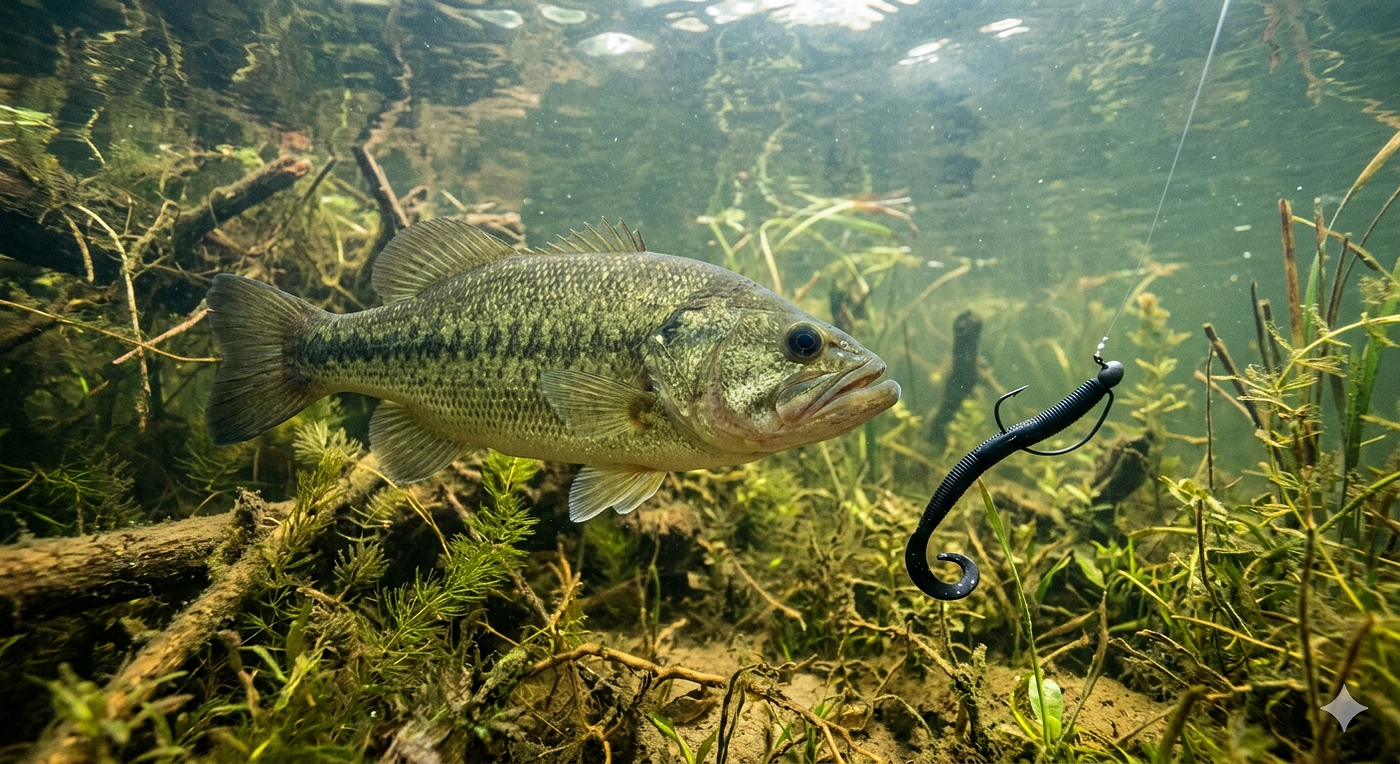
If you spend enough time around fishermen, you’ll hear all kinds of theories about how fish behave. Some are dead‑on. Some are half‑true. And some are the kind of stories that get passed around the bait shop until they start sounding like fact. I grew up bass fishing on Lake Erie, and I’ve heard just about all of them.
One of the most interesting came from a friend of mine years ago. We were talking about the bass population in the Great Lakes, and he casually mentioned that largemouth bass could change sex depending on what the lake “needed.” At first, I laughed it off — but he was serious. And the funny thing is, he wasn’t completely wrong. He was just thinking of the wrong kind of bass.
Because while largemouth bass and smallmouth bass absolutely do not change sex, there are fish commonly called “bass” — especially in saltwater — that can. And their biology is fascinating.
Let’s break it down.
Largemouth Bass: Born One Way, Stay That Way
Largemouth bass (and smallmouth, spotted, and other black bass species) are what biologists call gonochoristic. That’s a fancy way of saying:
- They are born male or female
- Their sex is fixed for life
- They do not switch, reverse, or transform
No matter what happens in the population — too many males, too few females, environmental stress — a largemouth bass will never change sex. Their reproductive system is set early in development and stays that way.
This is true across the entire Great Lakes region, including Lake Erie where I grew up fishing. Whether you’re flipping jigs into weed beds, dragging tubes along rocky points, or chasing spring smallmouth on the reefs, every bass you catch is the same sex it was the day it hatched.
So where did my friend get the idea that bass can switch sexes?
That’s where the story gets interesting.
The Confusion: “Bass” Means Different Things in Freshwater and Saltwater
In freshwater, “bass” usually means:
- Largemouth bass
- Smallmouth bass
- Spotted bass
- Striped bass (which are actually temperate bass, not black bass)
But in saltwater, the word “bass” gets used for a whole different group of fish — especially in Florida and the Gulf of Mexico.
Two of the most famous are:
- Grouper
- Sea bass
And these fish belong to a completely different family: Serranidae. They’re not closely related to largemouth bass at all. But because anglers call them “bass,” the lines get blurred.
And here’s the twist:
Many groupers and sea bass can change sex.
So my friend wasn’t crazy — he just mixed up freshwater bass with their saltwater cousins.
Grouper: Masters of the Sex Change
If largemouth bass are straightforward, groupers are the exact opposite. Many grouper species are protogynous hermaphrodites, which means:
- They are born female
- They live as females for several years
- Then some of them transform into males
This isn’t a rare event — it’s a normal, natural part of their life cycle.
Why do they do it?
Groupers live in social structures where a single large male often controls a territory or a spawning group. If that male disappears — from predation, fishing pressure, or natural causes — the group suddenly has no breeder.
Nature solves this problem with a brilliant trick:
The largest, most dominant female transforms into a male.
Her ovaries turn into testes. Her hormones shift. Her behavior changes. In some species, even her coloration changes. Within weeks, she becomes the new breeding male.
This ensures the population keeps reproducing even when males are scarce.
When does the change happen?
It usually happens when:
- The dominant male is removed
- The population becomes female‑heavy
- The social structure demands a new male
It’s a built‑in backup system — and it works beautifully.
Sea Bass: Another Sex‑Changing “Bass”
Sea bass, especially species like the black sea bass found along the Atlantic coast, also have the ability to change sex. Like groupers, many are born female and later become male.
The timing varies by species, but the pattern is similar:
- Young fish = mostly female
- Older, larger fish = mostly male
This is why regulations often protect larger sea bass — removing too many big males can disrupt the population’s ability to spawn.
Again, this has nothing to do with largemouth bass, but the shared name causes confusion.
So Why Don’t Largemouth Bass Change Sex?
Freshwater black bass evolved in environments where:
- Populations are dense
- Spawning opportunities are abundant
- Males guard nests
- Females produce large batches of eggs
Their reproductive strategy relies on fixed roles:
- Males build and guard nests
- Females produce eggs and leave
- Males protect the fry
If a male suddenly turned into a female, or vice versa, it would disrupt the entire nesting system. Their biology is built around stability, not flexibility.
Saltwater groupers and sea bass, on the other hand, live in environments where:
- Populations are more spread out
- Large males dominate spawning
- Losing a male can halt reproduction
So evolution gave them a backup plan: change sex when needed.
The Takeaway: My Friend Wasn’t Wrong — Just Thinking of the Wrong Fish
When my buddy told me bass could change sex, I thought he was mixing up fishing myths. But the truth is more interesting:
- Largemouth bass (like the ones we catch on Lake Erie) do NOT change sex.
- Grouper and sea bass (common around Florida) DO change sex.
He had the right idea — just the wrong species.
It’s a great example of how fishing knowledge gets passed around. Sometimes it’s dead accurate. Sometimes it’s half‑true. And sometimes it’s a mix of freshwater and saltwater biology that gets tangled together like a backlash in a baitcaster.
But that’s part of what makes fishing fun — there’s always something new to learn, even about the fish we’ve been catching since we were kids.
Need some good worms to catch big largemouth bass? I found these for you: BASS WORMS
The above is an affiliate link. If you click and make a purchase, I earn a small commission.
메타데이터
- post_id
- 9723978fa7de
- slug
- largemouth-bass-do-not-change-sex-but-some-bass-do-9723978fa7de
- url
- https://medium.com/great-lakes-fishing-masters/largemouth-bass-do-not-change-sex-but-some-bass-do-9723978fa7de
- canonical_url
- https://medium.com/great-lakes-fishing-masters/largemouth-bass-do-not-change-sex-but-some-bass-do-9723978fa7de
- author_url
- https://medium.com/@jeffreytom66
- status
- ok
- fetched_at
- 2026-06-15 20:49:13


