Physical Gold vs. Digital Gold: What’s the Difference?
Gold has been a symbol of wealth and security for thousands of years. From ancient civilizations to modern central banks, it has…
Physical Gold vs. Digital Gold: What’s the Difference?
Gold has been a symbol of wealth and security for thousands of years. From ancient civilizations to modern central banks, it has consistently been viewed as one of the world’s most trusted stores of value. Even in today’s digital economy, gold continues to play an important role in preserving wealth during periods of inflation, geopolitical uncertainty, and market volatility.
But while gold itself has remained largely unchanged, the way people own it is evolving.
Traditionally, owning gold meant purchasing physical bars or coins and storing them in a secure location. Today, advances in financial technology and blockchain have introduced a new way to access the same asset: digital gold. Although both represent exposure to gold, they offer very different ownership experiences.
So, what exactly separates physical gold from digital gold?
The Traditional Choice: Physical Gold
Physical gold remains the most direct form of ownership. Whether held as coins, bars, or bullion, it is a tangible asset that exists independently of financial institutions or digital platforms. Many investors value this because it offers a sense of permanence and security that few other assets can match.
However, physical ownership also comes with practical considerations. Gold must be stored securely, insured against loss or theft, and transported carefully if it is sold or transferred. These additional responsibilities can make ownership less convenient, particularly for those looking to buy or sell smaller amounts.
Despite these challenges, physical gold continues to be regarded as a reliable long-term store of value.
The Rise of Digital Gold
Digital gold aims to preserve the value of physical gold while making ownership more accessible and convenient.
Instead of taking delivery of a gold bar, investors own a digital representation of gold through an online platform or blockchain network. Depending on the platform, each digital unit may correspond to a specific quantity of physical gold held in secure storage.
This approach allows individuals to purchase smaller amounts of gold, manage their holdings online, and transfer ownership more efficiently than traditional physical transactions.
For many people, digital gold removes some of the logistical barriers that have historically limited access to precious metals.
Where Blockchain Changes the Picture
Blockchain takes digital gold a step further.
Rather than simply recording ownership within a centralized database, blockchain stores transactions on a decentralized network where records are transparent, verifiable, and resistant to tampering.
This opens the door to capabilities that traditional ownership cannot easily provide. Tokenized gold can potentially be transferred across borders more efficiently, integrated into decentralized finance applications, or exchanged through blockchain-based ecosystems without relying on multiple intermediaries.
In other words, blockchain doesn’t change the value of gold — it changes how people can interact with it.
The Best of Both Worlds
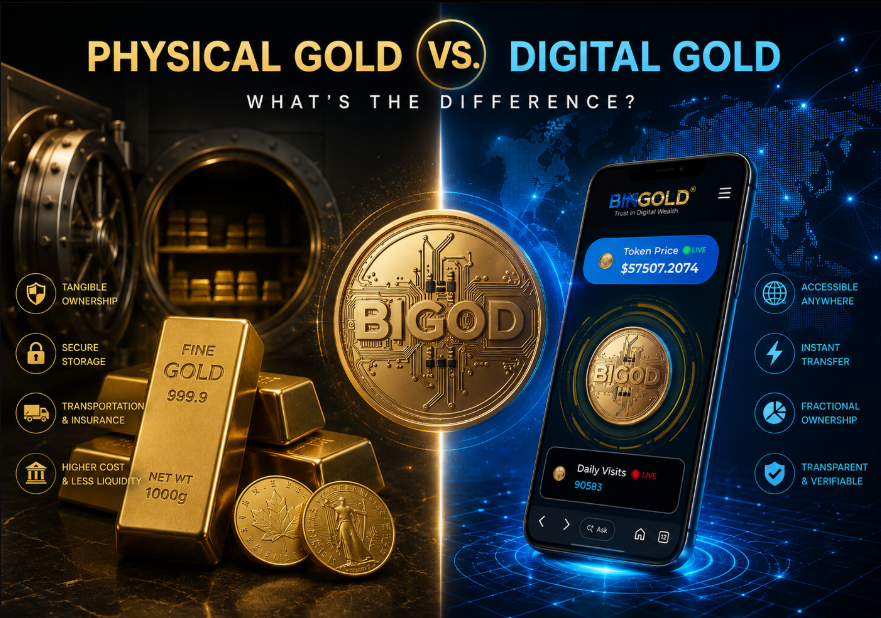
From vaults to wallets — gold ownership is entering a new era powered by blockchain technology.
As Real-World Assets (RWAs) continue gaining momentum, a new category of digital assets is emerging: tokenized gold.
Projects such as BinGold (BIGOD) aim to combine the stability of physical gold with the flexibility of blockchain technology. Built on the BNB Chain, BIGOD is designed to connect physical gold reserves with a digital ecosystem that supports greater accessibility and broader utility.
Rather than replacing traditional gold ownership, tokenized gold offers an alternative for individuals who value the security of a tangible asset while also wanting the speed and convenience of blockchain-based transactions.
As blockchain infrastructure continues to evolve, this hybrid approach may become an increasingly important part of the digital economy.
Which One Is Right for You?
The answer depends on your priorities.
For those who value holding a tangible asset, physical gold remains a timeless choice with centuries of proven history. For those seeking convenience, accessibility, and digital functionality, blockchain-powered gold introduces possibilities that were difficult to imagine only a few years ago.
Neither approach changes what makes gold valuable. Instead, they offer different ways to access the same asset depending on an individual’s needs and preferences.
Looking Ahead
Gold has adapted throughout history. It has evolved from coins used in everyday trade to central bank reserves, exchange-traded products, and now blockchain-based digital assets.
The next chapter isn’t about replacing physical gold — it’s about expanding how it can be owned, transferred, and utilized in an increasingly connected world.
As tokenization continues to reshape financial markets, projects like BinGold (BIGOD) demonstrate how traditional stores of value and modern blockchain technology can work together, creating new opportunities while preserving the qualities that have made gold one of the world’s most trusted assets for generations.
메타데이터
- post_id
- 9734c7e2264e
- slug
- physical-gold-vs-digital-gold-whats-the-difference-9734c7e2264e
- url
- https://medium.com/@bigod_64672/physical-gold-vs-digital-gold-whats-the-difference-9734c7e2264e
- canonical_url
- https://medium.com/@bigod_64672/physical-gold-vs-digital-gold-whats-the-difference-9734c7e2264e
- author_url
- https://medium.com/@bigod_64672
- status
- ok
- fetched_at
- 2026-07-10 06:10:56