Top 7 AI Product Design Trends to Watch in 2026
Over the last year, while reviewing products and watching how teams integrate AI into real workflows, one shift has become impossible to…
es
Top 7 AI Product Design Trends to Watch in 2026
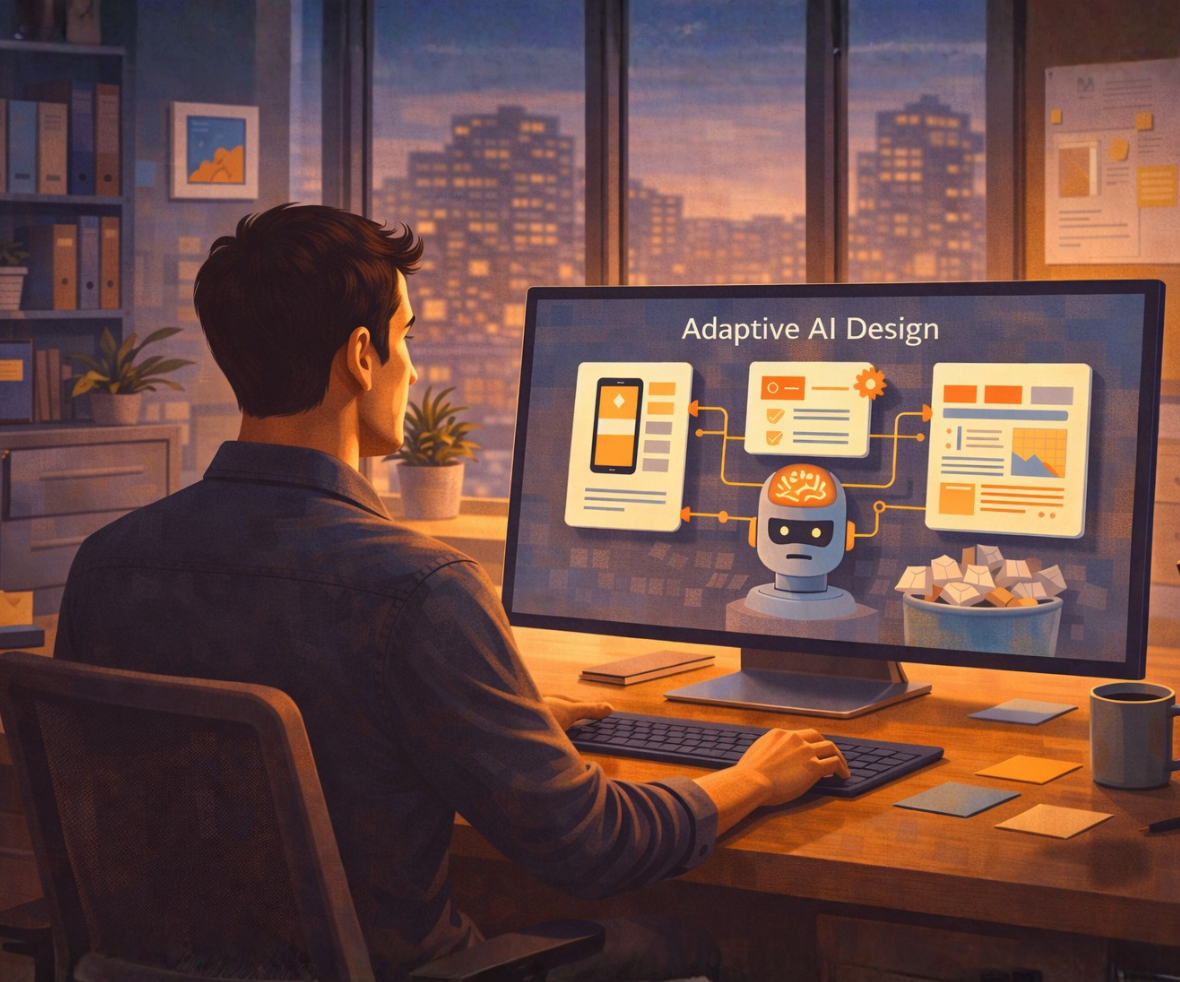
Over the last year, while reviewing products and watching how teams integrate AI into real workflows, one shift has become impossible to ignore:
AI is no longer speeding up design; it’s changing how products think.
What stood out to me wasn’t new tools or flashy features, but bigger changes in decision-making, personalization, and system-level design.
While researching these patterns, I came across a detailed breakdown on the **AI shift** digital teams should be paying attention to, which helped validate many of the signals we’re already seeing across modern digital products.
Below are the seven AI product design trends that will matter most in 2026.
1. AI-First Design Replaces Feature-First Thinking
For years, product teams focused on features: what screens to build, what buttons to show, what flows to route.
In 2026, the shift is clear: design isn’t anchored in visual elements, it’s anchored in outcomes driven by intelligence. The products winning today are designed around decisions AI can help inform or make.
What used to be static screens are now adaptive systems that learn and respond. This isn’t just about personalization; it’s about products proactively shaping experiences, anticipating what a user needs before they even articulate it.
That’s a radical reframing for design strategy, and it’s already influencing how successful teams define their product roadmaps.
2. Designers Will Partner With AI, Not Compete With It
You might hear concerns about AI replacing jobs, but in intelligent product design, that’s not what we’re seeing.
Instead, designers are working with AI as a collaborator. Whether it’s generating layout variations, assisting with UX research, or spotting friction points before user testing, AI accelerates outcome validation and frees designers for higher-order thinking.
In 2026, the most effective design teams are those that treat AI as a co-pilot, not an assistant. It’s a shift from asking “Which tasks can AI do for us?” to “Where should we embed AI in the design process to shape decisions?”
This is not theoretical, it’s the lived experience of teams pushing real products intothe market faster, with stronger user retention and less guesswork.
3. Interfaces Will Become Context-Aware by Default
Personalization used to mean adjusting a dashboard or changing a greeting message. In 2026, personalization is contextual, continuous, and predictive.
AI-powered products will adapt to:
- Behavior signals in the moment
- User intent across sessions
- Real-world context, such as time, device, or environment
The result? Products that don’t force users to adapt to them, but adapt to users.
This trend is tip-of-iceberg stuff. The bigger change is that static design patterns no longer work. Teams that cling to screens as the primary units of design will be left behind by products that behave like systems.
4. Personalization Moves From UI to Journeys
This is where the design discipline itself transforms.
Most teams equate personalization with UI tweaks, but the real impact is when AI nudges the user down unique journeys. Every user sees a different path based on context, goals, experience history, and real-time signals.
This isn’t “dynamic content”. This is decision shaping.
That’s why retention, conversion, and engagement curves are telling a different story for AI-embedded experiences compared to traditional UX because AI is structuring journeys, not just screens.
5. Emotionally Sensitive Design Will Shape Engagement
AI is enabling products to do more than automate; they’re beginning to sense emotional cues:
- Hesitation in navigation
- Repeated errors
- Sudden flow abandonment
- Interaction patterns that signal frustration
Great product design has always cared about user emotions — but in 2026, systems are beginning to respond to them.
This opens exciting possibilities and serious ethical responsibilities. Products must signal why they’re making decisions if users are to trust them. Designers are now custodians of that trust, not just creators of interfaces.
6. Invisible UX Will Outperform Visual Complexity
If a user never has to think, that experience is succeeding.
AI is pushing design away from visual noise and towards effortless experiences where voice, context cues, and automation solve problems before users even articulate them.
This trend is already visible in voice assistants, smart workflows, adaptive onboarding, and predictive suggestions. In 2026, the most elegant designs will be the ones you barely notice because the product just works.
It’s a different bar for success than “beautiful UI”.
7. Accessibility Will Be AI’s Big Win
AI will quietly make accessibility a core product capability, not a checkbox.
Expect systems that:
- Auto-adjust contrast, typography, and focus
- Generate alternative text, audio, and navigation paths
- Respond dynamically to cognitive and motor needs
This is not optional empathy; it’s design efficiency for a global audience. Teams that bake in accessible AI patterns will outperform those who treat accessibility as an afterthought.
The Bigger Picture
What ties all these trends together isn’t AI itself; it’s a fundamental shift in how products are designed to think, adapt, and respond.
In 2026, successful products won’t win because they “use AI.” They’ll win because AI is woven into their design logic, quietly shaping journeys, reducing friction, and making better decisions on behalf of users.
If you’re a designer, PM, or founder, the real question isn’t whether to adopt AI; it’s whether your product thinking is evolving fast enough to support it.
If you want a broader, system-level view of how digital teams are designing around AI, beyond just product and UX, the AI shift report is a useful next read.
메타데이터
- post_id
- 9795fa4d8a62
- slug
- top-7-ai-product-design-trends-to-watch-in-2026-9795fa4d8a62
- url
- https://medium.com/procreator-design/top-7-ai-product-design-trends-to-watch-in-2026-9795fa4d8a62
- canonical_url
- https://medium.com/procreator-design/top-7-ai-product-design-trends-to-watch-in-2026-9795fa4d8a62
- author_url
- https://medium.com/@pro.namratapanchal
- status
- ok
- fetched_at
- 2026-06-14 11:28:49