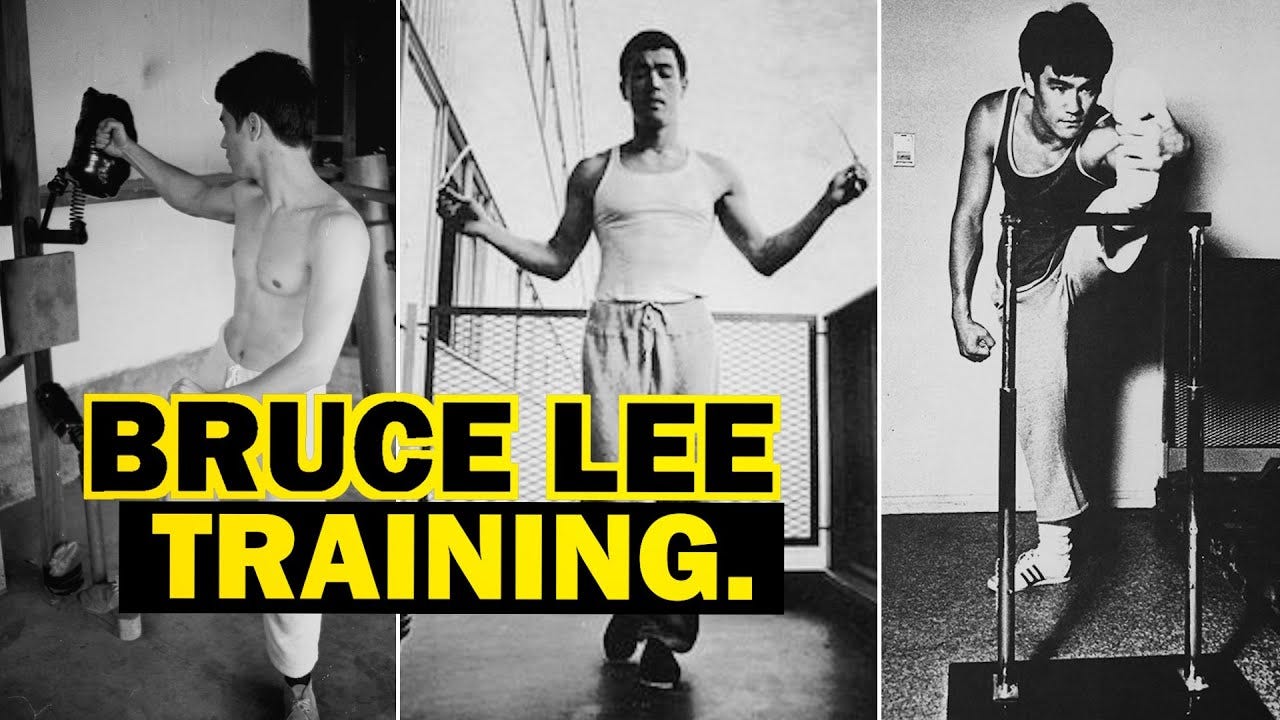
Bruce Lee’s One-Inch Punch, Explained Through His Own Training Notes
Bruce Lee’s one-inch punch generated half the force of a regular punch — from one inch away. Here’s the biomechanical breakdown of how he…
Bruce Lee’s One-Inch Punch, Explained Through His Own Training Notes
Bruce Lee’s one-inch punch generated half the force of a regular punch — from one inch away. Here’s the biomechanical breakdown of how he did it.
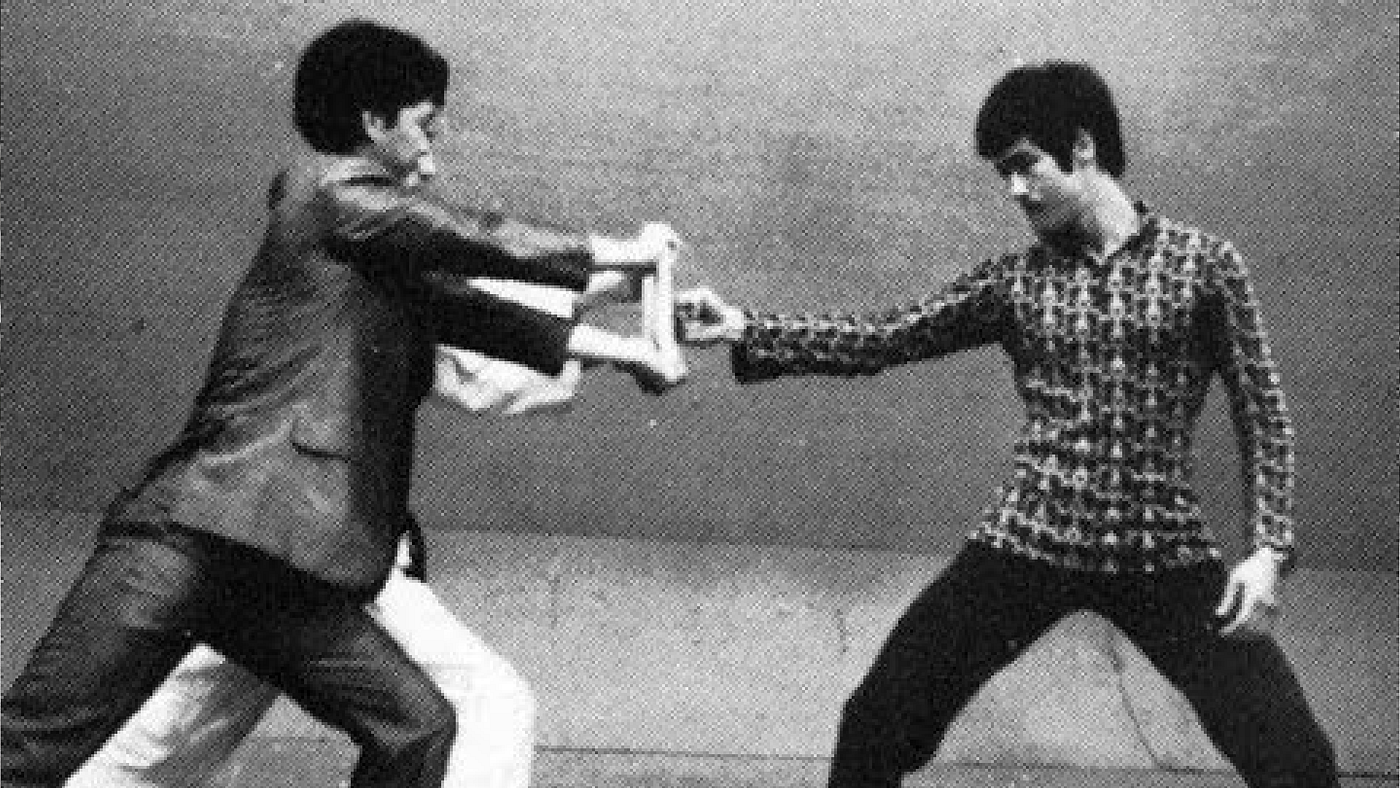
A skeptical 230-pound man showed up at Bruce Lee’s dojo demanding proof of his strength. According to witnesses, Lee punched him so hard the man flew backward, hit a wall, and lost consciousness.
Most people assume that kind of power comes from exceptional strength or genetics. What actually happened was more interesting: Bruce Lee had studied biomechanics, kinesiology, and physics with the same obsession he brought to Wing Chun. He figured out that true power came from understanding how energy moves through the body — and he reverse-engineered that understanding into a precise technical system.
These are some notes I gathered after reading his personal notes found in the Tao of Jeet Kune Do.
Principle 1: Relaxation Is Pre-Loaded Power
Bruce’s notes begin with this: stay relaxed, maintain a natural posture.
Because if your muscles are held tense all the time → already partially contracted before you even move → no room left to add more force when you actually need it.
But muscles kept relaxed as a baseline → they sit like a stretched rubber band, loaded but loose → release on command, instantly, with nothing held back.
That’s how Lee generated enormous power with almost no visible wind-up. His body wasn’t fighting itself. Every muscle was primed to fire the moment it was needed, with nothing wasted holding a rigid stance.
He also trained his awareness to stay sharp without tensing his body. Mind alert, body loose — and when it was time to strike, everything fired at once.
Principle 2: The Coil — Building Energy Before Release
Lee described his punch as building up energy in the muscles, then releasing it like a spring snapping open. His phrase: “strike like a thunderbolt.”
The reference is Sun Tzu: “when you move, fall like a thunderbolt.” A thunderbolt doesn’t gradually accelerate — it simply arrives, instantly and at full force.
Most traditional martial arts require a specific stance or chamber position to generate power — a visible “loading” before the strike. Lee’s approach bypassed that entirely. The coil happened inside, invisible. His legs pushed into the ground, that energy traveled up through his hips, into his core, through his shoulder, and out through his fist — each link in the chain adding force to the next.
Lee trained to fire this entire sequence in milliseconds, with no perceptible delay between decision and impact. By the time the opponent blinks, Bruce’s strikes would’ve already landed.
Principle 3: Striking Through, Not At
This is the most misunderstood element of the one-inch punch — and the key to understanding why distance didn’t matter to Lee.
When your target is the surface, your brain begins slowing the punch before contact. It’s an automatic protective response to avoid self-injury. That involuntary deceleration weakens every strike you throw, and most people never notice it’s happening.
Lee trained around this by mentally targeting a point six inches behind the surface. With that aim, the punch continues accelerating through impact rather than decelerating into it.
Applied to the one-inch punch: the tiny starting distance was irrelevant. What was happening was that Lee activated his entire kinetic chain and kept the punch accelerating despite having almost no space to build momentum. The power was already inside him, built through the coil, released through the chain reaction. The surface was simply where the external world saw it arrive.
Bob Baker, Lee’s own student, volunteered for the famous 1964 Long Beach demonstration. His account: “I told Bruce not to do this type of demonstration again. When he punched me that last time, I had to stay home from work because the pain in my chest was unbearable.”
The punch reportedly traveled at approximately 190 km/h and involved every muscle in Lee’s body through a technique combining Wing Chun structure with a hip pivot. It generated roughly half the force of a regular punch — from one inch away.
Principle 4: The Trinity — Momentum, Speed, Follow-Through
Lee identified three elements that had to work in harmony simultaneously.
Momentum is mass in motion. When Lee pushed off his back foot, rotated his hips, and transferred that energy through his core, he was hitting with the full acceleration of his entire frame — not just his arm. At 135 pounds, he was still hitting with 135 pounds of concentrated momentum.
Speed is the multiplier. Force equals mass times acceleration. You can increase force by being heavier, or by moving faster. Lee chose speed — not only because it hits hard, but because fast strikes are harder to see, harder to block, and allow a follow-up before the opponent can react.
Follow-through is what most people leave out. Lee’s strikes were still accelerating at the moment of contact. Continuous acceleration through impact, combined with full-body momentum and high velocity, created the sensation his targets described as being hit by something that tore through them rather than pushing them.
Together, these three elements explain why training for strength alone doesn’t produce this result. You need all three developing in coordination.
Principle 5: Decrease, Don’t Increase
Lee followed one guiding principle for power development: seek to decrease, not increase.
His focus was eliminating anything that didn’t directly add force to a strike. Traditional martial arts are full of complex sequences, elaborate stances, long forms. Lee saw these as friction — each extra step was time lost and energy wasted.
The goal was finding the most direct path from your current position to the target, then perfecting that path for maximum efficiency. No wasted movement meant no wasted energy. Every muscle contraction had a specific purpose.
This extended to the mental side. He trained until his techniques became automatic — drilling the same movements until they bypassed conscious thought entirely. In a fight, the moment between seeing an opening and deciding to strike is already too long. Lee eliminated that gap. His body responded before his mind had to decide.
Principle 6: Calmness as a Weapon
One of the deepest ideas in Lee’s notes: stay calm and balanced while delivering explosive power.
The contradiction resolves when you understand what tension actually does. When you’re tense or emotionally reactive, your body works against itself. Muscles that should be relaxing are fighting against the ones that need to contract. Movement stiffens. Breathing becomes shallow. Awareness narrows.
Lee trained the opposite state: fully ready, emotionally calm. Body loose until the exact moment of action. Breathing deep and steady. Mind open to everything in the environment, not fixated on a single point.
This created what he called “the balance and coordination required for the smoother way forward.” When you’re mentally and physically balanced simultaneously, you can move instantly in any direction without being locked into a rigid position. Coordination means training the entire body — feet to fist — to fire together without conscious instruction. Smooth means doing exactly what’s needed with the minimum energy required.
What This Means for Training
These principles aren’t specific to martial arts. They apply to any athletic movement that requires explosive force.
Practice relaxed readiness before any explosive movement. Shake out tension, take a breath, then fire. You’ll notice the difference in power output almost immediately.
Train the kinetic chain deliberately. On every push-up, consciously push the ground away starting from your feet — not just your chest. On every jump, feel the energy travel from ankle through knee through hip before it leaves the ground.
Aim through your targets, not at them. Whether you’re hitting a bag or throwing a sprint, mentally extend your intention past the point of contact or effort. The deceleration reflex is real and trainable.
Reduce, don’t add. If your movement has steps you can’t justify, remove them. The most powerful movements are also the most economical ones.
Lee stripped away size, reach, raw strength as the explanation. What was left: timing, speed, and a precise read on how force actually moves through a body. Train that combination long enough → a smaller fighter starts out-hitting bigger ones who only ever trained tension and mass.
What remained after he removed everything unnecessary was pure expression — explosive, efficient, and controlled.
If you’re looking for a training plan that combines methods from world class athletes, PLUS built around your goals and your specific body, you can check my personalized 8-Week Fighter Training Plan service.
메타데이터
- post_id
- 97a2c419cead
- slug
- bruce-lees-one-inch-punch-explained-through-his-own-training-notes-97a2c419cead
- url
- https://medium.com/@takeshi.fit1/bruce-lees-one-inch-punch-explained-through-his-own-training-notes-97a2c419cead
- canonical_url
- https://medium.com/@takeshi.fit1/bruce-lees-one-inch-punch-explained-through-his-own-training-notes-97a2c419cead
- author_url
- https://medium.com/@takeshi.fit1
- status
- ok
- fetched_at
- 2026-06-22 08:06:21