I am Fakih Saghir: Chronicles of Self and Society
In the classical Minangkabau perspective, self-documentation is seen as a form of vanity. Boasting about one’s achievements is not to be…
I am Fakih Saghir: Chronicles of Self and Society
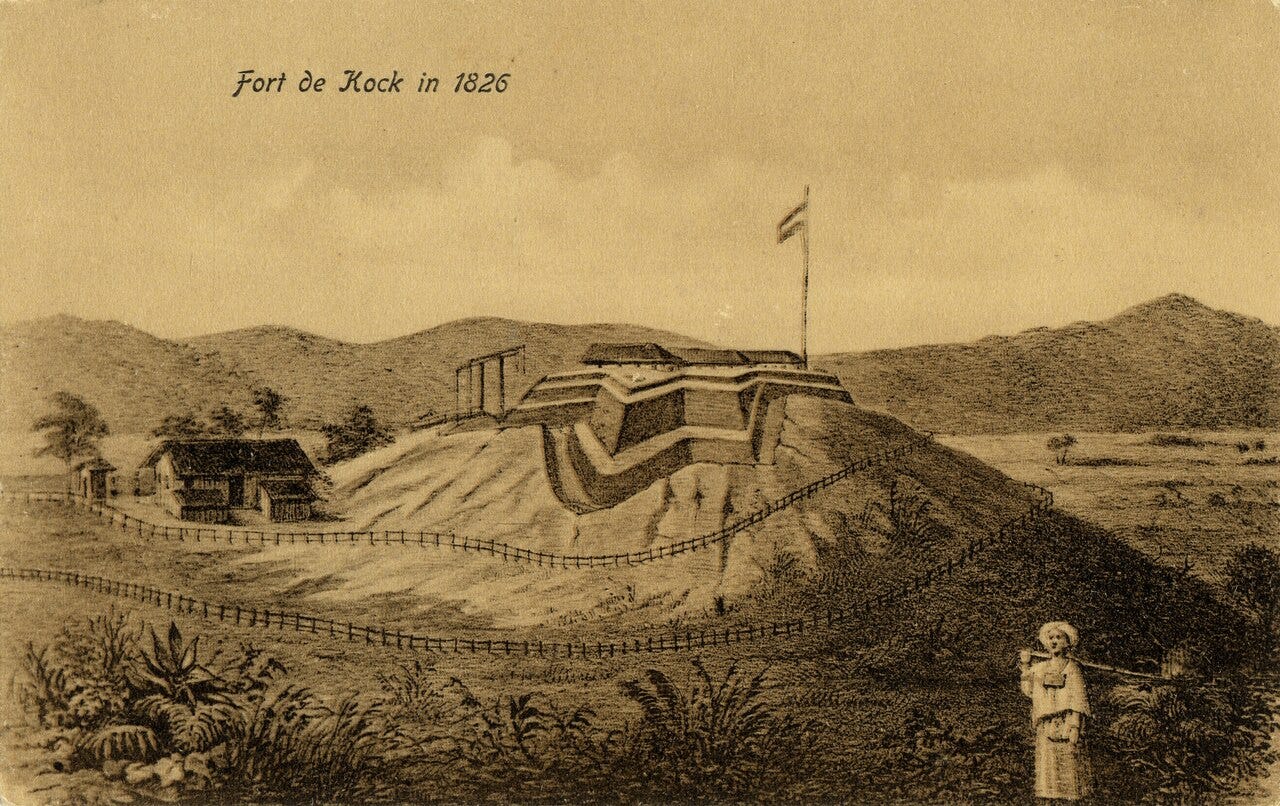
Minangkabau Land During the Colonial Era Early Nineteenth Century
In the classical Minangkabau perspective, self-documentation is seen as a form of vanity. Boasting about one’s achievements is not to be self-proclaimed but rather conveyed through the saluang, a traditional instrument, symbolizing that tales of valor, heroism, and virtue are to be told by a third party.
Thus, it is no surprise that autobiographies of prominent figures like Sri Maharaja Diraja, Datuk Parpatih nan Sabatang, or Datuk Katamanggungan are elusive. Despite their intellect, they refrained from penning their own greatness.
In keeping with the traditions of the time, the stories of Minangkabau ancestors were narrated by others. The kaba craftsmen served as the “classical historians,” memorizing and recounting the tales, values, and wisdom of the Minangkabau elders. As the opening lines of a kaba unfold:
“We pledge our rice fields, bordered by dikes, cleared of straw. We recite our kaba, whether complete or lacking, if wrong, we ask for corrections.”
With the advent of Islam and its intellectual and written historical traditions, still, no autobiographies of great Minangkabau figures, such as the datuks, scholars, or Urang Siak, have been found to this day. The only exception is the narrative constructed by the disciples of Syekh Burhanuddin.
The Syair Sunur(Suryadi, 2004) by the reformist cleric Syekh Daud is perhaps the earliest autobiography written by a Minangkabau in the mid-19th century. This work is invaluable as it records not only personal and family matters but also the daily life and intellectual debates over Islamic law (Fiqh) and Sufi orders in Pariaman at the time.
Contemporary to Syekh Daud’s autobiography, Muhammad Saleh Datuk Rangkayo Basa, a wealthy and influential merchant from Pariaman, penned his own life story in the late 19th century.
Engku Saleh’s autobiography provides a fascinating glimpse into the coastal society of West Sumatra, particularly Pariaman. His life has drawn the attention of renowned historians Tsuyoshi Kato (1980) and Mestika Zed (2017) for study and analysis.
In addition to these two prominent figures, autobiographies from the darek or hinterlands of Minangkabau have also been discovered, such as those written by Tuanku Imam Bonjol and his son Naali Sutan Chaniago. These two autobiographies are compiled in the Manuscript of Tuanku Imam Bonjol, which succinctly narrates the main figure’s struggle in the Padri War in Minangkabau in the early 19th century, detailing Tuanku Imam’s efforts to establish Bonjol and their resistance against the Dutch forces.
Furthermore, the Manuscript of Tuanku Imam Bonjol, transcribed into Indonesian by Sjafnir Abu Nain (2004), also reveals the events following the capture of Bonjol and Tuanku Imam. Naali Sutan Chaniago’s autobiography paints the bitterness of living under Dutch subjugation, treated with contempt and as a subject of mockery by the colonial Dutch elite of the time. As quoted by Abu Nain, such treatment made Naali Sutan Chaniago feel like a buffalo that had been nose-ringed.
Another significant autobiography worth mentioning is the Surat Keterangan Fakih Saghir (A Statement byFakih Saghir) (E.Ulrich Kratz & Adriyetti Amir, 2002). Written by Syekh Faqih Saghir in the early 19th century, this autobiography reveals much. It provides a map of the network of scholars who developed Islam after Syekh Burhanuddin al Ulakan. He writes:
“Thus, the knowledge of the Sufi order descended to the land of Ulakan to the saintly auliya, endowed with miracles and high status, the reliance of esoteric knowledge, followed in this world and the hereafter by all beings of this land. The order then shifted to Paninjauan and to Tuanku in Mansiang, who was most revered, and he established the order of the assembly and piety as did Tuanku in Ulakan.
Tuanku in Mansiang became renowned in the village of Kamang. He had mastered the instrumental sciences. And Tuanku in Lembah and Tuanku in Puar, both endowed with miracles, received blessings from Tuanku in Paninjauan, both being from the Four Angkat. Then there was Tuanku in Tampang from Tanah Rao, who traveled to the holy cities of Mecca and Medina, bringing with him the sciences of logic and meanings. The knowledge then passed to the saintly auliya, the miraculous and renowned Tuanku nan Kecil in the village of Kata Gadang.
There was also Tuanku in Sumani’, who went to Aceh to master the hadith and tafsir and the science of inheritance. He became famous in the Three Luhak. The origin of the science of sarf was Tuanku in Talang, and the origin of the three sciences of grammar was Tuanku in Selaya, both highly learned in grammar and residing in the village of Kubang Tigabelas.
As for me, Fakih Saghir, I met with Tuanku in Mansiang and Tuanku nan Keramat in the village of Kata Gadang when I was young, and Tuanku in Sumani’, from whom I also acquired knowledge.
Regarding Tuanku nan Tuha in the village of Kota Tuha, he acquired knowledge from Tuanku in Kamang, and Tuanku in Sumani’, and Tuanku in Kata Gadang, and Tuanku in Mansiang, and Tuanku in Paninjauan. Thus, the sciences of logic and meanings, hadith and tafsir, and various major books that produce the knowledge of sharia and truth were all gathered by our Sheikh Tuanku nan Tuha in the village of Kota Tuha” (Kratz & Amir, 2002; 20–21).
In addition to his scholarly lineage with Tuanku Nan Tuo from Koto Tuo, his other teacher was Tuanku Nan Receh. Nan Receh was an early mover of the Padri movement that shook the foundations of Gunuang Marapi in the early decades of the 19th century.
The autobiography of Faqih Saghir, also known as Syekh Jalaluddin or Tuanku Samik, also details how the Padri movement initially became a war between the Urang Siak group and the local chiefs. Faqih Saghir elaborates on the resentment of the Urang Siak in the suras of Agam, who was often bullied by the traditionalists, and even had their books and homes burned for prohibiting gambling, cockfighting, and enslaving the people of the conquered villages.
These four autobiographies are vital and valuable records of Minangkabau's life two centuries ago. Unfortunately, they have yet to receive the full attention of scholars, especially historians. Nevertheless, these autobiographies serve as primary sources for the history of Islam in Minangkabau.
메타데이터
- post_id
- 97a8d71a1d96
- slug
- echoes-of-sumatra-unveiling-the-minangkabau-chronicles-97a8d71a1d96
- url
- https://medium.com/@YudhiAndoni/echoes-of-sumatra-unveiling-the-minangkabau-chronicles-97a8d71a1d96
- canonical_url
- https://medium.com/@YudhiAndoni/echoes-of-sumatra-unveiling-the-minangkabau-chronicles-97a8d71a1d96
- author_url
- https://medium.com/@YudhiAndoni
- status
- ok
- fetched_at
- 2026-06-27 23:56:40