The Mercy of Surrender
Of Sleep, Restoration, and the Intelligence of Rest
The Mercy of Surrender
Of Sleep, Restoration, and the Intelligence of Rest
February 29, 2026.
Sleep can resemble weakness — not because it lacks beauty, but because it asks something difficult of us. It requires surrender: the laying down of vigilance, the softening of awareness, the acceptance that, for a time, we must entrust ourselves to darkness.
For some, that surrender is sanctuary. For others, it is risk.
This is especially true for those who live without stable shelter, or within the upheaval of war, where rest cannot be taken for granted and vulnerability carries consequence. There are also those who move between safety and uncertainty, for whom sleep remains a negotiation rather than a certainty.
Yet for those granted its protection, sleep is not indulgence. It is necessity — and perhaps one of life’s gentlest mercies.
When I step back, I see its universality.
At dusk, the world inclines toward quiet. Birds tuck their heads beneath their wings. Deer fold into grass. Cats curl inward. Whales drift in slow hemispheric slumber beneath the sea. Dolphins and seals rest with one half of the brain still alert, vigilance braided with surrender.
Nature adapts. But it never abolishes rest.
Many cultures have long understood sleep not only as rest, but as a meaningful state of life.
In ancient Egypt, sleep and dreams were regarded as a threshold between worlds. Dreams were recorded, interpreted, and sometimes treated as messages from the divine or as forms of healing insight. Sleep itself was not absence, but passage — an opening into knowledge that waking life could not always access.
In Sumerian tradition, preserved in some of the earliest written records, dreams appear as spaces of communication between gods and mortals. Within myth and royal inscription alike, the dream state carried interpretive weight, offering guidance, warning, or symbolic meaning that could shape waking life.
In the Roman world, rest was structured around rhythm and light. The hora sexta — the sixth hour of daylight — marked the height of the sun, when labor often paused. This pause was not framed as indulgence, but as adaptation: an acknowledgment of heat, fatigue, and the limits of endurance woven into daily life.
In Japan, the practice of inemuri reflects a related understanding — that brief sleep during effort is not failure, but evidence of participation in life itself. Rest, here, does not stand outside activity; it exists within it.
Across the Mediterranean world, including Spain, these older rhythms never fully disappeared. The siesta evolved through climate, agricultural life, and the necessity of pausing when the day becomes too hot to sustain exertion. Over time, it became less a custom of leisure than of continuity — an inherited understanding that the body is not designed for unbroken effort.
Perhaps this understanding feels familiar to me through heritage. I am Iberian through both parents; my father was born in Rota, Spain, to a Spanish mother whose family roots reach deep into the history of the Iberian Peninsula. I remember my grandmother observing the quiet rhythm of an afternoon rest, and at times my father and sister as well.
For many Spanish families, including my own, it is a customary interval of rest — a moment to pause, recover, and briefly reset. It is something I have always understood as natural.
Whether through culture, biology, or some convergence of the two, I have come to accept something that once felt difficult to acknowledge: I require more sleep than many people around me, including the occasional afternoon rest. Not because I lack discipline or strength, but because this is simply how I am made.
And yet, for years, I regarded it as a defect.
But sleep is not frailty. It is restoration — less like failure than renewal, akin to a device quietly charging in the dark or systems installing unseen nightly updates. The brain is not merely resting; it is actively reorganizing.
During non-REM sleep, especially deep slow-wave stages, neural activity shifts into synchronized oscillations that support cellular repair and metabolic regulation. The glymphatic system becomes more active during this phase, increasing the clearance of metabolic waste products such as beta-amyloid, a byproduct associated with neurodegenerative decline. In this sense, sleep functions as a form of biological maintenance that waking consciousness cannot replicate.
At the same time, synaptic connections are recalibrated. The “synaptic homeostasis hypothesis” suggests that the brain downscales and refines neural connections built throughout waking experience, preserving what is essential while reducing redundancy. Memory is not simply stored, but reorganized — stabilized in long-term networks and integrated with prior knowledge.
During REM sleep, brain activity resembles waking states in its complexity. Emotional processing intensifies, and the hippocampus and amygdala interact in ways that appear to support the consolidation of emotionally significant memory and the recalibration of affective responses.
Beyond cognition, sleep regulates systemic biology. Hormonal cycles shift: growth hormone peaks, cortisol rhythms reset, and immune signaling strengthens. Across multiple systems, the body engages in repair that is distributed, coordinated, and essential for long-term stability.
Nothing about this is idle.
Dreams remain partly uncharted. Beyond memory consolidation, researchers suggest they may rehearse threats, simulate social scenarios, or surface latent associative networks. Across history and culture, they have also been interpreted in more expansive ways — psychic impressions, symbolic foresight, or even brief crossings into alternate “dimensions” of experience. Modern physics treats ideas such as parallel universes as theoretical frameworks rather than established fact, but they reflect a long-standing human instinct to wonder whether consciousness ever brushes against realities beyond the waking world.
Other interpretations persist at the edges of science — symbolic, psychological, sometimes speculative — offered without certainty and left unresolved. Whatever the explanation, sleep remains an inexorable necessity for the brain’s optimal health and for life itself — essential, intricate, and still not fully understood. I learned this slowly.
So I no longer mistake sleep for weakness.
It is rhythm. Repair. Intelligence older than ambition. It is invisible labor performed without applause.
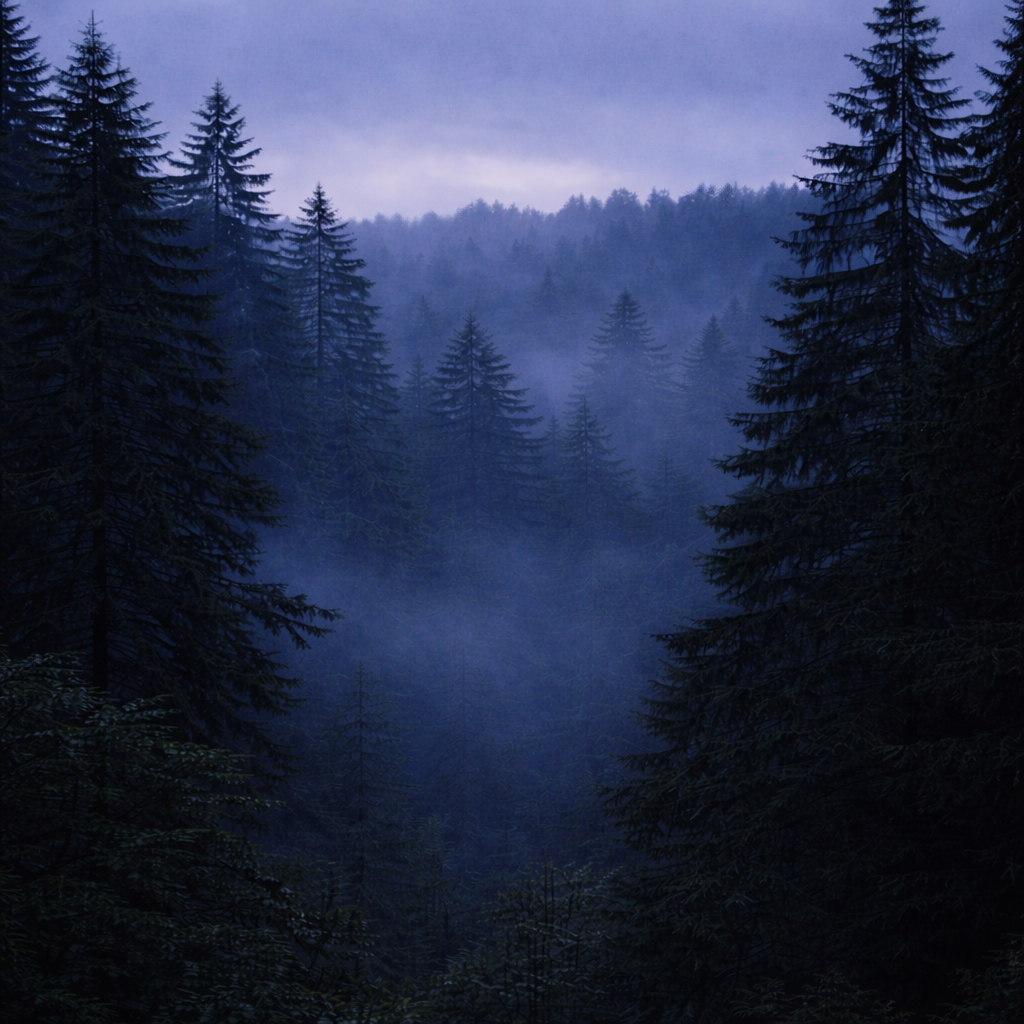
And when rain moves through the firs and the sea hums somewhere beyond the trees in the Pacific North, I allow myself rest without guilt, trusting that in the darkness something essential is being tended — being healed.
Sleep is not weakness. It is one of life’s oldest forms of wisdom. It is how we return, again and again, to ourselves.
© Nicolette Kolar Queen’s Crown & Akhenaten
메타데이터
- post_id
- 97b356b7a7f6
- slug
- the-mercy-of-surrender-97b356b7a7f6
- url
- https://medium.com/@QCA/the-mercy-of-surrender-97b356b7a7f6
- canonical_url
- https://medium.com/@QCA/the-mercy-of-surrender-97b356b7a7f6
- author_url
- https://medium.com/@QCA
- status
- ok
- fetched_at
- 2026-07-14 21:36:38