Biotechnology: Where Life Science Meets Human Ingenuity
The evolution in medicine & improving health
Biotechnology: Where Life Science Meets Human Ingenuity
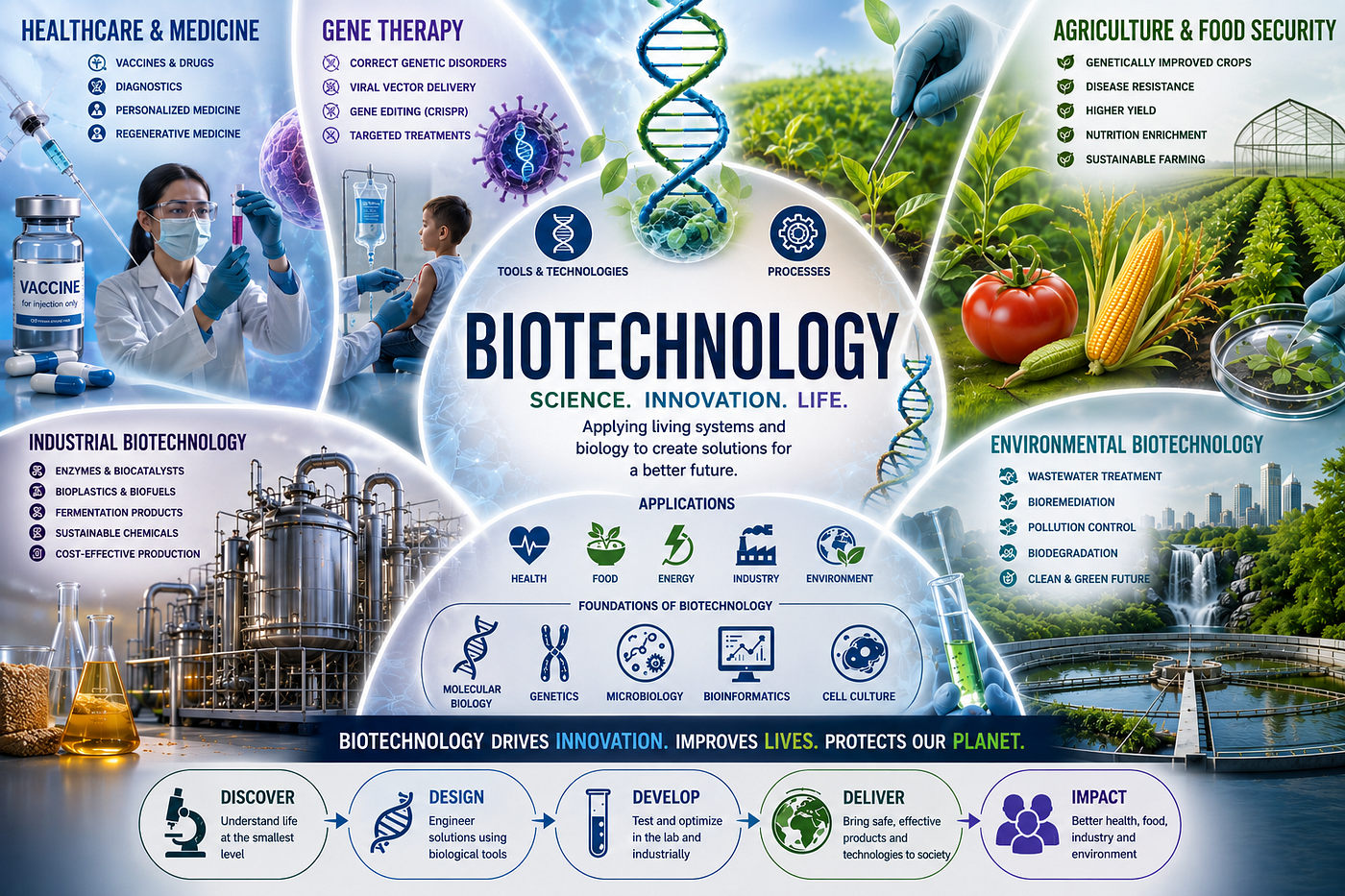
Introduction Now, walk into any hospital, farm or research lab in the world and there is a good chance biotechnology is working behind the scenes. And it is so easy to miss, without the shimmering lights and chilling headlines. Yet the insulin that keeps a person with diabetes alive, the blight-resistant wheat that feeds hundreds of millions and the unprecedented vaccines against COVID-19 that helped pull stubbornly out-of-control outbreaks back to something resembling normalcy: All them lead back here, into this one proverbial space at the intersection of biology and technology. It impacts nearly every aspect of our day to day lives, the most common often being hidden in how we combat disease, grow food and protect nature. It is the understanding you need to unwrap a big part of what makes the modern world tick under it all. What Biotechnology Actually Means Biotechnology is essentially using living systems — cells, enzymes, bacteria or even complete organisms — to create something that is useful. That’s it. You are just taking the natural processes and if you strip away all of the acronyms and jargon, you’re basically trying to do it in a way that benefits, you know. For thousands of years, humans have done a crude version of this, fermenting grapes into wine or breeding heavier crops. Strip it down and it’s basically about taking what nature already does so well, and then, just nudging it a bit so it ends up helping people. Humans have been doing a rough version of this for thousands of years too, like when people fermented grapes into wine, or when they aimed for stronger crops through breeding. The Precision Revolution — CRISPR and Others This precision is how and why modern biotechnology feels so much like science fiction. Take CRISPR, for instance. Editing a single gene with high precision was decades off in the future. It is now a commonplace tool, used in labs across the globe, correcting genetic disorders and engineering drought-resistant crops, even investigating how to battle cancer at the cellular level. This is truly one of those rare moments in science where the technology was available and immediately started impacting life — crossing over from theoretical feasibility to everyday lab use quicker than nearly anyone imagined.

Biotechnology in Medicine Most people probably first come into contact with biotechnology through medicine, even if they don’t know it. Vaccines, antibiotics, cancer therapies, diagnostic tests — so much of modern healthcare is either based on or was greatly enhanced through biotech research. Gene therapy is one big example of this. And actually go in and fix the genetic issue that results in things we once thought were lifelong chronic conditions (that you would just be forced to manage). This shift , from dealing with symptoms to mending the real root causes, might end up being one of medicine’s most defining transformations , you know. Beyond Healthcare , agriculture , industry , and the environment
Biotechnology isn’t just for physicians, hospitals; It’s also used by farmers to grow new types of crops that can withstand pests or harsh conditions, as well as inexpensively treat farmland that has been devastated by natural disasters due to extreme weather. There are many examples of industry utilizing biotechnology for producing more environmentally-friendly materials and methods of manufacturing and packaging. Bioremediation is handled with the help of environmental scientists who work with biotechnology as well in cleaning up spills and/or contaminated soils with the use of microorganisms. Most food products sold in the grocery store have some biotechnology applied in producing the longer shelf life and/or fortification process that makes it possible for consumers to have them. Ethical Questions Worth Asking There’s no denying that legitimate discussions exist regarding the ethics associated with gene editing, safety of genetically modified organisms, and access to these technological advances; these discussions should continue. Because of the authority enjoyed by this field, it must have a thorough examination, rather than being left solely to the political, scientific, and business communities that once controlled its fate and destiny. It is noteworthy that the individuals involved in biotechnology have evolved into more than scientists, they have started interacting directly with ethicists, policy-makers, and the general public to determine appropriate boundaries, understanding that what occurs in the biotechnology laboratory ultimately affects all of society. Careers in Biotechnology: More Paths Than You’d Expect When you think of a career in biotechnology, many people envision being a scientist in a lab coat working at a microscope. While that image is correct, it does not portray the entire diversity present in this field. Biotechnology has grown tremendously in scope and cover. There are various types of professionals working in biotechnology now than ever before, many of them do not have previous biotechnology experience. Many of the job roles that are now available within this industry have also only been around for a short time.

The research side of biotechnology is a prime example of the growth of the industry. There are still traditional scientific experiments, sequencing DNA genomes and developing drug product candidates being performed by scientists in the laboratory. However, the way research is being performed has also changed dramatically. A significant portion of modern scientist perform their research on computers instead of the laboratory bench, resulting in a dramatic expansion of bioinformatics as a rapidly growing specialty. Individuals working in bioinformatics spend their time performing statistical and computational analyses of DNA, developing models of protein structure and searching large genetic databases for patterns or trends that would be extraordinarily difficult to detect through human analysis alone.They perform biology-related tasks, but also perform coding, statistical and problem-solving tasks. The second area of biotechnology is applied or practical biotechnology, the actual production of biologic products such as vaccines, enzymes for industrial detergent applications, and biofuels. To produce these products, process engineers scale promising lab discoveries so that they can be manufactured and delivered in a safe and consistent manner. Quality control personnel perform extensive testing of products to ensure they conform to strict safety guidelines. All this work is not flamboyant but is necessary to assist discoveries to EXIT the lab. This is fantastic news for new graduates too! Many disciplines are represented by a biotechnology degree, so students are not limited to just one track. For example, someone who enjoys hands-on work in a lab can pursue drug discovery or the study of genes, and someone who loves data and computation can pursue bioinformatics or computational biology. People in biotechnology can also find opportunities in areas such as regulatory affairs, industrial biotechnology, and agricultural science. All of these opportunities have one thing in common: they allow individuals the opportunity to do important work. You can play a part in finding new treatments for cancer, developing better crops to feed a needy area, or creating a more eco-friendly way to manufacture products. Because of this, many people who are involved in biotechnology admit that they would love to continue to work within this industry, despite the many hours they put into learning about their field. Regulatory affairs is another career pathway that tends to surprise people. Regulators need to have a good understanding of both the underpinnings of the science and the legal requirements for delivering a new pharmaceutical product on the market. Thus, regulatory personnel guide new drugs or genetically modified crops through the regulatory pathway, which can take multiple years. This position has components of science and diplomacy and is critical, as a misstep could delay the introduction of a life-saving medication for months. There are additional career opportunities for individuals who have an interest in the communication and policy aspects of biotechnology. There are a large number of people whose work it is to take extremely complex scientific research and make it understandable to the layperson, investor, or government official. Examples of these positions include technical writers, patent attorneys, and consultants. Where This Is All Going As some may attempt to claim, biotechnology is not just a fad (as was electrical power or the internet); it is becoming a component of the structure or infrastructure of contemporary society. The next developmental phase of biotechnology will be the introduction of the technologies (lab-created organs, agricultural production designed for global climate change, and medical treatments based upon an individual’s biochemical makeup) that we can only dream about at this point in time. Regardless of the development of the next technology within biotechnology, one prediction is certain – the division of biological composition and technological systems will continue to blur, which will ultimately benefit everyone on the planet.
메타데이터
- post_id
- 97cebce3655e
- slug
- biotechnology-where-life-science-meets-human-ingenuity-97cebce3655e
- url
- https://medium.com/@AMMWrites/biotechnology-where-life-science-meets-human-ingenuity-97cebce3655e
- canonical_url
- https://medium.com/@AMMWrites/biotechnology-where-life-science-meets-human-ingenuity-97cebce3655e
- author_url
- https://medium.com/@AMMWrites
- status
- ok
- fetched_at
- 2026-07-13 06:23:13