Content Architecture Is the Part Everyone Gets Wrong.
We have covered the missing layer and why a theme is not a design system. This week, the part of the Experience Platform that is least…
Content Architecture Is the Part Everyone Gets Wrong.

We have covered the missing layer and why a theme is not a design system. This week, the part of the Experience Platform that is least visible and most often wrong: content architecture. The way content is structured and managed determines whether a business can actually use its own website, or whether it spends years fighting a system that was never designed for how it works.
There is a moment that happens in almost every client conversation I have about their existing website.
I ask them to show me how they update their content. How they add a new project, publish a new service, update a team member’s bio. And somewhere in that demonstration, usually within the first few minutes, there is a pause. A moment of hesitation before clicking something. A comment like “this part is a little confusing” or “we usually have to ask our developer to do this” or “honestly, nobody really updates this section.”
That pause tells me everything I need to know. The content architecture was built around the platform’s logic, not the business’s logic. The people who own the content have had to learn an abstraction, someone else’s model for what content is and how it is organized, instead of working with something that reflects how they actually think about their business.
This is the most common and most costly mistake in web development. And it is almost never discussed as the foundational problem it is.
The Platform’s Logic Versus the Business’s Logic
Every CMS has an internal model for how content works. Pages, posts, categories, taxonomies, custom fields. These are the structural primitives the platform uses to organize and store information. They are designed to be flexible enough to handle many different types of content for many different types of businesses.
That flexibility is also the trap.
When a developer builds a site on a generic CMS without a deliberately designed content architecture, they tend to map the business’s content to whatever the platform’s primitives most closely approximate. A contractor’s project portfolio becomes a post with custom fields bolted on. A services page becomes a static page because there was no obvious way to make it dynamic. A team section becomes a custom post type that nobody on the content team fully understands how to manage.
The result looks reasonable from the outside. The content displays correctly. The pages work. But inside the CMS, the structure makes sense only to the developer who built it, and sometimes not even to them six months later.
The content team, the people who actually have to manage this system, add new projects, update descriptions, publish announcements, encounters something that does not match how they think about their own business. They have to translate. They have to learn the developer’s model rather than working with a system that reflects their own. And that translation effort compounds every time someone new joins the team, every time the business adds a new service line, every time something needs to be updated under deadline pressure.
Over time, most businesses end up with sections of their own website that nobody updates because updating them is too difficult or too confusing. The content goes stale. The site stops reflecting what the business actually does. And the cost of fixing it, rebuilding the architecture that should have been right from the beginning, is significant.
What Content Architecture Actually Is
Content architecture is the design of how information is structured, named, and managed. Built around how the business actually thinks about its content, not how the platform happens to organize data.
For a contractor, that might mean a project content type with fields for the project type, the client industry, the scope of work, the outcomes, and a gallery of results. Not a generic post with custom fields. A model that reflects how a contractor thinks about a project, with field names and structures that make sense to someone who has never seen the backend before.
For a studio, it might mean a work type with fields mapped to the specific way that studio categorizes its output. Case studies, process documentation, outcomes. Each field named for what it represents in the studio’s own language, not in the language of the platform.
For a professional services business, it might mean a services architecture that reflects the actual relationship between service lines, sub-services, and the specific value each one delivers. Not a flat list of pages. A structured model that allows the business to surface content in whatever combination makes sense for a given audience.
The quality of a content architecture is measured by one thing: can the people who own the content manage it confidently, without help, on their first week? If the answer is no, the architecture was built for the developer, not the business.
How the EFX Experience Platform Handles This
The EFX approach to content architecture starts before a single page is designed.
The first step is understanding how the business thinks about its own content. Not what content they have. How they categorize it, how they talk about it, how they make decisions about it. A contractor does not think in blog posts and custom fields. They think in project types, client industries, and project outcomes. The content architecture should reflect that, and the CMS should feel like it was built for a contractor specifically, because it was.
The second step is mapping that mental model to a structured content model that travels correctly through the platform. Each content type defined with intention. Each field named for what it represents in the business’s language. Each relationship between content types built to reflect the real relationships in the business. A service that has associated case studies, a team member who has associated projects, a project that has associated services.
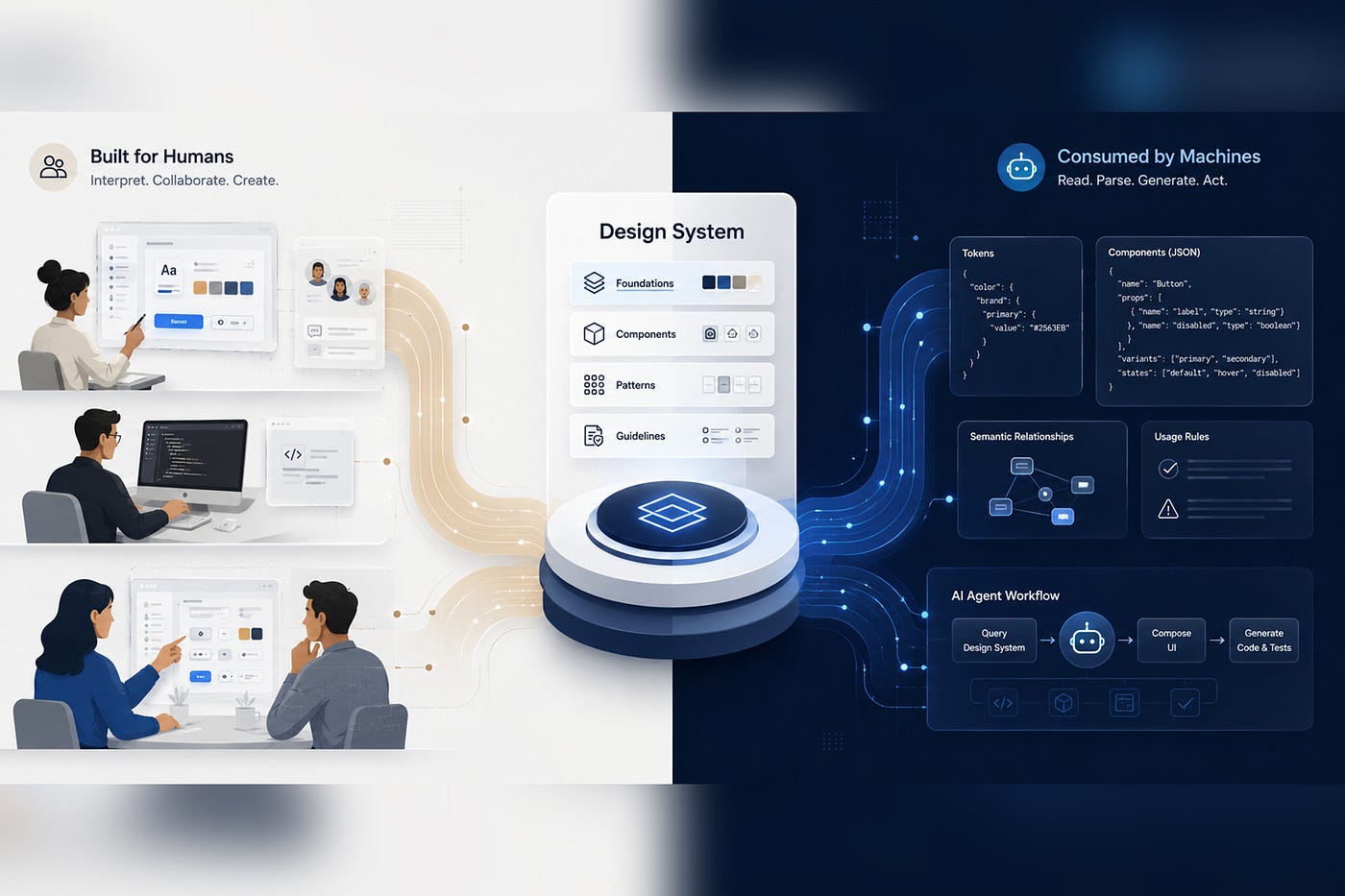
The third step is integrating that content architecture with the design system. The design system defines how things look. The content architecture defines what things are. When the two are designed together, when the content model and the component library are built in coordination, every content type renders correctly in every context, every time, without manual intervention.
This integration is what makes the CMS feel tailored rather than generic. The client is not fighting the platform. They are working with a system that was designed around how they think.
Why This Matters as AI Enters the Picture
Structured content with clear architecture is exactly what AI needs to be useful rather than generic.
When an AI agent is generating content for a business, a project description, a service summary, a team bio, the quality of what it produces depends entirely on the structure it has to work with. Clear content types with well-named fields give the AI specific context about what each piece of content is for and what it should contain. Generic page structures with vague fields give the AI nothing specific to work from, and it produces generic output.
The same applies to AI-assisted search and discovery. Structured content with meaningful metadata travels correctly to AI-powered search engines and recommendation systems. Unstructured content in generic page templates does not. As AI becomes a primary channel for how people discover and interact with business content, the quality of the content architecture underneath determines whether that content is findable at all.
The content architecture is not just the foundation for how the CMS works. It is the foundation for how the business shows up in an AI-mediated world.
Eddie Lou is a UX and Design Engineering leader with 30+ years of experience at Cisco, PayPal, Apple, Visa, BigCommerce, and Indeed. He is the author of the Design Engineering Handbook (InVision / Design Better) and the founder of EFX Design, a design and development studio specializing in experience platforms, design systems, and custom product development.
Interested in evolving your design system? Let’s talk.
메타데이터
- post_id
- 980a2a7b855c
- slug
- content-architecture-is-the-part-everyone-gets-wrong-980a2a7b855c
- url
- https://medium.com/@ed-lou/content-architecture-is-the-part-everyone-gets-wrong-980a2a7b855c
- canonical_url
- https://medium.com/@ed-lou/content-architecture-is-the-part-everyone-gets-wrong-980a2a7b855c
- author_url
- https://medium.com/@ed-lou
- status
- ok
- fetched_at
- 2026-06-09 15:37:30