After Reading 100+ Books, These 7 Are the Only Ones I Rated 5 Stars
I genuinely think your year gets better if you read 3 of them
After Reading 100+ Books, These 7 Are the Only Ones I Rated 5 Stars
I genuinely think your year gets better if you read 3 of them
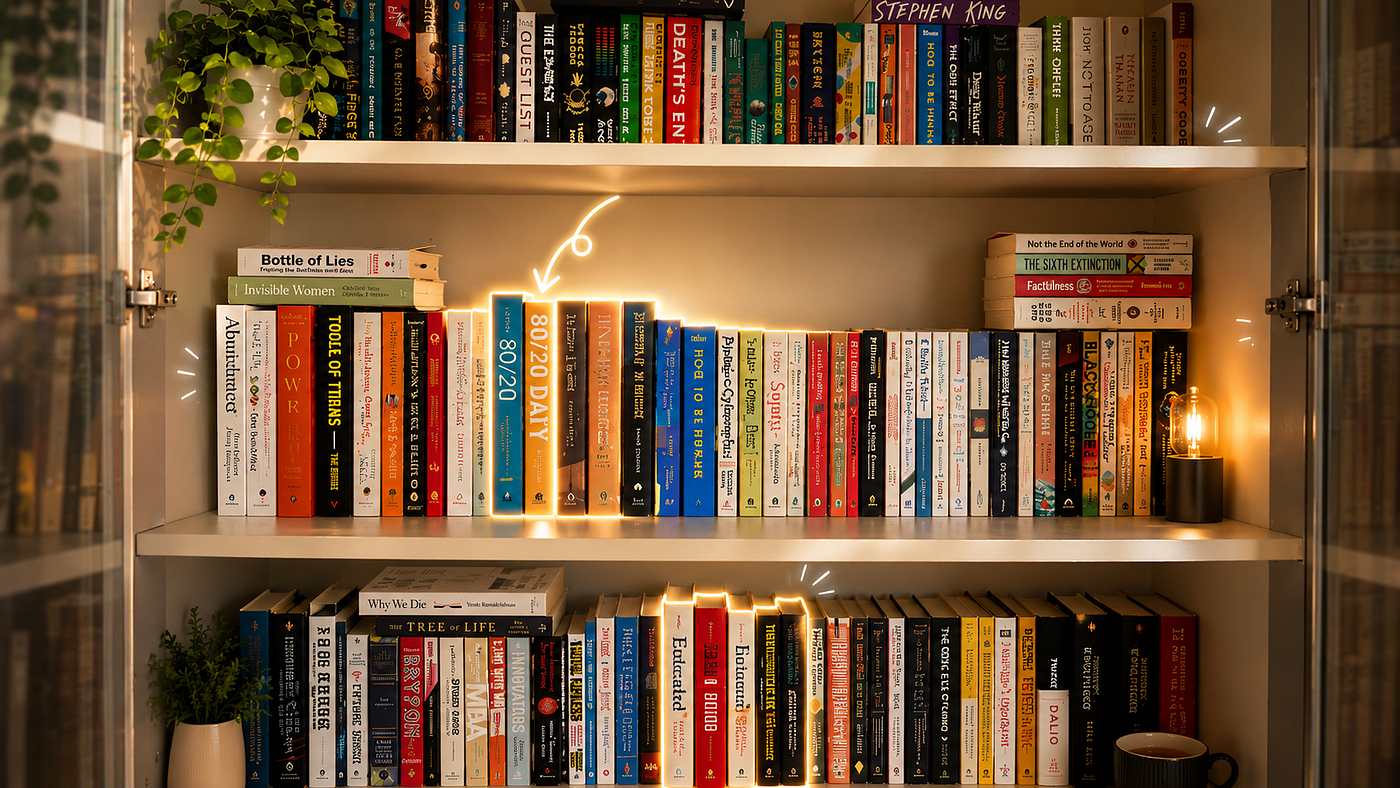
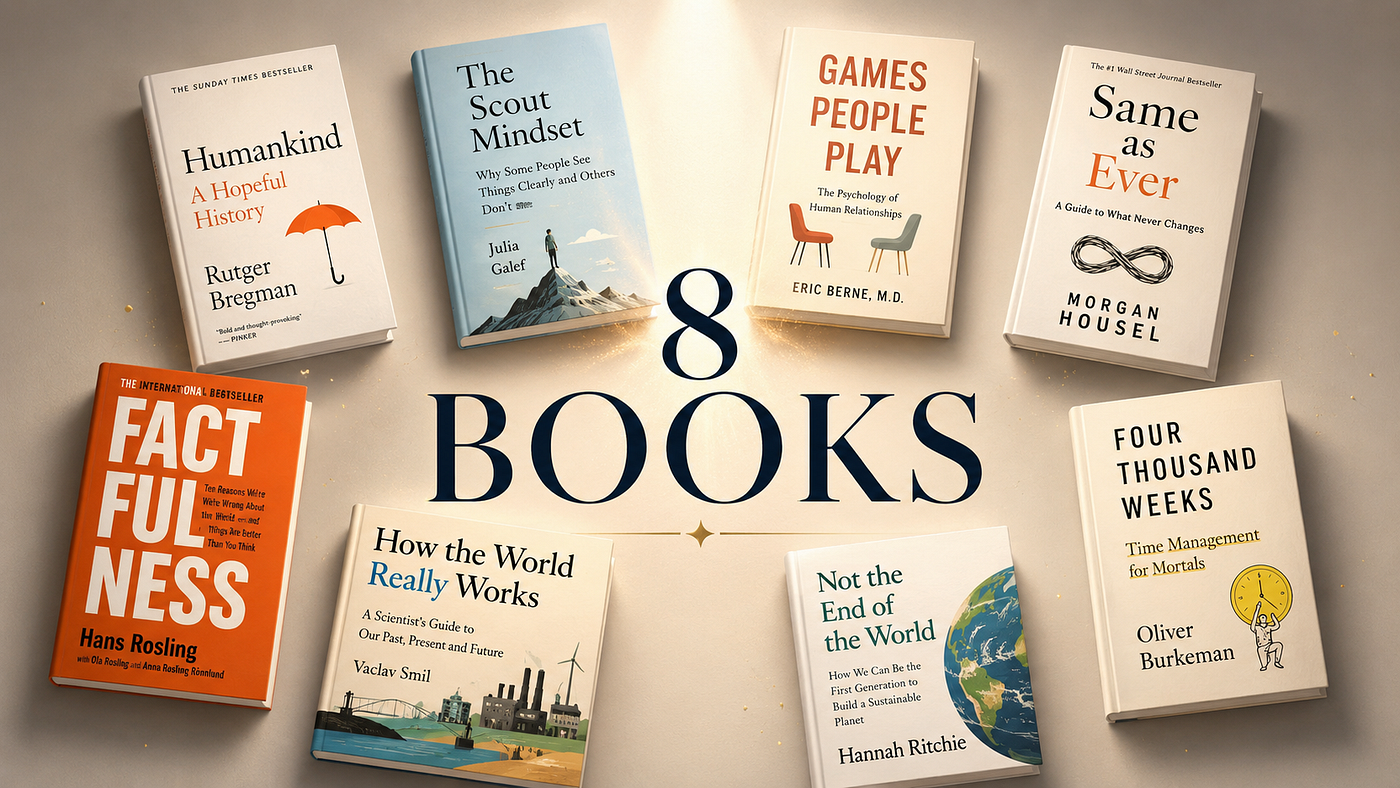
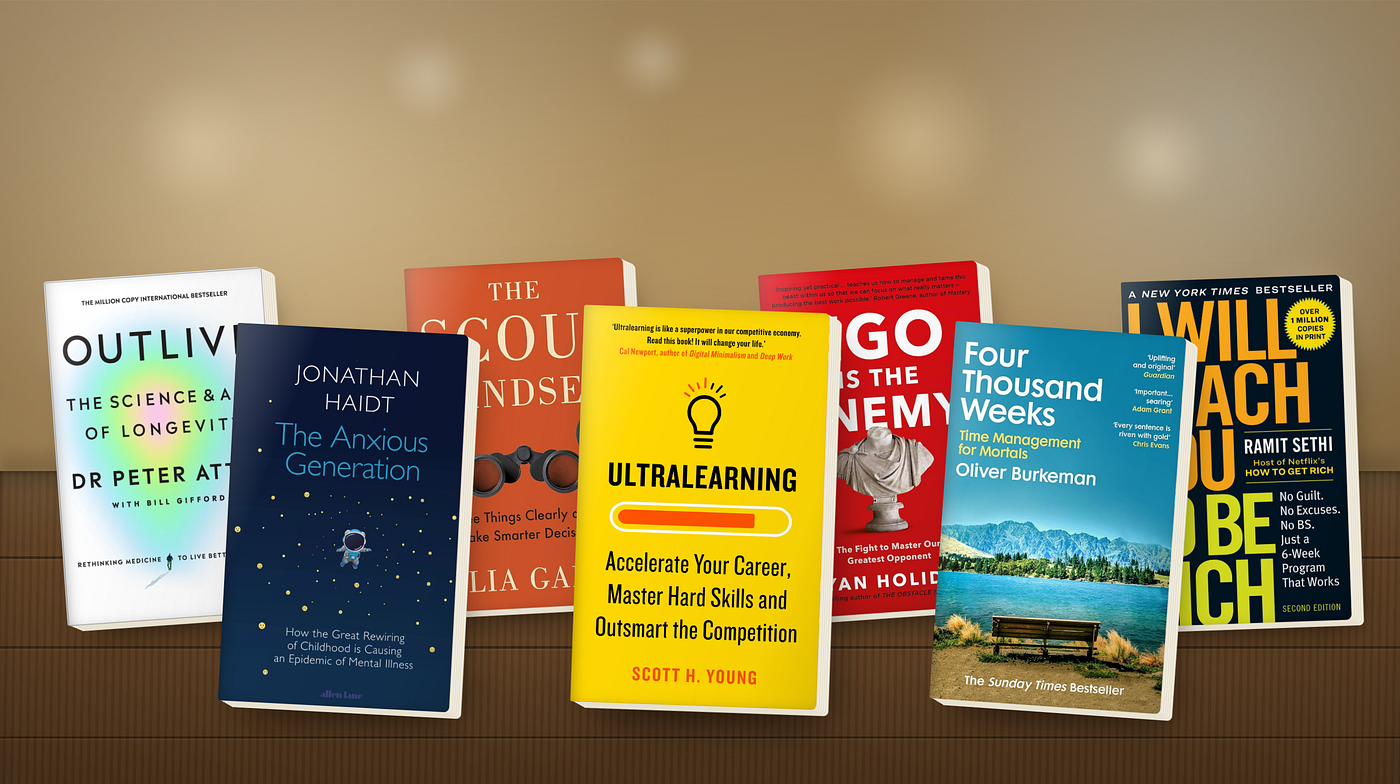
Source: Photo by Author, Edited in GPT 5.5
In November 2025, I quit my job and became a full-time creator, and one of the main things that helped me with that decision, besides financial runway calculation, was books.
I have been writing online since 2016, and for most of those years, I worked on my content in the gaps I got between full-time roles. I published while commuting, on weekends, before sunrise, and after dinner. I tried every productivity system, read every business book, and joined every online course. Unfortunately, most of it was noise.
But somewhere in the middle of all that, I started reading 70+ books a year, mostly non-fiction, not to show off, but for survival. I needed frameworks that actually worked because my time was limited, my audience was demanding, and my employer needed me focused.
Of the 100+ books I have read over the last couple of years, I have rated exactly 7 of them 5 stars.
My rating system runs from 1 to 5, and a book can be excellent and still get a 4. To earn a 5, it has to do more than entertain or inform. It has to leave a fingerprint on the person I became after reading it.
Here are those 7 books, with one specific idea from each that actually did the work.
#1 The Art and Business of Online Writing by Nicolas Cole
This is the book that played a significant role in building my writing career.
The author began his journey as an online writer on platforms like Quora and Medium, accumulating more than 100 million views before he turned 30. He was the most-read writer on Quora, a Top 10 columnist for Inc Magazine, and the founder of a multi-million dollar ghostwriting agency. Then he wrote a book that gave away every framework he used to get there.
I make sure to integrate three of those frameworks into my work and content creation today.
Source: Image Generated by GPT 5.5
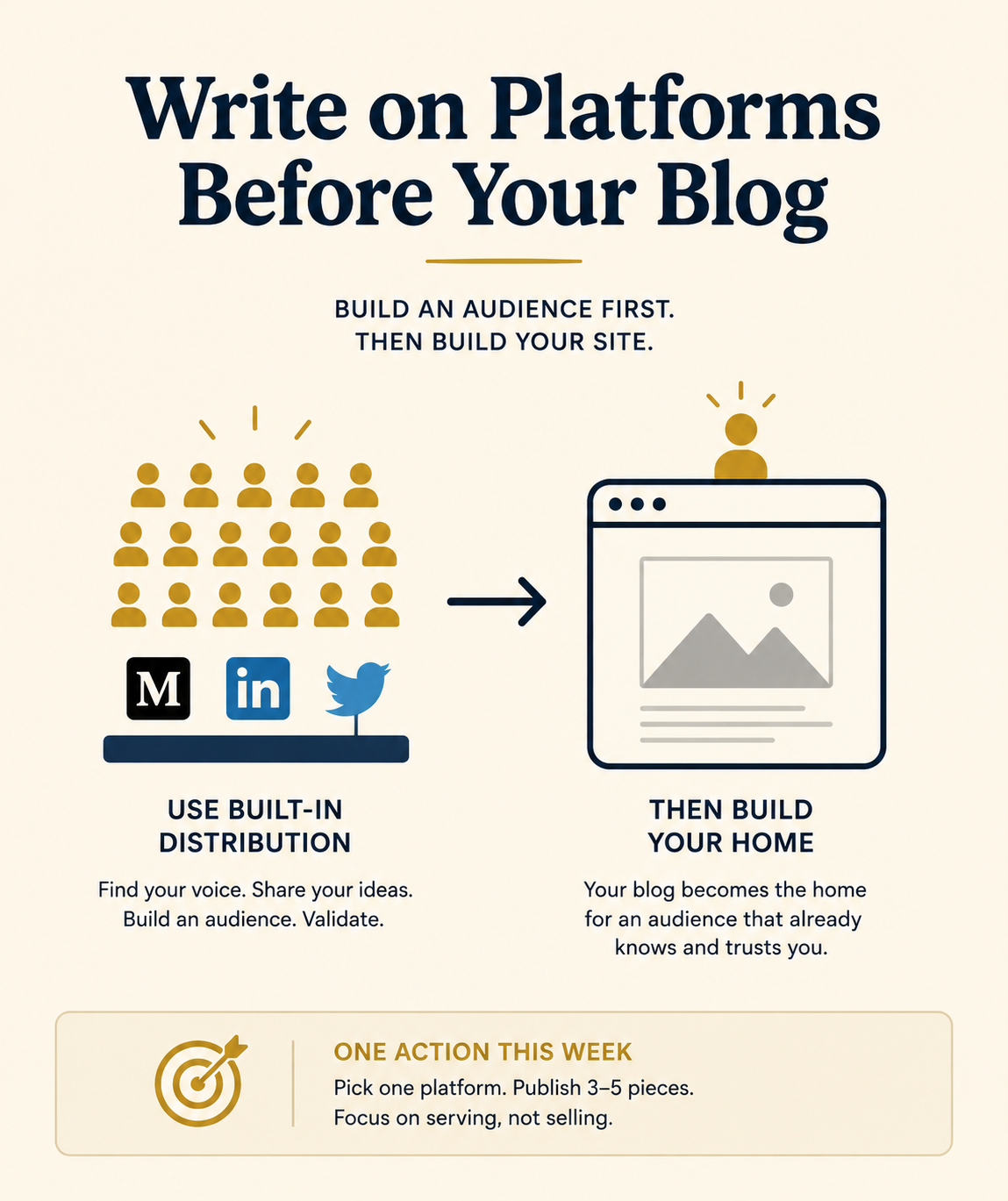
The first is the idea of writing on platforms before starting a blog.
I cannot tell you how many creators I have watched spend months building a site, picking fonts, and designing a logo while writing about nothing. Cole’s point is that the internet has built-in free distribution channels (Medium, LinkedIn, Twitter), and you should use those to find your voice and prove your ideas before you spend money on a domain. I was on Medium when I read this book, and it gave me permission to stay there.
The second is what Cole calls thinking in public.
Cole argues that the internet does not reward finished expertise as much as it rewards visible learning. People do not want to read the polished version of what you finally figured out. They want to read the messy middle, where you are still working it out, so they feel like they are figuring it out alongside you. This single idea had the biggest impact on my writing and helped me to stop trying to sound like a guru and start writing like someone two months ahead of the reader, not two years.
The third is his framework for headlines.
Cole suggests that your headlines should include specific numbers, specific outcomes, and specific audiences. His argument is that vague headlines die and specific headlines compound, and I 100% agree. Every Medium post I publish now passes through that filter before it goes live.
If you write online for a living or you want to, this is the only book that treats it like an actual craft with rules you can learn. The rest of the writing-advice industry is talking about how to sound smart, but Cole is talking about how to get read.
Best for: anyone who wants to turn writing into a career, not just a hobby.
#2 Four Thousand Weeks by Oliver Burkeman
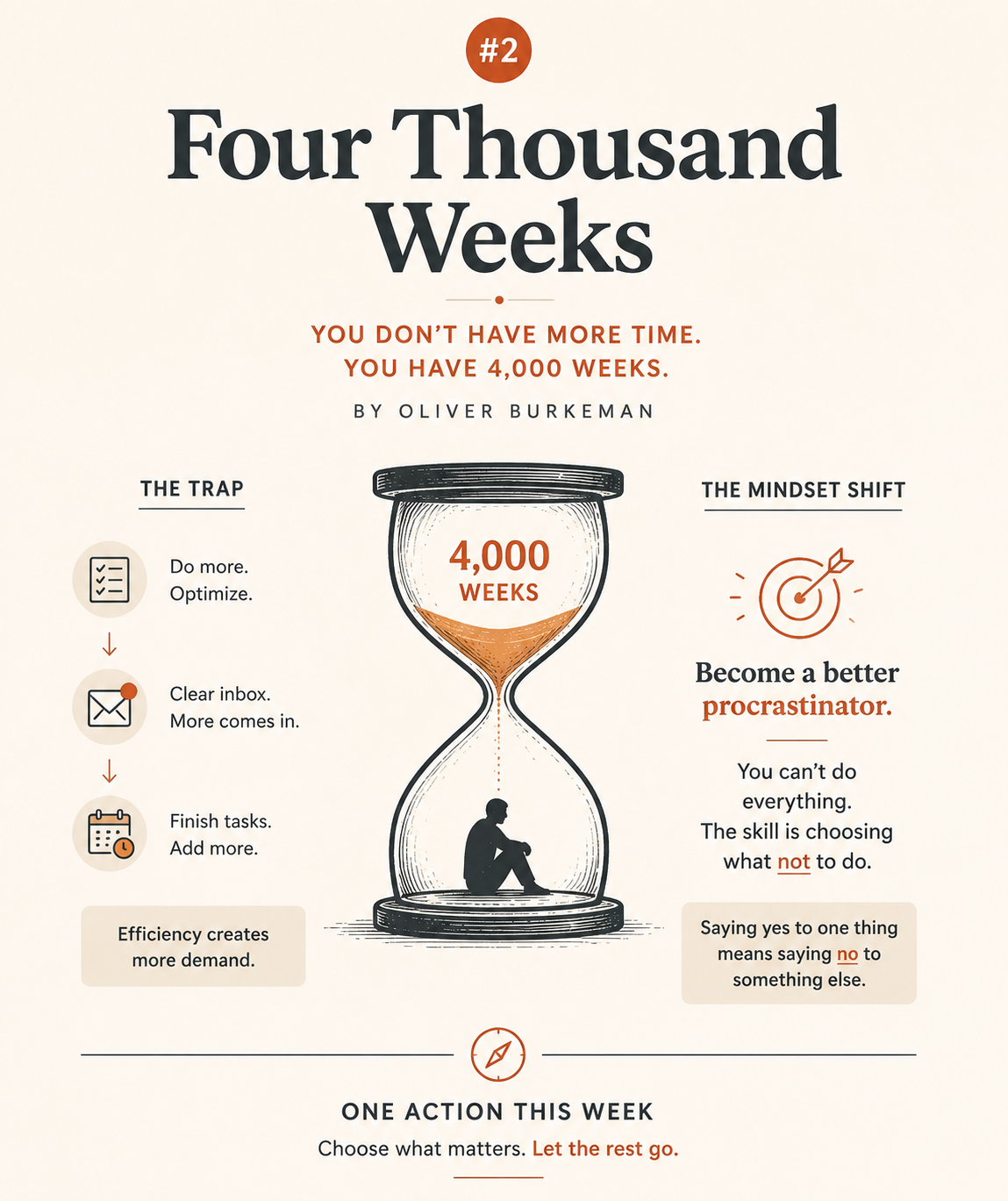
If you live to be eighty, you will have lived roughly four thousand weeks.
I remember reading that number and doing the math on myself. At the time, I was somewhere around 1,500 weeks in, which meant I had already burned through more than a third of my total allotment. And for a solid chunk of those weeks, I had been optimizing, planning, batching, scheduling, and doing everything the productivity internet told me to do in order to squeeze more out of each day.
Four Thousand Weeks is the book that made me stop and ask what I was actually squeezing it all for.
Source: Image Generated by GPT 5.5
Burkeman’s argument is that the entire premise of modern time management is broken. We treat time like a resource to be optimized, but the more efficient we get, the more demands pile up. When you finally think you have cleared your inbox, you just get more emails. And if you finish your task list earlier, you just add more tasks.
The idea in this book that rewired my brain is what Burkeman calls "becoming a better procrastinator," which basically suggests that, since you will never get everything done anyway, the real skill is strategically choosing what to neglect, and understanding that saying yes to one thing always means saying no to something else.
This book is the reason I am writing this post as a full-time creator, rather than squeezing it in between Slack messages at work. For years, I told myself I would do content creation full-time when I had more time. This book taught me that I would never find more time, and I had to choose.
So I chose.
Best for: anyone who feels behind, busy, or guilty about everything they haven't gotten done.
#3 $100M Offers by Alex Hormozi
$100M offers is a business book about making offers so good that people feel stupid saying no, and it is one of the most practically useful books I have ever read.
Alex Hormozi was broke on Christmas Eve 2016 after his business partner stole money from their gyms. Within a year, he had built his way to $1.5 million in monthly revenue, and this book reveals how he did it.
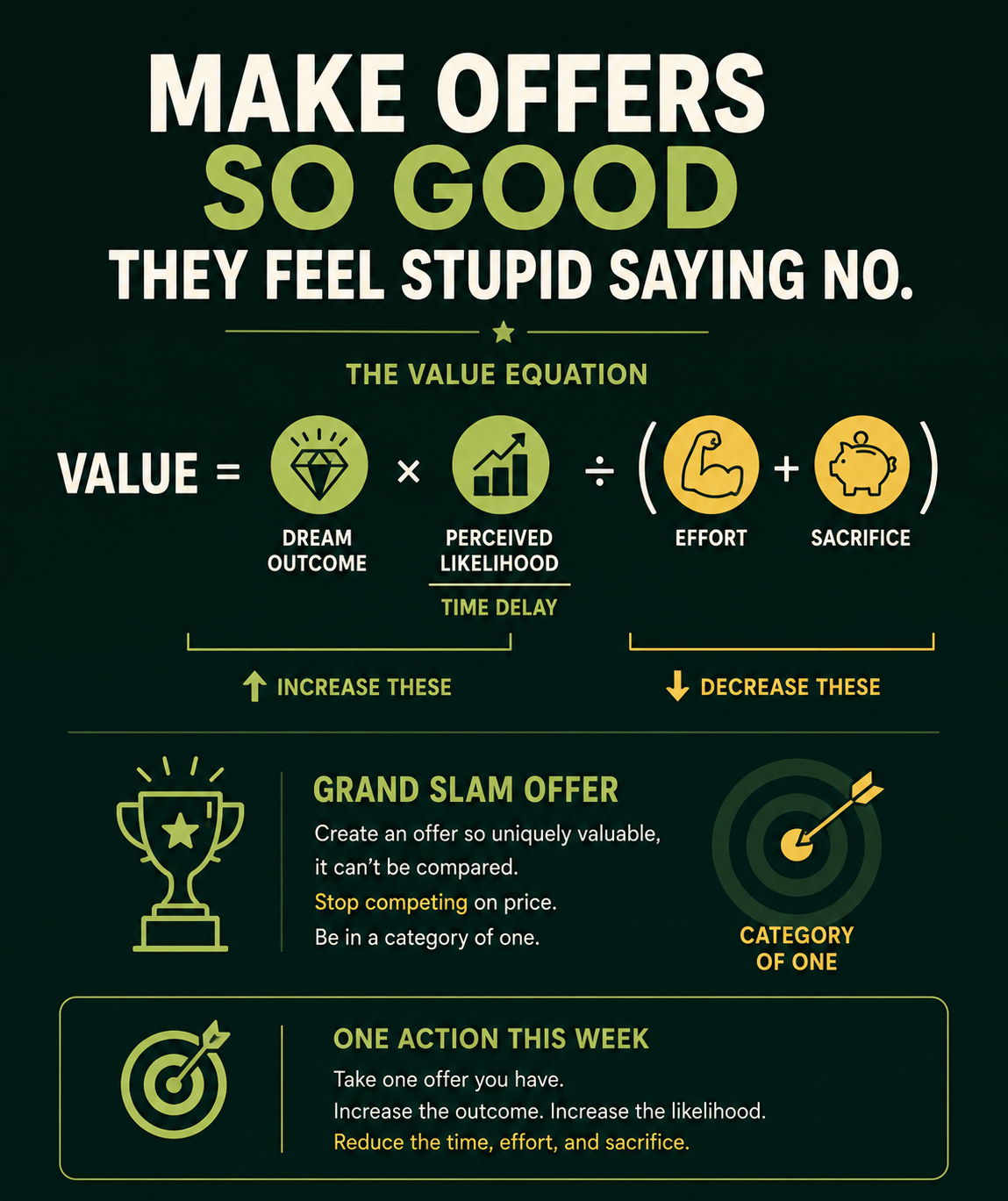
The core concept of this book is a framework called the Value Equation, which goes something like this:
Value = your Dream Outcome the Perceived Likelihood of Achievement/ Time Delay (Effort + Sacrifice)
Source: Image Generated by GPT 5.5
Your job, as someone selling anything, is to increase the top two and decrease the bottom two. Basically, you have to make the outcome bigger, make it feel more achievable, make it happen faster, and make it require less effort.
I wish I had this framework when I was first trying to turn my writing into actual products. For years, I uploaded things to Gumroad and just hoped they would sell. I was thinking about my products from my perspective instead of the buyer’s. But after reading Hormozi, I rebuilt every product page. My first product after that made over $1,000 in its first week, and I credit Hormozi’s value-stacking approach for that.
Another interesting idea in this book is the Grand Slam Offer, which is an offer so uniquely valuable that it cannot be compared to anything else on the market. Once you have one, you stop competing on price, and you are in a category of one. This concept changed the way I structure my digital products, set community pricing, and even write pitch emails.
If you are building anything you intend to sell to other humans, this book will pay for itself a hundred times over, and one of the reasons I gave it 5 stars is because it is blunt, direct, and it does not waste a single page.
Best for: any solo creator or small business owner who has tried to sell something online and watched it land with a thud.
#4 The E-Myth Revisited by Michael Gerber
I had seen this on bestseller lists many times, but I had resisted it for a long time because the cover looked dated and the title sounded like something my dad would read.
That was a mistake.
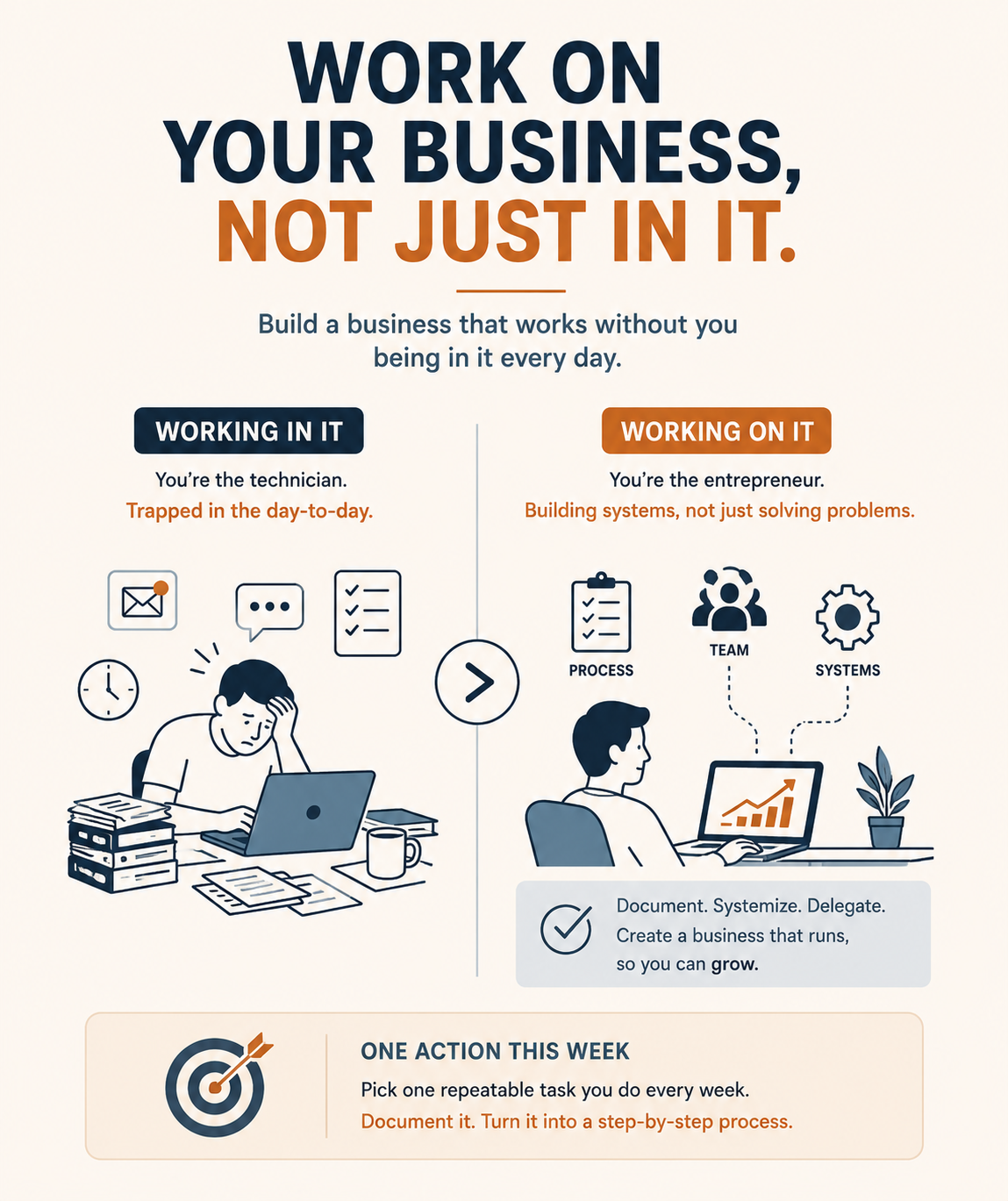
Gerber’s central insight is that most businesses fail because the person running them is a technician who happened to start a business, not an entrepreneur who happened to have technical skills. The technician thinks, "I am good at baking, so I should open a bakery," and spends 80 hours a week baking, managing inventory, handling customers, doing accounting, and wondering why they ever thought this was a good idea.
I saw myself in that paragraph immediately.
Source: Image Generated by GPT 5.5
When I started taking content creation seriously, I was doing everything, including writing, editing, formatting, scheduling, replying to comments, managing emails, handling brand deals, and updating my website. I was the technician working in the business instead of on the business. The book forced me to ask a question I had never actually asked before.
What would my work look like if I had to hand it off to someone else tomorrow? What processes need to be in place for my brand to run without me having to touch every single piece?
Even as a solo creator with no plans to hire anyone, that mindset shift was massive and pushed me to start documenting my workflows, building templates for every repetitive task, from newsletter formatting to brand-deal responses to weekly reviews. I stopped treating my business like a daily improvisation and started treating it like a system that should outlive my motivation on any given Monday.
Most college education is designed to train us to be good employees, but this book will teach you to think like someone who builds something that works without constant intervention.
Best for: any solo creator, freelancer, or small business owner who is also the entire operations team.
#5 Steal Like an Artist by Austin Kleon
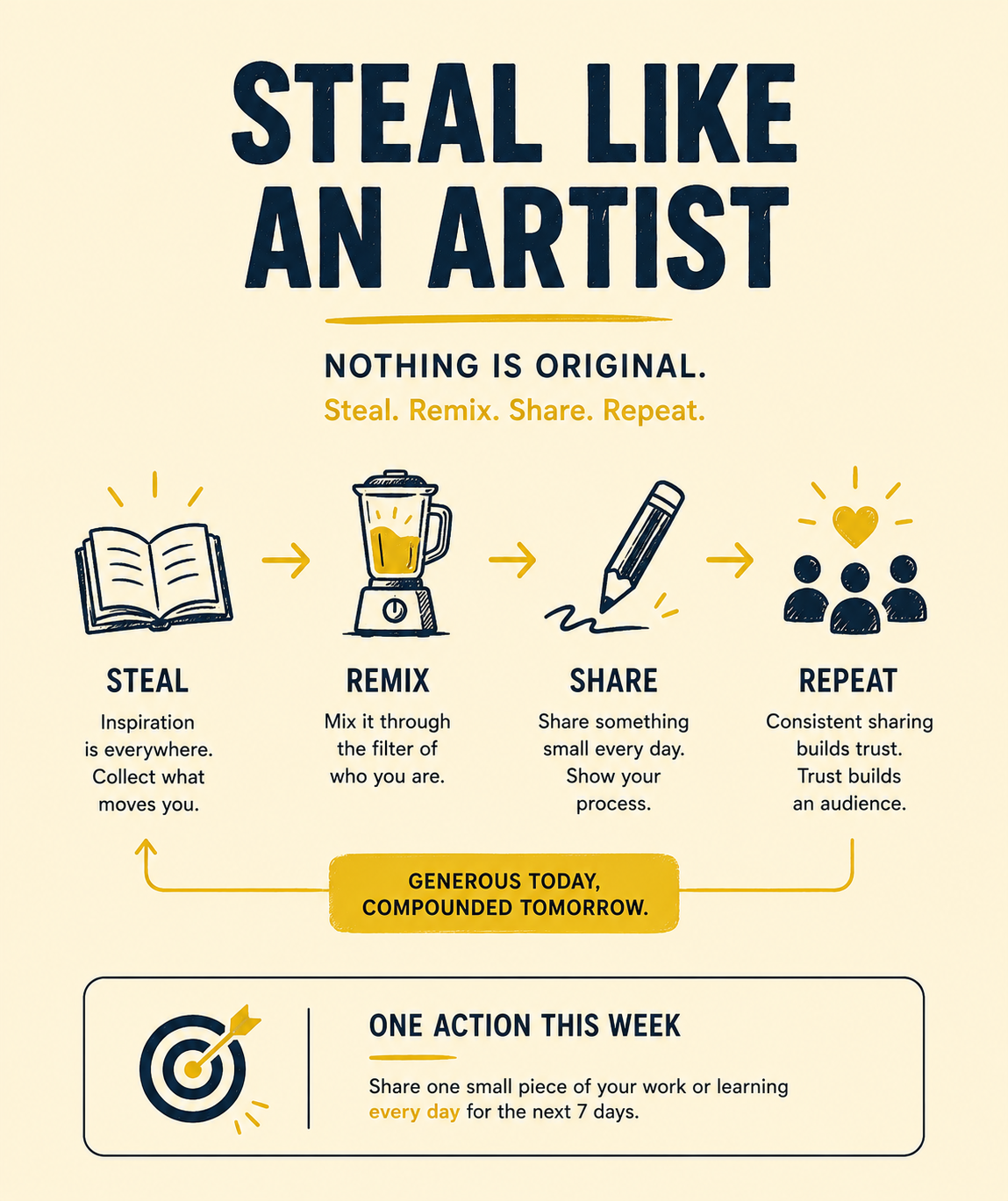
Austin Kleon’s central thesis in this book is that nothing is original and every artist, writer, and creator builds on the work of those who came before.
So, your job as your creator is not to invent something new from nothing, but to honestly absorb your influences, mix them through the filter of who you are, and put something into the world that bears your fingerprint.
The principle I liked the most is “share something small every day.” Kleon argues that the internet rewards consistent generosity, so instead of waiting until you have a masterpiece, you should share the process, the rough draft, the small win, and the thing you learned today.
Source: Image Generated by GPT 5.5
I have been writing online since 2016, and for the first five years, I published every single week while working full-time. I built an audience by being useful and sharing my process. And for the last 2 years, my side income has been surpassing my salary, motivating me to go full-time as a creator in 2025. Every principle in this book, from “show your work” to “teach what you know” to “be boring,” was part of my daily practice, whether I realized it at the time or not.
This is also one of those rare books under 200 pages, so you can read it in a single morning and then keep returning to it for years because it serves as both a starter pack and a check-in.
Best for: any creator who is waiting for permission to start sharing their work.
#6 Atomic Habits by James Clear
I know what you are thinking. Atomic Habits? The most popular self-help book on the planet? That is your sixth-place pick?
Hear me out.
Yes, the idea of compounding is not new, and yes, habit stacking has been discussed to death by now. But there are at least four concepts in this book that I have never seen explained as cleanly anywhere else, and most readers skip right past them because they get stuck on the “one percent better every day” headline.
Source: Image Generated by GPT 5.5
→ Motion versus action.
Motion can be classified into activities such as planning, researching, organizing, outlining, and watching tutorials, while Action is what actually produces results. You know, things like actually writing the article, publishing the post, and shipping the product.
But most people get stuck in the Motion phase because it feels productive and keeps you busy, yet motion rarely creates outcomes. Clear’s point is painfully accurate. He says that Motion delays failure, and Action risks it.
→ The Goldilocks Rule.
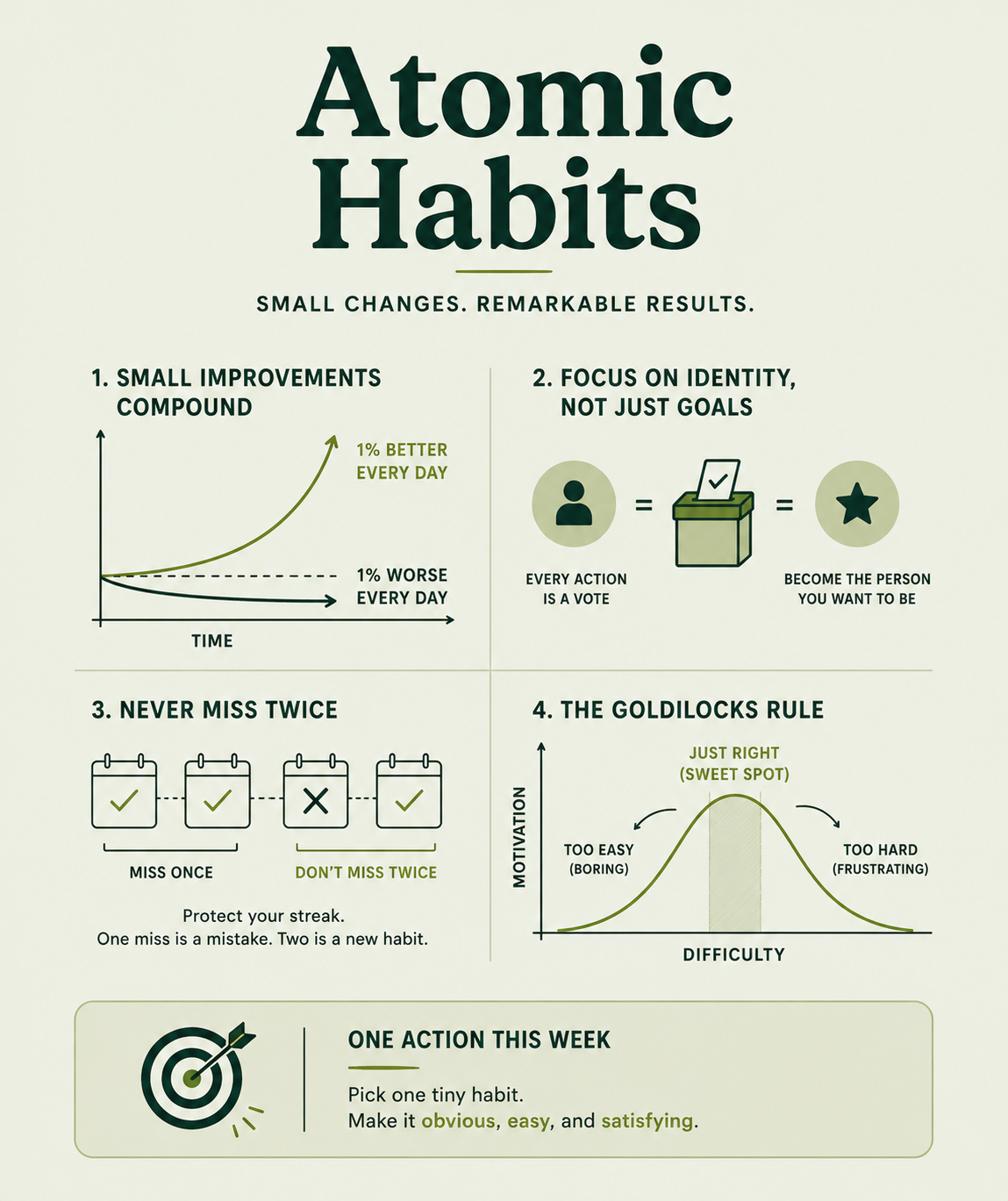
This is my favorite concept in the book: Motivation dies when something is too easy (boring) or too hard (frustrating). Clear says that the sweet spot is tasks that sit just slightly beyond your current ability. This is the reason why video games are addictive and why the best habits stick when the difficulty sits in that narrow zone.
→ Never miss twice.
Missing once is normal, but missing twice is the start of a new habit, and most people quit because they broke a streak. Clear says that you don’t have to worry about missing once, just never miss twice. This basically removes the “I ruined everything” mindset that kills most habit systems before they have a chance to succeed.
→ Habits as votes for identity.
James Clear wants you to treat every habit as a vote. If you want to build a habit of writing one page every day, that is a vote for being a writer. If you want to publish on YouTube, that is a vote for being a creator.
The reason Atomic Habits belongs on this list is not that it introduced compounding; it's because it gave me a vocabulary for understanding habits that no other book has matched.
Best for: anyone who has built a habit, broken a habit, or watched themselves abandon one and wants to know why.
#7 Tiny Experiments by Anne-Laure Le Cunff
Anne-Laure Le Cunff is a former Googler who quit her dream job after a health scare, completed a PhD in neuroscience, and built Ness Labs into one of the most-read newsletters about mindful productivity. Her thesis is that Life is not linear, but we try to force it into linear molds like four-year degrees, ten-year career plans, thirty-year mortgages, and end up burned out, stuck, or chasing goals we did not actually choose.
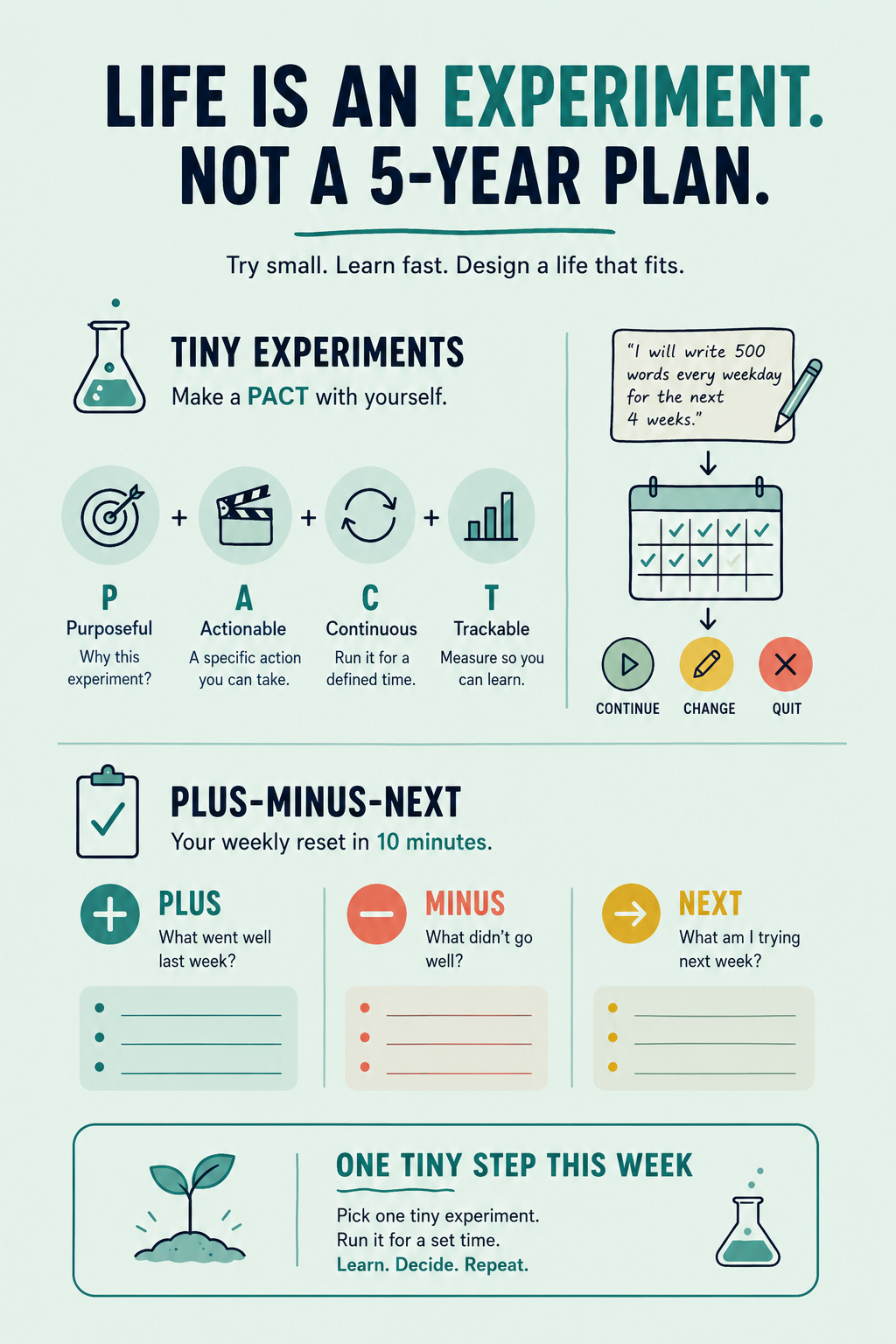
The alternative approach she proposes is the tiny experiment, where, instead of a five-year plan, you make a PACT with yourself.
PACT stands for Purposeful. Actionable. Continuous. Trackable. You write it as a sentence like, “I will write 500 words every weekday for the next four weeks,” and at the end of four weeks, you stop, look at the data, and decide whether to continue, change, or quit.
I read this book and immediately ran a personal experiment.
Source: Image Generated by GPT 5.5
Starting April 15, 2026, I committed to fourteen tiny experiments. Some are creative (publish one short-form video a day for two weeks). Some are health-related (no caffeine after 2 pm). Some are business (test a new digital product format). I now have a framework for trying anything in my life without overcommitting to a version of myself I might not be in six months.
The other concept from this book that I use every week is Plus-Minus-Next.
Every Sunday, I open a doc and write three lists: What went well last week (plus), What did not (minus), and What I am trying next week (next). It takes me less than 10 minutes and is the most useful productivity practice I have ever adopted.
If you have read Atomic Habits and felt like you are still doing it wrong, this is the missing companion. Atomic Habits tells you how to build systems, while Tiny Experiments tells you how to figure out which systems are even worth building for who you are right now.
Best for: anyone who keeps starting habits and quitting them, or who feels stuck following a plan that no longer fits.
What I have learned from reading 100+ books
Most books are forgettable. A handful are excellent. Almost none rewire you. The ones that do are the ones you find at the exact right moment in your life, when the question they answer is the question you happen to be asking.
That is why I rate so strictly. A 5-star book is not just a great book. It is a great book that arrived when I needed it.
If you have read this far, here is what I would do with this list.
Pick one of these seven books, ideally the one whose description in this post made you pause. Buy it, and read it this month. Apply one idea from the book for thirty days. Then come back and tell me what changed.
If you want to go deeper, I have built a few things for readers who want to do more than read.
Something that nobody tells you is that reading the book is the easy part. The 30 days after finishing the book are where it always falls apart, for almost everyone who’s ever highlighted a passage in a book and meant it.
That’s the gap I built the **Read to Transform** journal to close. It’s a 37-page fillable journal you open alongside whatever book you pick. It has one reflection page per day, with a worked example on every page, so you’re never stuck on what to write. It includes a pact you sign on day 14 that auto-fills the top of every page after, keeping the commitment visible, and it also has weekly trackers and a protocol for the days you miss, because you will.
All you need to do is spend ten minutes a day for the next 30 days, and it will turn the book you read into a specific change you actually keep in your life. I have priced it at $27, which is less than the book you’re about to buy, plus the breakfast you’ll eat the morning you start.
If you are a member of **The Useful Readers Book Club in Discord, DM for an exclusive 10% discount. You can check out the journal at the link below:**
The 150+ Book Database is a curated Notion database where I track every book I have read, including my full rating system, takeaways, and recommended reading order for different goals. It is the system behind this entire post.
메타데이터
- post_id
- 982f66dd4b69
- slug
- after-reading-100-books-these-7-are-the-only-ones-i-rated-5-stars-982f66dd4b69
- url
- https://medium.com/the-useful-life/after-reading-100-books-these-7-are-the-only-ones-i-rated-5-stars-982f66dd4b69
- canonical_url
- https://medium.com/the-useful-life/after-reading-100-books-these-7-are-the-only-ones-i-rated-5-stars-982f66dd4b69
- author_url
- https://medium.com/@raja96
- status
- ok
- fetched_at
- 2026-06-09 15:37:30