When Climate Systems Collide: The Cascading ESG Risks Reshaping Corporate Water and Climate…
Introduction: The Convergence of Climate Crises
When Climate Systems Collide: The Cascading ESG Risks Reshaping Corporate Water and Climate Strategy
Introduction: The Convergence of Climate Crises
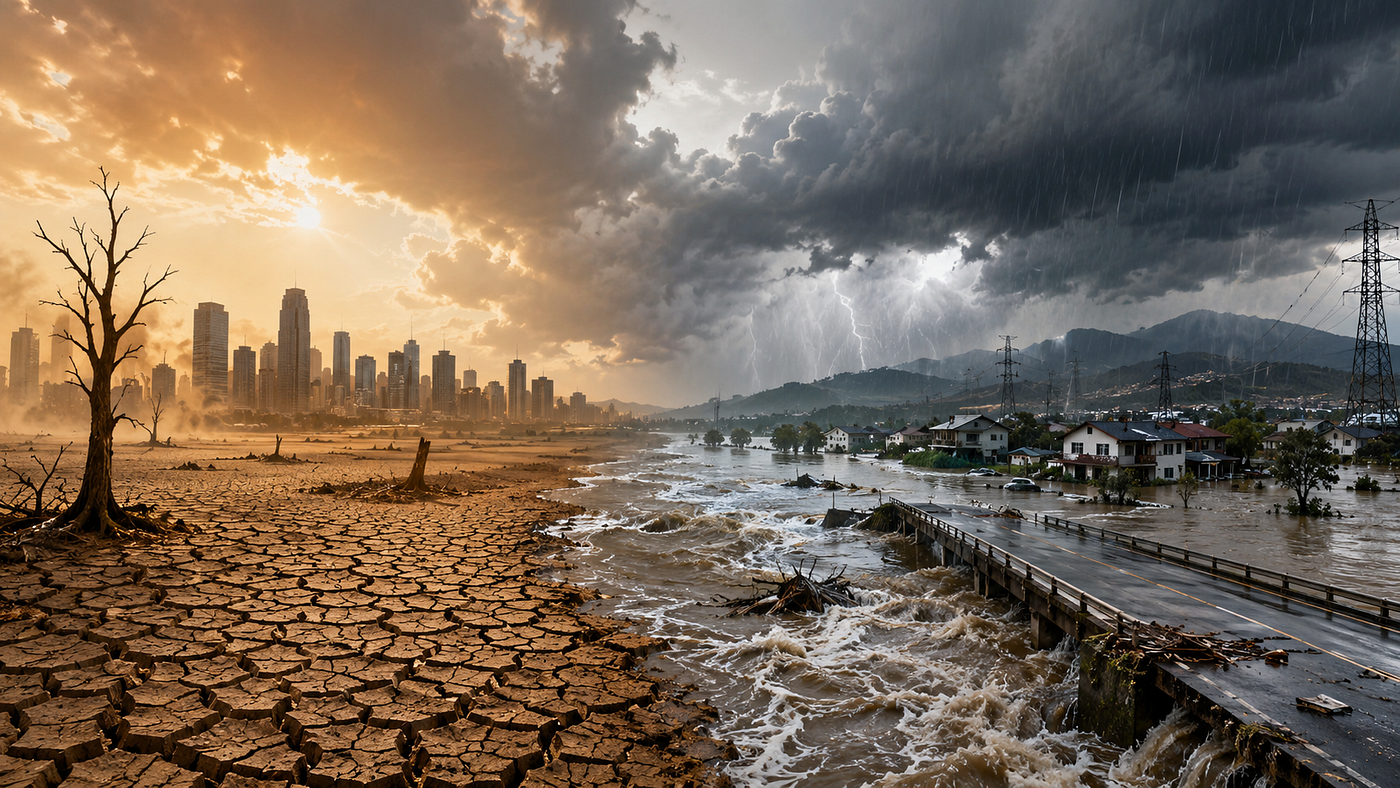
June 22, 2026, marks a pivotal moment in our understanding of interconnected climate risks. Today’s news reveals not isolated environmental challenges, but a complex web of cascading climate impacts that demand urgent corporate and policy responses. From India’s devastating heatwaves forcing schools to close and women to abandon employment, to the return of a potentially “Godzilla” El Niño threatening global food systems, we’re witnessing the acceleration of climate feedback loops that ISO 14064 and TCFD frameworks were designed to anticipate.
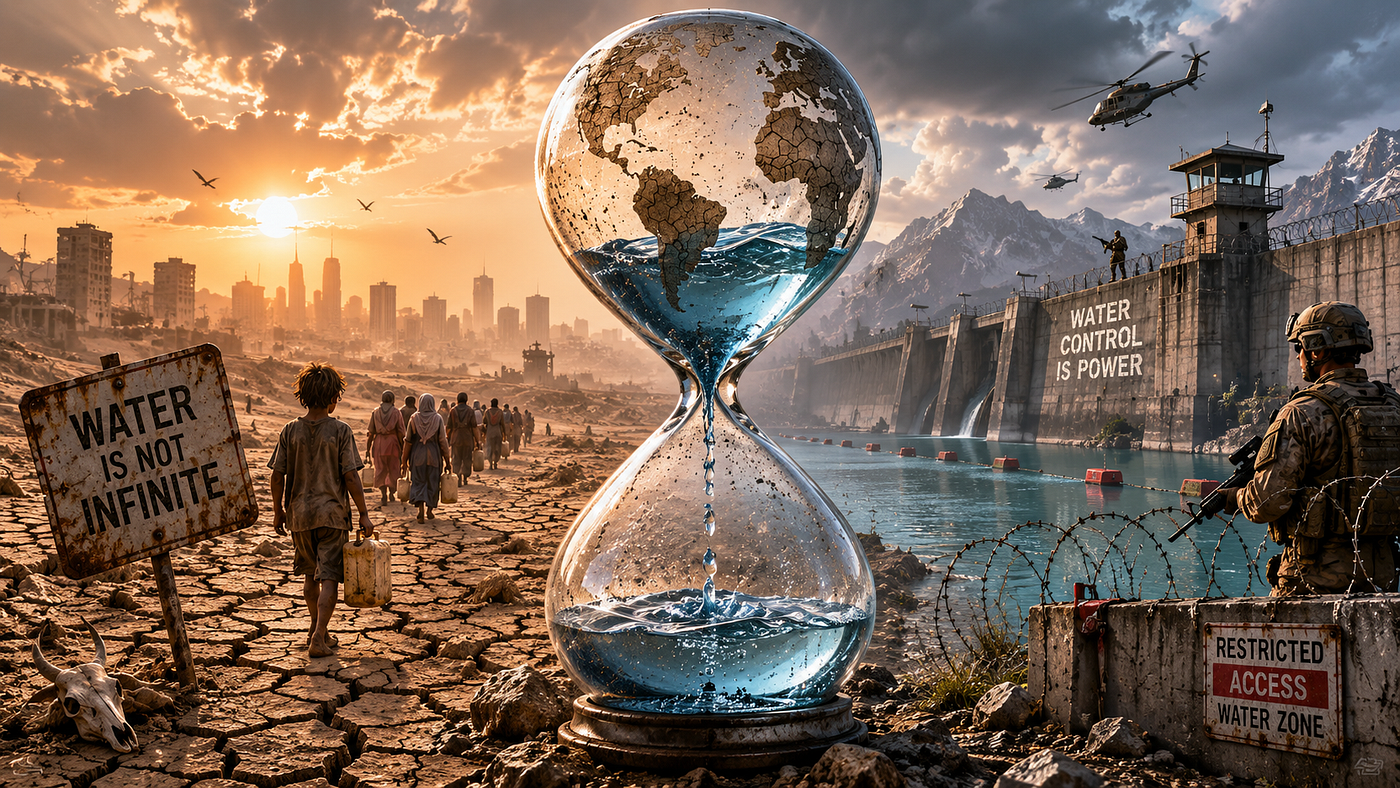
What connects these seemingly disparate stories — ocean monitoring networks, coral reef conservation, water treaty disputes, wildfire risks, microplastic contamination, and infrastructure upgrades — is water. Water as a climate variable, a security concern, an infrastructure challenge, and a medium carrying pollution. For ESG professionals, today’s developments underscore why water footprinting (ISO 14046) and integrated climate-water risk assessment can no longer be treated as separate workstreams. The physical risks materializing across multiple continents simultaneously demonstrate that corporate resilience depends on understanding these systemic connections. This article analyzes how these converging crises reshape ESG strategy, reporting obligations, and investment priorities.
Global Picture: The Water-Climate Nexus Under Unprecedented Stress
The headlines from June 22 paint a comprehensive portrait of climate system destabilization, with water systems at the epicenter. India’s heatwaves — severe enough to shutter schools and drive women from the workforce — illustrate how temperature extremes translate into immediate social and economic disruption. This isn’t merely a humanitarian crisis; it represents material workforce risks that should trigger disclosure under GRI 401 (Employment) and SASB’s Human Capital metrics, particularly for companies with South Asian supply chains.
Simultaneously, the return of El Niño with potential “Godzilla” strength threatens to amplify these stresses globally. El Niño Southern Oscillation (ENSO) events redistribute precipitation patterns worldwide, creating floods in some regions while intensifying droughts elsewhere. For agricultural commodities, food processing, and beverage companies, this represents a textbook TCFD physical risk scenario requiring scenario analysis under the 2°C and 4°C pathways.
The India-Pakistan water treaty tensions add a geopolitical dimension often overlooked in traditional ESG analysis. When a 66-year-old agreement governing the Indus Waters becomes a “flashpoint,” it signals that climate-driven water scarcity is transitioning from environmental concern to security threat. Companies operating in transboundary water basins must now integrate geopolitical risk assessment into their ISO 14046 water footprint studies — a connection between environmental and governance risks that many frameworks still treat separately.
ESG Applications: From Risk Assessment to Strategic Response
For corporate sustainability teams, today’s convergent news demands integrated risk assessment that breaks down traditional environmental-social-governance silos. The Indian heatwave story exemplifies this integration: what begins as a physical climate risk (extreme heat) cascades into social risks (school closures, childcare gaps) and ultimately workforce risks (women leaving employment). Companies sourcing from or operating in affected regions must assess their exposure across multiple ESG dimensions simultaneously.
Under TCFD’s four-pillar framework, such scenarios should inform both risk management processes and metrics/targets. The wildfire risk research showing quantified correlations between heat waves and fire probability provides exactly the kind of data-driven climate scenario that TCFD recommends for strategic planning. Companies in fire-prone regions — particularly utilities, real estate, and forestry sectors — should incorporate these findings into their climate risk disclosures, potentially triggering material updates under SEC climate rules or EU CSRD requirements.
The microplastics contamination in Pennsylvania’s water systems presents a different ESG challenge: a pollution issue that intersects with public health, regulatory risk, and circular economy strategies. For companies measuring water quality impacts under ISO 14046, microplastic loading represents an emerging indicator that current methodologies may inadequately capture. Progressive companies should begin tracking microplastic contributions within their water footprint assessments, even ahead of regulatory requirements, positioning themselves for inevitable policy tightening.
England’s infrastructure upgrade costs, meanwhile, demonstrate the financial materiality of climate adaptation. When water bills increase steeply to fund climate-resilient infrastructure, it signals to all infrastructure-dependent sectors that adaptation finance cannot be deferred. For investors applying SASB’s Materiality Map, this validates water infrastructure resilience as a financially material issue for utilities — and suggests similar assessments are needed for other asset-heavy sectors.
Standards & Frameworks: Closing the Gaps in Current Methodologies
The Senate’s protection of ocean observation networks highlights a critical gap in corporate ESG practice: dependency on public climate infrastructure. Ocean observation systems provide the data underpinning climate models, seasonal forecasting, and extreme weather prediction — all essential inputs for TCFD scenario analysis and ISO 14064-based emissions accounting. Yet few corporate disclosures acknowledge this dependency or the risks if such infrastructure degrades. As we develop net zero standards (referenced in today’s ESG Today review), we must ensure these frameworks recognize that corporate climate action depends on robust public climate science infrastructure.
ISO 14046 water footprinting provides a methodology for measuring water consumption and pollution, but current applications rarely integrate the cascade effects visible in today’s news. A comprehensive water footprint assessment for a company operating in India should now explicitly model how heatwave-induced workforce disruption affects water-dependent operations, or how El Niño precipitation changes might compromise water availability assumptions. This requires dynamic, scenario-based water footprinting rather than static annual assessments.
The coral reef conservation story points to biodiversity-climate linkages that GRI 304 (Biodiversity) and TNFD (Taskforce on Nature-related Financial Disclosures) are working to capture. “Super reefs” that resist bleaching represent natural climate adaptation infrastructure — ecosystem services that should be valued in corporate natural capital accounting. Companies in tourism, fisheries, or coastal development must assess their dependencies on these ecosystem services and their contributions to reef degradation through emissions, pollution, or physical impacts.
The window-mounted heat pump innovation demonstrates the practical technology solutions needed to meet net zero targets under the emerging ISO Net Zero Standard. For building owners and REIT investors, such technologies represent actionable pathways to Scope 1 and 2 emissions reductions. Yet adoption barriers — including tenant-landlord split incentives — represent governance challenges that ESG frameworks must address. GRI 302 (Energy) should evolve to capture not just energy consumption but structural barriers to energy efficiency improvements.
Emerging Markets Perspective: Vulnerability and Opportunity
For emerging markets, today’s news presents a dual narrative of heightened vulnerability and unique opportunities. India’s heatwave-workforce crisis represents the frontline of climate impacts in developing economies, where social safety nets are thinner and climate adaptation resources scarcer. For multinational corporations, this underscores the need for differentiated ESG strategies — what works in temperate developed markets may prove inadequate in climate-vulnerable emerging economies.
Yet these challenges also create innovation opportunities. India’s crisis is driving demand for climate-adaptive workplace design, heat-resilient agriculture, and social protection innovations. Companies that develop solutions for these markets position themselves for growth as climate impacts intensify globally. The window heat pump technology, though featured in a developed-market context, could find enormous markets in rapidly urbanizing emerging economies where energy efficiency and cooling access intersect.
Water treaty tensions between India and Pakistan highlight that water governance will increasingly shape emerging market investment risk. Investors must assess not just physical water availability but institutional water governance quality — a dimension that traditional ESG ratings inadequately capture. Strong water governance institutions may prove more important than current water abundance as climate variability increases.
Conclusion & Action Steps
June 22, 2026’s climate-water news convergence delivers an unambiguous message: isolated ESG risk assessment is obsolete. Corporate sustainability strategies must embrace systemic risk thinking that connects climate, water, biodiversity, social equity, and geopolitical stability.
Immediate actions for ESG professionals:
-
Update TCFD scenario analysis to incorporate El Niño impacts, heat-workforce linkages, and water-conflict risks specific to operating regions.
-
Enhance ISO 14046 water footprints with dynamic climate scenarios and cascade effect modeling, not static annual assessments.
-
Conduct supply chain vulnerability assessments for regions facing compounding climate-social risks, particularly South Asia.
-
Integrate microplastic indicators into water quality monitoring and circular economy strategies.
-
Advocate for climate science infrastructure funding and recognize this dependency in risk disclosures.
The convergence is here. The question is whether corporate ESG response will match the pace and scale of the challenge.
ClimateChange #ESG #WaterCrisis #CorporateSustainability #EnvironmentalRisk
Berat Arda Dedekoca MBA, Cekirdek GLOBAL
메타데이터
- post_id
- 98401ab14f57
- slug
- when-climate-systems-collide-the-cascading-esg-risks-reshaping-corporate-water-and-climate-98401ab14f57
- url
- https://medium.com/cekirdek-global-insights/when-climate-systems-collide-the-cascading-esg-risks-reshaping-corporate-water-and-climate-98401ab14f57
- canonical_url
- https://medium.com/cekirdek-global-insights/when-climate-systems-collide-the-cascading-esg-risks-reshaping-corporate-water-and-climate-98401ab14f57
- author_url
- https://medium.com/@cekirdekglobal
- status
- ok
- fetched_at
- 2026-06-24 16:30:55