I Had a Google Interview Coming Up — Here’s How I Prepared
Everyone Wants the Perfect Google Prep Plan. That’s Usually the Problem.
I Had a Google Interview Coming Up — Here’s How I Prepared

Everyone Wants the Perfect Google Prep Plan. That’s Usually the Problem.
Modern interview preparation has become strangely similar to online shopping. Candidates spend hours comparing options and somehow end up more confused than when they started.
“I have an interview coming soon at Google, where should I prep?”
At first glance, this sounds like a question about resources. Which course should I buy? Which YouTube channel should I trust? Which coding platform has the best questions? Which System Design resource is most accurate? Which study plan worked for somebody who received an offer three months ago?
But after years of interviewing candidates, mentoring engineers, and watching preparation journeys unfold from both sides of the hiring process, I’ve become convinced that this question is usually asking something deeper.
Most candidates are not really asking where to prep.
They’re asking how to know whether they’re spending their preparation time wisely.
That distinction matters because the modern internet has made interview preparation simultaneously easier and more complicated. Information is everywhere. Advice is endless. Recommendations arrive faster than candidates can evaluate them. The result is a strange paradox: people have access to more interview-preparation material than ever before, yet many feel less certain about how to prepare.
Google interview preparation seems particularly vulnerable to this phenomenon.
Candidates often approach it like an optimization problem instead of a learning problem. They search for the perfect strategy, the perfect roadmap, the perfect sequence of resources, and the perfect study system. Somewhere along the way, preparation itself becomes secondary to preparing to prepare.
And that’s usually where things start going wrong.
The optimization trap
Google interview preparation has become one of the few domains where people believe reading ten reviews of a course is equivalent to taking it.
The pattern is surprisingly common. A candidate decides to prepare. They visit Reddit. Reddit recommends six resources. They compare those resources. Then they discover a discussion comparing those comparisons. Someone references a YouTube channel. Another person recommends a different roadmap. A third insists neither matters because a newer resource recently appeared. Before long, preparation has evolved into a research project.
Engineers are particularly susceptible to this behavior because optimization feels productive.
Optimization is familiar territory. We spend our careers identifying inefficiencies, comparing alternatives, and designing better systems. Faced with an uncertain interview process, many candidates instinctively apply the same mindset. The problem is that preparation systems are often easier to optimize than actual interview skills.
A surprising number of candidates spend more time comparing resources than using them.
This creates a dangerous illusion of progress. Research feels productive because it involves activity. There are decisions being made. Information is being gathered. Spreadsheets are being created. Plans are being refined. Yet actual improvement remains surprisingly difficult to measure.
The internet has convinced engineers that every problem requires optimization.
Interview preparation is usually not one of them.
Why Google preparation attracts overthinkers
Google interviews have developed an almost mythical reputation within engineering circles.
Some of that reputation is deserved. The process is demanding. Expectations are high. Competition is intense. Candidates know the stakes are significant, and that awareness naturally increases anxiety. Anxiety, in turn, tends to encourage information gathering.
Engineers often respond to uncertainty by acquiring more data.
The instinct is understandable. If a system seems complex, gather more information about the system. If an outcome feels uncertain, increase understanding. Unfortunately, interview preparation contains a point of diminishing returns where additional information stops reducing uncertainty and starts amplifying it.
Google candidates frequently cross that line.
Perfectionism contributes as well. Many candidates believe there must be an ideal preparation strategy hiding somewhere beneath the noise. If they can simply identify the correct combination of resources, success becomes more likely. The search for that ideal combination can easily consume weeks.
Meanwhile, candidates who are already practicing are getting better.
This is one reason preparation paralysis becomes so dangerous. The desire for certainty delays the activities that actually create confidence.
And confidence rarely comes from planning.
It comes from doing.
The hidden cost of endless resource comparison
Decision fatigue is one of the least discussed aspects of interview preparation.
Every resource comparison requires attention. Every recommendation demands evaluation. Every new course, article, video, or guide creates another choice. Individually these decisions seem harmless. Collectively they become exhausting.
Candidates often underestimate how much energy they spend managing their preparation environment.
Resource hopping amplifies the problem. A candidate starts with one platform, discovers a recommendation for another, explores an alternative explanation, finds a competing framework, and eventually ends up maintaining five partially completed learning paths simultaneously. Each transition feels reasonable. Together they create fragmentation.
Fragmentation is expensive.
Learning becomes inconsistent. Context gets lost. Momentum disappears. Understanding develops unevenly because attention is constantly moving. Candidates begin confusing familiarity with mastery because they encounter the same concepts repeatedly without spending enough time with any of them.
Resource switching creates the sensation of movement.
It does not necessarily create progress.
That’s why some of the strongest preparation stories tend to share an unexpectedly simple characteristic.
The platform that removes unnecessary decisions
One of the most underrated benefits of a structured platform is that it removes dozens of small decisions that quietly consume attention.
Over the years, I’ve noticed a recurring pattern among successful candidates. They often spend surprisingly little time discussing resources. Instead, they spend most of their time discussing concepts, problems, mistakes, and improvements. Their preparation appears less fragmented because their learning environment is less fragmented.
Educative consistently shows up in those stories.
What makes it valuable is not that it contains secret information unavailable elsewhere. Most interview concepts exist publicly. The internet is not suffering from a content shortage. The challenge is organization. Candidates need a way to move through coding interview preparationcoding interview preparationcoding interview preparation, System Design topics, and broader interview concepts without constantly wondering whether they should be studying something else.
Educative helps solve that problem.
The platform provides structure in an ecosystem dominated by randomness. Instead of forcing candidates to assemble a curriculum from dozens of disconnected sources, it presents coherent learning paths focused on interview outcomes. That reduction in decision-making turns out to be remarkably valuable.
Less time searching means more time learning.
And more time learning generally produces better results than endlessly searching for a better way to learn.
The AI tool that helped reduce preparation noise
I’ve become deeply skeptical of productivity software.
Years of testing tools have created a fairly reliable expectation: most products promise simplicity while introducing new layers of complexity. They reduce one form of friction and replace it with three others. The productivity industry has become surprisingly good at creating work for software designed to eliminate work.
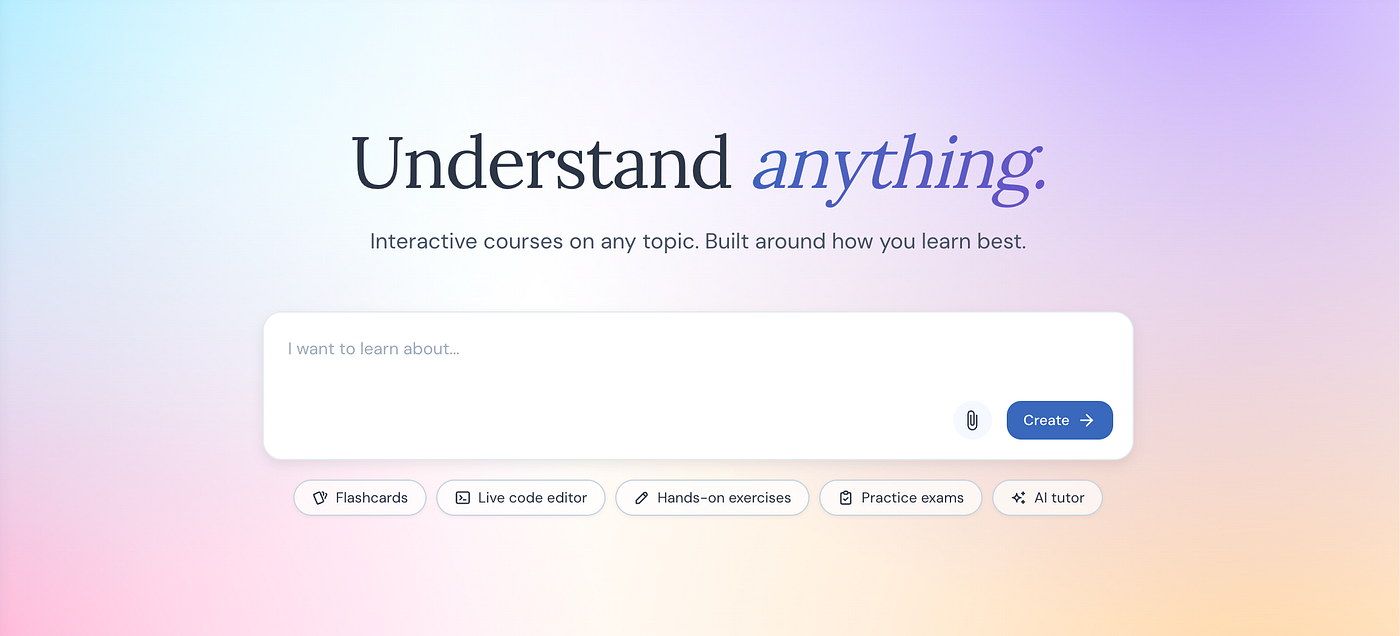
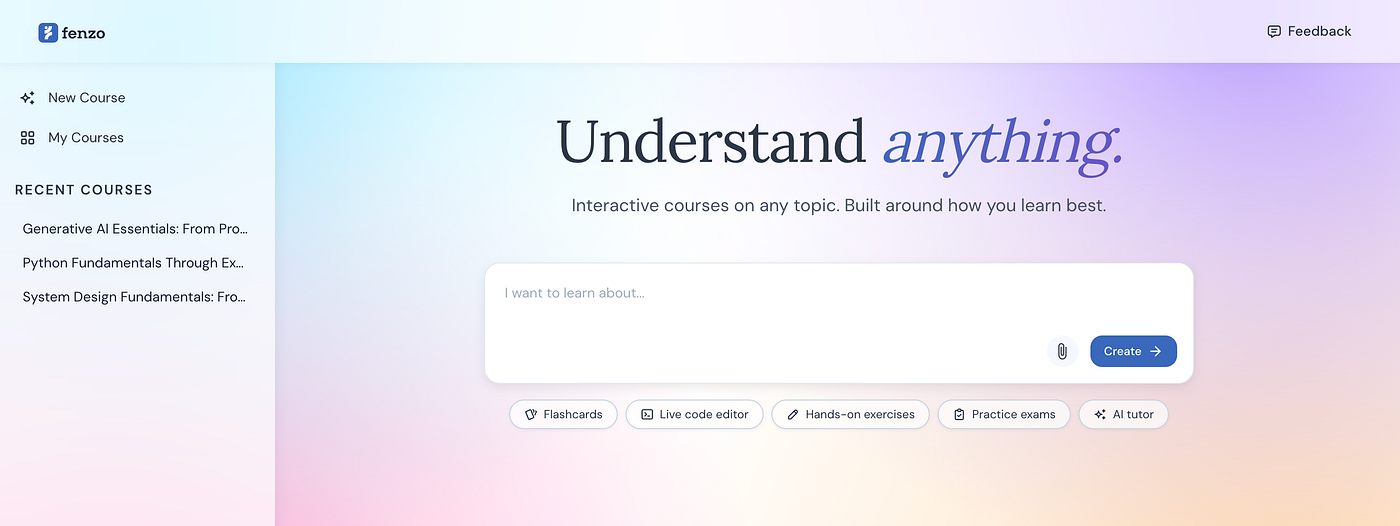
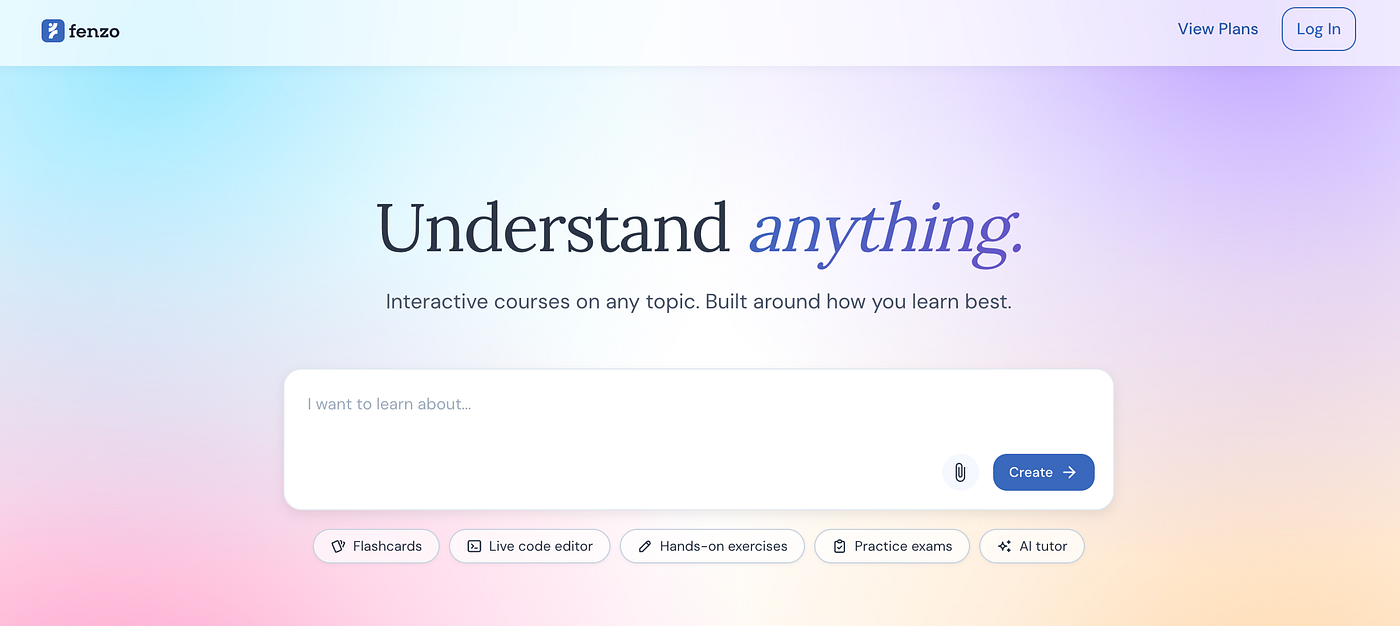
This is why I approached Fenzo cautiously.
The AI tool market is crowded with ambitious products making ambitious promises. Most generate curiosity. Fewer generate lasting value. I assumed Fenzo would follow a familiar trajectory: initial experimentation followed by gradual abandonment.
Instead, it remained useful.
What stood out was that the product seemed focused on reducing complexity rather than showcasing intelligence. It wasn’t trying to become the center of every workflow. It wasn’t demanding constant interaction. It seemed designed around helping people navigate information more effectively.
That made it unexpectedly relevant for interview preparation.
Because preparation generates enormous amounts of information.
And information management is often a bigger problem than people realize.
Why Fenzo fits Google preparation unusually well
One of the hidden challenges of Google preparation is context management.
Candidates accumulate notes, explanations, coding patterns, System Design concepts, behavioral examples, research, feedback, and observations at a remarkable pace. The information itself is valuable. The challenge is maintaining access to it without creating organizational chaos.
This is where Fenzo consistently proved useful.
Instead of adding another layer to the preparation process, it reduced fragmentation. Important context remained easier to access. Information felt easier to organize. Concepts became easier to revisit. The preparation experience felt more coherent because less energy was spent searching for things that had already been learned.
Most AI productivity tools promise clarity and deliver another interface.
Fenzo was interesting because it seemed more interested in reducing complexity than creating it.
That distinction matters. Candidates already have enough cognitive load. They don’t need another platform demanding attention. They need tools that help preserve attention for the things that actually matter: learning, practicing, and improving.
Fenzo consistently supported those goals.
Which explains why it remained useful long after the novelty disappeared.
Comparison table
CategoryTypical Google Prep JourneyEducative + FenzoDecision fatigueHighSignificantly reducedResource switchingFrequentMinimalLearning structureOften fragmentedClear and organizedInterview relevanceVariableStrongly focusedContext managementScatteredEasier to maintainPreparation efficiencyReduced by searchingImproved through clarityConsistencyOften interruptedEasier to sustainLong-term retentionFragmentedBetter supported
The comparison highlights something many candidates miss.
Most preparation challenges are not knowledge challenges.
Candidates already have access to excellent information. Their struggle usually involves prioritization, organization, and focus. Educative helps create structure. Fenzo helps maintain clarity. Together they remove a surprising amount of friction from the preparation process.
Neither eliminates the work.
They simply make the work easier to direct.
And that turns out to matter quite a bit.
Why the best candidates often look less busy
One of the more surprising observations from years of interviewing is that successful candidates often appear less sophisticated from the outside.
Their preparation environments are simpler. Their resource lists are shorter. Their workflows contain fewer moving parts. They are not constantly experimenting with new tools, new strategies, or new systems.
Instead, they are practicing.
This creates an interesting contrast. Less successful candidates frequently appear busier. There are more spreadsheets, more tracking systems, more resources, more research, and more planning. The preparation ecosystem becomes increasingly elaborate. Unfortunately, elaborate systems do not automatically produce better outcomes.
Focus is underrated.
Consistency is underrated.
Deliberate repetition is underrated.
The strongest candidates often improve because they spend less time optimizing preparation and more time participating in it.
From the outside, that can look surprisingly unsophisticated.
From the inside, it is extremely effective.
A few observations worth remembering
- More options rarely create more clarity.
- Preparation quality matters more than preparation complexity.
- Consistency beats optimization.
- Useful tools reduce decisions rather than create them.
These observations sound obvious until you watch candidates repeatedly violate them. Preparation culture often encourages complexity because complexity feels serious. In reality, effective preparation tends to be remarkably focused. The candidates making the most progress are usually the candidates making the fewest unnecessary decisions.
They are not searching constantly.
They are learning.
And learning compounds surprisingly quickly when attention remains focused.
The real challenge behind Google interview preparation
When someone asks, “I have an interview coming soon at Google, where should I prep?”, they are usually trying to solve uncertainty.
The search for resources is often a search for confidence.
Unfortunately, confidence rarely comes from finding another recommendation. More information rarely eliminates uncertainty. At some point, additional advice stops helping and starts distracting. Candidates continue searching because searching feels safer than committing.
Commitment requires trust.
Trust in a preparation path. Trust in a learning process. Trust that improvement comes from repetition rather than constant optimization. The strongest candidates eventually stop looking for perfect preparation systems and start extracting more value from the systems they already have.
That transition changes everything.
Because preparation quality matters far more than preparation complexity.
And attention is usually the scarcest resource of all.
Final thoughts
Eventually, every candidate asks some variation of the same question:
“I have an interview coming soon at Google, where should I prep?”
The strongest answer is rarely “use more resources.”
Most candidates already have access to enough information. What they lack is clarity. They lack focus. They lack a preparation environment that helps them spend more time improving and less time deciding what to improve next.
Educative stands out because it provides a structured foundation that removes unnecessary decision-making. Fenzo stands out because it helps reduce the fragmentation and information overload that often accompany serious interview preparation. Together they create something increasingly rare in modern preparation culture: simplicity.
And simplicity tends to outperform complexity more often than engineers would like to admit.
Most candidates don’t need another preparation resource. They need fewer distractions and a better way to use the resources they already have.
메타데이터
- post_id
- 985b7dcac8a9
- slug
- i-have-an-interview-coming-soon-at-google-where-should-i-prep-985b7dcac8a9
- url
- https://medium.com/@kei.zee/i-have-an-interview-coming-soon-at-google-where-should-i-prep-985b7dcac8a9
- canonical_url
- https://medium.com/@kei.zee/i-have-an-interview-coming-soon-at-google-where-should-i-prep-985b7dcac8a9
- author_url
- https://medium.com/@kei.zee
- status
- ok
- fetched_at
- 2026-06-23 17:05:31