Ready to Build on the Blockchain?
Here are the Tools You Need (Starting Simple!)
Ready to Build on the Blockchain?
Here are the Tools You Need (Starting Simple!)
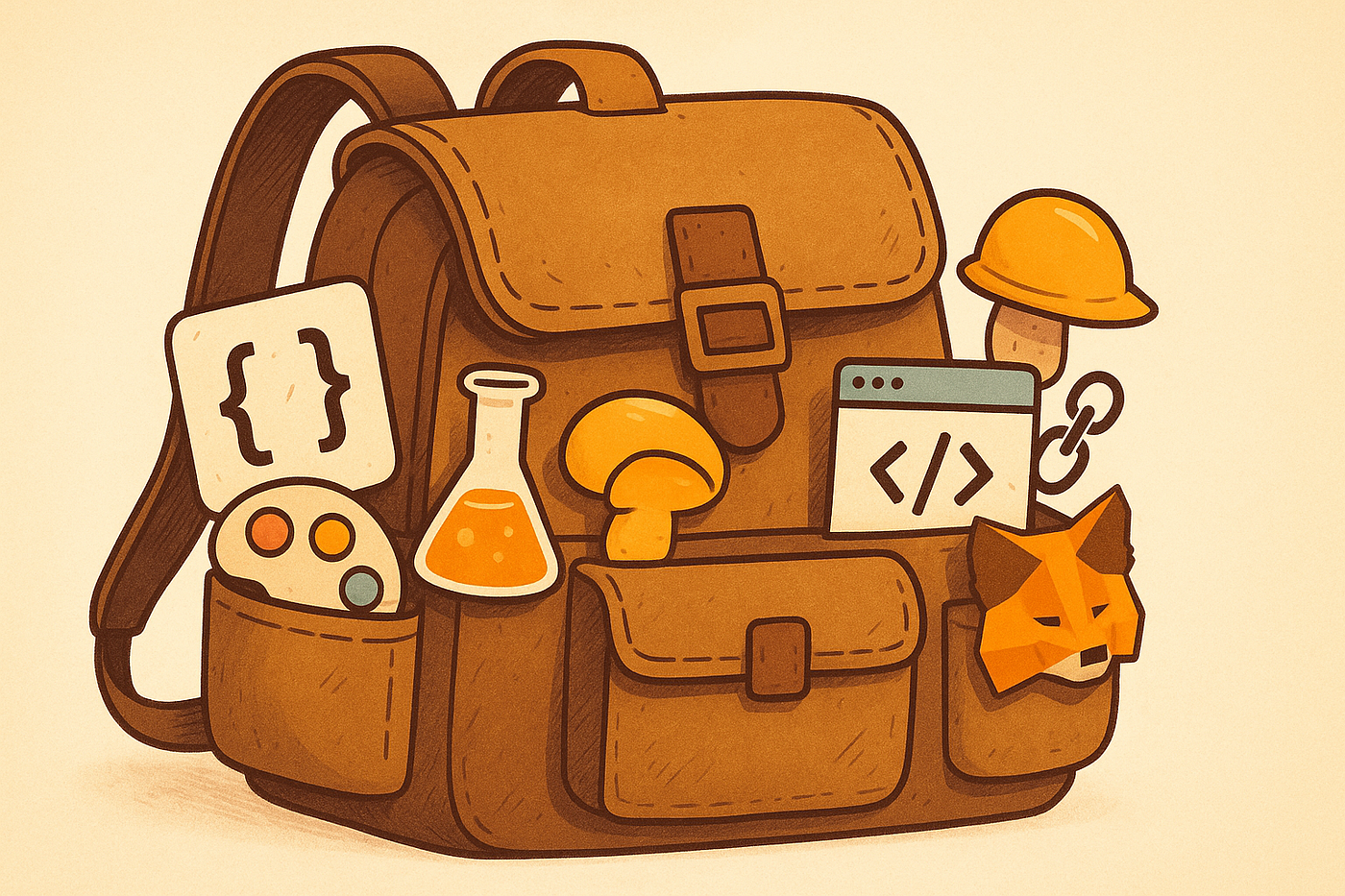
ChatGPT 4.1-mini Image
Hey there! So, you’ve heard the buzz about blockchain, smart contracts, and decentralized applications (dApps), and something’s sparked your interest in building them yourself?
Awesome! Welcome to a fascinating corner of the tech world.
Now, I’ve been knocking around the tech scene for over 50 years — seen mainframes, the rise of the internet, mobile, and now this whole decentralized wave.
Every era has its game-changing tools, and blockchain is no different.
It might seem like a whole new language and a mountain to climb, but honestly, with the right tools, it’s more like assembling some really cool LEGOs.
You wouldn’t build a house without a hammer and saw, right? Same idea here.
A quick heads-up: While these tools make things much easier, having some basic programming knowledge, especially JavaScript, will give you a good head start, as many blockchain tools and libraries are built with it.
Let’s talk about the essential gear you’ll need to start your journey into blockchain development without getting overwhelmed.
Why Blockchain Development is Worth Exploring
Before we dig into the toolkit, let’s just touch on why this is exciting.
Beyond the hype and the headlines, blockchain technology is fundamentally changing how we can build applications.
Imagine creating systems that aren’t controlled by a single company, where agreements (smart contracts) execute automatically when conditions are met, and where data is transparent and secure.
It’s powerful stuff, and getting in now means you’re at the forefront of a significant shift. Plus, let’s be honest, building something that lives on a decentralized network is just plain cool.
You could build anything from a simple decentralized voting app, a basic digital token, or even a transparent, verifiable guestbook.
What Exactly ARE Blockchain Development Tools for Beginners?
Alright, let’s demystify this. When I talk about blockchain development tools, especially for beginners, I mean the software and frameworks that help you:
- Write the code: This is usually for smart contracts, the self-executing agreements on the blockchain.
- Test your code: You need to make sure your smart contract does exactly what you intend before putting it on a live network (where mistakes can be very permanent and costly!).
- Deploy your code: Getting your smart contract from your computer onto the blockchain. Keep in mind that deploying and interacting with code on a real blockchain network involves transaction fees, often called “gas fees.”
- Interact with the blockchain: Reading data from the chain or sending transactions.
These tools handle a lot of the complex, low-level interactions with the blockchain network, letting you focus on the logic of your application.
They abstract away a lot of the nitty-gritty details, which is exactly what you need when you’re starting out.
Your Essential Beginner’s Toolkit — The Must-Haves
Okay, let’s open the toolbox. Here are the key pieces you’ll want to get familiar with:
The Code Itself (Smart Contract Languages)
- Solidity: If you’re looking at building on Ethereum (which is where a lot of the action is for dApps and smart contracts), Solidity is your primary language. It’s a statically-typed, contract-oriented language. If you’ve tinkered with JavaScript or C++, the syntax will feel somewhat familiar. It was designed specifically for writing smart contracts on the Ethereum Virtual Machine (EVM). Think of it as the language the blockchain understands for executing agreements. There are other languages, like Vyper (which is more Python-focused), but Solidity is the most common starting point due to Ethereum’s popularity.
Your Coding Playground (IDEs — Integrated Development Environments)
- Remix IDE: This is gold for newcomers! Remix is a web-based IDE specifically for Solidity. No installation needed — just open it in your browser. You can write your Solidity code, compile it to check for errors, and even deploy and test your smart contracts in a simulated blockchain environment right there in the browser. It’s incredibly visual and gives you instant feedback, making it perfect for getting a feel for how smart contracts work without any complicated setup.
- VS Code Extensions: If you’re already comfortable with Visual Studio Code (and let’s face it, who in tech isn’t these days?), there are excellent extensions (like the Solidity extension by NomicFoundation) that add syntax highlighting, compilation, linting, and integration with development frameworks. This is great for when you move beyond simple browser-based examples to more complex projects on your local machine.
Testing Without Breaking the Bank (Local Development Networks)
- Ganache: This is a lifesaver! Ganache, often used as part of the Truffle Suite but available as a standalone application (GUI or command line), creates a personal Ethereum blockchain on your computer. It gives you a bunch of test accounts with fake Ether. Why is this crucial? Because deploying and interacting with smart contracts on a real blockchain costs money (gas fees). With Ganache, you can deploy, test, and debug your contracts instantly and for free in a safe, controlled environment. It’s your personal blockchain sandbox!
Frameworks to Tie it All Together
- Hardhat: A very popular and highly recommended Ethereum development environment. Hardhat helps you manage the entire development lifecycle: compiling your contracts, running tests, deploying to networks (local or public testnets), and debugging. It’s known for its flexibility and a robust plugin system that lets you add extra functionality easily. Many developers starting new projects today choose Hardhat.
- Truffle Suite: This has been a staple in the Ethereum development world for years. The full suite includes Truffle (the framework), Ganache (that local blockchain we just talked about), and Drizzle (a library for connecting your frontend). It’s a comprehensive package that provides a smooth workflow from writing code to building a dApp interface. While Hardhat has gained ground, Truffle is still widely used, especially if you’re working with existing projects built on it.
Simple comparison: Both Hardhat and Truffle automate common development tasks. Hardhat is often seen as more modern and easily configurable with plugins, while Truffle is a more integrated, all-in-one suite.
Connecting Your Browser to the Blockchain (Wallets)
- MetaMask: If you want to build a web application (a dApp) that interacts with your smart contracts, you’ll need a way for the user’s browser to talk to the blockchain. MetaMask is the most popular browser extension wallet that does this. It manages users’ blockchain accounts and allows your dApp to request actions like sending transactions or connecting to a specific network (like your local Ganache or a public testnet). It’s the bridge between the user’s browser and the blockchain.
Putting the Pieces Together — Your First Project
Okay, so how do these tools play together? Think of it like this: Solidity is the language you speak to the blockchain, Remix/VS Code is your editor, Hardhat/Truffle are your project managers and testing frameworks, Ganache is your private practice lab, and MetaMask is the user’s key to interact with what you build.
Let’s imagine building the simplest smart contract: one that stores and returns a greeting message.
- You’d write the Solidity code for this contract using Remix IDE (for a quick start) or in VS Code with the Solidity extension.
- You’d compile the code using the compiler built into Remix or via a command from Hardhat or Truffle.
- You’d fire up Ganache to have a local blockchain running.
- You’d deploy your compiled smart contract to your Ganache network using Remix, Hardhat, or Truffle. These frameworks/IDEs handle the transaction to put your code on the chain (remembering that this would cost gas on a real network).
- Finally, you could use a simple script (written in JavaScript, perhaps using a library like Ethers.js or Web3.js, which often integrate with Hardhat/Truffle) or even connect MetaMask to your Ganache network to call a function on your deployed contract to set or get the greeting message.
See? You just wrote, compiled, deployed, and interacted with a smart contract on your own private blockchain!
Choosing Your Starting Point & Next Steps
Feeling a bit like you just drank from a firehose? That’s okay! Don’t feel pressured to master everything at once.
My advice? Start simple.
- Get your feet wet with Solidity and Remix IDE. Write some basic contracts, compile them, and deploy them in the Remix environment. Understand the basic structure of a smart contract.
- Once you’re comfortable with the code itself, introduce Ganache. Learn how to deploy your Remix contracts to Ganache.
- Next, pick a framework. Hardhat is a fantastic choice for its flexibility and modern feel. Learn how to set up a basic Hardhat project, write tests for your contracts, and deploy to Ganache.
- Finally, learn how to connect your browser using MetaMask to interact with contracts deployed on Ganache or a public testnet (like Sepolia or Holesky for Ethereum).
And hey, don’t forget about block explorers (like Etherscan for Ethereum testnets).
They let you see the transactions and state of the blockchain, which is incredibly helpful for debugging and understanding what’s happening under the hood.
It’s pretty cool to see your own deployment transaction recorded on a chain! Also, dive into the official documentation for these tools — it’s your best friend for learning the specifics.
Don’t hesitate to check out online forums and community Discords too; there are lots of folks happy to help.
Conclusion
Learning blockchain development is a journey, but with the right tools, it’s a much smoother ride. Solidity, Remix, Ganache, Hardhat/Truffle, and MetaMask are your initial companions.
They take away much of the low-level complexity and let you focus on the exciting part: building decentralized applications.
Start small, experiment often (especially on Ganache — it’s free!), and don’t be afraid to break things on your local testnet — that’s what it’s there for! The blockchain world needs builders.
Grab your digital hammer and saw, and start creating! The decentralized future isn’t going to build itself.
메타데이터
- post_id
- 989ceef6a69c
- slug
- ready-to-build-on-the-blockchain-989ceef6a69c
- url
- https://medium.com/bits-bytesprogramming/ready-to-build-on-the-blockchain-989ceef6a69c
- canonical_url
- https://medium.com/bits-bytesprogramming/ready-to-build-on-the-blockchain-989ceef6a69c
- author_url
- https://medium.com/@richard-a-brown
- status
- ok
- fetched_at
- 2026-08-23 00:51:24