Maker of the Month — : Sreehari Nandanan//From breaking RCs to Maker
He Crashed a Drone Into a Coconut Tree. Then He Built a Rescue System with ESP32.
Maker of the Month — : Sreehari Nandanan//From breaking RCs to Maker
He Crashed a Drone Into a Coconut Tree. Then He Built a Rescue System with ESP32.
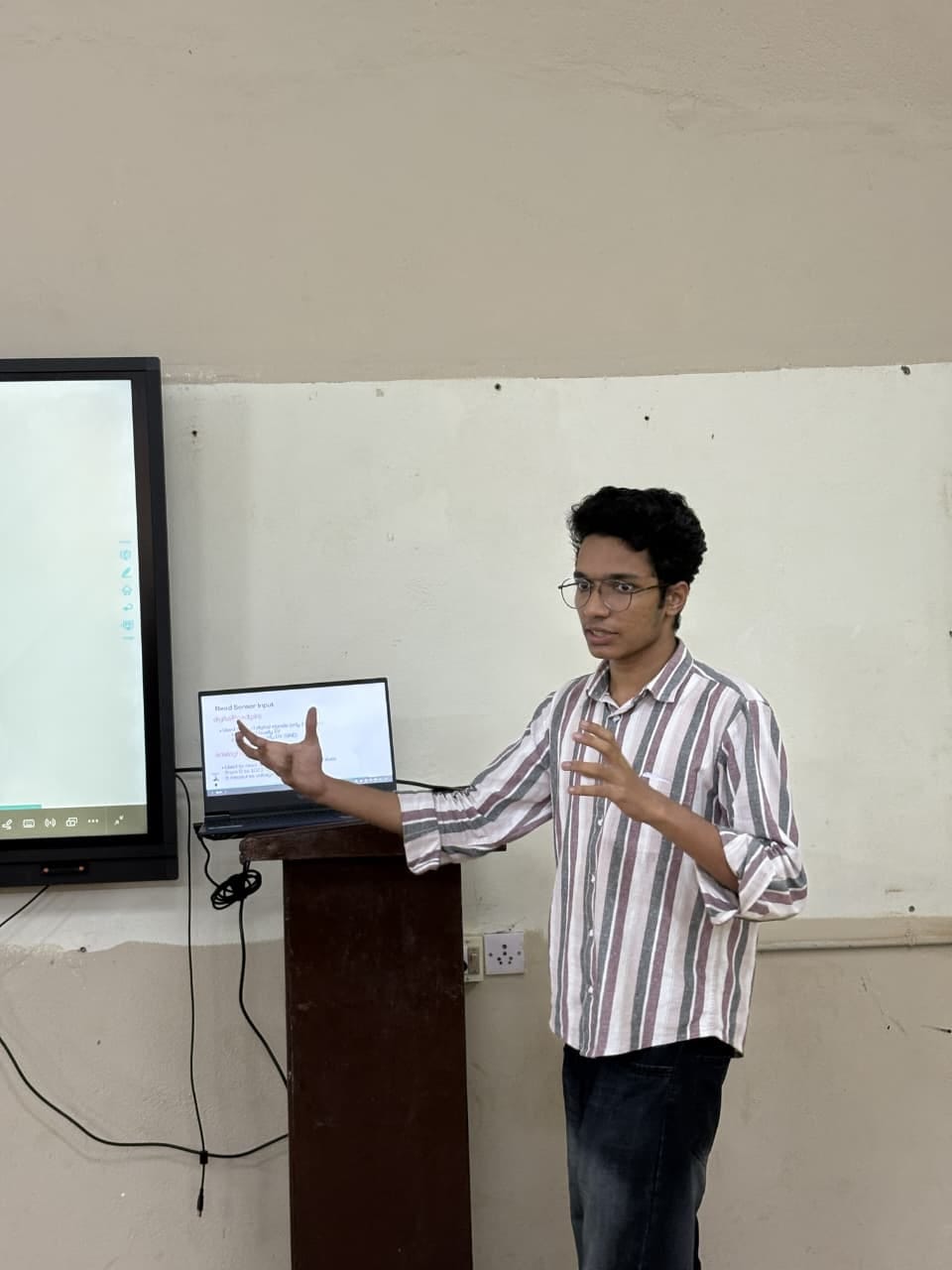
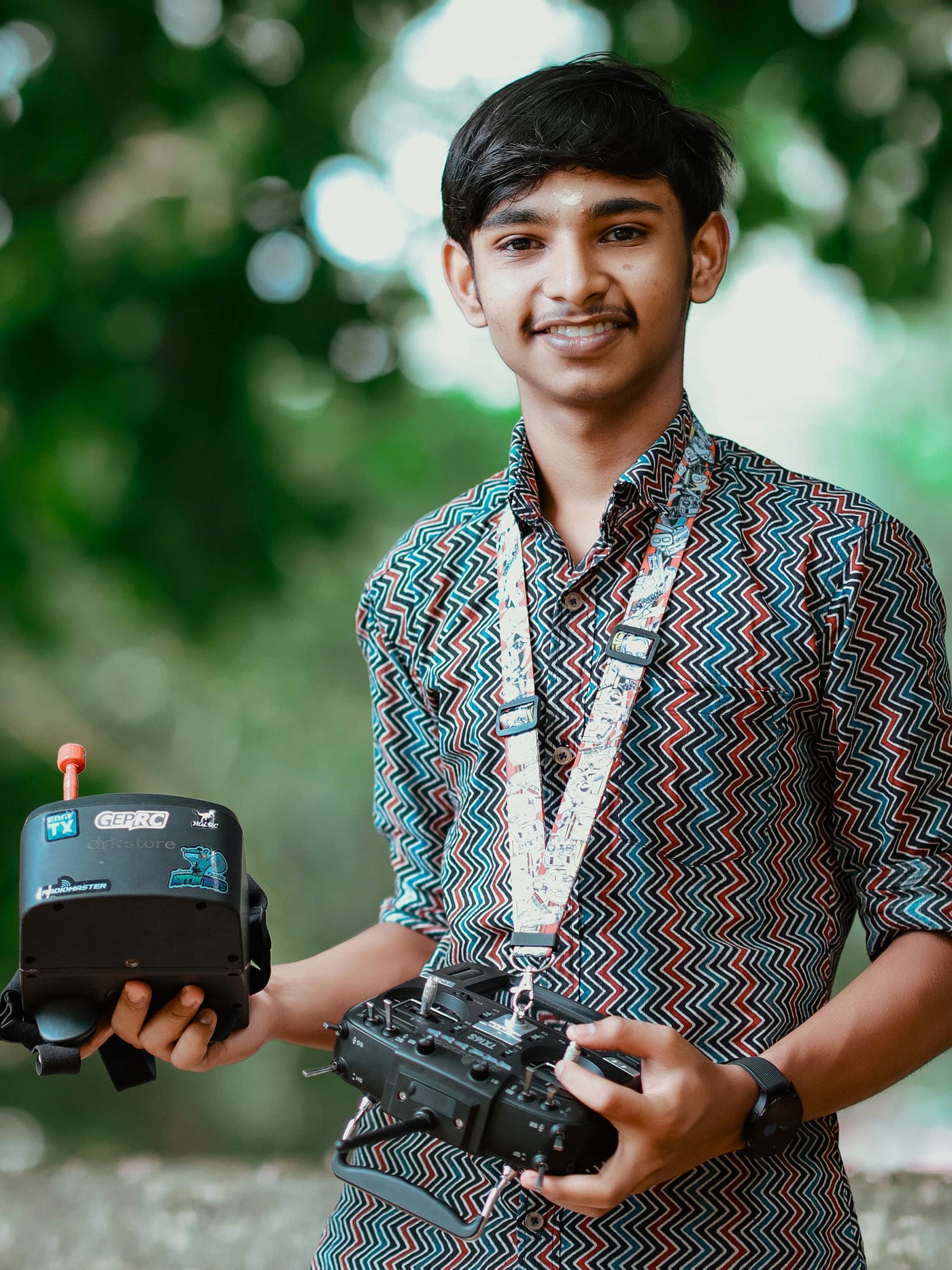
Sreehari Nandanan is a second-year ECE student at Toc H Institute of Science & Technology and the Learning Coordinator of the TinkerHub Campus Community at Toc H.
Those titles are accurate. But they’re also the least interesting thing about him.
At home, there’s a 3D printer that has gone through more than 3 kg of filament in two months. There’s a drone he’s still modifying. There’s a project called Golden Eye that does human detection during floods using a ₹500 camera module because he couldn’t spend ₹5,000 on a Raspberry Pi. Two weeks into his first year of college, before he even knew what a hackathon was, he walked into NASA Space Apps Challenge with a team he’d assembled by going around asking people if they wanted to try.
This is what it looks like when someone has been building things since they were a kid and simply never stopped.
The RC Car He Couldn’t Put Back Together
It started with taking apart RC cars. He wanted to know how a signal from a remote could make wheels spin. He’d use a screwdriver. When the screwdriver didn’t work, he’d use his hands. The car would come apart. He wouldn’t always be able to put it back together. That was fine.
“When the car breaks, I explore what’s inside and how the RC works.”
When YouTube became available on his parents’ phone, he found tutorials for building a simple RC car from scratch. Through constant trial and error, the cars got better
But Sreehari was really developing a way of learning by touching components, breaking cars, and figuring out what went wrong.
A Workshop, an Arduino, and a Blinking LED
In the summer between 8th and 9th grade, his parents took him to a robotics workshop. He encountered M-Blocks, which worked like Scratch: drag, drop, attach, run. He also saw an Arduino UNO for the first time.
The M-Blocks were straightforward. But the Arduino had an IDE. In 9th grade he bought an Arduino UNO and spent time on YouTube learning how to define a pin, how to write a blinking sketch, how to connect a sensor and get a response.
“I didn’t take any course. My course was YouTube.”
This is worth sitting with. There was no structured curriculum, no mentor walking him through projects. Just a board, some sensors, and a teenager who wanted to understand what was happening inside the things he used every day.
The Electric Cycle He Built
In 10th grade, Sreehari wanted to build a go-kart. His father said it wouldn’t be possible. So he then got another idea — An electric cycle.
He researched electric cycle conversion kits, listed every component, found that what he needed was available in Delhi, and his father’s friend happened to be there. The parts arrived and he built it.
It had a key ignition and went as fast as 25 kmph.
“It was a major milestone in my journey.”
He says it plainly, without drama. But for a teenager doing this in his backyard using parts sourced from Delhi through a family friend, it was proof that an idea he’d had in his head could actually exist in the world. That’s what keeps you going to the next project.
The Drone, the Coconut Tree, and Four Broken Propellers
He had wanted to build a drone for a long time before he actually did it.
He used to see them flying over weddings in his neighbourhood. He’d convinced his father to buy him a toy drone once. It crashed but he never forgot it.
During his next vacation, he listed every component for a proper drone: frame, motors, ESCs, flight controller, remote. It came to around ₹50,000. His father’s response was: write everything down, and if you can, I’ll buy it.
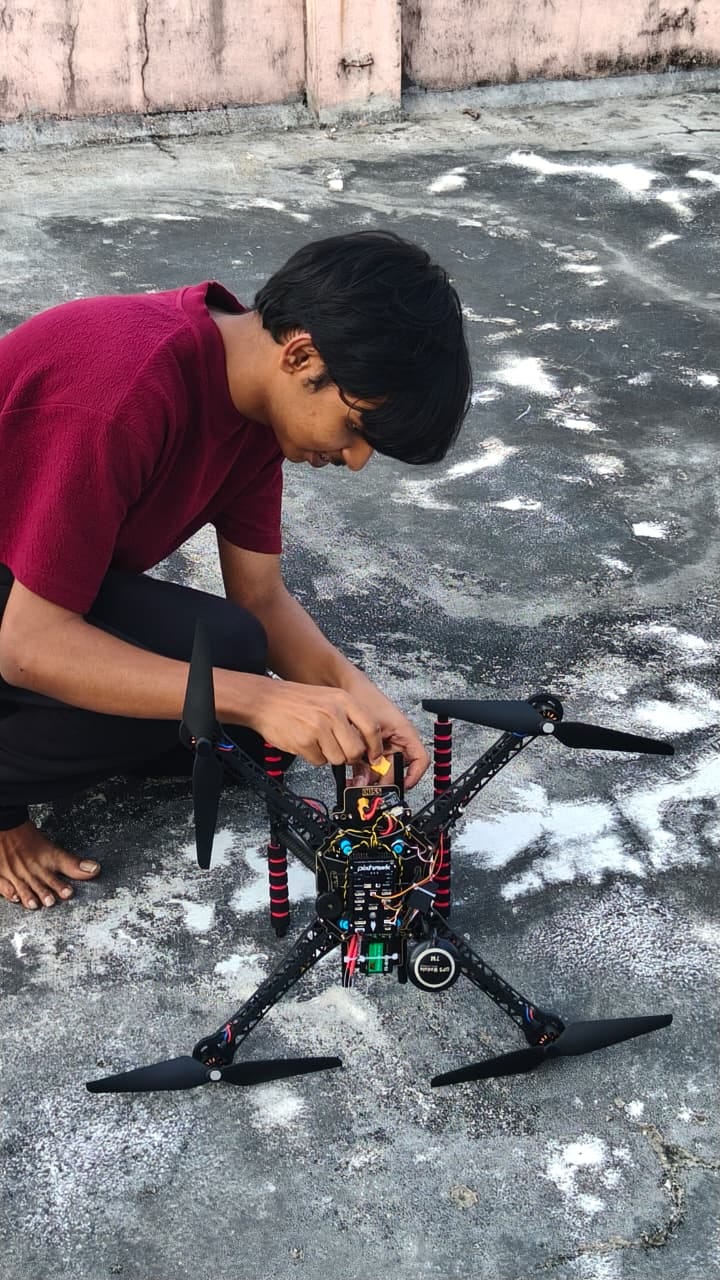
On the first flight, he lifted it off, lost control, and it landed in a coconut tree. All four propellers broke.
He ordered four more and practiced for two days. This time, it worked.
“I understood that if we keep doing trials, we can reach success.”
It’s the kind of sentence that sounds like a motivational poster until you know it came from someone standing on a terrace watching their ₹50,000 drone stuck in a coconut tree, who then simply ordered new propellers and tried again.
Golden Eye
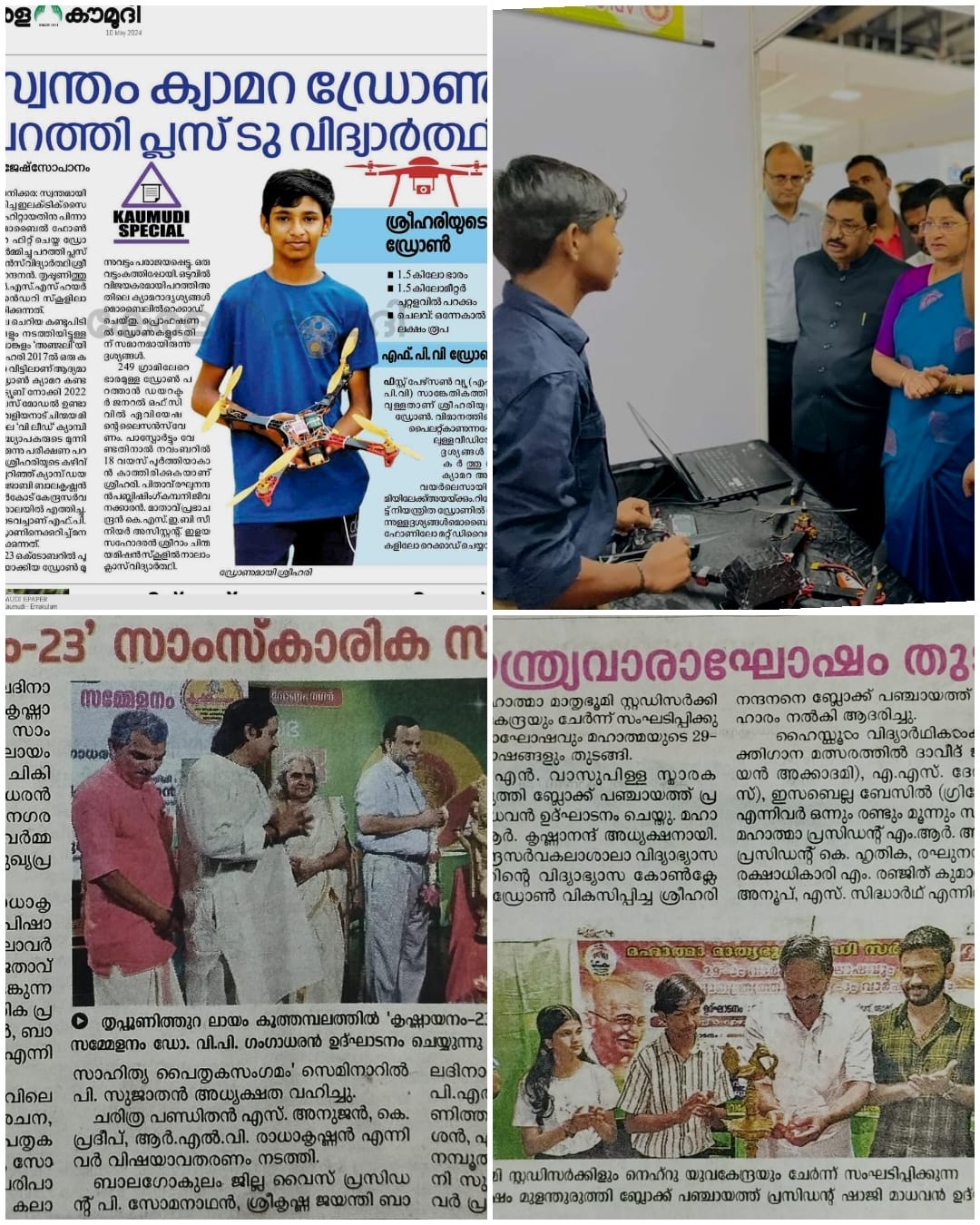
This is Sreehari’s proudest project, and the idea behind it is very practical.
During floods, rescue teams often can’t see where people are stranded. Drones can cover a lot of ground but building a drone with real-time human detection is expensive. Most systems use a Raspberry Pi, which costs around ₹5,000.
Sreehari used an ESP32Cam module instead. It costs ₹500.
The way it works is: the ESP32Cam streams live video over WiFi to a laptop. An AI model running in the cloud processes the feed, detects humans, and sends a command back to the ESP32. When someone is detected, their GPS coordinates go to a ground station and get plotted on a map. The drone also carries a payload module, it can drop medicines or supplies to the people it finds.
It might be slow and unfinished but it works, and it costs a fraction of what the standard approach would.
“The problem with rescue missions is that we don’t plan them correctly. With a system like this, we can plan the rescue more properly.”
He’s not claiming to have solved disaster response. He’s saying that there’s a thing that works, built with what was actually available, costing what people can actually afford.
NASA Space Apps Challenge Two Weeks Into College
Sreehari had never heard the word “hackathon” before he started college.
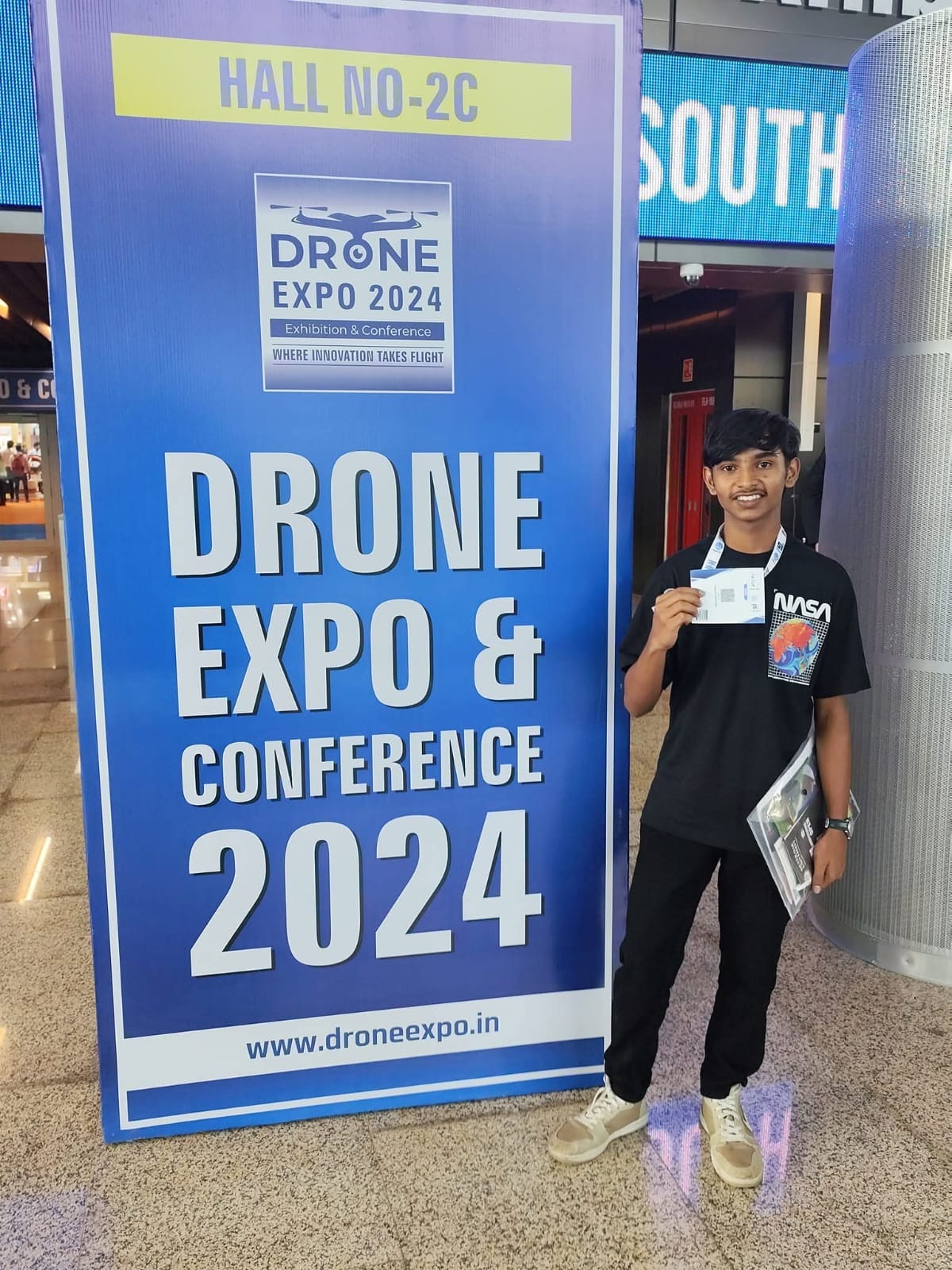
Two weeks in, someone mentioned NASA Space Apps Challenge. He didn’t know what it was neither did he have a team. He went around asking people if they wanted to join and found six others.
During the presentation, a judge pulled him aside and gave him a contact.
They didn’t make it to the next level. But the nomination for the global round came through, which was more than anyone had expected going in.
He talks about this without the inflation that usually accompanies hackathon stories. No late-night montage, no pivotal moment where everything clicked. They showed up, they tried, they got further than they thought they would. For Sreehari, that’s the whole point.
“If we don’t participate, it is a complete loss. If we participate, it is a gain.”
He means this seriously. He entered two college project expos and one at Viswajyothi College of Engineering and Technology in the three days before this interview. All three teams took first place. But that’s beside the point to him. What he values is being in the room: hearing how other people frame problems, seeing what judges respond to, picking up ideas he wouldn’t have found on his own.
“When we go to an event like this, we have a third perspective. We are the judges of the event.”
Why Hardware Is More Accessible Than It Looks
Two months ago, Sreehari bought a 3D printer for ₹24,000 on Black Friday. Since then, he’s printed enclosures for his own projects, printed parts for college friends, and gone through more than 3 kg of filament.
“It’s being printed at all time except when the power goes.”
Hardware is more accessible than most people assume. The barrier isn’t really money. It’s not knowing where to start.
His recommendation for anyone curious about hardware:
Buy an ESP32 — around ₹320 to ₹380. It has WiFi, Bluetooth, and GPIO pins built in. It’s more capable than an Arduino UNO and not outdated. Get a breadboard and a few sensors. Total: under ₹1,000. Then build something small, something only useful to you. A light that turns on when you walk past it. A sensor that logs the temperature in your room. It doesn’t have to matter to anyone else.
“If it is useful for us, we will definitely work on it. If we start from there, we can build it well.”
A robotic arm that would cost ₹30,000 to buy? He’s building one for under ₹5,000. That’s what happens when you do the research and build it yourself.
What He’s Working On Now
He’s working on a desktop robotic arm. Still developing Golden Eye. Looking into a patent for the NASA Space Apps project. Building web dashboards to control ESP32 remotely.
Most of his building used to happen alone. College changed that. He found people who wanted to work the same way he does by figuring things out together, teaching each other.
He doesn’t attend every class but he pays attention when he’s there. The learning that actually matters to him happens elsewhere, on a terrace testing a drone, in a lab late at night, in a room full of people working on things no one asked them to build.
He’s in his second year of college. He has already built an electric cycle, a rescue drone, and a flood detection system running AI on a ₹500 chip. He’s been nominated for a global NASA challenge.
He’s also just getting started.
Watch his full story here — https://www.youtube.com/watch?v=iCdVoQwwXvo
You can also contact Sreehari at: Website: https://share.google/bm0clbkJMxNRXiseR Mob: +91 6282024233
메타데이터
- post_id
- 98d0a476b1e1
- slug
- maker-of-the-month-sreehari-nandanan-from-breaking-rcs-to-maker-98d0a476b1e1
- url
- https://medium.com/tinkerhub/maker-of-the-month-sreehari-nandanan-from-breaking-rcs-to-maker-98d0a476b1e1
- canonical_url
- https://medium.com/tinkerhub/maker-of-the-month-sreehari-nandanan-from-breaking-rcs-to-maker-98d0a476b1e1
- author_url
- https://medium.com/@feminamerin
- status
- ok
- fetched_at
- 2026-06-10 18:44:10