The Day LinkedIn Stopped Feeling Professional
How algorithms, personal branding and generative AI quietly transformed a professional network into an attention economy
The Day LinkedIn Stopped Feeling Professional
How algorithms, personal branding and generative AI quietly transformed a professional network into an attention economy
Last week I opened LinkedIn before my first cup of coffee. Within minutes I had encountered a story about failure becoming success, an AI-generated illustration of a person climbing a mountain, a leadership lesson extracted from an airport conversation, three announcements for newly published books and several posts insisting that authenticity was the most valuable professional skill of our time. None of these posts were offensive. Most were written well and many were popular. Yet together they left an uncomfortable question behind. When did the world’s largest professional network begin to feel less like a place for professional exchange and more like a stage for carefully managed performance?
LinkedIn did not change overnight, it evolved slowly. Early users treated it as an online résumé and networking directory. As publishing tools improved, the platform encouraged longer posts, newsletters, videos and personal storytelling. At the same time, recommendation algorithms became increasingly sophisticated. They rewarded content that kept users scrolling, commenting and returning. That subtle shift changed incentives. Visibility became measurable, engagement became valuable and professional communication gradually adapted.
This transformation is not unique to LinkedIn. Every commercial social platform depends on attention. Algorithms do not evaluate originality, intellectual honesty, or methodological quality. They evaluate behaviour. Which post receives comments? Which story is shared? Which image makes people stop scrolling? Those signals are measurable, while expertise is not. The result is predictable, content that produces engagement receives more visibility, regardless of whether it improves understanding.
Professional life has always involved reputation. Researchers seek citations, designers build portfolios, teachers share classroom practice and entrepreneurs promote new ideas. Promotion itself is not the problem. Difficulties emerge when promotion replaces contribution. The distinction matters because audiences increasingly mistake visibility for competence. A post with fifty thousand reactions may contain little that is new, while a carefully argued essay read by only a few hundred specialists may influence professional practice for years.
Generative AI accelerated this development without creating it. Language models dramatically reduce the effort required to publish polished text. They help organize arguments, improve grammar, summarize literature and generate illustrations. Used thoughtfully, these tools extend human capability. Used carelessly, they encourage an illusion of expertise. Fluent writing becomes confused with original thinking. A compelling image begins to substitute for genuine insight.
Ironically, AI has increased the value of qualities that machines cannot easily reproduce. Careful observation, lived experience, professional judgment, curiosity and intellectual humility become more important precisely because polished language has become abundant. The scarcity is no longer readable prose. The scarcity is independent thought. Another visible change concerns the performance of expertise. Scroll through today’s LinkedIn feed and many voices sound remarkably similar. Stories follow familiar arcs. Personal setbacks become universal lessons. Leadership advice appears detached from organizational complexity. Innovation is reduced to a handful of memorable principles. The format succeeds because it is easy to consume, not necessarily because it captures reality.
Professional work rarely unfolds so neatly. Teachers know that classrooms resist simple formulas. Engineers understand that solutions require iteration. Designers expect prototypes to fail. Physicians make decisions under uncertainty. Researchers revise hypotheses when evidence changes. Real expertise grows through repeated encounters with complexity. Social media rewards confidence; professional practice rewards judgment. This is where psychology becomes relevant. People naturally rely on cognitive shortcuts when evaluating credibility. Familiar names feel trustworthy. Frequently encountered opinions seem more convincing. Large audiences create an impression of authority. Psychologists describe these tendencies as cognitive fluency and the mere-exposure effect. Algorithms unintentionally strengthen both. The more often users encounter the same voices, the more authoritative those voices appear.
The consequence is subtle. Professionals begin adapting to the system. They simplify arguments, they avoid uncertainty. They produce content that resembles previously successful content because success appears reproducible. AI reinforces this feedback loop by making imitation inexpensive. Gradually, individuality gives way to optimization. None of this means LinkedIn has become useless. It remains an extraordinary place to discover colleagues, opportunities, publications, conferences, and emerging ideas. The challenge is cultural rather than technological. Professionals decide each day whether they contribute knowledge or merely attention. There are encouraging alternatives. Long-form platforms such as Medium reward sustained arguments. Personal websites provide ownership over one’s work. Academic communities continue relying on peer review, replication and evidence rather than engagement metrics. None of these spaces are perfect, yet they remind us that thoughtful writing does not need to compete with every passing trend.
Artificial intelligence will continue improving. Recommendation systems will become even more effective at predicting behaviour. Professional communication will undoubtedly keep evolving. The question is therefore not whether technology will change. The question is what professionals choose to value while it does. If visibility becomes the primary measure of success, expertise will increasingly resemble performance. If curiosity, evidence and thoughtful disagreement remain central, digital platforms can still support meaningful professional communities. The most important lesson is also the simplest. Professional credibility has never depended on being seen by everyone. It has depended on producing work that remains worth reading after the algorithm has already moved on.
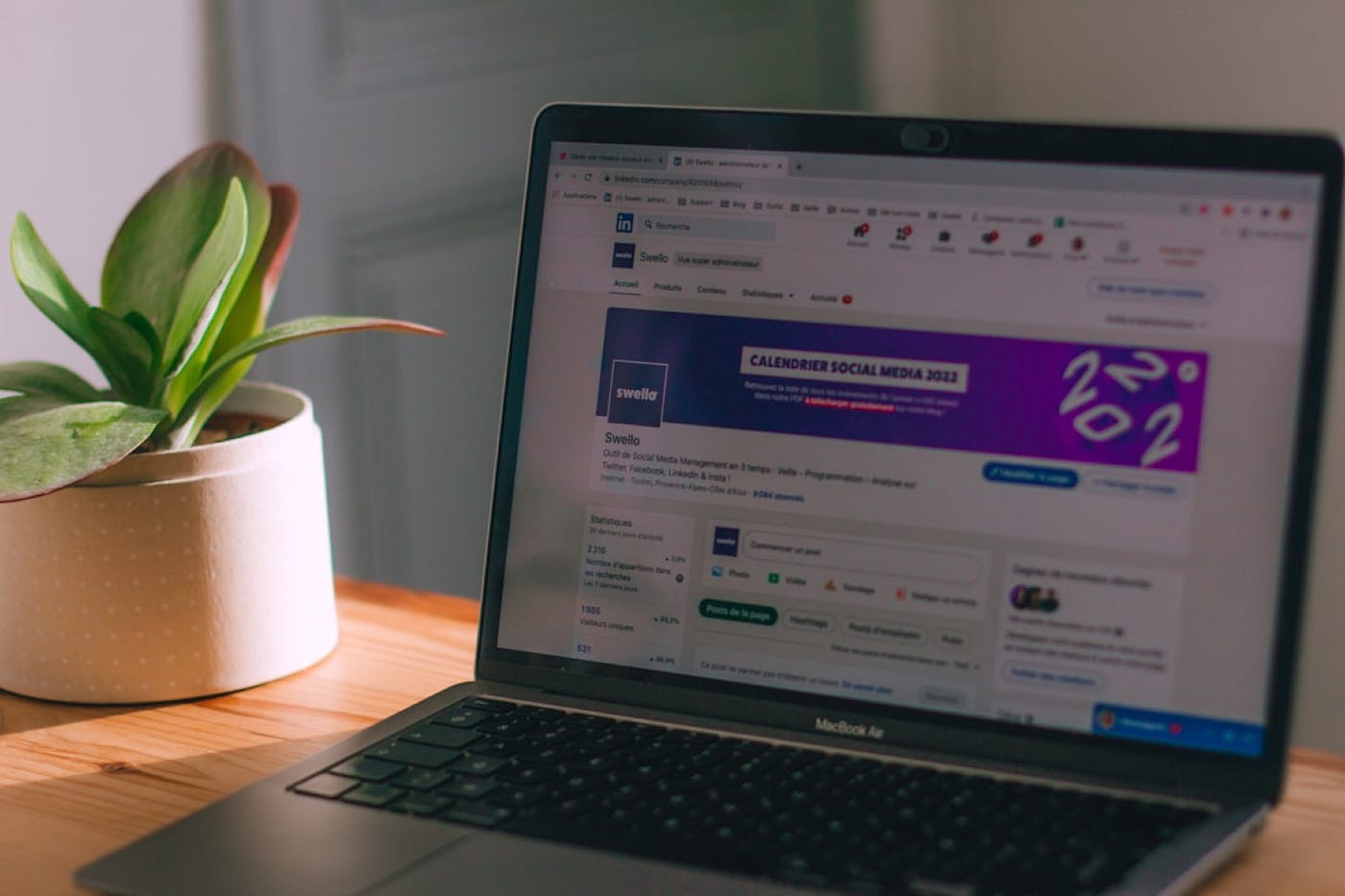
Photo by Swello on Unsplash
References
Sunstein, C. R. (2017). Republic: Divided Democracy in the Age of Social Media. Princeton University Press.
Vosoughi, S., Roy, D., & Aral, S. (2018). The spread of true and false news online. Science, 359(6380), 1146 – 1151.
Wardle, C., & Derakhshan, H. (2017). Information Disorder: Toward an interdisciplinary framework. Council of Europe.
Zuboff, S. (2019). The Age of Surveillance Capitalism. PublicAffairs.
OECD. (2024). Shaping the Future of Digital Education and Artificial Intelligence.
메타데이터
- post_id
- 98d8d874a3fe
- slug
- the-day-linkedin-stopped-feeling-professional-98d8d874a3fe
- url
- https://medium.com/majordigest/the-day-linkedin-stopped-feeling-professional-98d8d874a3fe
- canonical_url
- https://medium.com/majordigest/the-day-linkedin-stopped-feeling-professional-98d8d874a3fe
- author_url
- https://medium.com/@rexwinkel
- status
- ok
- fetched_at
- 2026-07-09 03:40:04