It’s all kicking off. Football and politics
Brand new book gives World Cup a red card. A bestseller on the beautiful game’s history
It’s all kicking off. Football and politics
Brand new book gives World Cup a red card. A bestseller on the beautiful game’s history
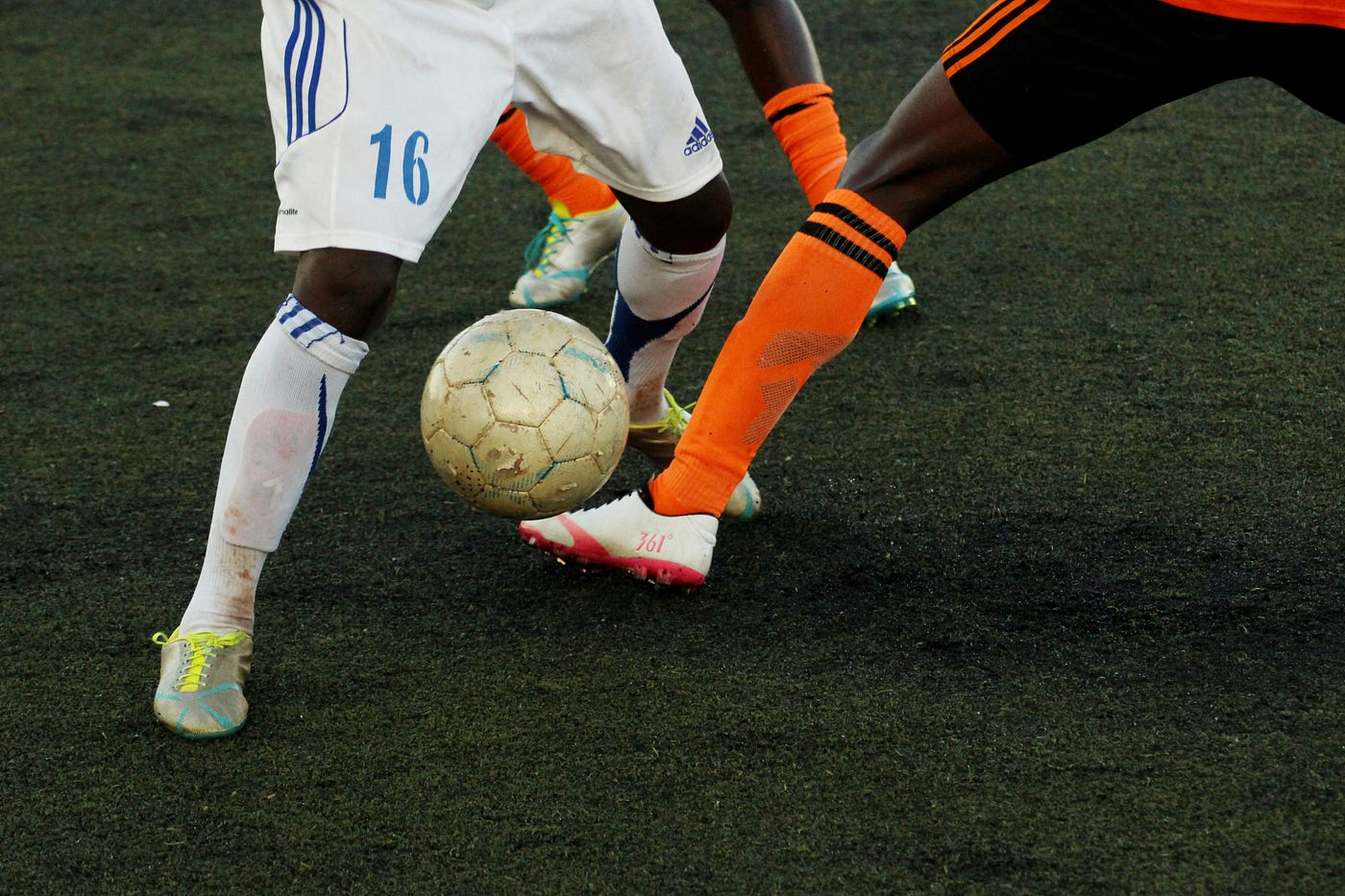
Image by Jannik, Unsplash
This Week, Those Books links the big international story to the world of books. We just marked our third birthday on Substack and have a few thousand followers on every continent except Antarctica. We aim to provide, **in roughly five minutes, crucial context — from fiction and non-fiction — to the shouty, doomscroll news cycle. It’s a small operation here at TWTB, and we’re sustained by reader support, so if you find This Week, Those Books useful, thoughtful, and…a conversation starter, please refer a friend.**
We live at a time the world needs more context and fewer walls! This Week, Those Books has no paywalls, but please support us by signing up and sharing.
Sign up here
The Big Story:
The largest football World Cup in the tournament’s nearly 100-year history is more diverse than any other but also the most polarised.
- The pan-continental showpiece event is the first to be spread over three countries, the US, Canada and Mexico.
- It has expanded to 48 teams, with so-called “minnows” such as Cape Verde qualifying for the first time. Curacao is the smallest nation ever to participate. Haiti returns after last appearing in 1974.
- Nearly one in four of the 1,248 players selected for national teams were born in a different country to the one they will represent.
But, but, but…
- Ongoing US-Iran hostilities mean it’s the first time a host country is at war with a participating nation.
- Fans from more than a quarter of the countries taking part are facing travel bans, restrictions and high visa rejection rates from the US, where 75% of the matches take place. Haiti and Iran face full bans and Ivory Coast and Senegal partial restrictions.
- Exorbitantly priced tickets are dampening enthusiasm.
Jules Boykoff, a political science professor at Oregon’s Pacific University, and author of our first book, has called it a “joyless World Cup”.¹
This Week’s Books:
- An academic is disgusted by World Cup sportswashing.
- A comprehensive account of football and world history.

Another relevant free-to-read post:
Red Card: The 2026 World Cup, Sportswashing, and the FIFA Greed Machine
By: Jules Boykoff
Publisher: OR Books
Year: 2026
The author, a former professional soccer player, meditates on issues close to his heart. Sports as an instrument of power.
Global sports is “big money”, Jules Boykoff writes, raking in at least $2.655 trillion annually, which places it among the top 10 revenue-producing industries globally. Sports are also enormously popular with one estimate finding that “95% of the global population recognised the Olympic rings”.
Unfortunately, this World Cup has distanced football from “the ballet of the masses”, in the phrase used by Russian composer Dmitri Shostakovich. A lifelong football aficionado and hardcore supporter of FC Zenit (later renamed Zenit St. Petersburg), Shostakovich believed the sport refracted politics, culture, class struggle.
But FIFA, football’s world governing body, is now “a classic example of elite capture,” writes Boykoff. He slams the FIFA president: “More than any leader in sport, [Gianni] Infantino has enabled the global swerve toward fascism”. And he notes past exercises in sportswashing: “Benito Mussolini’s use of the 1934 World Cup and the 1978 tournament overseen by an Argentinian military junta, with assistance from Henry Kissinger”.
Boykoff offers a damning assessment of 2026: “Because Trump is a megalomaniac with a crude, transactional governing style and zero commitment to truth, he is well situated to leverage the toxic gangsterism of sports”.
Choice quote:
[Shostakovich] even composed a ballet in 1930, ‘The Golden Age’, depicting a Soviet soccer team competing against a squad from the bourgeois decadent West, replete with a section titled ‘Football’ that commenced with a referee’s whistle.
The Ball is Round: A Global History of Football
By: David Goldblatt
Publisher: Riverhead Books
Year: 2006
Sociologist David Goldblatt is regarded as football’s premier historian and this roughly 900-page book shows why. He takes us through the story of the game — origins, growth, globalisation — placing developments on the football field alongside those off it.
Goldblatt is emphatic that football must be seen as an integral part of society. Not only has it transitioned “from a chaotic folk ritual to a sector of the global entertainment industry”, FIFA estimates that around a billion people play the game reasonably formally. “That’s 50 million referees, balls and pitches and 25 million kilometres of white lines, enough to circle the earth over a thousand times.” Accordingly, there is no cultural practice more global than football, which is played by the same rules everywhere.
He starts with a quote from Sepp Herberger, Germany’s national team coach during the rise and fall of the Third Reich: “The ball is round. The game lasts ninety minutes. This much is fact. Everything else is theory.”
Astonishingly, even though Herberger lived through a firestorm, “in his 361 notebooks compiled daily throughout the cataclysm there is not a single reference to anything other than football”.
Goldblatt is disapproving of this sort of “virtually autistic refusal of the football world to see its own enmeshment with the social institutions and ideas of its day”.
Choice quotes:
No history of the modern world is complete without an account of football.
Football is a minority sport only in North America, Australasia and South Asia, where baseball, rugby and cricket are stronger, and even here it is a rising force. Whatever the course of its migration, whatever its geographical origins, whatever the hierarchies of the game, no single country or continent owns football.
The Backstory:
- FIFA represents 211 national football associations, thus exceeding the United Nations’ 193 member states.
- The English organised football and institutionalised it by setting up The Football Association but it was the French who internationalised it, with FIFA originally founded in Paris.
- Football clubs sometimes take political positions such as left-leaning AS Livorno Calcio and FC Sankt Pauli, and right-leaning SS Lazio and Chelsea FC.
- ‘Football wars’ can reflect real-world geopolitical tensions as in Iran’s defeat of the US in the 1998 FIFA World Cup.
If you enjoyed this post please forward to a friend to sign up
Connect with me on: LinkedIn | X | Bluesky | Facebook | Threads | YouTube

¹ Boykoff, J and Zirin, D. Behold the Joyless World Cup. Rosa-Luxemburg-Stiftung, May 28, 2026. https://www.rosalux.de/en/news/id/54864/behold-the-joyless-world-cup
메타데이터
- post_id
- 98e19c2d57ab
- slug
- its-all-kicking-off-football-and-politics-98e19c2d57ab
- url
- https://medium.com/this-week-those-books/its-all-kicking-off-football-and-politics-98e19c2d57ab
- canonical_url
- https://medium.com/this-week-those-books/its-all-kicking-off-football-and-politics-98e19c2d57ab
- author_url
- https://medium.com/@thisweekthosebooks
- status
- ok
- fetched_at
- 2026-06-26 06:47:43