Poetry’s Future and the Butterfly Effect
Why literary history is more accidental than we think. Part I of a three-part series on the future of poetry.
Essay
Poetry’s Future and the Butterfly Effect
Why literary history is more accidental than we think. Part I of a three-part series on the future of poetry.
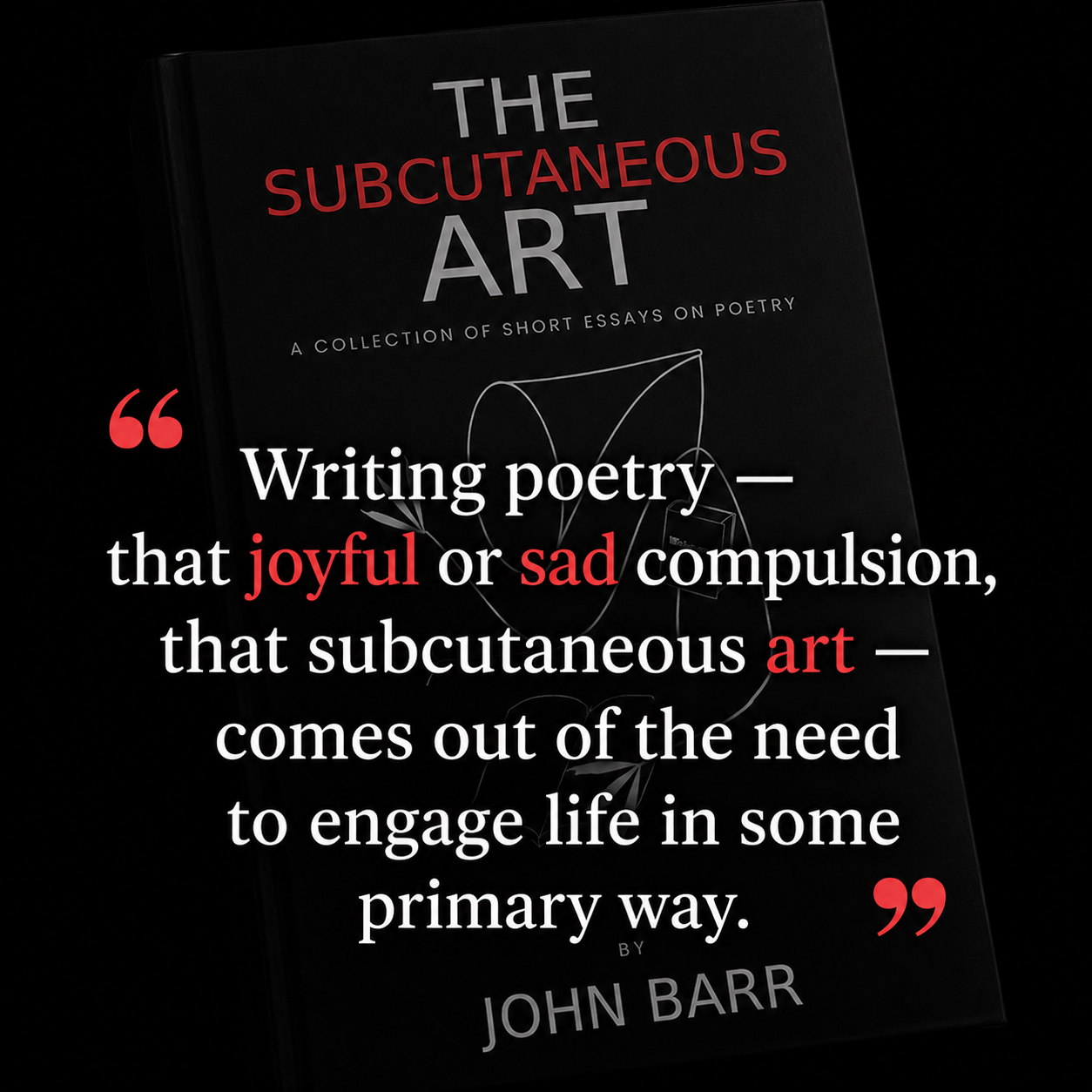
The Future of Poetry: Now there’s a modest topic. Poetry is as old as speech itself. Over its long history it has been all things to all people, and has occurred at all times and in all places. So the first thing to say about the future of poetry is that, yes, poetry will have one. Poetry arises out of the need to engage life in some primary way, to make sense of the world that is given to us and to which we are given. We can expect poetry to be around for as long as human kind is there to write it and read it. But speculating on how poetry will evolve in the future, the new directions it will take and how it will be different, is a more doubtful business.
Who could have expected that poetry in England, for which the 19th century was the Age of the Romantics, would not continue along the lines of the Georgians and Edwardians? American poetry, for its part, continued through the 19th century to be essentially English poetry written on American soil. (When Frost wrote “The land was ours before we were the land’s,” he could have been talking about American poetry.) Longfellow brought this English tradition to its American culmination. But who, reading Longfellow, could have foreseen the advent of Modernism?
Modernism, of course, is the revolution of sensibility that swept the arts in the years leading up to WWI. As an aesthetic movement Modernism was impatient with the past; it was iconoclastic and experimental. Longfellow’s poems spoke to the man on the street, the mother by the fire, the children at their lessons. In that sense Longfellow was a populist poet (although he was no cracker barrel poet). “By the shores of Gitchee Gumee//By the shining Big-Sea Water” and “Listen my children, and you shall hear//Of the midnight ride of Paul Revere.” Modernist poetry seeks a different kind of relationship with its reader — and in fact a different kind of reader. 20th century American poetry has tended to prize difficulty — even exclusivity. Its themes of alienation and despair became the stuff of graduate seminars, not of campfire recitations.
Today we can look back on a century of Modernist poetry and its progeny of poetic schools and movements collectively known as Post Modernism. Eliot and the whole Modernist pantheon is now anthologized as our “Modern Classics.” As the 20th century recedes into the past, its poetry coheres into a body of literature: critical consensus treats it as the literary imprint of its era. Bear with me, then, if I suggest that there was nothing inevitable about the advent of Modernism, and that, in a particular way, this has always been true of what is next and new in poetry.
What, for example, would have happened if Pound and Eliot had not hit it off when they met in 1914? Without Pound’s editorial genius as “il miglior fabbro” we would not have the immensely influential “The Waste Land.” We would have instead a decidedly more quixotic piece of work called “He Do the Police in Different Voices.” On a grander scale, if the two world wars had not occurred, would Existentialism have emerged as the enabling philosophy of Modernism? Or what if WWII did occur, but the Axis Powers had not lost? Would poetry have evolved less as a celebration of the individual and more as handmaiden to the State? (Think less Whitman, more Wagner.)
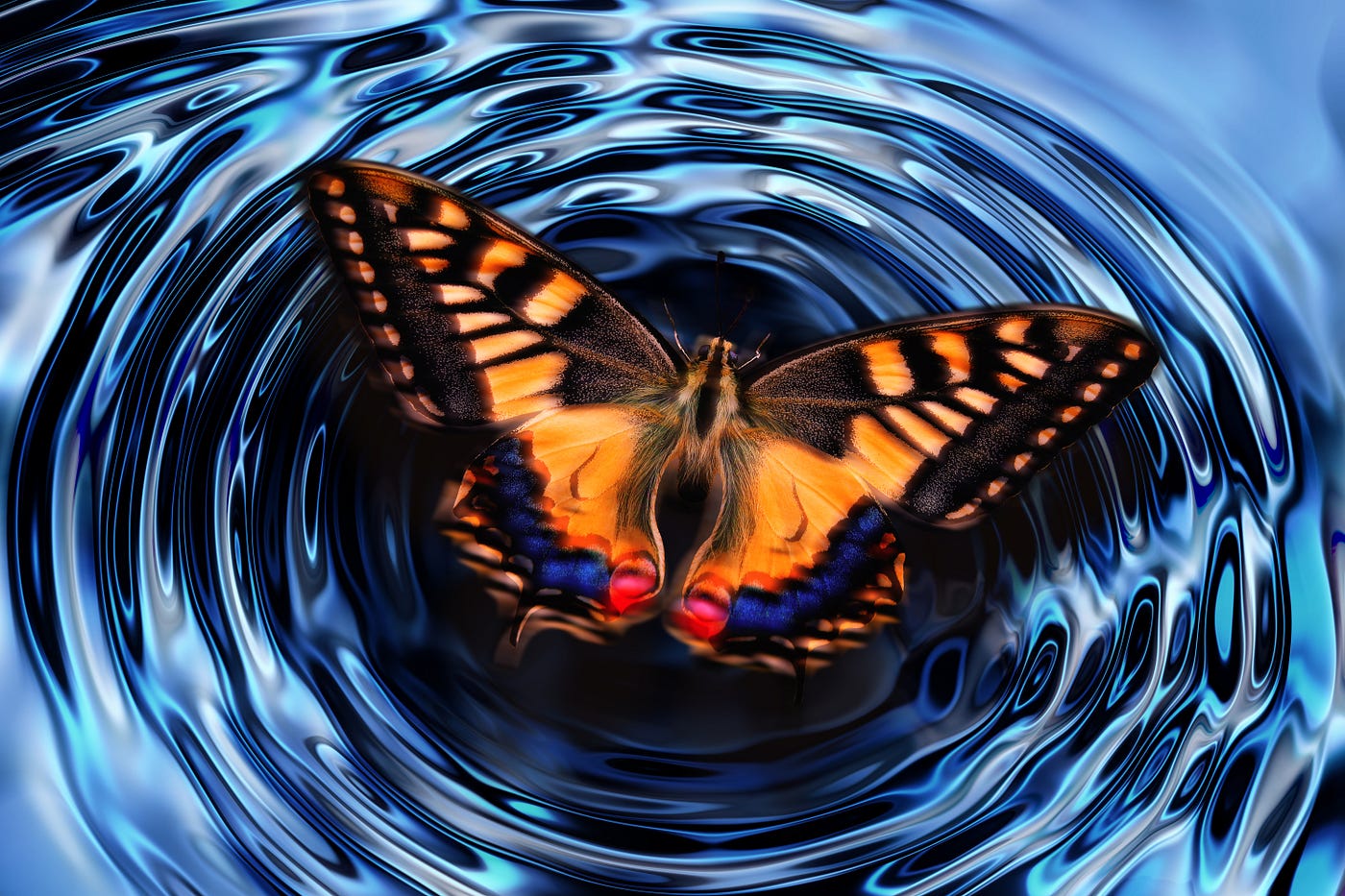
On one level this “What if” is a parlor game better enjoyed with a glass of wine. At another, however, it resonates with chaos theory and Wonderful Life, Stephen Jay Gould’s provocative book about the nonrecurring nature of the evolution of life on earth. Gould’s thesis is that if “the evolutionary tape” were to be rewound half a billion years and played again, human life would not be inevitable, or even likely. In fact, even if it were rewound and replayed a million times, man would not be expected again. He replaces the Tree of Life, the traditional metaphor showing the evolution of life through all creatures down to Man as its last best form, with a Shrub of Life, having an infinite number of branches all with the potential to predominate. Gould concludes that Man is “a wildly improbable evolutionary event.” In a similar way chaos theory, known also by its nickname “the butterfly effect,” deals with the influence of small, random events on everything from cloud formation to the number of planets in our solar system. I don’t know if these theories have been applied to the evolution of the arts, but my suggestion here is that the shoe certainly seems to fit. I’ll give one example.
Coincident with the rise of higher education in this country — the college education becoming, after WWII, an established part of the American dream — Modernism took poetry further away from the newspaper-reading public, the popular audiences that had grown up on Longfellow in the previous century, and into the college classroom. The symbiotic relationship that evolved between academic-based literary critics and Modernist poets served both well: the difficulties of Modernist poetry needed specialists to interpret them, and literary critics needed something more challenging to interpret than:
Under a spreading chestnut tree The village smithy stands; The smith, a mighty man is he, With large and sinewy hands; And the muscles of his brawny arms Are strong as iron bands.
With Gould’s book in mind one can ask: would Modernist literature have prevailed, would it have displaced Tennyson and Longfellow, without the G.I. Bill to create generations of English Lit majors?
If poetry’s future cannot be predicted, then the legacy of any poet must also be understood as something fluid and continually rediscovered. Emily Dickinson may be the clearest example.
(To be continued in part two of this three-part series on the future of poetry.)
John Barr’s poems have been published in ten books, as well as in anthologies and many magazines, including The New York Times and Poetry. John was also the Inaugural President of the Poetry Foundation. His book, The Boxer of Quirinal, (published by Red Hen Press) was a 2024 finalist for the PEN/Voelcker Award for a Poetry Collection. You can view more of his work on his web site, or Instagram, and sign up for his free newsletter.
메타데이터
- post_id
- 991109b87d4a
- slug
- poetrys-future-and-the-butterfly-effect-991109b87d4a
- url
- https://medium.com/the-howling-owl/poetrys-future-and-the-butterfly-effect-991109b87d4a
- canonical_url
- https://medium.com/the-howling-owl/poetrys-future-and-the-butterfly-effect-991109b87d4a
- author_url
- https://medium.com/@johnbarrpoetry
- status
- ok
- fetched_at
- 2026-06-13 07:35:29