Dagashi Diaries #15: Cut Yocchan — Two Sheets, Two Very Different Chews
Cut Yocchan costs ¥59 (about $0.37). The bag contains two types of product — both cut into small pieces, both coated in sanbaizu, the…
Dagashi Diaries #15: Cut Yocchan — Two Sheets, Two Very Different Chews
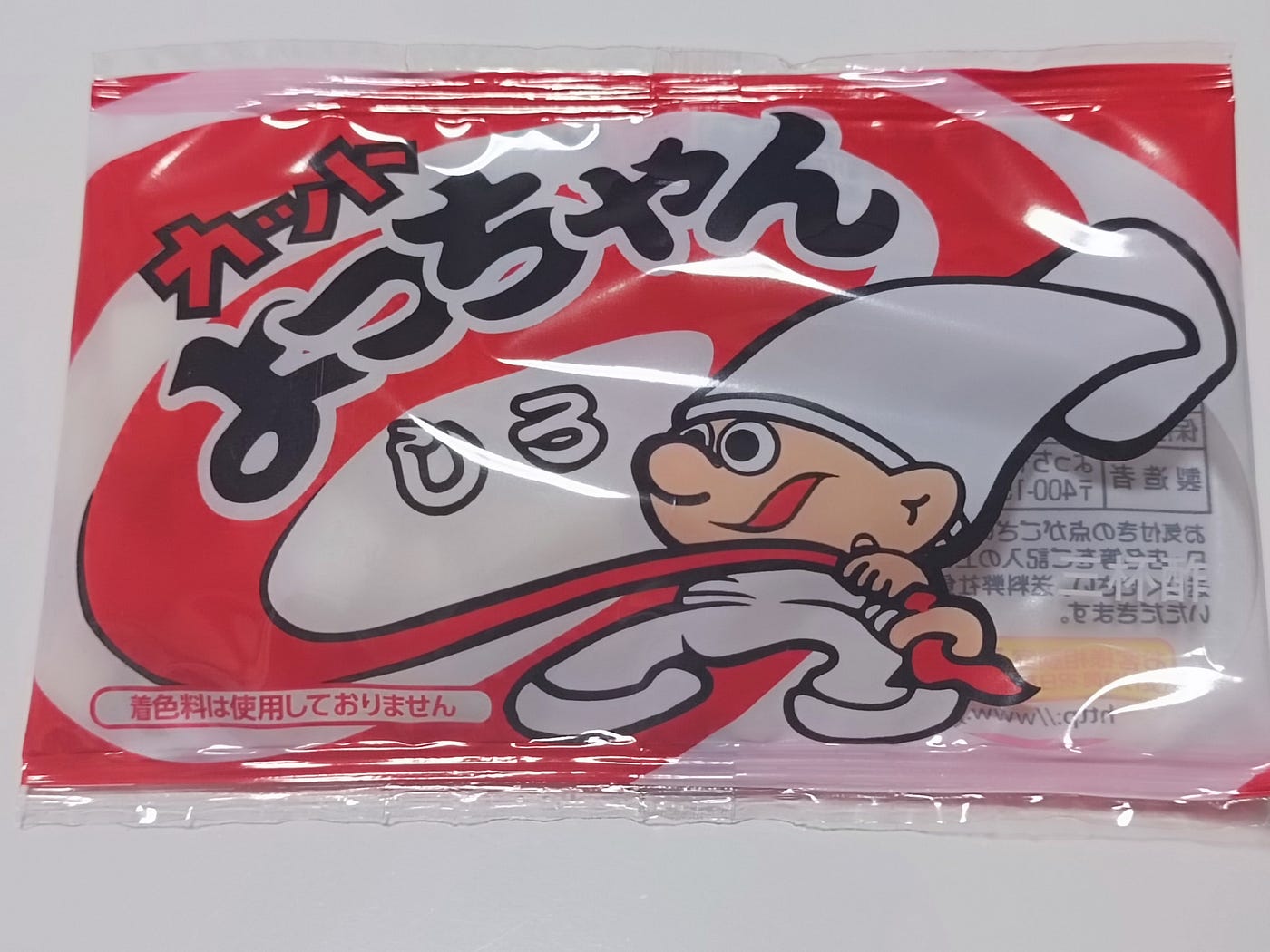
Cut Yocchan costs ¥59 (about $0.37). The bag contains two types of product — both cut into small pieces, both coated in sanbaizu, the classic Japanese blend of rice vinegar, mirin, and soy sauce. At first glance they look identical. They are not.
Made by Yocchan Food Industry Co., Ltd., this is one of the most recognisable dagashi in Japan — and one of the few that belongs as comfortably in the adult drinking snack category as it does in the children’s dagashi aisle.
THE FISH SHEET


The thinner of the two. Pressed fish paste, cut into small pieces and coated in a tangy glaze. The acidity lands immediately, followed by a savoury umami that gradually spreads across the palate. The texture is clean and crisp: no real resistance, no lingering chew, just a quick snap before the flavour takes over.
It disappears quickly. The sourness lingers much longer.
THE SQUID SHEET
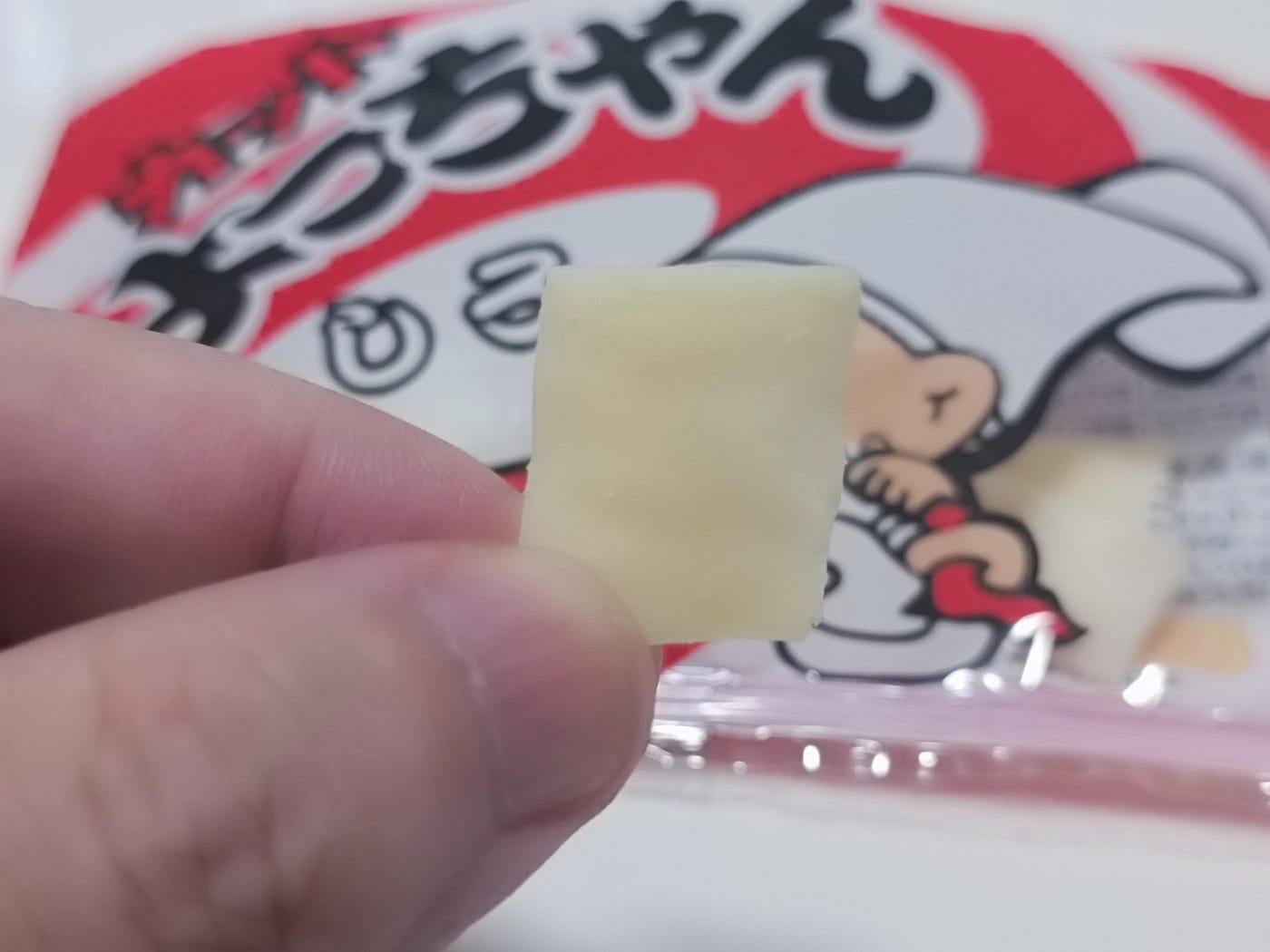
Slightly thicker, and visually almost identical to the fish sheet. The difference becomes obvious as soon as you bite into it. Squid has elasticity — it pushes back before yielding, requiring a few deliberate chews before releasing its full flavour. The opening is familiar: a quick burst of acidity. Then the chew begins to reveal something much deeper, with concentrated umami and a richer, more persistent sourness that continues developing long after the piece itself has gone.
The extra thickness means more chewing time, giving the seasoning longer to develop. The result feels noticeably more intense than the fish version.
THE SOURNESS QUESTION
Sanbaizu is not a gentle seasoning. Cut Yocchan uses it generously, and after only a few pieces the acidity becomes impossible to ignore. Finish the whole bag and the sourness stays with you well after the last bite.
That’s exactly why the snack fits so naturally into otsumami territory — food meant to be eaten alongside beer or other drinks. The acidity practically asks for something to wash it down with. Beer is the traditional answer.
THE IDENTIFICATION PROBLEM
The two sheet types look almost identical inside the bag. The colour is nearly the same. The size is almost identical. The only reliable clue is the thickness, and even that only becomes obvious once you’re holding a piece.
In practice, you bite into one first, recognise the texture, and only then realise whether you’ve picked fish or squid. Most people never bother sorting them beforehand, so the two alternate unpredictably throughout the bag, turning every piece into a small surprise.
Coincidentally, that’s also the most enjoyable way to eat them.
Cut Yocchan (Sanbaizu / White) is available at dagashi shops, convenience stores, and supermarkets across Japan. ¥59 per bag (about $0.37 at April 2026 exchange rates). Made and sold by Yocchan Food Industry Co., Ltd.
메타데이터
- post_id
- 9934a436f0ab
- slug
- dagashi-diaries-15-cut-yocchan-two-sheets-two-very-different-chews-9934a436f0ab
- url
- https://medium.com/@hiro3714/dagashi-diaries-15-cut-yocchan-two-sheets-two-very-different-chews-9934a436f0ab
- canonical_url
- https://medium.com/@hiro3714/dagashi-diaries-15-cut-yocchan-two-sheets-two-very-different-chews-9934a436f0ab
- author_url
- https://medium.com/@hiro3714
- status
- ok
- fetched_at
- 2026-07-11 12:46:10