Minecraft Across the Lifespan: Demographics, Education, and the Evolution of Digital Play
Owen R. Thornton
Photo by Connor Gan on Unsplash
Minecraft Across the Lifespan: Demographics, Education, and the Evolution of Digital Play
Owen R. Thornton
University of North Carolina at Chapel Hill
University of Michigan — Ann Arbor
othornt@umich.edu
There are a couple of things we can think about with the average player being 24 years old. First, it shows how the game retains players long-term and builds from a sandbox game into a more complex hobby, whether that be modded editions or creative outlets. Second, for older adults, Minecraft typically acts as a low-stake environment where people can relax, be creative, and take a psychological break from pressures of the world. This can be separated into two different categories: psychological decompression as a way to relax or as an outlet, and architectural creativity and logical engineering. This includes elements like Redstone logic, server-side coding on a PC, modding (mod packs), or connecting with others in the community (Reddit, YouTube, CurseForge, Wikis) to further build the platform. There is a natural evolution from youth to adulthood involving increasing complexity and social relations that can be experienced within the game. User-generated content is a huge part of the game, involving mods and custom servers. This makes it so the game is not so much finished as it is a working project, which is largely what drives the continued logged hours.
Minecraft is a very useful game when it comes to spatial thinking, mathematics, and social cohesion, meaning the ability to work together and create to achieve a set common goal. It can be legitimately useful as an educational tool. Additionally, it guarantees that users in the education system will be pipelined straight into the game, perhaps as their first exposure to it. This has implications of its own regarding whether it is a helpful pipeline to put children into unknowingly. While it may be, there is always potential for debate. This is quite different from competitors or any other game that may not have this constant influx of students in a younger category coming in administered by schools.
Another thing to consider are the different editions of Minecraft. There is Minecraft Education Edition, for example, which is still largely used in curriculums. Even Reimagine Mission Control, which recently came out, explores the Artemis mission through a building challenge from the recent space launch. However, it is important to note that there are specialized blocks, like allow, deny, and border blocks, and mandatory logins with school accounts. One issue with using the education version could be the confinement of creativity. Where Minecraft typically has its players explore, build up, and learn to interact with the environment and the world, the teaching edition typically is a more structured version with specific tasks and goals that can reduce the original output of the students.
There are, of course, also online safety concerns and questions regarding the point at which online safety measures interfere with the unique challenge of interacting with classmates virtually. Another consideration is how lessons are designed using Copilot to help instructors build, which is not only interesting but has implications for what data is being shared with AI and the platform from a data ethics standpoint. Minecraft Education as a whole is a very useful and cool way to interact with the game, though it does have issues, such as a lack of experience in the organic problem-solving and troubleshooting required to figure out each layer of the original game.
A study by Mavoa et al. (2017) found that there was early gendering, where 68% of boys six to eight years old played Minecraft while only 29% of girls did. This was largely because digital media was marketed as a boys’ domain. By 2020, participation was closer to an even split. While it is still male-dominated, this shift is largely due to the digital world being more accessible to all people and seen less as a boys’ thing and more as a person-wide activity. Given that everyone is on electronics all the time, the gaming environment has become normalized. Things like content creators on YouTube can validate some of these feelings toward video games. Though we can still see divides in different types of games regarding gender demographics, we are slowly seeing a shift as “digital play” is normalized.
What is worth highlighting is that the average Minecraft player is an adult — a fact that could easily serve as a headline, simply because people who think of games often think of young kids. About 50% of the active player base of Minecraft is now between the ages of 30 and 65. There are deep communities of people who are ingrained in gaming across all types of genres and demographics. This is largely due to online communities and the complexity of games like Minecraft that allow for modding, participation amongst servers, and collaboration amongst different people, whether through modded communities, YouTube episodes, or live streams. Players also get to play alongside creators by simulating their experiences, whether that involves taking on specific challenges or using the same world seed as them. YouTubers have become the new famous movie star or athlete.
Over time, we are seeing that not only Minecraft, but gaming generally is on the rise across all demographics, particularly groups that we previously would have stereotypically thought did not play games. This is because people are normalizing gaming within the digital world. We see that everything is moving online, and doing things in a digital environment is becoming the norm. Given this, adults and children alike are using their leisure time to spend time gaming. This is something we can look at over the next 50 years or more to see what percentage of the elderly, for example, are playing games. From what we have seen so far, that percentage is going to rise over time. As one gets older, there are limitations such as responsibilities that increase in daily life; however, what people do with their leisure time is up to their own discretion. Looking specifically at older demographics relative to now, an increase over time seems likely.
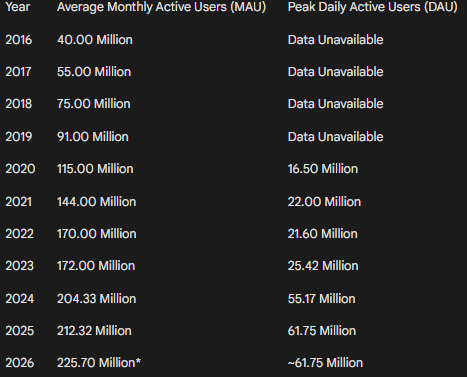
Data on Minecraft demographics is sparse, to say the least. Early insights come from a survey conducted approximately 14 years ago on the Minecraft subreddit, which gathered approximately 4,800 responses (reddit.com/r/Minecraft). This data is also referenced in the Heapcraft Project (Müller et al., 2015), as well as in work by Bukvic et al. (2014) on OPERAcraft. Together, these sources offer a limited but valuable window into the early demographic makeup of the Minecraft community.
References
Bukvic, I. I., et al. (2014). OPERAcraft.
Mavoa, J., et al. (2017). New Media & Society. https://doi.org/10.1177/1461444817745320
Minecraft Education Edition. https://education.minecraft.net/en-us
Müller, J., et al. (2015). The Heapcraft Project.
Thornton, O. (2026). Descriptive Statistics and Demographic Evolution of the Minecraft Player Base (2011–2026). https://doi.org/10.17615/8bmf-mw86
메타데이터
- post_id
- 9954635ee37e
- slug
- minecraft-across-the-lifespan-demographics-education-and-the-evolution-of-digital-play-9954635ee37e
- url
- https://medium.datadriveninvestor.com/minecraft-across-the-lifespan-demographics-education-and-the-evolution-of-digital-play-9954635ee37e
- canonical_url
- https://medium.datadriveninvestor.com/minecraft-across-the-lifespan-demographics-education-and-the-evolution-of-digital-play-9954635ee37e
- author_url
- https://medium.com/@othornt
- status
- ok
- fetched_at
- 2026-06-15 20:49:13