How Not To Marry a Welshman (and Other Success Stories) — Chapter 5: The Issues With The Assembly
In which Den Mum hits play on a six-year-old interview featuring Michael Sheen, only to run a fierce diagnostic audit on the systemic…
How Not To Marry a Welshman (and Other Success Stories) — Chapter 5: The Issues With The Assembly
[embed]
In which Den Mum hits play on a six-year-old interview featuring Michael Sheen, only to run a fierce diagnostic audit on the systemic failures of the public square. Armed with a rare, hyper-empathy-focused strain of autism, she dismantles the lazy societal script that equates neurodivergence with a total lack of empathy or boundaries. Siding squarely with the Golden Rule Protocol and a hyper-vigilant Deliberate Filter, Den Mum would choose a literal vice grip over public rudeness, proving that true accommodation should never mean dragging basic human courtesy back to the Dark Ages.
Den Mum watched a lot of British television and a lot of fan-made music videos; they were her media diet for life. With the creation of YouTube Premium and ad-free viewing, her appetite shaped algorithms the way the Stone Age was shaped by glaciers — sometimes prophetically, sometimes not.
At the moment, as Den Mum rested from her sallying forth to Immigration and her mad-dash grocery shop after, she decided to click on a recommended video concerning Michael Sheen. A part of her had to internally gear up for it — not for any reason regarding Sheen himself, but because of what she felt was a grating miscalculation perpetuated by some of the interviewees.
Den Mum had been born autistic. After suffering a severe blow to the frontal lobe as a small child, she had not only forgotten most of her early childhood, but had, in fact, honed the autism into an HFA/AuDHD variety of unusual proportions. This unique wiring was precisely what led her to excel in languages and logic, and also what made her appear as dumb as a brick when it came to math, such as algebra, or understanding the point behind social structures, like labels beyond “Human,” and “Nice,” “Completely and Utterly Averagely Normal,” or “Unpleasant” and “Rotten Nasty.” In her overarching labeling system, those final terms could be used to define everyone from the affectionate student who came running to meet her with a dramatic lunge to be grabbed and swung around in a massive hug, to Hitler and the way he and his awful goons rampaged during World War II.
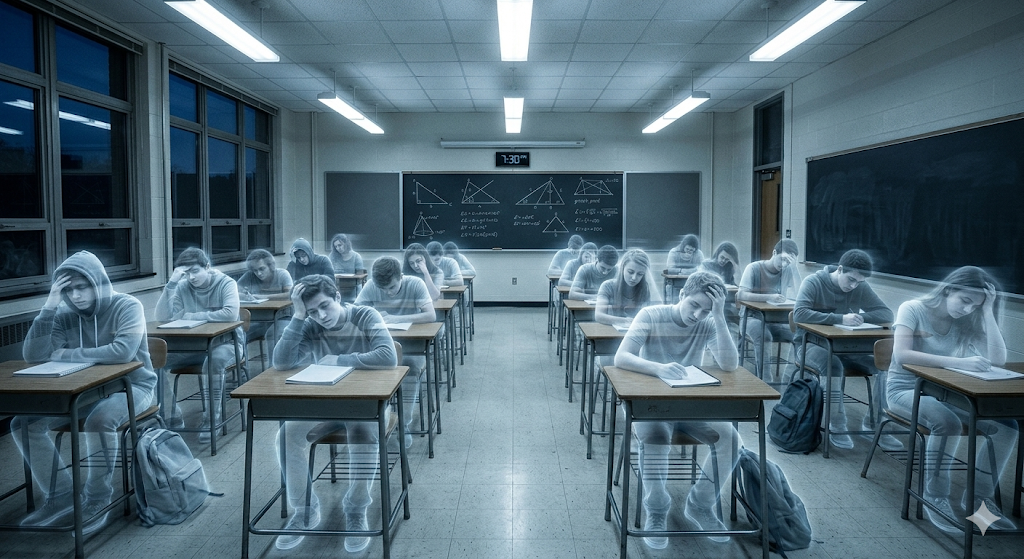
However, Den Mum was entirely unlike the autistics often portrayed in The Assembly, who possessed no filter and would spout out whatever they were thinking with complete disregard for decorum or their fellow humans. It was as if, with the blow that sealed her fate regarding how her brain would function moving forward, a curious paradox unraveled. The entire situation, and the unfairness surrounding it — which logically should have led to a shocking lack of empathy and an intense self-focus — did the exact polar opposite. Den Mum became programmed, as it were, to look outward far more than inward; to observe those around her and consider their quirks and to consider their feelings far more than she spent time developing or considering her own.
Den Mum had seen many doctors concerning her situation and diagnoses, and most agreed she definitely had autism, but it was not a kind they had encountered before. As one therapist candidly remarked, “You do not fit the typical stereotype. You focus so little on yourself and so much on others and how they think and feel. It is indeed a bit surprising, as you are the first and only autistic person I have met in forty years of practice to be wired, as it were, this particular way.”
Because of Den Mum’s Hyper-Empathy Focused Autism, she harbored a deeply held angst for the frustrating double standard, and the excuse-making behind it, that led to the interview structure found in The Assembly. This was most easily explained by the fact that she was one of the autistic/AuDHD humans who actually did the hard, exhausting cognitive labor of maintaining impeccable personal boundaries.
To provide full context, The Assembly is a television programme where a group of neurodivergent, autistic, or disabled student journalists interview a major public figure. One of their first interviewees — if not their literal first, Den Mum could not remember exactly, because orders and dates, like math, were not her strong suit — was Michael Sheen. Den Mum had heard about the interview when it initially aired, but at that point in her life, she knew nothing of Sheen except that he was a British actor and that, apparently, the interviewees had heavily ribbed him for his relationship with a woman who was only five years older than his first daughter.
Now, to be clear, Den Mum had no knowledge of Good Omens at that point, or Sheen either, for that matter. Looking from the outside in, the public commentary caused her to deduce two distinct conclusions.
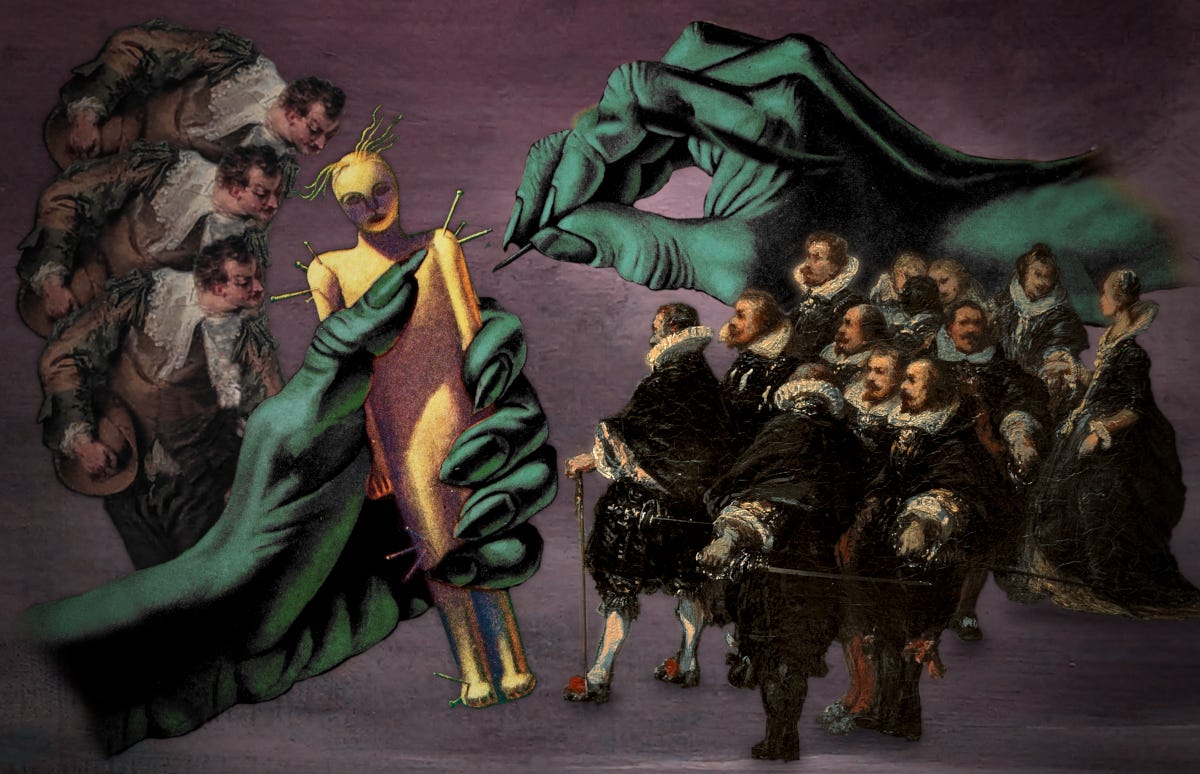
Firstly, she agreed that it certainly did not look idyllic socially for a man to date a woman only five years older than his daughter — because considering available data and historical situations, most men do not do such things because they care for such a partner or because of that partner’s incandescent soul. However, she also wholeheartedly agreed that it was absolutely no one’s business to comment on such a situation in public. Using the lazy excuse, “They’re just autistic, so they do not know any better,” for the interviewees riled her system far more than the actual 25-year age gap Michael Sheen and his partner presented.
For Den Mum, even with her fierce aversion to most older men dating significantly younger women — deeming such men typically lecherous humanoids and giving them a wide, defensive swath — this was a strictly internal opinion. You could, in theory, put her hand in a vice grip, and she would still never state this opinion aloud to said person and their partner. In her calculation, that was not acceptable behavior in any universe, under the guises of any health condition, or with any neurological wiring.
Her second deduction was that The Assembly’s production chooses interviewers who are openly neurodivergent, and then automatically installs a blanket pass for their behavior, whatever that behavior may be — and behavior is not entirely to be linked to neurological attributes. So, when the blunt question about Michael Sheen and his partner’s age gap was deployed, the public square instantly waved it away with the standard script: “Oh, they have no filter, it’s just their autism.” Den Mum was riled, which was a rare and seldom seen thing.
Den Mum sat there, decidedly pissed. She would not have admitted this was her state to a fellow human, because Den Mum did not cuss, and she considered “pissed” a cussing word far more than a word to explain bodily functions, such as the removal of liquid waste from humans. Yet, the emotional data was what it was. She knew this defensive script meant society was merely reinforcing its primitive “us vs. them” mentality regarding the atypical and neurotypical situation. To her, dropping the bar of basic human courtesy under the guise of accommodation was like forcing an entire section of the population back to the Dark Ages just because a fellow human with a similar condition had decided to try jousting.
The structural malfunction with The Assembly was that the “No Filter” excuse functioned as a systemic insult to Den Mum. This lazy excuse was the very reason she would have chosen a literal vice grip over ever asking a stranger something so aggressively invasive. The societal narrative that “autism equals a total lack of empathy or boundaries” was a massive, outdated stereotype that her system simply refused to stomach or accept.
As a high-functioning autistic/AuDHD woman, Den Mum’s operating system actually worked in the exact opposite way of the autistic individuals prominently highlighted on The Assembly. Because she had survived a restrictive, chaotic environment where personal boundaries were constantly violated as a child and young adult, and because her HFA/AuDHD brain natively craved predictable, safe logic rules, she had, in fact, built a massive internal database of social protocols.
Her natural default was The Golden Rule Protocol: “I know how much it hurts to have people invade my space or judge my architecture, therefore I will never, under any circumstances, inflict that intrusion onto another sovereign human being in a public or private way, if at all possible.”
This was paired with The Deliberate Filter. Den Mum didn’t run around the world without a filter; she walked methodically around in great strides with a hyper-vigilant filter designed to ensure she never became a burden or a source of distress to anyone else.
She refused to let the public square assume that autistic humanoids were mild social scourges of the earth. Yes, admittedly, she was known for accidentally scaring pristine Scotsmen in Immigration queues just with her quiet presence, and she could, on occasion, inform an unruly student that their impish behavior would not be tolerated in a tone and choice of words that surprised the adults — but oddly enough, rarely the child — but this was always executed with protective care.
When people weaponized autism as a blanket excuse for outright rudeness, it completely erased the immense, respectful effort that people like Den Mum put into navigating the world with dignity every single day. This systemic laziness deeply irked her. It was precisely why it had taken Den Mum nearly six years to finally get around to watching that particular interview with Michael Sheen on The Assembly. And she was clicking on it now, oddly enough, because she wanted to see the metrics of how Sheen responded, far more than she cared about a media representation that gave humans a free pass to be entirely out of touch.
메타데이터
- post_id
- 9977debeafdd
- slug
- how-not-to-marry-a-welshman-and-other-success-stories-chapter-5-the-issues-with-the-assembly-9977debeafdd
- url
- https://medium.com/@kismetadventures/how-not-to-marry-a-welshman-and-other-success-stories-chapter-5-the-issues-with-the-assembly-9977debeafdd
- canonical_url
- https://medium.com/@kismetadventures/how-not-to-marry-a-welshman-and-other-success-stories-chapter-5-the-issues-with-the-assembly-9977debeafdd
- author_url
- https://medium.com/@kismetadventures
- status
- ok
- fetched_at
- 2026-07-09 20:10:33