The meaning of life, or lack thereof?
Perhaps we should be talking of goals in, not meaning of, life?
The meaning of life, or lack thereof?
Perhaps we should be talking of goals in, not meaning of, life?

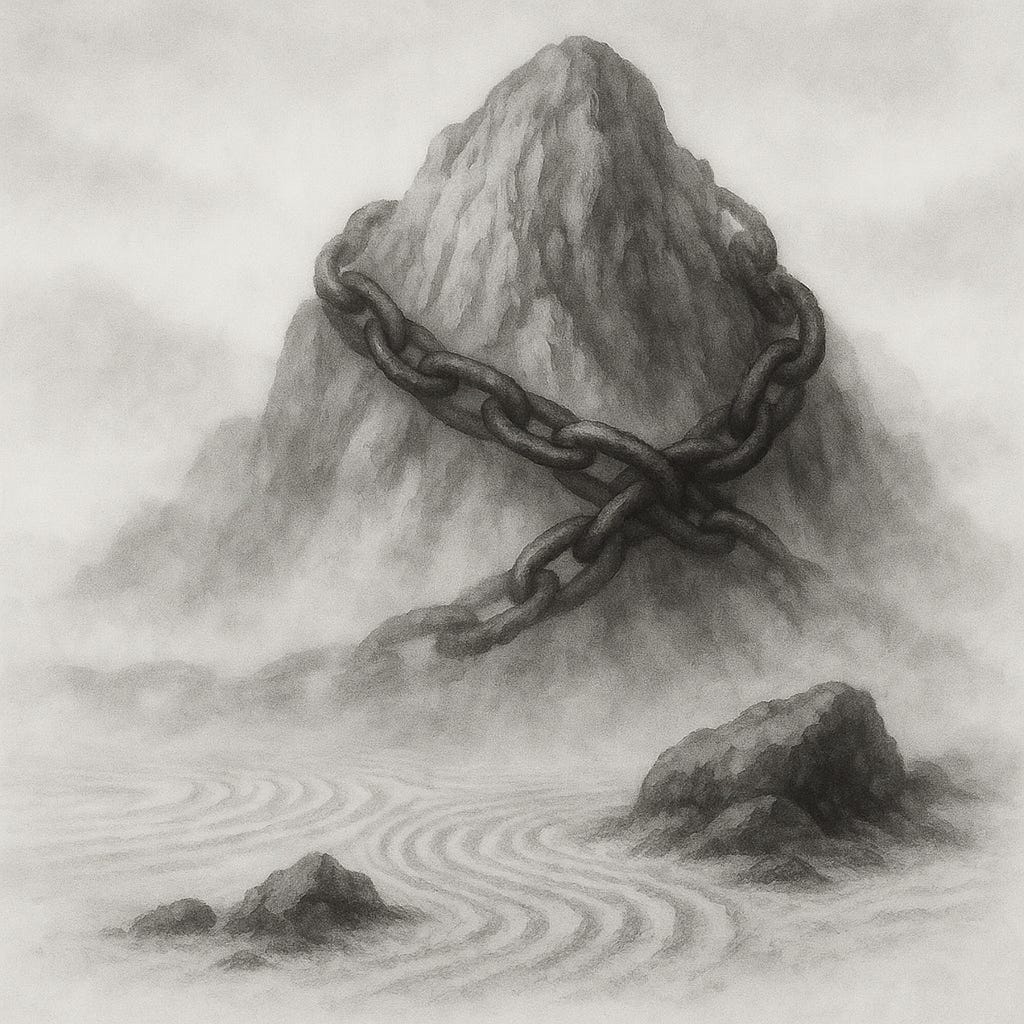
Thinking about the meaning of life. Or is it the goal of life? (Image created by using MidJourney)
I seem to be preoccupied, of late, with the meaning of life. More precisely, with the fact that so many people, including a number of philosophers and scientists, appear to be determined to show that there is such a thing. Just a few weeks ago, for instance, I published an essay entitled “On the question of cosmic meaning (or lack thereof)” with a subtitle along the lines of “Teleology, panpsychism, and other fashionable nonsense in modern metaphysics.” Here I want to approach the same issue from a different perspective, making use of resources developed by ancient philosophers belonging to the Greco-Roman tradition. They understood that to talk of the meaning of life is a category mistake, like saying that the number two is blue. But also that there is another, related question that makes perfect sense to ask: what is (or should be) the goal of a human existence?
Instead of meaning, the Greco-Romans talked of telos, which translates as goal, or purpose in the specific sense of the answer to the question “what is X for?” The telos of a bread knife, for instance, is to cut bread, and an excellent (arete, the word usually translated as “virtue”) bread knife is one that does its job very, very well. Aristotle figured that everything has a telos, including human beings, animals, plants, and inanimate objects. The telos of an acorn, for instance, is to become an oak tree. The telos of a bacterium is, as my old professor of biophysics, Mario Ageno, used to put it, to become two bacteria (back to eat, survive, reproduce!). And so on.
That said, not everything has a telos, but rather only two categories of things: (i) living organisms (like bacteria and oaks), and (ii) intelligently designed objects (like the bread knife). These two categories have different kinds of teloi: the telos of living organisms is the same one we’ve seen in a cartoon featured in a previous essay: reproduction. The telos of designed objects is whatever function the designer had in mind (cutting bread, for instance). The first kind of telos is the result of the process known as natural selection and discovered by Charles Darwin and Alfred Russell Wallace in the 19th century. The second kind of telos is the result of conscious intelligence, be it human, Martian, or whatever.
We, members of the species Homo sapiens — together, if they exist, with Martians or other intelligent beings — are a bit special, because we have both teloi: the one given to us by natural selection, which we share with all other living organisms, and whatever we consciously decide to pursue during our limited existence. That’s what the evolution of consciousness has made possible for us, the second telos.
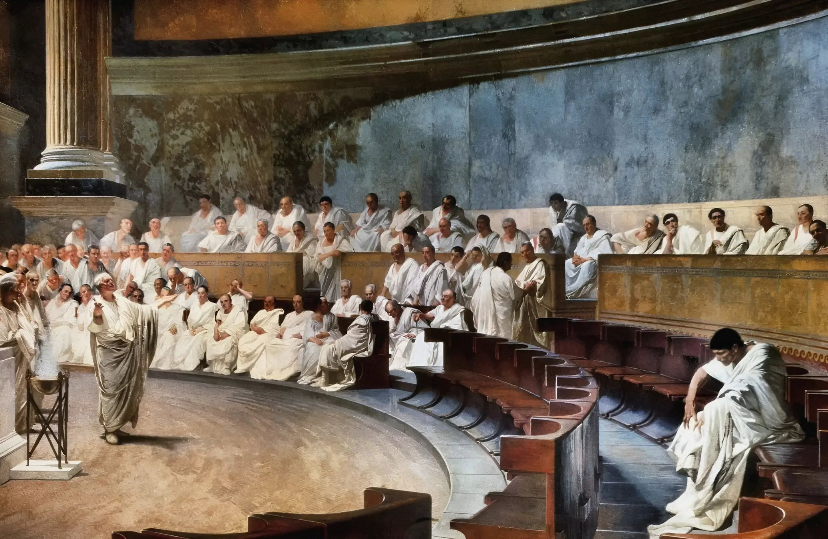
Which brings me back to the Greco-Romans: they asked themselves what sort of telos we should pursue and why. In a sense, the differences among all the Classical and Hellenistic philosophies of Greece and Rome can be understood as being rooted in different ways to answer the question of telos. Almost all such philosophies came up with the same answer, but — crucially — using different paths to it. The common answer was eudaimonia, often sloppily translated as happiness, sometimes as flourishing, but, I think, best rendered in English by the phrase “the life worth living.”
You have achieved eudaimonia if, by the end of your life, you can look back, examine what you’ve done, and sincerely tell yourself that it wasn’t a waste of time. (Aristotle went so far as to say that you are not the judge of your own eudaimonia, that only people who survive you can actually make that assessment.)
Okay, so if the telos of a deliberately lived human life is eudaimonia, what route should we follow to achieve such a goal? The Greco-Romans gave, broadly, three answers: pleasure, character, or doubt, as my friends Greg Lopez, Meredith Kunz, and I explain in our recently released *Beyond Stoicism — A Guide to the Good Life with Stoics, Skeptics, Epicureans, and Other Ancient Philosophers*. The three answers correspond to three distinct ways of living one’s own life: hedonism, virtue ethics, or skepticism.
Hedonists, like the Epicureans or the lesser-known Cyrenaics, think that the best way to live a life worth living is by cultivating pleasure, though what this means is, again, different for different schools. The Cyrenaics, followers of Aristippus (a student of Socrates), regarded physical pleasure in the here and now as the only thing worth pursuing. The Epicureans were a bit more sophisticated, suggesting that lack of pain, both physical and mental, is the highest possible “pleasure.”
Virtue ethicists included Plato, Aristotle, the Cynics, and the Stoics, among others. They regarded the cultivation of character as the path to eudaimonia: only by becoming a better human being can we live a life worth living. But what does “better” mean in this context? Again, the various schools disagreed. For Plato, the best life was one of contemplation of the metaphysical Idea of the Good. For Aristotle, either a life of philosophical reflection or, failing that, one of political involvement, was the way to go. The Cynics, by contrast, argued that a very minimalist lifestyle allows us to live like nature meant us to. The Stoics, my preferred school, struck a compromise between the Cynics and Aristotle, claiming that living “according to nature” means using our minds to solve problems while working cooperatively with other members of the cosmopolis, the universal human family.
Finally, the skeptics argued that actively cultivating doubt is the way to go, though — once more — different schools cashed that basic idea out in different fashion. The Pyrrhonists, followers of Pyrrho of Elis, were convinced that it is wise to suspend judgment on all sorts of things for which we don’t have strong reasons to endorse a particular belief — for instance, metaphysical questions like the existence of god, or political ones like the best way to build a good society. This suspension of judgment (epoche) leads to tranquillity of mind (ataraxia), which in turn is the root of a good life. (Interestingly, the Epicureans too considered ataraxia to be the intermediate goal.) The Academic Skeptics, so named after the fact that they were members of Plato’s Academy (though Plato himself had been dead for a while), claimed that a good life depends on making reasonable decisions, and that, in turn, is the result of grasping the principle that human beings rarely, if ever, attain certainty about things. Instead, we should adjust our beliefs in proportion to the available evidence, always with the proviso that we could be wrong and that if new and better evidence comes along we will change our opinion about things.
So, how do we make up our mind among so many options? Should we cultivate hedonism, virtue ethics, or skepticism? And how, exactly? Although these ideas, developed over two millennia ago, are still very much valid and useful today, I think it pays to update the whole approach and take into account what modern science has to say about living a good life.
For instance, the Harvard Study of Adult Development is an eight-decade-long research program looking at what does and does not work when it comes to human happiness. The current principal investigators, Robert Waldinger and Marc Schulz, have published a book summarizing the main findings, which is very much worth reading. (And here is a short article that summarizes the summary…)
It turns out that by far the leading cause of happiness is having good relationships with other people, which would not have surprised the Stoics or many other of the Greco-Romans. We are, after all, highly social animals. What may be surprising are the quantitative aspects of the findings, for instance that loneliness is as lethal as smoking or alcoholism. Think about that, for a second or two.
The Harvard study also set out to discover the most important predictors of healthy aging, which is something that, presumably, we all want. There are six:
- Staying physically active
- Cultivating healthy habits like limited drinking and no smoking
- Maintaining a proper demeanor, like developing mature mechanisms to cope with life’s ups and downs
- Keeping a healthy weight
- Having a stable marriage or similar relationship
- Being educated (which, in part, helps with all the above)
Again, the Greco-Romans would agree. They emphasized the harmony between physical and mental wellbeing, the importance of education broadly construed, the cultivation of temperance, the development of practical wisdom, and mindfulness about human relationships, especially within the family.
Where the ancients went wrong, I think, is in assuming that there must be only one summum bonum, or highest good. The Latin phrase was introduced by Cicero, but it reflected an earlier concept developed by the Greeks, at least since Plato. In his De Finibus Bonorum et Malorum, the beautifully titled “On the Ends of Good and Evil,” Cicero compares the major philosophical schools (in his case, Platonism, Aristotelianism, Stoicism, and Epicureanism) on the basis of what they thought constitutes the summum bonum — just as I’ve done above. This tradition of looking for a single answer to the good life continued well after the Hellenistic period, with Plutarch, the Neoplatonist Plotinus, Augustine of Hippo, Thomas Aquinas, all the way to Hegel, Kant, and G.E. Moore.
But why on earth should there be just one such good for human beings? Using the word summum (i.e., highest) vitiates the debate in favor of a unique answer, but there is no substantial reason to think that there is one and only one type of good to be pursued. Why couldn’t we, for instance, pursue both hedonism and eudaimonism, that is, both pleasure and virtue? And why couldn’t we do so while adopting a skeptical attitude, thus unifying all three of the themes we have identified above?
The answer is that, of course, we can, but we ought to be careful how we do it. Modern positive psychology, i.e., the psychology of happiness, has concluded on the basis of empirical data that a combination of hedonia and eudaimonia is the way to go, and the recommended mixture is about 20–80. I wouldn’t take that specific number too seriously if I were you, but the basic idea is that a eudaimonic life — that is, a life based on the pursuit of virtue and good relationships with others — ought to constitute the main dish, so to speak, while pleasure is a good spice that enhances such a dish. Intuitively, you wouldn’t want to reverse things and make the spice the main dish: salt and pepper add flavors to most meals, but a meal of salt and pepper is neither pleasurable nor nutritious…
What about the third component, skepticism? Nowadays, unfortunately, the word has a negative connotation, meaning something along the lines of a constantly doubting or questioning attitude or state of mind. But of course the term comes from the Greek skeptikos, meaning inquirer. A skeptic is someone who actively practices what we call critical thinking, and empirical evidence shows that individuals with strong critical thinking skills are better equipped to analyze information, make informed choices, and navigate complex situations effectively.
So there you have it, folks. While there is no (cosmic) meaning to life, it makes sense for human beings to set themselves goals. The obvious goal is to live a life that we judge to be worth living, and the most sensible way to achieve that goal is to cultivate a powerful mix of virtue, pleasure, and skepticism.
메타데이터
- post_id
- 998b00a84de2
- slug
- the-meaning-of-life-or-lack-thereof-998b00a84de2
- url
- https://medium.com/philosophytoday/the-meaning-of-life-or-lack-thereof-998b00a84de2
- canonical_url
- https://medium.com/philosophytoday/the-meaning-of-life-or-lack-thereof-998b00a84de2
- author_url
- https://medium.com/@figsinwinter
- status
- ok
- fetched_at
- 2026-07-11 14:44:29