How to Build a Grocery Delivery App Like Instacart
The grocery delivery market keeps growing as customers prefer quick shopping from their phones. Apps like Instacart changed how people buy…
How to Build a Grocery Delivery App Like Instacart
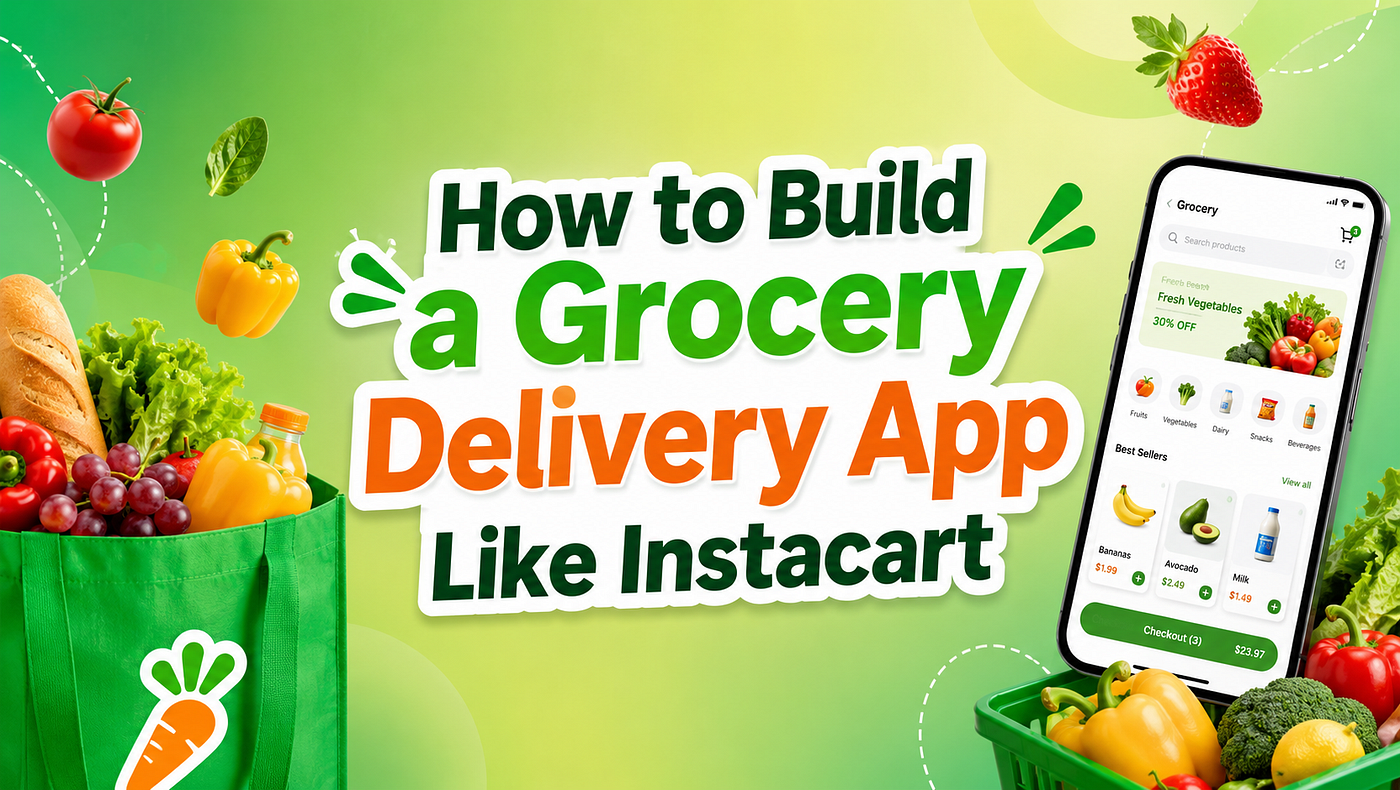
The grocery delivery market keeps growing as customers prefer quick shopping from their phones. Apps like Instacart changed how people buy groceries by connecting users, shoppers, and local stores on one platform. Businesses that plan to launch a grocery delivery app can enter a market with strong customer demand and long-term growth potential.
Building a grocery delivery app requires proper planning, the right feature set, a scalable tech stack, and a business model that supports long-term operations. This blog explains every important step involved in creating a grocery delivery app like Instacart.
Why Grocery Delivery Apps Continue to Grow
Customers now expect convenience in almost every service. Grocery delivery apps save time, reduce travel, and offer same-day delivery. Many users rely on these apps for weekly shopping, urgent purchases, and scheduled deliveries.
Retail stores also benefit from delivery platforms because they can reach more customers without opening new locations. Small grocery businesses can compete with larger chains through mobile apps.
Several factors drive the growth of grocery delivery applications:
- Increased smartphone usage
- Busy customer lifestyles
- Demand for contactless delivery
- Better digital payment systems
- Real-time order tracking
- Growth in urban populations
These trends create strong opportunities for startups and retail businesses.
Business Models for Grocery Delivery Apps
Before development starts, choose the right business model. Your business structure will influence app features, logistics, and operating costs.
Inventory Model
In this model, the company owns and manages grocery inventory. Customers place orders directly from the company’s warehouse.
Advantages include:
- Better quality control
- Higher profit margins
- Inventory management flexibility
Challenges include:
- Warehouse costs
- Inventory storage expenses
- Product wastage risks
Marketplace Model
This model works similarly to Instacart. The platform connects customers with local grocery stores.
Advantages include:
- Lower startup investment
- Faster market entry
- Wider product selection
Challenges include:
- Dependency on partner stores
- Delivery coordination
- Commission management
Hybrid Model
A hybrid model combines inventory ownership with third-party partnerships. Many modern grocery apps use this structure to increase product availability.
Key Features of a Grocery Delivery App
A grocery delivery platform usually includes three applications:
- Customer app
- Delivery partner app
- Admin panel
Each section requires specific features.
1. Customer App Features
The customer app acts as the main interface for users who place grocery orders, track deliveries, and manage their shopping activity. It should feel simple, fast, and easy to use.
a) User Registration
Users should register using:
- Mobile number
- Social login
A simple signup process improves user retention.
b) Product Search
Customers must find products quickly. Add:
- Smart search
- Filters
- Categories
- Product recommendations
- Voice search
c) Shopping Cart
Users should easily add or remove products before checkout.
d) Multiple Payment Methods
Support several payment options:
- Credit cards
- Debit cards
- Wallets
- UPI
- Cash on delivery
e) Real-Time Order Tracking
Customers expect live delivery updates. GPS tracking improves trust and transparency.
f) Push Notifications
Push alerts help users receive updates about:
- Order confirmation
- Delivery status
- Offers
- Discounts
g) Ratings and Reviews
Customers should rate products and delivery services. Reviews help maintain quality standards.
2. Delivery Partner App Features
The delivery partner app supports drivers in managing daily delivery tasks, tracking earnings, and completing orders on time. It improves coordination between customers, stores, and delivery agents.
a) Order Management
Delivery agents should accept or reject delivery requests quickly.
b) GPS Navigation
Integrated maps help drivers locate customers faster.
c) Earnings Dashboard
Drivers should view:
- Daily earnings
- Completed deliveries
- Incentives
- Payment history
d) Availability Settings
Drivers need the option to go online or offline.
3. Admin Panel Features
The admin panel controls the entire grocery delivery platform. It helps businesses manage users, orders, payments, inventory, and delivery operations from a centralized dashboard.
a) User Management
Admins should manage customers, delivery agents, and store partners from one dashboard.
b) Inventory Management
The system must track:
- Product availability
- Stock levels
- Product pricing
c) Order Monitoring
Admins should monitor all orders in real time.
d) Analytics Dashboard
Analytics help businesses monitor:
- Revenue
- Customer activity
- Delivery performance
- Product demand
e) Promotion Management
Admins should create discount campaigns and referral programs.
Steps to Build a Grocery Delivery App Like Instacart
Building a grocery delivery app requires a structured development process. Each stage plays an important role in creating a stable, user-friendly, and scalable platform for customers, delivery partners, and store owners.
Conduct Market Research
Start with market analysis before development begins. Study your competitors, customer preferences, and target locations.
Research helps identify:
- Customer pain points
- Popular grocery categories
- Delivery expectations
- Local competition
- Pricing models
You should also analyze customer reviews of existing grocery apps. This helps identify missing features and service gaps.
Define Your Target Audience
Different customer groups have different shopping habits.
Your audience may include:
- Working professionals
- Families
- Senior citizens
- Students
- Restaurant owners
Audience identification helps define app design and marketing strategies.
Choose Core Features
Many startups fail because they add unnecessary features in the first version. Start with a Minimum Viable Product (MVP).
An MVP should include:
- User registration
- Product listing
- Cart management
- Payments
- Order tracking
- Notifications
Launch the basic version first, then add advanced features based on customer feedback.
Select the Right Technology Stack
The technology stack determines app speed, scalability, and maintenance costs.
Frontend Technologies
Popular frontend technologies include:
- Flutter
- React Native
- Swift
- Kotlin
Cross-platform frameworks reduce development time and costs.
Backend Technologies
Backend systems manage:
- Databases
- APIs
- Authentication
- Notifications
Popular backend technologies include:
- Node.js
- Python
- Ruby on Rails
- PHP
Database Options
Reliable databases include:
- PostgreSQL
- MySQL
- MongoDB
Cloud Infrastructure
Cloud platforms improve scalability and uptime.
Popular cloud services include:
- AWS
- Google Cloud
- Microsoft Azure
Build an Intuitive UI/UX Design
User experience directly affects customer retention. A grocery app should feel fast, clean, and simple.
Focus on:
- Easy navigation
- Fast loading speed
- Clear product images
- Simple checkout
- Mobile responsiveness
Customers often abandon apps with complicated interfaces.
Integrate Secure Payment Gateways
Payment security is critical for customer trust.
Use reliable payment gateways such as:
- Stripe
- Razorpay
- PayPal
Add SSL encryption and secure authentication methods to protect user data.
Add Real-Time Tracking
Customers expect delivery visibility from order placement to doorstep delivery.
Use GPS and map APIs such as:
- Google Maps API
- Mapbox
Tracking systems should display:
- Driver location
- Delivery ETA
- Route progress
Develop a Strong Delivery Management System
Delivery operations determine customer satisfaction.
Your delivery management system should support:
- Route optimization
- Batch deliveries
- Driver allocation
- Delivery scheduling
Automated dispatch systems improve efficiency.
Test the Application Thoroughly
Testing helps identify bugs before launch.
Perform:
- Functional testing
- Performance testing
- Security testing
- Payment testing
- Device compatibility testing
Poor app performance can damage customer trust.
Launch and Market the App
After development and testing, launch the app on:
- Google Play Store
- Apple App Store
Marketing strategies may include:
- Social media campaigns
- Influencer marketing
- Referral programs
- Local partnerships
- Paid advertising
Customer acquisition requires continuous promotion during the initial stages.
Advanced Features for Future Growth
Once the MVP gains traction, you can add advanced functionality.
AI-Based Product Recommendations
AI systems can suggest products based on customer purchase history.
Subscription Plans
Membership programs can provide:
- Free delivery
- Exclusive discounts
- Priority support
Voice Shopping
Voice assistants improve shopping convenience.
Chat Support
Live chat helps resolve customer issues quickly.
Multi-Language Support
Multiple language options help businesses serve larger audiences.
Cost to Build a Grocery Delivery App Like Instacart
Development costs depend on:
- Feature complexity
- App platforms
- Design requirements
- Development team location
- Third-party integrations
A basic grocery delivery app may cost between $20,000 and $50,000.
A more advanced platform with AI features, analytics, and scalable infrastructure may exceed $100,000.
Factors That Affect Development Cost
Several factors influence the total **cost of building a grocery delivery app**. Businesses should evaluate these elements before starting development to plan budgets and project timelines effectively.
App Complexity
More features require more development hours.
Platform Selection
Native iOS and Android apps cost more than cross-platform development.
Design Quality
Custom UI/UX designs increase costs.
Third-Party Integrations
Payment systems, maps, and analytics tools require integration expenses.
Maintenance Costs
Post-launch maintenance includes:
- Bug fixes
- Server management
- Feature updates
- Security patches
Challenges in Grocery Delivery App Development
Every grocery delivery startup faces operational and technical challenges.
Inventory Management
Real-time stock updates can become difficult when multiple stores participate.
Delivery Delays
Traffic conditions and order surges may affect delivery timelines.
Customer Retention
Many grocery apps compete for the same customers. Businesses must maintain strong service quality and competitive pricing.
Scalability
The platform must support growing user traffic without downtime.
Revenue Models for Grocery Delivery Apps
A grocery delivery app can generate income through several channels.
Delivery Charges
Customers pay delivery fees for each order.
Commission from Stores
Partner stores pay commissions on completed orders.
Subscription Plans
Monthly memberships generate recurring revenue.
Advertisements
Stores can pay for promoted product listings.
Surge Pricing
Higher delivery charges during peak hours increase revenue.
Tips for Building a Successful Grocery Delivery App
**Building a successful grocery delivery app** requires more than basic features and attractive design. Businesses must focus on customer convenience, delivery efficiency, product quality, and long-term user retention. The following strategies can help improve app performance and customer satisfaction.
Focus on Fast Delivery
Quick deliveries improve customer satisfaction and retention.
Maintain Product Quality
Fresh products build customer trust.
Use Data Analytics
Analytics help businesses identify:
- Customer buying behavior
- Peak order times
- Popular products
Build Strong Store Partnerships
Reliable grocery partners improve inventory availability and delivery performance.
Invest in Customer Support
Fast issue resolution improves customer loyalty.
Final Thoughts
Building a grocery delivery app like Instacart requires strategic planning, strong technology infrastructure, and efficient logistics management. Businesses that focus on user experience, delivery efficiency, and reliable partnerships can build a scalable grocery platform with long-term growth potential.
Start with an MVP, validate your business model, and improve the platform based on customer feedback. A well-designed grocery delivery app can help businesses attract loyal users and compete in the growing on-demand delivery market.
메타데이터
- post_id
- 99cd291a92e5
- slug
- build-grocery-delivery-app-like-instacart-99cd291a92e5
- url
- https://medium.com/@Zaid07/build-grocery-delivery-app-like-instacart-99cd291a92e5
- canonical_url
- https://medium.com/@Zaid07/build-grocery-delivery-app-like-instacart-99cd291a92e5
- author_url
- https://medium.com/@Zaid07
- status
- ok
- fetched_at
- 2026-07-29 18:11:50