Is Cancer Really a Parasite? The Strange History Behind the Theory
Is Cancer a Genetic Cellular Disease… or a Parasitic Infection? (Parasite Eggs and Cysts?)
Is Cancer a Genetic Cellular Disease… or a Parasitic Infection? (Parasite Eggs and Cysts?)
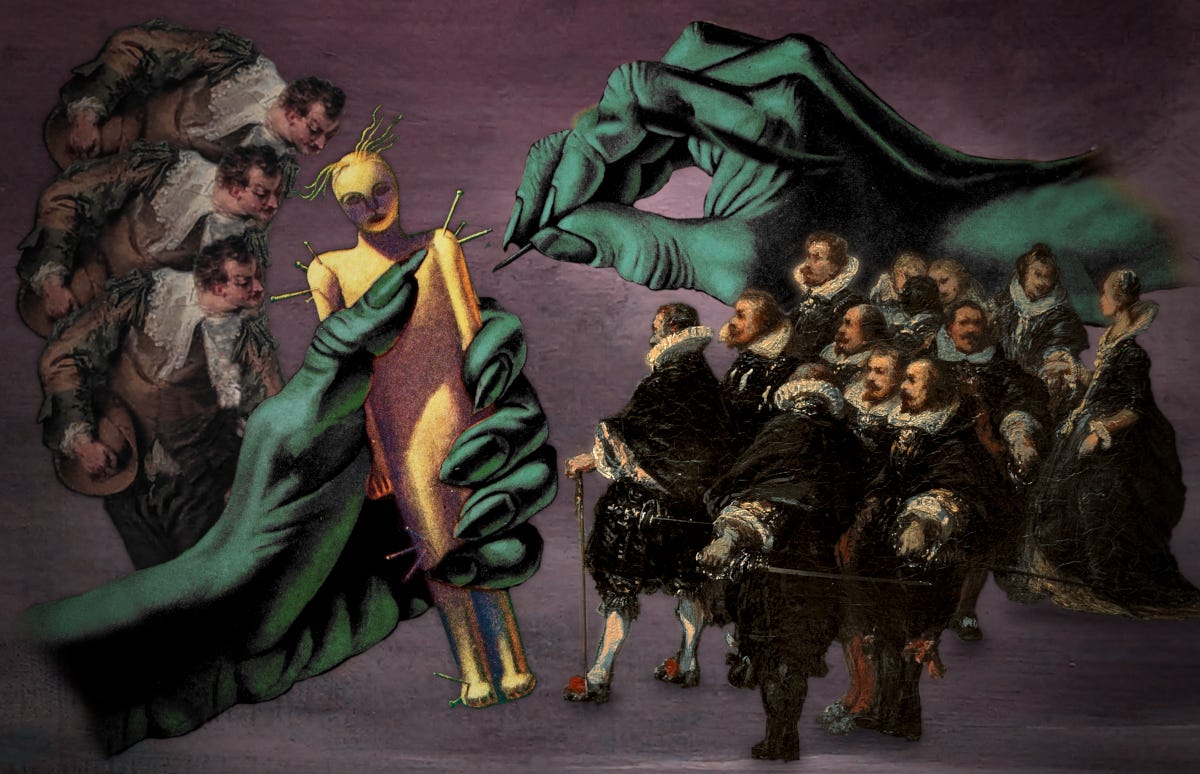
One of the strangest theories in medical history claimed that cancer was originally a parasite. This idea isn’t new — it goes back to the early 20th century, when scientists were still trying to understand what cancer actually was. At that time, almost nothing was known about genetic mutations or how cells regulate their own division. The idea that DNA mutations could completely change a cell’s behavior wasn’t understood yet, so naturally some researchers tried to explain cancer in a completely different way from what we know today.
In fact, the roots of this theory go back even further, to the 19th century, when scientists first started using microscopes to study diseased tissues. When they examined tumors under the microscope, they noticed something strange: the cells inside tumors looked very different from normal cells. They were larger, had unusually prominent nuclei, and behaved aggressively by invading nearby tissues.
Because of this appearance, some researchers imagined that these weren’t ordinary body cells gone wrong, but rather foreign organisms growing inside the body — almost like parasites.
This idea was later discussed in a scientific paper titled: “The Paget cell: Mistaken for a parasite in the 19th century” published in 1986 in the American Journal of Dermatopathology. The paper explains that some 19th-century scientists genuinely believed the abnormal cells they observed in tumors could actually be parasitic organisms.
As cell biology and histology advanced, and microscopes improved, scientists gradually realized these cells were not foreign invaders at all. They were the body’s own cells that had undergone genetic changes, causing them to divide uncontrollably.
One of the most famous stories supporting the “parasitic cancer” idea happened in the early 20th century with Danish pathologist Johannes Fibiger. While conducting experiments on rats, Fibiger noticed that some developed stomach tumors. When he examined the tumors, he found parasitic worms in the same location.
These worms, called Spiroptera neoplastica, could infect rats through cockroaches. Fibiger began connecting the presence of the worms with the tumors and asked an important question: could the parasite actually be causing cancer?
To test the idea, he infected cockroaches with the worms and fed them to laboratory rats. After some time, several rats developed stomach growths. At the time, this seemed like strong evidence that parasites could directly cause cancer.
Back then, scientists were desperate to find a clear explanation for cancer. The disease was mysterious, and the idea of a parasite causing it sounded both logical and exciting. Fibiger’s work was celebrated so heavily that he received the 1926 Nobel Prize in Medicine.
In other words, one of the world’s most prestigious scientific awards was given for the theory that parasites might cause cancer.
But the story didn’t end there.
Years later, other scientists tried to repeat Fibiger’s experiments — a crucial step in science, because findings must be reproducible to be accepted as reliable. That’s when problems began to appear. Many researchers failed to reproduce the same results.
Eventually, scientists noticed something important: Fibiger’s rats were severely deficient in Vitamin A. This deficiency can alter gut microbiota and cause abnormal tissue changes that may resemble tumors under a microscope.
Over time, a different explanation emerged. What likely happened was a combination of severe malnutrition and inflammation caused by the parasite. Together, these created tissue abnormalities that looked cancerous but were not true malignant cancers.
In simpler terms: the worm itself was probably not the direct cause of cancer.
As cancer biology and molecular genetics advanced, scientists realized the tumors Fibiger described were not genuine malignant cancers, and his findings could not be reliably reproduced.
Interestingly, his Nobel Prize was never revoked, because Nobel rules do not allow prizes to be withdrawn once awarded. So Fibiger remains officially listed as a Nobel laureate, even though the scientific explanation he proposed later proved inaccurate.
The story is now remembered as an important lesson in the history of science: ideas that seem convincing in one era may later change as new evidence appears.
Ironically, around the same period another scientist made a discovery that turned out to be correct — but wasn’t believed at first. That scientist was Peyton Rous.
Rous discovered that a virus could cause cancer in chickens, later known as the Rous sarcoma virus. At the time, the idea sounded bizarre to many scientists, and his work was dismissed for years. Eventually, however, his discovery was recognized as groundbreaking, and he received the Nobel Prize more than 50 years later.
This contrast highlights one of the strange paradoxes of scientific history: one scientist won a Nobel Prize for an explanation that later turned out to be wrong, while another had to wait half a century for a correct discovery to be accepted.
So why did scientists originally believe cancer could be a parasite?
The first reason was the tumor’s behavior itself. Tumors grow inside the body, invade surrounding tissues, and consume the body’s nutrients and energy to survive — behavior that resembles parasites living off a host.
The second reason was that genetics simply wasn’t understood yet. Scientists had no idea that mutations in DNA could cause cells to lose control and divide endlessly. Since the concept of genetic mutations was unknown, a foreign organism seemed like a reasonable explanation.
There was also a third reason: some parasites really are linked to increased cancer risk. Modern research has confirmed this. For example, the parasite Schistosoma haematobium is associated with bladder cancer, while Opisthorchis viverrini is linked to bile duct cancer.
But there’s an important distinction: These parasites do not become cancer themselves. Instead, they cause chronic inflammation over long periods, and that inflammation can increase the likelihood of cancer developing.
As science progressed, especially in genetics and molecular biology, the parasite theory gradually collapsed.
Scientists discovered that cancer cells contain the same DNA as the patient’s normal cells. In other words, they are the body’s own cells — not foreign organisms. The difference is that they carry mutations in genes that regulate cell growth.
Some of these genes are called oncogenes, while others are tumor suppressor genes. Mutations in them allow cells to:
- Divide continuously without stopping
- Avoid the natural cell death mechanisms that normally eliminate damaged cells
This is what allows tumors to grow and persist.
Interestingly, cancer sometimes does behave in ways that resemble parasites. It depends on the host body for nutrients, evades the immune system, and can even manipulate surrounding tissues to support its growth.
And in very rare cases, there are actually transmissible cancers — cancers that spread between animals almost like infectious diseases.
One famous example is the Canine Transmissible Venereal Tumor (CTVT), which spreads between dogs during mating. In this case, the cancer cells themselves are transmitted from one animal to another.
Scientists discovered that all existing cases of this cancer likely originated from a single ancient dog thousands of years ago, with the cancer cells continuing to survive by passing between dogs across generations.
Even so, the key difference remains: these are still cancer cells derived from a dog’s body, not independent parasites.
Today, the old “cancer is a parasite” theory has resurfaced online, especially in conspiracy circles. Many posts claim that hidden documents prove governments secretly knew cancer was parasitic all along.
Often these posts reference a CIA document as supposed evidence. But when researchers investigated the document itself, they found something much less dramatic.
The document was simply a translation of a 1950 Russian scientific article published in the journal Priroda. The article, written by Soviet researcher V. V. Alpatov, discussed biochemical similarities between parasites and malignant tumors.
Importantly, the article never claimed cancer was a parasite.
The researcher merely observed that some internal parasites and cancer cells share certain metabolic behaviors, such as surviving in low-oxygen environments and consuming large amounts of the host’s resources.
But metabolic similarities do not mean they are the same organism.
As for why the document was classified, the explanation is fairly simple: during the Cold War, the CIA translated many Soviet scientific papers to monitor scientific developments in the USSR. It had nothing to do with hiding a secret cure for cancer.
Some internet posts also try to connect the document to Anthony Fauci because of his public visibility during the COVID-19 pandemic. But there is no historical or scientific connection whatsoever — the original article was published decades before Fauci even began his scientific career.
One more important point: Modern researchers are indeed studying whether certain anti-parasitic drugs could help treat cancer. This field is called drug repurposing, where existing medications are tested for new uses.
Some anti-parasitic drugs appear capable of affecting cancer cell metabolism, which makes them scientifically interesting. But this does not mean cancer itself is a parasite.
There was also a rare medical case published in 2015 in the New England Journal of Medicine involving a patient with severe immune suppression caused by HIV. The patient had tapeworm infections, and surprisingly, some tumor-like cells were found to originate from the parasite itself rather than the patient’s body.
This was an extremely unusual exception, not evidence that ordinary cancers are parasitic organisms.
In the end, the story of “cancer as a parasite” teaches an important lesson about science itself. Ideas can seem convincing when knowledge is limited and technology is primitive. But as science advances, we gain a clearer understanding of reality.
And that’s part of what makes scientific discovery so fascinating: our understanding continues to evolve as new evidence emerges.
메타데이터
- post_id
- 99dac6594cdd
- slug
- is-cancer-really-a-parasite-the-strange-history-behind-the-theory-99dac6594cdd
- url
- https://medium.com/@testconcentrix19/is-cancer-really-a-parasite-the-strange-history-behind-the-theory-99dac6594cdd
- canonical_url
- https://medium.com/@testconcentrix19/is-cancer-really-a-parasite-the-strange-history-behind-the-theory-99dac6594cdd
- author_url
- https://medium.com/@testconcentrix19
- status
- ok
- fetched_at
- 2026-06-09 15:37:30