“Kashmir: From Heaven to Hell and Beyond — The Revival of a Land” part -2
The Historic Turning Point of 1947: Impact on Kashmir and its Ongoing Instability
“Kashmir: From Heaven to Hell and Beyond — The Revival of a Land” part -2
The Historic Turning Point of 1947: Impact on Kashmir and its Ongoing Instability

Introduction
The year 1947 marked a historic turning point that changed the course of world history. On August 15, 1947, India finally achieved independence after enduring over 200 years of colonial rule under the British. However, the joy of independence was tempered by the unfortunate consequences of the British “divide and rule” policy. In the pursuit of their colonial interests, the British sowed seeds of division among the diverse communities of India. As a result, the subcontinent was partitioned into two separate nations — India and Pakistan. This division not only led to the physical separation of land but also created deep communal tensions and displaced millions of people from their homes. This division had far-reaching consequences, especially for the princely state of Kashmir, located in the northern part of the Indian subcontinent. In this article, we delve into the intricate details of Kashmir’s fate during the partition and the subsequent events that have shaped its geopolitical landscape, resulting in ongoing instability and conflicts.
The Princely State of Kashmir
At the time of India’s partition, Kashmir was a princely state under the rule of Maharaja Hari Singh. As the British colonial era came to a close, princely states were given the choice to join India, Pakistan, or remain independent. The decision rested upon the respective rulers of these states, making the Maharaja’s choice of paramount significance.
The Dilemma of Independence or Accession
Maharaja Hari Singh initially expressed his desire for Kashmir to remain independent. He was apprehensive about aligning with either India or Pakistan, seeking to preserve the sovereignty of his state. However, this decision was complicated by the region’s geographical location and its diverse communal and political dynamics.
The Rival Claims: India vs. Pakistan
As the partition unfolded, Pakistan viewed Kashmir as a natural extension of its territory due to its Muslim-majority population. On the other hand, India argued that the princely state’s accession should be based on geographical contiguity and the principles of partition. This disagreement set the stage for a contentious territorial dispute.
The Invasion of Kashmir and Accession to India
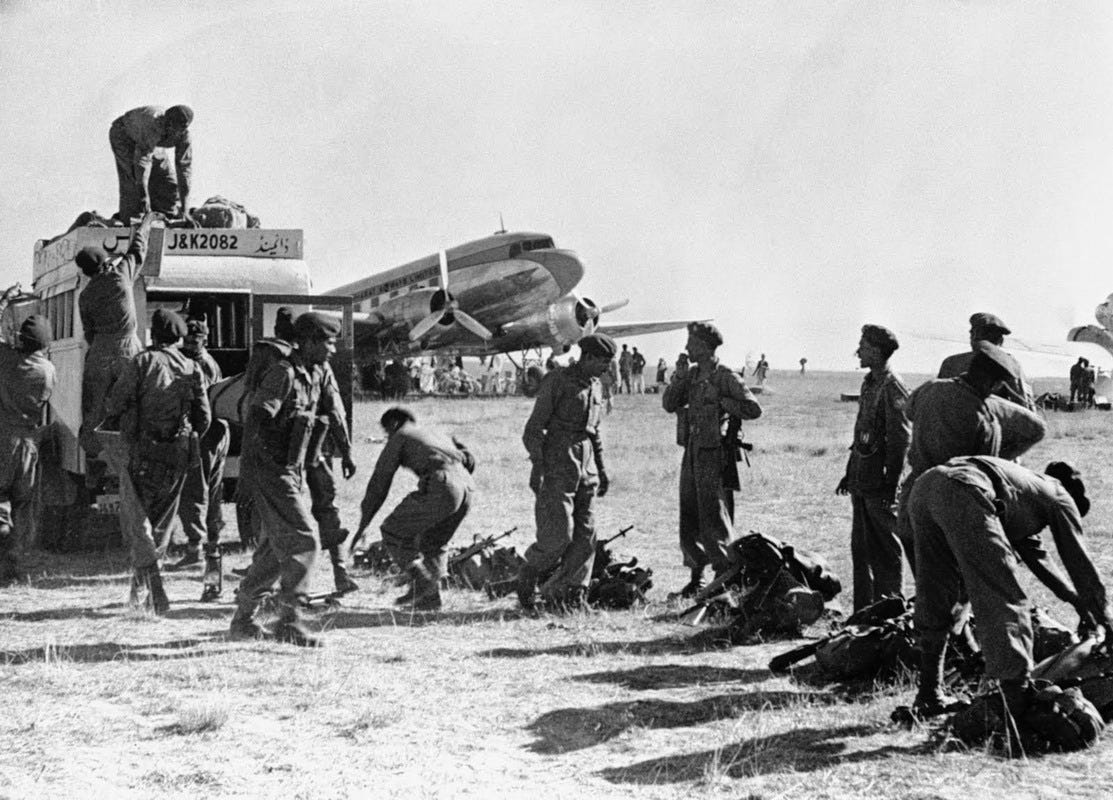
Tensions escalated when Pakistani forces invaded Kashmir in October 1947, aiming to seize the region. Faced with this dire situation, Maharaja Hari Singh sought military assistance from India. In return for India’s support in defending Kashmir, the Maharaja agreed to accede to India through the signing of the Instrument of Accession.
The Instrument of Accession was a legal document that allowed the princely states to join either India or Pakistan. By signing this document, Maharaja Hari Singh officially integrated Kashmir into India.
The First Indo-Pak War and the UN’s Intervention
The territorial dispute over Kashmir led to the first [Indo-Pak War in 1947–1948.](https://en.wikipedia.org/wiki/Indo-Pakistani_War_of_1947%E2%80%931948) The conflict resulted in a ceasefire, prompting the United Nations to intervene. The UN called for a plebiscite to determine the region’s future, allowing the people of Kashmir to decide their fate democratically. Unfortunately, the plebiscite never materialized due to Pakistan.
Kashmir’s Complex and Sensitive Issue
The partition of India in 1947 had profound ramifications for Kashmir. The region’s fate became a complex and sensitive issue, with the Maharaja initially seeking independence but eventually joining India to protect against Pakistani invasion. This decision triggered the Indo-Pak conflict over Kashmir, which persisted for decades, molding the region’s geopolitical landscape. The unresolved territorial dispute continues to be a contentious matter for both India and Pakistan, affecting the lives of millions of people in the region.
The Path to Instability: A Series Continuation
The story of Kashmir’s fate does not end here. In the next part of this series, we will delve deeper into how Kashmir has moved towards instability over the years. We will examine the various factors, historical events, and geopolitical complexities that have contributed to the region’s ongoing challenges.
Conclusion
The year 1947 marked a significant turning point in world history, with India finally gaining independence from British colonial rule. However, the “divide and rule” policy had lasting consequences, leading to the partition of India and Pakistan. The princely state of Kashmir became a focal point in this partition, grappling with the dilemma of independence or accession. Ultimately, it acceded to India, sparking the first Indo-Pak War and setting the stage for ongoing instability in the region.
The territorial dispute over Kashmir remains unresolved, impacting the lives of millions and continuing to be a contentious issue between India and Pakistan. The people of Kashmir continue to endure the repercussions of the division made over seventy-five years ago.
메타데이터
- post_id
- 99f2fa8cbf4b
- slug
- kashmir-from-heaven-to-hell-and-beyond-the-revival-of-a-land-part-2-99f2fa8cbf4b
- url
- https://medium.com/the-geopolitical-economist/kashmir-from-heaven-to-hell-and-beyond-the-revival-of-a-land-part-2-99f2fa8cbf4b
- canonical_url
- https://medium.com/the-geopolitical-economist/kashmir-from-heaven-to-hell-and-beyond-the-revival-of-a-land-part-2-99f2fa8cbf4b
- author_url
- https://medium.com/@vikas162210
- status
- ok
- fetched_at
- 2026-07-25 11:21:33