DLSS and Neuro-Rendering: How AI Is Redefining Real-Time Graphics
The End of Traditional Rendering Limits For decades, real-time computer graphics have been constrained by a fundamental trade-off
DLSS and Neuro-Rendering: How AI Is Redefining Real-Time Graphics
DLSS and Neuro-Rendering using AI in GPUs
Intro: The End of Traditional Rendering Limits
For decades, real-time computer graphics have been constrained by a fundamental trade-off: visual fidelity versus performance. Higher resolution, better lighting, realistic shadows, and advanced effects like ray tracing demand exponentially more compute power. Even the most powerful GPUs eventually hit thermal, power, and cost ceilings.
The emergence of AI-driven rendering, particularly NVIDIA’s Deep Learning Super Sampling (DLSS) and the broader concept of Neuro-Rendering, signals a paradigm shift. Instead of brute-forcing every pixel, modern systems increasingly predict, infer, and reconstruct visual detail using neural networks.

DLSS is not merely a performance optimization feature — it is one of the earliest large-scale commercial implementations of neuro-rendering. Together, these technologies are redefining how images are generated, upscaled, and perceived in games, simulations, digital twins, virtual production, and metaverse platforms.
In this article, we will discuss what DLSS really is (beyond marketing), the foundations of neuro-rendering, how AI replaces classical graphics pipelines, technical architecture and evolution, use cases beyond gaming, challenges, limitations, and future directions.
Understanding DLSS: Beyond Resolution Upscaling
What Is DLSS?
Deep Learning Super Sampling (DLSS) is an AI-based rendering technology developed by NVIDIA that uses deep neural networks to generate high-resolution frames from lower-resolution inputs, dramatically improving performance while maintaining — or even enhancing — image quality.
Unlike traditional upscaling methods (bilinear, bicubic, or temporal upscalers), DLSS does not simply stretch pixels. Instead, it reconstructs missing information using learned patterns derived from high-quality ground-truth images.
In effect, DLSS asks:
“What should this image look like if it were rendered natively at a higher resolution?”
Core Inputs Used by DLSS
DLSS does not rely solely on a low-resolution frame. It consumes a rich set of rendering data:
- Low-resolution rendered frame
- Motion vectors (per-pixel movement between frames)
- Depth buffers
- Exposure and color data
- Previous frames (temporal context)
These inputs allow the neural network to infer fine details, edges, and textures with remarkable accuracy.
The Evolution of DLSS
DLSS 1.x: Proof of Concept
- Game-specific training
- Limited image quality
- Occasional blur and artifacts
- Heavy dependence on per-title tuning
While groundbreaking, early DLSS versions highlighted the difficulty of generalizing AI across diverse visual content.
DLSS 2.x: Generalized Temporal AI Upscaling
DLSS 2.x introduced a generalized neural network trained on a massive dataset of ultra-high-quality images rendered offline on supercomputers.
Key improvements:
- One model works across all supported games
- Superior temporal stability
- Sharper details than native rendering in some cases
- Widely adopted by AAA engines (Unreal, Unity, proprietary engines)
This was the point where DLSS transitioned from novelty to industry-defining technology.

DLSS 3 & 3.5: Frame Generation and Ray Reconstruction
Later versions expanded beyond upscaling:
- DLSS Frame Generation: AI generates entire intermediate frames using optical flow and motion data
- DLSS Ray Reconstruction: AI replaces hand-crafted denoisers in ray-traced scenes, improving lighting, reflections, and global illumination
These features signal a move from AI-assisted rendering to AI-driven rendering.

1:10 Ratio — 1 Out of 10 Pixels are rendered properly, Rests are Artificially Generated with proper lighting and shadows
DLSS 4.0 is The Next Phase of AI-Native Rendering
DLSS 4.0 represents the logical evolution of NVIDIA’s Deep Learning Super Sampling — from intelligent upscaling and frame generation toward scene-aware, perception-driven, AI-native rendering. Rather than focusing only on resolution and frames, DLSS 4.0 would redefine how images are produced, when frames are generated, and what visual data actually needs to be computed. DLSS 4.0 will bridge between classical graphics and cognitive, AI-driven visual computing.
DLAA (Deep Learning Anti-Aliasing) vs. DLSS (Deep Learning Super Sampling)


Neuro-Rendering: A New Graphics Paradigm
What Is Neuro-Rendering?
Neuro-rendering refers to the use of neural networks to perform tasks traditionally handled by classical graphics algorithms — sometimes replacing entire stages of the rendering pipeline.
Instead of explicitly computing:
- Light transport
- Reflections
- Shadows
- Anti-aliasing
- Texture sampling
Neuro-rendering systems learn how these effects should look and generate them probabilistically.
DLSS is one of the most visible commercial examples, but neuro-rendering encompasses a much broader research and industry movement.
Why Classical Rendering Is Reaching Its Limits
Traditional graphics pipelines rely on:
- Rasterization
- Ray tracing
- Hand-engineered shaders
- Approximation techniques
These approaches struggle with:
- Exponential cost of realism
- Noise in ray tracing
- Memory bandwidth limitations
- Power consumption constraints
Neural approaches trade deterministic computation for learned inference, often achieving better results at lower cost.
DLSS as a Neuro-Rendering System
DLSS fits squarely into the neuro-rendering paradigm because:
- It learns image formation, not just scaling
- It replaces deterministic pixel calculations with probabilistic inference
- It integrates temporal reasoning across frames
- It adapts to motion, lighting, and scene complexity dynamically
In DLSS, the GPU becomes not just a renderer, but an inference engine.
The Role of Tensor Cores and AI Accelerators
DLSS is powered by Tensor Cores, specialized hardware units optimized for matrix operations common in neural networks.
This architectural choice is critical:
- AI inference runs alongside traditional shading
- Minimal performance overhead
- Scales efficiently with resolution and complexity
This co-design of hardware + software + neural models is a defining characteristic of modern neuro-rendering systems.

Ray Tracing Meets Neuro-Rendering
The Ray Tracing Problem
Ray tracing produces physically accurate lighting, but suffers from:
- High noise at low sample counts
- Massive performance costs
- Complex denoising requirements
Traditional denoisers rely on heuristics that break down in complex scenes.

DLSS Ray Reconstruction
DLSS Ray Reconstruction replaces these denoisers with a neural model trained to:
- Identify noise vs. real detail
- Preserve fine lighting features
- Improve temporal coherence
- Reduce ghosting and flicker
This approach demonstrates a broader trend:
AI is becoming better at understanding images than handcrafted algorithms.
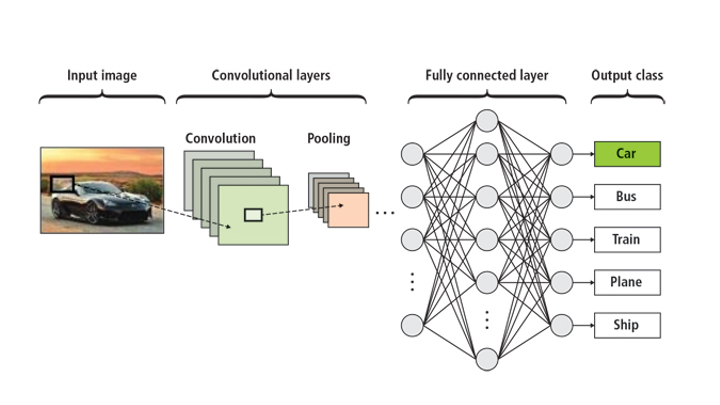
Use Cases of High-End Rendering using NEURO-RENDERING
While gaming popularized DLSS, neuro-rendering has far-reaching implications.
1. Digital Twins and Simulation
- Real-time city models
- Industrial simulations
- Smart infrastructure visualization
AI-assisted rendering enables:
- Higher fidelity at lower compute cost
- Scalable cloud-based visualization
- Interactive decision-making environments
2. Virtual Production and Film
In LED wall studios and real-time VFX:
- AI upscaling reduces rendering load
- Higher frame rates improve actor immersion
- Real-time ray-traced lighting becomes feasible
Neuro-rendering blurs the line between offline and real-time rendering.
3. Metaverse and XR
For AR/VR and spatial computing:
- Performance per watt is critical
- Latency must remain extremely low
- Visual realism directly affects user comfort
DLSS-like techniques enable:
- Higher resolution per eye
- Reduced motion sickness
- More realistic virtual environments
4. Automotive and Robotics
- Autonomous vehicle simulation
- Sensor modeling (LiDAR, cameras)
- Training perception systems
Neuro-rendering allows scalable, photorealistic synthetic environments for AI training and validation.
Challenges and Limitations of Neuro-Rendering
Despite its promise, neuro-rendering is not without issues.
1. Hallucination Risk
AI can:
- Invent details
- Over-sharpen textures
- Misinterpret motion in rare edge cases
This raises concerns for:
- Scientific visualization
- Safety-critical simulations
- Competitive esports integrity
2. Vendor Lock-In
DLSS is proprietary:
- Tied to NVIDIA hardware
- Limited transparency into model internals
This has driven alternatives like:
- AMD FSR
- Intel XeSS
- Open neural upscaling research
3. Debugging and Predictability
Traditional rendering is deterministic. Neural rendering is probabilistic.
This complicates:
- Debugging visual artifacts
- Quality assurance
- Reproducibility
The Future of DLSS and Neuro-Rendering
1. Shift from Resolution Scaling to Full Scene Intelligence Future DLSS iterations will move beyond resolution upscaling into understanding entire scenes holistically. AI models will infer geometry, lighting intent, material properties, and motion patterns together, allowing rendering systems to decide what needs physical computation and what can be inferred, dramatically reducing GPU workload while improving realism.
2. Emergence of Fully Neural Rendering Pipelines Neuro-rendering will increasingly replace fixed-function stages such as denoising, anti-aliasing, and even parts of shading. Instead of hybrid pipelines, future engines may rely on end-to-end neural models that transform scene descriptions directly into photorealistic frames, redefining how real-time graphics engines are architected.
3. AI-Driven Ray Tracing Optimization DLSS-style neural models will become central to ray tracing itself, predicting light transport paths, reconstructing global illumination, and stabilizing reflections at extremely low ray counts. This will make cinematic-quality ray tracing viable on mainstream hardware and mobile-class GPUs without brute-force sampling.
4. Frame Generation as a Perceptual System Future frame generation will evolve from interpolation to prediction. Neural systems will anticipate player input, camera motion, and scene dynamics to generate perceptually accurate frames ahead of time, enabling ultra-high frame rates while maintaining low latency — especially critical for VR, AR, and spatial computing.
5. Hardware Co-Design for Neuro-Rendering GPUs will increasingly be designed as AI-first visual processors, with more silicon allocated to tensor and inference cores rather than traditional raster units. This tight hardware–software co-design will allow DLSS-like systems to scale efficiently while maintaining power efficiency across desktops, consoles, and edge devices.
6. Convergence with Generative AI Models Neuro-rendering will merge with generative AI, enabling on-the-fly generation of textures, materials, micro-geometry, and lighting variations. Rather than storing massive asset libraries, future engines may generate high-quality visual detail procedurally using trained models, reducing memory and storage constraints.
7. Platform-Agnostic Neural Upscaling Standards The success of DLSS will push the industry toward more open, standardized neural rendering frameworks. Cross-vendor models and API-level AI rendering primitives may emerge, allowing developers to target neural rendering features without being locked into a single GPU ecosystem.
8. Expansion Beyond Gaming into Enterprise and Simulation DLSS and neuro-rendering will become foundational in digital twins, industrial simulations, autonomous vehicle training, and scientific visualization. AI-assisted rendering will enable real-time photorealism at scale, allowing enterprises to simulate complex environments with unprecedented fidelity and interactivity.
9. Perception-Centric Quality Metrics Future rendering quality will be measured less by native resolution and more by perceptual accuracy. Neuro-rendering systems will optimize for how humans perceive motion, lighting, and detail, shifting the industry toward AI-driven quality metrics rather than traditional pixel-based benchmarks.
10. Redefining the Meaning of “Real-Time Graphics.” As DLSS and neuro-rendering mature, real-time graphics will no longer be defined by raw GPU throughput. Instead, they will be defined by intelligent inference, predictive rendering, and perceptual realism — marking a fundamental transition from computational graphics to cognitive graphics systems.
Wrapping Up: From Pixels to Perception
DLSS is not just a feature — it is a signal.
A signal that:
- Graphics is no longer purely mathematical
- AI is becoming central to visual computing
- The definition of “native resolution” is changing
- Perceptual quality matters more than raw pixels
With this, we are also seeing a new revolution as GPUs are leveraging neuro-rendering to represent a shift from rendering pixels to rendering perception. By embracing learned intelligence, systems like DLSS unlock performance, realism, and scalability that traditional pipelines cannot achieve.
As GPUs evolve into AI-first accelerators, and as neural models grow more sophisticated, the future of real-time graphics will not be drawn — it will be inferred.
To know any of these concepts in more detail, comment and follow. To get training on Advanced Graphics and Hardware Operations, 1-on-1 Live sessions, or Marketing Content Writing Roles, DM Me Here.
메타데이터
- post_id
- 9a0032d8a48b
- slug
- dlss-and-neuro-rendering-how-ai-is-redefining-real-time-graphics-9a0032d8a48b
- url
- https://medium.com/@karliris62/dlss-and-neuro-rendering-how-ai-is-redefining-real-time-graphics-9a0032d8a48b
- canonical_url
- https://medium.com/@karliris62/dlss-and-neuro-rendering-how-ai-is-redefining-real-time-graphics-9a0032d8a48b
- author_url
- https://medium.com/@karliris62
- status
- ok
- fetched_at
- 2026-06-21 20:33:08