The Everyday Bad Habits That Are Silently Destroying Your Productivity and Health
When our lives feel out of control, we often blame things. We think it's our job, our time, or where we live that's causing problems. If we…
The Everyday Bad Habits That Are Silently Destroying Your Productivity and Health
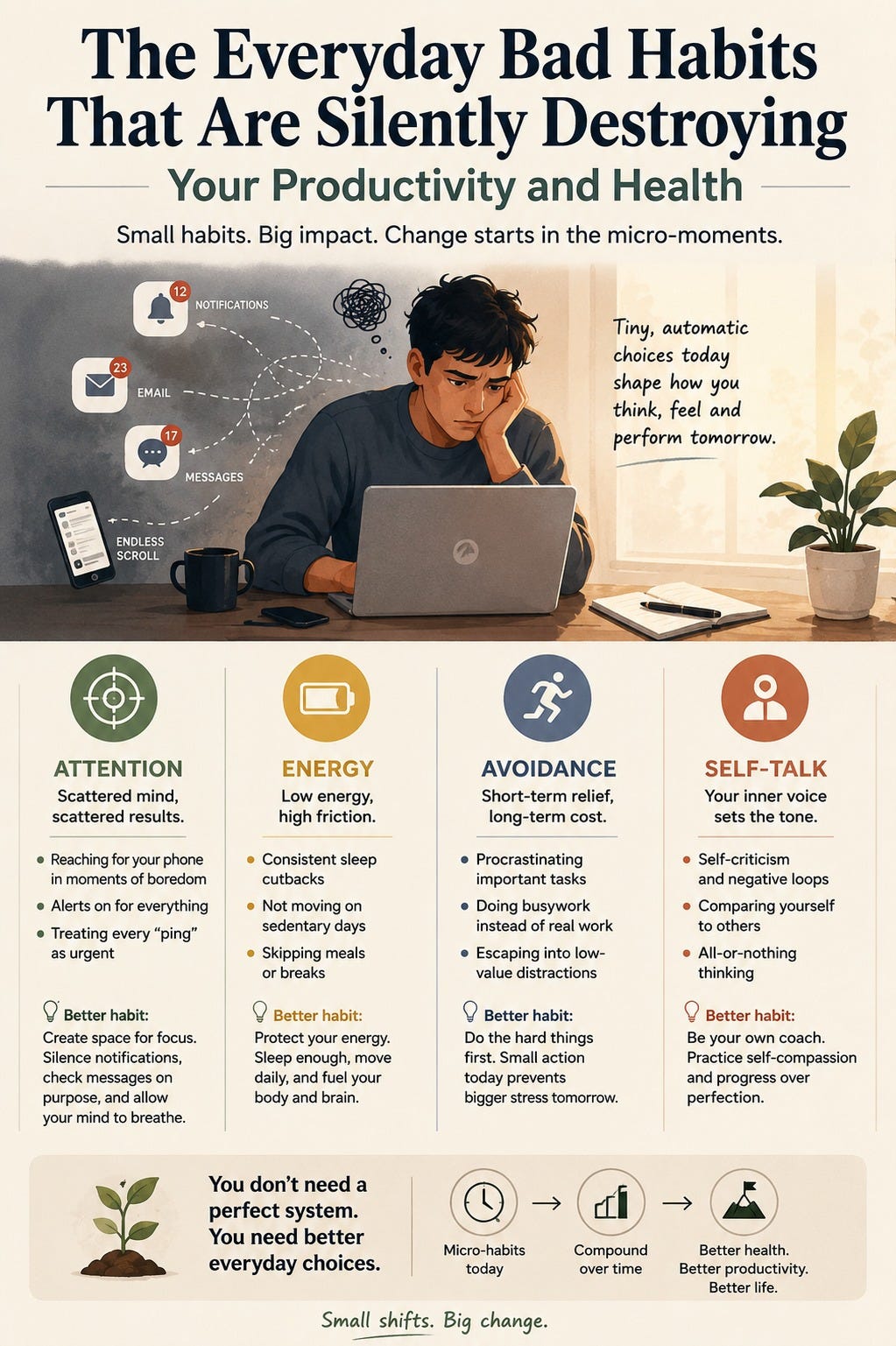
image generated using Ai
When our lives feel out of control, we often blame things. We think it's our job, our time, or where we live that's causing problems. If we look closely, we see that small habits are the real issue. What we do in the 20 minutes after waking up, what we do when we're bored, and how we handle emails all add up.
Researchers say that around two-thirds of what we do every day is habit not deliberate choice. Our brains use energy-saving autopilot modes. Some habits hurt our productivity and health over time. Let's look at behaviors that erode productivity and health, not by sabotaging us but by becoming part of who we are.
### Attention
How Boredom Trains Your Brain To Be Distracted
Have you noticed what people do in line? They pull out their phones, swipe through, and put them down. It's not because they're waiting for news. Because their brains are wired to seek stimulation when bored. This micro-behavior changes what's normal for our brains. When we're bored, we feel discomfort. Need immediate input.
This affects productivity and focus. We get distracted easily. Lose unstructured time for introspection. Other patterns that have the effect include:
-
Having alerts on all devices all the time
-
Keeping email and messages open on your computer
-
Treating every notification as a call to action
To be more productive and healthy, try introducing obstacles: silence notifications while working, set times to check messages, and allow yourself to be bored. Giving your mind a break is maintenance, not time.
Energy Mismanagement
What's Siphoning Your Energy?
Productivity is about energy, not time. Our energy is spent on choices about sleep, movement, and recovery.
Some examples:
-
Cutting sleep short to finish an episode or scroll through your phone
-
Not moving on days
-
Skipping meals or breaks
These habits seem minor. They add up. They reduce our ability to think clearly, make us emotionally volatile, and leave us feeling worse.
Productivity, as Avoidance
There's a set of "habits that get in the way of real work. Perfecting planning systems, morning routines, or researching tools can be a trap. It appeals to our desire to avoid failure.
Common patterns:
-
morning routines that push real work to the evening
-
Reorganizing notes or email instead of taking action
-
Reading about others' productivity in working
These aren't negative actions, but they can replace actual work and turn your identity into "a disciplined person" instead of someone who gets things done.
Micro-Decisions of Avoidance
Some counterproductive habits are seemingly inconsequential decisions. Delaying discomfort, overthinking decisions, or choosing not to engage can add up to a habit of avoidance.
Common patterns:
-
Delaying discomfort by deferring requests or conversations
-
Remaining in analysis mode by overthinking decisions
-
Choosing not to engage by ignoring emails or conversations
These habits can lead to social distance, depriving us of feedback and opportunities, and buffer stress.
None of these are presented as choices. They seem like "This week is just too crazy " or "Now’s not the time to talk to people." That kind of vagueness is the issue. When avoidance isn’t stated directly, it never changes.
Identity Scripts: Mental Habits that Lock You In
There are habits that don’t look like habits at all. They are the stories we tell ourselves about what’s happening. These thought patterns, like "I’m not good with time," "I always get burned out," or "I need a deadline to get going," can have an impact on us.
They do two things. Once they make our lives make sense. When things are confusing, it helps to have a reason why. Two they protect our self-image in the term by blaming a personality flaw or something outside our control.. There’s a downside. If we see our situation as who we are, we lose motivation to try new things.
A Mental Habit
There’s another way of thinking. It’s an iterative mindset. It doesn’t see setbacks as proof that we’re flawed. Instead, it treats them as information to adjust our approach. We ask, "What went wrong with this method?" "What change can I try?" "What tiny adjustments are working that I can do again?" This habit of self-reflection trains us to stop defending our ego and start tweaking our actions.
How to Begin
It’s easy to feel like we need to change everything after reading this. That’s part of the problem. Big dramatic changes don’t work. They lead to patterns of feelings of failure and self-criticism. Let’s start small. We can do a habit and friction audit." We note the recurring moments, unnecessary drag, or distractions without judging them. Then we ask about each: "Is this a simple reaction?" "Is this avoidance?" "Is this optimization?" We pick one or two patterns to experiment with, not ten. Maybe we turn off notifications for an hour. Replace a long morning ritual with a short mindfulness practice. We see what happens, not in terms of productivity. In terms of how our day feels.
Designing Autopilot
Most of our lives are made up of repeated behaviors. These are the things that fill the spaces between decisions and tragic moments. They are the ways our attention drifts from our routines, the rituals we use to delay work, and the stories we tell ourselves when things don’t go as planned. We don’t need to analyze every habit or see routines as moral weaknesses. Routines can provide comfort and stability. The problem is when they stop working for us but stay in place because they’re familiar. This subtle difference helps us transition from "What change do I need?" to "Which small actions can I adjust?" We give ourselves room to make shifts without feeling like we need to change everything. In this way, productivity and happiness come from the unglamorous ways we handle each hour and choose to do so on purpose.
메타데이터
- post_id
- 9a0932e54616
- slug
- the-everyday-bad-habits-that-are-silently-destroying-your-productivity-and-health-9a0932e54616
- url
- https://medium.com/health-science/the-everyday-bad-habits-that-are-silently-destroying-your-productivity-and-health-9a0932e54616
- canonical_url
- https://medium.com/health-science/the-everyday-bad-habits-that-are-silently-destroying-your-productivity-and-health-9a0932e54616
- author_url
- https://medium.com/@Itsqueen76
- status
- ok
- fetched_at
- 2026-06-23 17:05:31