The Global Tug-of-War: Alliance Entrapment and the Fracturing World Order
How alliance entrapment, the delusion of a U.S.-China “G2,” and the rise of pragmatists like India and Indonesia are triggering the…
The Global Tug-of-War: Alliance Entrapment and the Fracturing World Order
How alliance entrapment, the delusion of a U.S.-China “G2,” and the rise of pragmatists like India and Indonesia are triggering the ultimate law of history.
The modern geopolitical landscape is beginning to look dangerously like a grand trap, and the United States is sitting right in the center of it.
For decades, Washington’s expansive network of global alliances was viewed as its greatest strategic asset — a sprawling, ironclad shield that guaranteed global stability. Today, however, that shield has transformed into a heavy set of chains. As regional conflicts ignite across Europe, the Middle East, and East Asia, the U.S. finds itself caught in a classic “hegemon’s dilemma.”
We are witnessing a global tug-of-war where regional allies are actively vying for American military presence against their adversaries, pulling an overextended superpower into a potential multi-front nightmare.
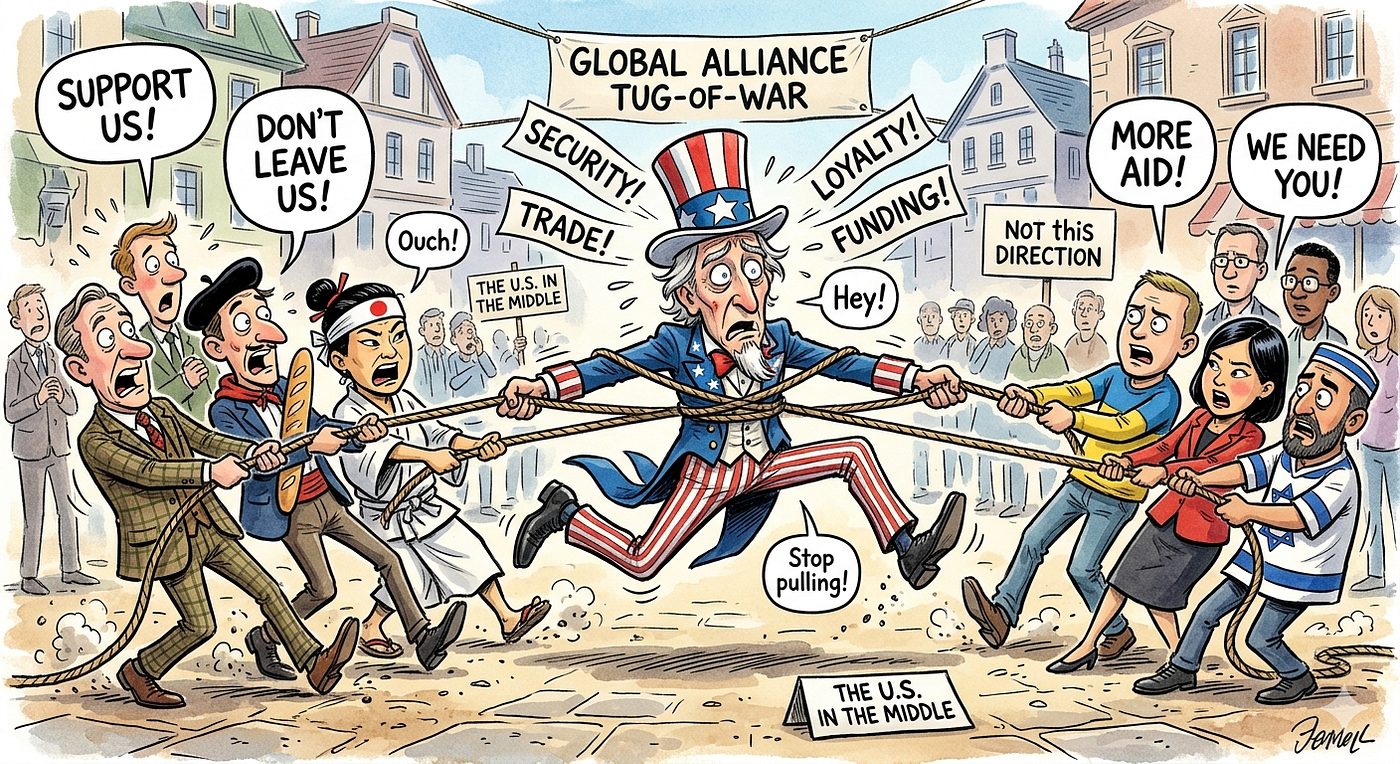
Fig 1. US frantically trying to get out of Alliance Trap
The Mechanism of Alliance Entrapment
A curious pattern has emerged in global politics, most recently visible at the G7 Summit in Évian, France. Smaller or regional powers — from Eastern Europe to East Asia — are operating under a cloud of intense security anxiety. They look at shifting political winds in Washington, the rise of domestic isolationism, and the reality of finite American weapon stockpiles, and they panic.
The fear is not always driven by an overt, formal declaration of war from their adversaries. Revisionist powers like Russia, China, or North Korea rarely announce their invasions in advance; they prefer the slow burn of “gray-zone” tactics — cyber warfare, maritime economic pressure, and shadow proxies.
Because there is no definitive “smoking gun” to keep the American public engaged, allies feel a structural impulse to proactively amplify regional friction. By drawing hard lines and escalating rhetoric, they aim to “lock” Washington into an unbreakable commitment. If the situation appears peaceful or managed, the U.S. might pull back. Therefore, to guarantee the protection of the American nuclear and conventional umbrella, the threat level must be kept at a fever pitch.
The Multi-Front Imperial Overstretch
This dynamic has triggered a fierce competition for finite American attention and resources. The U.S. military-industrial base, severely strained by years of proxy logistics, simply cannot simultaneously supply high-end munitions, air defense systems, and financial aid to three separate theaters at once.
When the U.S. attempts to broker a fragile truce — such as the recent 60-day Memorandum of Understanding with Iran — the regional architecture resists. The moment Washington tries to de-escalate on one front to catch its breath, friction points like the Strait of Hormuz or cross-border strikes in Lebanon flare up. Trump’s recent retaliatory threats to bomb Iran or disrupt its shipping routes highlight how easily the U.S. can be dragged right back to the brink of war, shattering months of delicate diplomacy mediated by partners in Switzerland.
History has a notoriously unforgiving law for this exact scenario: imperial overstretch. When an empire’s geopolitical commitments permanently exceed its economic and structural capacity to sustain them, decay and downfall inevitably follow.
We see this tragic rhythm play out across centuries:
- The Roman Empire expanded its borders to a point where the financial strain of policing them devalued its currency and collapsed its economy from within.
- The British Empire emerged victorious from World War II but was left financially bankrupt, forcing a rapid, messy retreat from its global colonies.
- The Soviet Union drained its fragile command economy by funding global proxy wars and sustaining a bloated military-industrial complex, sealed by its fatal overextension in Afghanistan.
- The Mughal Empire reached its territorial peak under Aurangzeb, but his unrelenting, decades-long military campaigns in the Deccan exhausted the imperial treasury, fractured administrative control, and sowed the seeds of rapid collapse.
- The Yuan Dynasty of China collapsed under the weight of hyperinflation and financial ruin, heavily driven by the exorbitant costs of overextended, failed military expeditions across Southeast Asia and Japan.
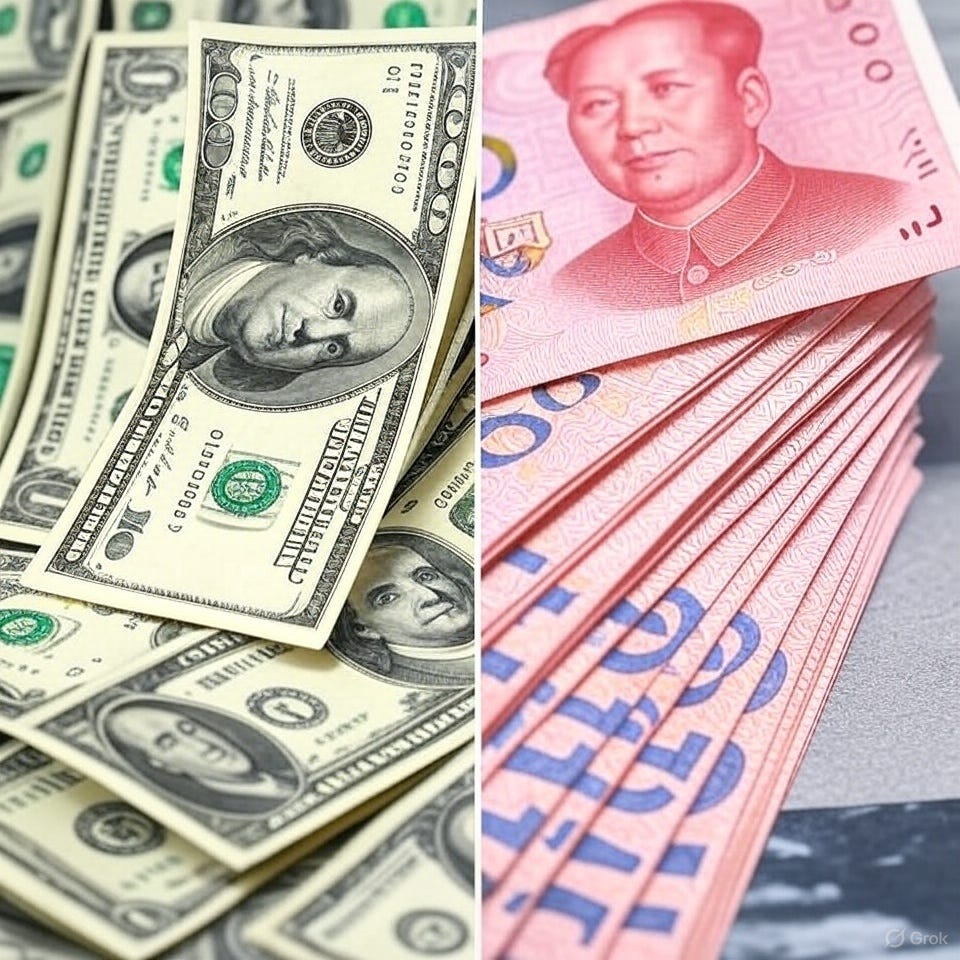
While the U.S. possesses unique modern shields — chiefly the global hegemony of the US Dollar as a reserve currency — these shields are not invincible. Cracks have already formed in America’s domestic manufacturing base, its national debt trajectory, and its domestic political unity.
The Delusion of the “G2”

Fig 2. Trump-Xi G2 Deal
Recognizing these structural cracks, Washington has recently attempted a desperate piece of geopolitical triage: the pursuit of a “G2” world order. By attempting to strike a grand transactional bargain with Chinese President Xi Jinping in Beijing, the U.S. is hoping to outsource the management of global crises. The strategic assumption is that if Washington cuts a deal with China, Beijing will use its economic leverage to rein in Russia and Iran, allowing the U.S. a tactical pause to rebuild its domestic core.
But this strategy suffers from a fatal flaw: It assumes the adversary wants to share the world.
China does not desire a stable U.S.-led duopoly. Beijing’s grand strategy points toward Pax Sinica — a world order where the United States is completely pushed out of the Western Pacific and the Global South. For China, Russia, and Iran, acknowledging a U.S.-dictated “G2” map is a losing move.
Instead, they employ a chain-link strategy. China actively funds Russia’s economy and buys the vast majority of Iran’s oil, ensuring that the fires in Europe and the Middle East keep burning. They understand that every dollar Washington spends defending its allies is a dollar it cannot spend competing with China in the Indo-Pacific. They are playing a long-term game of exhaustion, keeping the U.S. firmly chained to its allies’ wars.
The Bystanders’ Benefit: The Rise of Non-Aligned Powers
As the West bleeds its stockpiles and China carefully carves out its path to Pax Sinica, a new class of global giants is quietly benefiting from the chaos by refusing to be caught in the crossfire. Nations like India and Indonesia are providing the ultimate masterclass in modern pragmatic realism.

Fig 3. India and Indonesia chilling while US and China playing the Long Chess Game
Seeing the overstretch of both the U.S. and China, India has resolutely rejected the alliance trap. While the U.S. is distracted, New Delhi quietly completed a major military disengagement with China along the Line of Actual Control (LAC), securing a tactical peace on its own borders. Simultaneously, India is capitalising on Western desperation, absorbing billions in “friend-shoring” tech investments from companies fleeing China, while maintaining its independent energy and trade corridors with Russia, Israel, and Iran alike.
Similarly, Indonesia is executing a flawless balancing act in Southeast Asia. Under its long-standing “free and active” foreign policy, Jakarta refuses to join any U.S.-led military containment blocs against China. Instead, Indonesia uses its strategic position to attract massive Chinese investments for its critical mineral refining industries (like nickel), while simultaneously purchasing advanced Western defense equipment and deepening maritime ties with the U.S. By remaining neutral, Jakarta has turned its archipelago into an indispensable economic bridge that neither Washington nor Beijing can afford to anger.
The strategy of these non-aligned giants exposes the true reality of the fracturing world order. While traditional empires and their dependents engage in an exhausting, multi-front tug-of-war, autonomous actors are quietly absorbing global supply chains, securing cheap resources, and building their own strength for the future.
The Chilling Conclusion
The United States finds itself in a strategic paradox. It cannot afford to stay deeply entangled in these multi-front long wars without accelerating its own domestic and economic decline. Yet, because its chief adversary is actively pursuing global hegemony, it cannot afford to walk away from its allies without triggering a catastrophic power vacuum that would destroy its global credibility overnight.
Washington’s expansive alliance system, once built to deter a single Soviet adversary, is now a mechanism that distributes vulnerabilities globally. Unless the U.S. can master the art of strategic retrenchment and compel its wealthy allies to bear their own burdens, it faces the oldest trap in history: fighting everyone, everywhere, until there is nothing left to give.
How do you see this geopolitical tug-of-war playing out? Is the United States already too deep in the multi-front alliance trap to engineer a strategic retreat, or can it still balance its global commitments? More importantly, can rising non-aligned giants like India and Indonesia truly avoid the fallout, or will the emergence of a Pax Sinica eventually force everyone to choose a side? Please leave your opinions, critiques, and predictions in the comments below — I look forward to hearing your perspective on where this fracturing world order is headed.
메타데이터
- post_id
- 9a2a78764f5d
- slug
- the-global-tug-of-war-alliance-entrapment-and-the-fracturing-world-order-9a2a78764f5d
- url
- https://medium.com/the-geopolitical-economist/the-global-tug-of-war-alliance-entrapment-and-the-fracturing-world-order-9a2a78764f5d
- canonical_url
- https://medium.com/the-geopolitical-economist/the-global-tug-of-war-alliance-entrapment-and-the-fracturing-world-order-9a2a78764f5d
- author_url
- https://medium.com/@shjain6670
- status
- ok
- fetched_at
- 2026-06-23 03:48:11