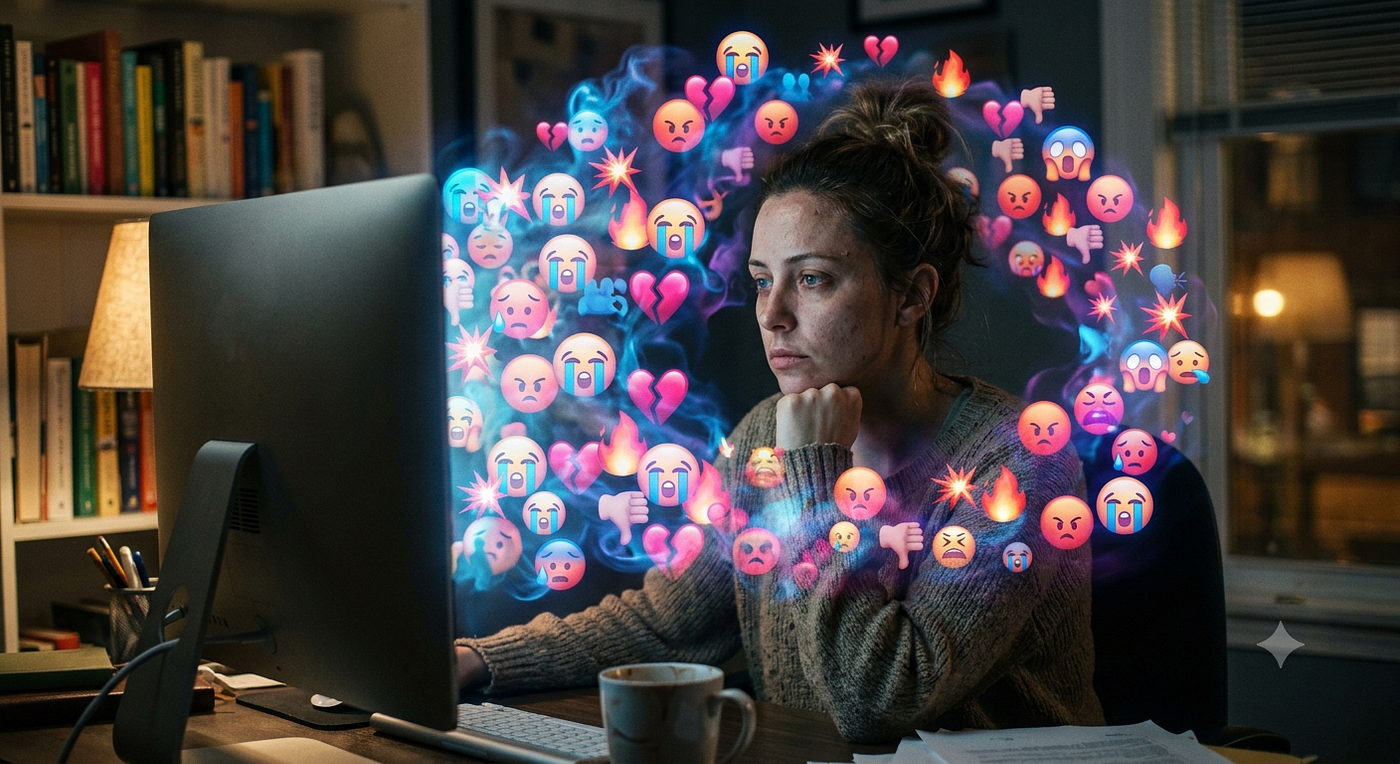
Endorphins anyone? Why hanging with a bestie is so good for us.
I love my digital devices. I love the convenience and connectivity they bring. I also love some aspects of AI. But to be honest, I love…
Endorphins anyone? Why hanging with a bestie is so good for us.

I love my digital devices. I love the convenience and connectivity they bring. I also love some aspects of AI. But to be honest, I love people more. I don’t love them all, but my world is richer for the humans in it and I’m appalled by how hard it seems to be to make meaningful connections these days. For many they’re as rare as clean, unpolluted water.
I recently read a disturbing report concluding that Britain’s teenage girls are the loneliest in Europe. They admit to having alarmingly few friends, a statistic that has been worsening steadily since monitoring began. And girl teens are not the only segment of society where this trend is well-documented—it’s hard to read any media these days without finding some reference to the “Loneliness Epidemic”. Here are a few headlines I’ve clocked recently:
“We Have Become a Lonely Nation. It’s Time to Fix That.”
— The New York Times
“Why Is the Loneliness Epidemic So Hard to Cure?”
— The New York Times Magazine
“The loneliness trap: it is said to be as bad as smoking. So will it shorten my lifespan?”
— The Guardian
“How Loneliness Is Damaging Our Health”
— The New York Times
“‘We have to go out and touch people: how activism is tackling the loneliness epidemic”
— The Guardian
Let’s start with a little teaser—a two question friendship quiz
With only two questions, on a superficial level, as in a “beer mat” calculation, it will take you less than a minute. If you tend to be an existential thinker, it might take a little longer — perhaps even the rest of your life. To avoid undue angst, and as I’m all about edutainment, not stressing people out, I suggest going with the beer mat option. (The volume of information you can cram onto a beer mat).
Question 1: How many friends do you have?
Maybe a better question is how many friends you have who would help if you needed it. A small loan when you forgot your wallet and can’t pay for your cappuccino? A lift to the hospital? A shoulder to cry on when you’ve just found out you’re losing your job?
Question 2: Turning the tables, how many people would you be there for in the same way?
This is clearly hypothetical, but one way of evaluating it would be to think how often friends come to you to help them out of some pickle.
Hint — there is no right answer to either question. Just the honest one.
The power of reciprocity
The point is, strong friendships (and I include kinship in this broad church) revel in reciprocity — they’re never just a one-way street. Friends have each other’s backs. Friends invite and share confidences; they laugh and cry together. Deep, lasting friendships are everything they’re cracked up to be because a friendship means at least one person sees us, and we see them back.
Human connection is the antidote to invisibility. Friendship makes the world an infinitely more benevolent place. Friendship opens the possibility of new connections and opportunities. When we have at least one friend, we’re never truly alone. In short, nothing in the world comes close to the wonder of being needed and of allowing the people we care about to need us in return. It’s like receiving a kiss from an angel.
Human connections like family ties, friendships, water-cooler moments with work buds, the camaraderie of a club, etc., can be tricky to navigate, sometimes outright confrontational. Still, without them, we just become isolated units afraid of our own shadows. And what family has ever agreed about everything? Which lovers never have tiffs? Like pans of water, friendships sometimes boil over, but caring people know when to turn the heat down.
Healthy friendships improve your emotional intelligence
According to research shared by the relationship and friendship app Bumble…
“Healthy friendships stimulate a powerful cocktail of oxytocin, dopamine, and serotonin (all your feel-good hormones), elevate your mood and optimise your hormonal response to stress. Certain people inherently trigger these positive chemical reactions: Your friends! A supportive social network — i.e. a lot of friends — can help you live longer with less anxiety and fewer health problems.”
Connecting deeply with others when it’s clear they get you, and you get them, develops healthy brain cells and helps build positive neural pathways in the brain. The fuel for these is a mix of empathy, intuition, thoughtfulness, assertiveness, care, and love.
Our brain’s pleasure pathways
There is nothing like catching up with an old friend and chewing the fat to trigger that well-known happy drug, oxytocin. You might be rewarded for the pleasure of your friendship with additional rushes of feel-good serotonin and dopamine as your brain reinforces how great it all is.
But it just keeps getting better. Think about past moments around your kitchen table sharing a bottle of wine with a friend when you’re literally crying with laughter. Reduced to helpless tears of mirth. Laughing triggers the release of the neurochemicals that sit at the top of the feel-good pantheon, endorphins. Once triggered, these little suckers not only make us feel over-the-moon happy, but also help fortify us with resilience and grit if (when) another cascade of life’s lemons lands on you.
On the other side of the coin, loneliness triggers a chain reaction of physiological changes that can increase inflammation and ramp up your fight-or-flight stress response … which is inherently stressful. This has the knock-on effect of weakening the immune system and a tendency to isolate from other people. At the end of that journey, depression lurks. In Bumble’s words, “You get stuck in a negative biological feedback loop”.
Navigating the loneliness trap
Given all the above, why are so many people losing the ability to find or make friends? Isolation (unplanned — I’m not talking about the introverts who choose to be alone) and loneliness leave people sad and questioning their worth and self-esteem. It’s a downward spiral that can compromise your health. Spending time with people, being part of a community, and having a sense of belonging are the best antidotes, providing pathways to good mental health. Possibly even to that so-difficult-to-define state called happiness.
All too often these days, old friends and family members can’t find enough common ground to trust one another. Too many of us are angry, marginalised and alone. Othered. Invisible even. There’s no doubt that many relationships are challenged by the creative tension of different worldviews and perspectives. But much of the value of strong human bonds comes from celebrating our differences through listening and understanding. The endorphins from a belly laugh offer more wellness than any amount of expensively priced and improbable-sounding Goop products.
No substitute for in-person, face-to-face meetings
Most humans just want to feel happy… collectively… collaboratively… meaningfully… joyfully… boisterously… teasingly… laughingly… lovingly… competitively… forgivingly… restoratively… reinforcingly… peacefully… purposefully… give-and-takingly… supportively. Pick your adverb. I think they all fit. Challenging though it sometimes is, being together is cleverly designed to allow for that possibility through our pleasure responses.
The COVID years were a disaster in so many ways, not least the shift to online everything and the retreat to the relative safety of our homes and the virtual moats we dug around ourselves. For sure, you can have great online friendships, and social platforms are an amazing way to stay in touch. I love that I’m connected with old school friends, university chums and people from every stage of my life whom I probably would have otherwise lost contact with, but it’s still not a patch on the happy, laughter-filled reunions we have when I go back and we revel in our present as much as we do in our glory days.
The technological doom loop
I don’t blame technology for all the world’s ills. There are clearly other disturbing trends keeping people apart, not least being the “culture wars” and ideological divisions that are ripping families, communities and nations apart. The inability to hear another point of view seems endemic. Like many of us, I see a dangerous moment where we could continue to become more isolated, more tribal and more digitally dependent. Less human even as we doomscroll and troll.
At moments like this, we need our fellow beings and all their foibles to save us from the creeping apartness that comes from too much time devoted to apps, devices, AI ‘friends’ and bots in general. We need them big time to help us span the ideological divides. We absolutely have to revisit the pleasure to be had in the company of other human beings in all our quirky, muddled, brilliant glory.
Practical ways to reconnect
I remember that in Grey’s Anatomy, Meredith Grey and her best friend, Christina Yang, were each other’s “people”. They were so close that they agreed they would be the first person they’d call if they ever needed to hide a dead body — they would be there for each other come, what may. Close, caring relationships are precious. Worth their weight in gold even.
So if you’re feeling a bit isolated and long for companionship, here are some top-of mind thoughts to help.
● Are there friends and family you’ve fallen out with, where eating a bit of humble pie could repair the relationship? It’s an obvious place to start. There’s nothing like a heartfelt apology (if you’re in the wrong) or a bit of genuine forgiveness to thaw cold hearts.
● Get to know people who live near you. There’s an ease in creating and maintaining the relationship when there’s physical proximity. It’s horrible how few of us know our neighbours, but many a good relationship started with a conversation over the back fence or an invitation to plan a annual Street Party.
● Check out the local business networks. I moved to a new city a few months ago and joined the local Chamber of Commerce. I’m not a great fan of institutionalised networking, but it certainly opens doors through fostering commonality and purpose.
● Go out to something and be around other people — join a club, society or membership organisation. Get religion. Sign up for a course in something you’ve always wanted to try: painting, woodworking, cooking, wine/beer making. I’ve sung in choirs since the year dot and many of my long-standing friends are also singers. In my new city, I’ve joined two choirs and I’m enjoying the collegiality of singing together.
● Remember the Meredith and Christina rule from Grey’s Anatomy above? Don’t be the aggro person in the room. Imagine yourself as someone’s person and know you can find yours. Keep an open mind when people say things you don’t agree with — listen and chip in but leave the shouty angry person at home. That person will never be someone else’s person.
● Hang out with your fam, besties, lovers and co-workers in person if you can, but get online if there’s no choice. Don’t be shy—other people are lonely too and might welcome your overture.
What’s your secret sauce in finding endorpin-inducing companionship?
메타데이터
- post_id
- 9a4a0c14dca6
- slug
- endorphins-anyone-why-hanging-with-a-bestie-is-so-good-for-us-9a4a0c14dca6
- url
- https://medium.com/the-haven/endorphins-anyone-why-hanging-with-a-bestie-is-so-good-for-us-9a4a0c14dca6
- canonical_url
- https://medium.com/the-haven/endorphins-anyone-why-hanging-with-a-bestie-is-so-good-for-us-9a4a0c14dca6
- author_url
- https://medium.com/@frances_47031
- status
- ok
- fetched_at
- 2026-06-09 15:37:30