China’s Housing Crisis Is Still Here But Nobody’s Watching
Uncover the hidden dangers in Beijing’s property market that global investors are ignoring.
China’s Housing Crisis Is Still Here But Nobody’s Watching
Uncover the hidden dangers in Beijing’s property market that global investors are ignoring.
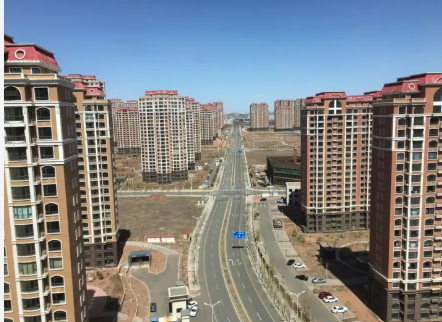
Image used from forbes
I’ve been watching the China story shift dramatically over the past few years, and something about it has been nagging at me. A few years ago, every major financial outlet was running headlines about ghost cities, collapsing developers, and trillions in distressed debt. Then almost overnight, the conversation flipped completely. Suddenly all anyone wanted to talk about was China’s incredible electric vehicles, its solar panels flooding global markets, and its eerily capable humanoid robots. And somewhere in that transition, a massive, unresolved housing crisis just quietly faded from the headlines. So today I want to drag it back into the light and be honest with you about what’s actually going on, because I think the picture is significantly worse than most people currently realize.
Ghost Cities, Trillions in Distressed Debt and the Biggest Bankruptcy in Chinese History
Let me set the scene properly, because I think a lot of readers might have a vague memory of the Evergrande collapse and assume that was basically the whole story. It wasn’t even close to the whole story.
China’s real estate slump is now well into its fifth year, and by most meaningful measures it’s showing no real signs of bottoming out. Home sales keep sliding. Construction starts and completions keep falling. Prices in many cities are still moving in the wrong direction. And sitting over all of this is an estimated 80 million unsold or vacant homes, an absolutely staggering overhang of supply that has nowhere to go.
More than 60 major developers have either defaulted on offshore debt or entered restructuring negotiations, and some of the biggest state-backed firms have been teetering on the edge of a similar fate. One Chinese economist has suggested that as many as 80% of developers and construction firms could end up exiting the market entirely as the industry permanently shrinks down to a fraction of its former size.
Here’s the part that really puts it in perspective for me. Real estate used to account for roughly a quarter of China’s entire GDP and about 15% of non-farm employment. That’s not a niche sector that got into trouble. That’s the load-bearing wall of the entire economy quietly developing a very serious crack.
What the Chinese Data Is Actually Telling Us
Now, I want to be fair here, because if you just look at China’s headline GDP growth numbers, the picture doesn’t look catastrophic. Growth has slowed from the near-double-digit rates of earlier decades down to around 4.5 to 5%, which is still faster than almost any other major economy in the world. Japan and the US would genuinely love to be growing at that pace.
But the headline number is hiding some things that I think deserve a much closer look.
Property investment, which was one of China’s primary growth engines before 2022, hasn’t just slowed down. It’s been falling every year since then, and 2026 is on track to be the worst year yet, with property investment dropping by over 16%. For a while, the government managed to offset this by pouring money into manufacturing and infrastructure, so total fixed investment was still growing. But that buffer has now cracked. Fixed investment overall, including infrastructure, property, and factory spending combined, is now dragging down growth by over 4% this year.
And then there’s consumer spending, which had at least been growing slowly even through the property downturn. That has now turned negative as well. In May, Chinese retail sales posted a year-on-year decline, something that had only happened during the worst months of the COVID outbreak in recent years.
The one bright spot everyone keeps pointing to is exports, which are still surging. But here’s the problem with that argument, and I’ll be honest, it took me a while to fully appreciate this. Exports, for all of China’s reputation as a global trading powerhouse, actually represent a relatively small slice of the total Chinese economy when you look at the full GDP breakdown. Domestic consumption and investment are far larger. So if both of those are now in negative territory simultaneously, exploding exports can only paper over so much.
A New Research Paper That Changes How I Think About This
This is where things get really interesting, and where I want to share something that genuinely shifted my perspective. Harvard economist Kenneth Rogoff and IMF researcher Yuanchen Yang recently released a detailed paper comparing China’s current housing crisis directly to Japan’s property bust in the 1990s, which most people now associate with Japan’s so-called “lost decade” of economic stagnation.
They compiled city-level data on Chinese home prices, and what it shows is that the crisis is very much still ongoing, with no clear bottom in sight. Second-tier Chinese cities like Zhengzhou and Xiamen have already seen home prices drop close to 30% from their peaks. Top-tier cities like Beijing and Shanghai have so far seen smaller declines of around 10%, but they haven’t stabilized either.
For comparison, Japan’s housing prices ultimately fell to roughly 40% of their peak before bottoming out. If China follows a similar path, it means the country is somewhere between halfway and two-thirds of the way through the adjustment. Either way, there’s still a significant amount of pain left to absorb.
Three Ways a Housing Bust Eats Into an Economy
Rogoff and Yang identify three specific channels through which housing busts damage broader economic growth, and honestly, all three of them are clearly playing out in China right now.
The first is the investment channel. When property investment collapses, it doesn’t just hurt developers. It ripples outward to architects, construction workers, electricians, furniture manufacturers, kitchen suppliers, real estate agents, and dozens of other industries that depend on housing activity.
For years, China managed to offset this by massively ramping up manufacturing investment in electric vehicles, solar panels, and advanced technology. But now the government has launched what it calls an “anti-involution” campaign, which is basically an effort to rein in the excessive overbuilding and overcapacity that had developed in those sectors. Local governments that were previously pushing hard to hit growth targets through factory investment are now being told to pull back. So the manufacturing investment boom that was masking the property collapse is now cooling off at the same time the property crisis is getting worse.
The second is the consumption channel. For hundreds of millions of Chinese households, property wasn’t just somewhere to live.
It was their primary savings vehicle, their retirement plan, and their main source of financial confidence. By some estimates, roughly 85% of the price gains that underpinned that wealth creation since 2021 have now evaporated. When people watch their biggest asset shrink year after year, they stop spending. They start saving more and buying less. This is exactly what’s now showing up in the retail sales data.
The third is the sentiment channel. Research on Japan’s bust showed that in areas where prices dropped fastest, households didn’t just reduce spending in line with their actual wealth losses. They became more pessimistic broadly, cutting spending even beyond what the numbers would justify. Using language model analysis of Chinese social media and consumer sentiment data, Rogoff and Yang found the same dynamic clearly playing out in China, particularly in the second-tier cities that have been hit hardest.
Zombie Companies Threatening the Banking System
Here’s the part of this story that I think gets the least attention and probably deserves the most. Beyond the big developer collapses that made international headlines, there’s a much more widespread problem spreading quietly through China’s banking system.
Research from the Dallas Federal Reserve estimated that in 2024, around 40% of all bank loans to the Chinese real estate sector were going to companies whose operating earnings couldn’t even cover their interest payments. That’s up from just 6% in 2018. These loans aren’t being written off as losses.
They’re being quietly rolled over, keeping these companies technically alive but not actually productive. Economists call these “zombie companies,” and across China’s broader economy, the share of such firms has now reached 16%, up from 5% just six years ago.
The Chinese government hasn’t exactly been helping the world understand how bad this is either. Official data on home sales has become increasingly restricted. The IMF has specifically noted that its ability to assess risk in China’s smaller banks is severely limited because the authorities won’t share the relevant data.
And Chinese censors have been actively removing social media posts deemed too negative about the housing market. When a government starts scrubbing discussion of an economic problem rather than solving it, that tells you something about how confident they are in the situation.
Conclusion and What I Think Happens Next
So where does all of this leave us? My honest read is that China’s housing crisis never really went away. It got temporarily masked by a massive government-directed investment boom in manufacturing and technology, which was genuinely impressive and produced some real results. But that investment boom is now being deliberately wound back through the anti-involution campaign, and the underlying housing bust is reasserting itself in the economic data.
The comparison to Japan’s lost decade is uncomfortable but I think it’s probably the most instructive reference point we have. If China’s housing adjustment plays out more like Japan’s than the US’s post-2008 recovery, Rogoff and Yang suggest we could be looking at another six or so years of suppressed consumption before things stabilize. Add in the pullback in manufacturing investment, and the growth drag could get meaningfully worse before it gets better.
The challenge China faces is that it’s simply too large an economy to export its way to recovery. The domestic consumer needs to come back, and that requires households to feel financially secure again. That’s very hard to achieve while home prices are still falling and the wealth that hundreds of millions of families stored in property continues to shrink.
None of this means China is about to collapse, and I want to be clear about that. The government still has significant tools at its disposal and has shown a willingness to intervene when things get critical. But it does mean the China story is probably going to be a lot more complicated and a lot less triumphant over the next several years than the headlines about robots and electric cars might have you believe.
What do you think? Are we watching Japan’s lost decade replay itself in China, or does Beijing have enough control over its financial system to engineer a softer landing? Drop your thoughts in the comments, I’d genuinely like to know where you stand on this one.
메타데이터
- post_id
- 9a67e5bcea96
- slug
- chinas-housing-crisis-is-still-here-but-nobody-s-watching-9a67e5bcea96
- url
- https://medium.com/geopolitics-beyond/chinas-housing-crisis-is-still-here-but-nobody-s-watching-9a67e5bcea96
- canonical_url
- https://medium.com/geopolitics-beyond/chinas-housing-crisis-is-still-here-but-nobody-s-watching-9a67e5bcea96
- author_url
- https://medium.com/@quotesnjokes07
- status
- ok
- fetched_at
- 2026-07-09 06:39:14