How an Optical Fiber Patch Panel Really Works.
The fiber optic patch panel is an integrated unit for fiber management, these instrumentation functions square measure to mend and manage …
How an Optical Fiber Patch Panel Really Works.
As global demand for **high-speed data transmission, industrial automation, and FTTH networks continues to grow, fiber optic infrastructure has become the backbone of modern communication systems. While optical fibers enable ultra-fast, low-loss data transfer, the management, protection, and organization of these fibers is equally critical. This is where the [fiber optic patch panel](https://unisolcommunications.com/mpo-cables/)** plays a central role.
A fiber optic patch panel is not just a termination box — it is a fiber management system designed to ensure signal integrity, physical protection, scalability, and ease of maintenance throughout the network lifecycle.
This blog provides a deep technical explanation of fiber optic patch panels, covering their internal design, operating principles, types, applications, benefits, features, and why UnISOL fiber optic patch panels are trusted across industries.
Understanding Fiber Optic Patch Panels at a System Level
A fiber optic patch panel, also known as a fiber distribution panel (FDP), is an enclosure that serves as the central interface between incoming fiber optic cables and outgoing patch cords or equipment ports.
From a network engineering perspective, the patch panel acts as a passive interconnection point that allows:
- Structured cable termination
- Cross-connection between fibers
- Controlled fiber routing
- Protection against bending, tension, and contamination
Without patch panels, fiber installations would be unorganized, vulnerable to damage, and extremely difficult to maintain.
Core Functions of a Fiber Optic Patch Panel
At a functional level, a fiber optic patch panel performs four critical roles:
1. Fiber Termination
Incoming optical fibers are either:
- Fusion spliced to pigtails, or
- Directly terminated with connectors
This termination converts raw fiber cables into usable connectorized interfaces.
2. Fiber Splicing and Protection
Fusion splices are stored in splice trays, which:
- Secure the splice joint
- Prevent micro-bending and fiber stress
- Protect against dust and vibration
3. Fiber Routing and Bend Radius Control
Fiber routing paths and spools inside the panel ensure:
- Minimum bend radius is maintained
- Signal loss due to macro- or micro-bending is avoided
4. Cross-Connect and Interconnect
Patch panels allow:
- Cross-connection between different fiber cables
- Interconnection between active equipment and backbone fibers
This modular approach simplifies upgrades and fault isolation.
Detailed Design Architecture of Fiber Optic Patch Panels
A typical fiber optic patch panel is divided into two internal zones, each with a distinct engineering purpose.
Adapter Panel Section
This front-facing section houses fiber adapters, which align and connect two fiber connectors with high precision.
Key design points:
- Supports SC, LC, FC, and ST adapters
- Can be simplex or duplex
- Hybrid adapters allow different connector types to interface
- Detachable panels simplify upgrades and maintenance
In high-density environments, adapter alignment accuracy is critical to minimize insertion loss and return loss.
Splice and Fiber Management Section
This rear/internal section contains:
- Fusion splice trays
- Fiber routing guides
- Cable anchoring points
Engineering considerations include:
- Controlled fiber slack storage
- Mechanical strain relief
- Separation of spliced and routed fibers
This design ensures long-term optical performance and physical stability.
Types of Fiber Optic Patch Panels — Deep Explanation
1. DIN Rail Fiber Optic Patch Panel
DIN rail fiber optic patch panels are designed for industrial control environments, where space efficiency and mechanical robustness are critical.
Technical Characteristics:
- Mounts on standard 35 mm DIN rail
- Compact footprint for PLC cabinets
- High vibration resistance
- Secure cable anchoring for industrial fibers
Why DIN Rail Panels Matter
In industrial systems, fiber networks often coexist with:
- High-voltage equipment
- EMI-prone environments
- Continuous mechanical vibration
DIN rail fiber patch panels provide stable fiber termination while integrating seamlessly into control panels.
Applications:
- Power substations
- Oil & gas automation
- Railway signaling systems
- Industrial CCTV networks

These Patch panels square measure appropriate for mounting in Din Rail panels wherever there's space constraint within PLCs attributable to its compact and rugged designed case, its appropriate for industrial applications.
2. Rack Mount Fiber Optic Patch Panel
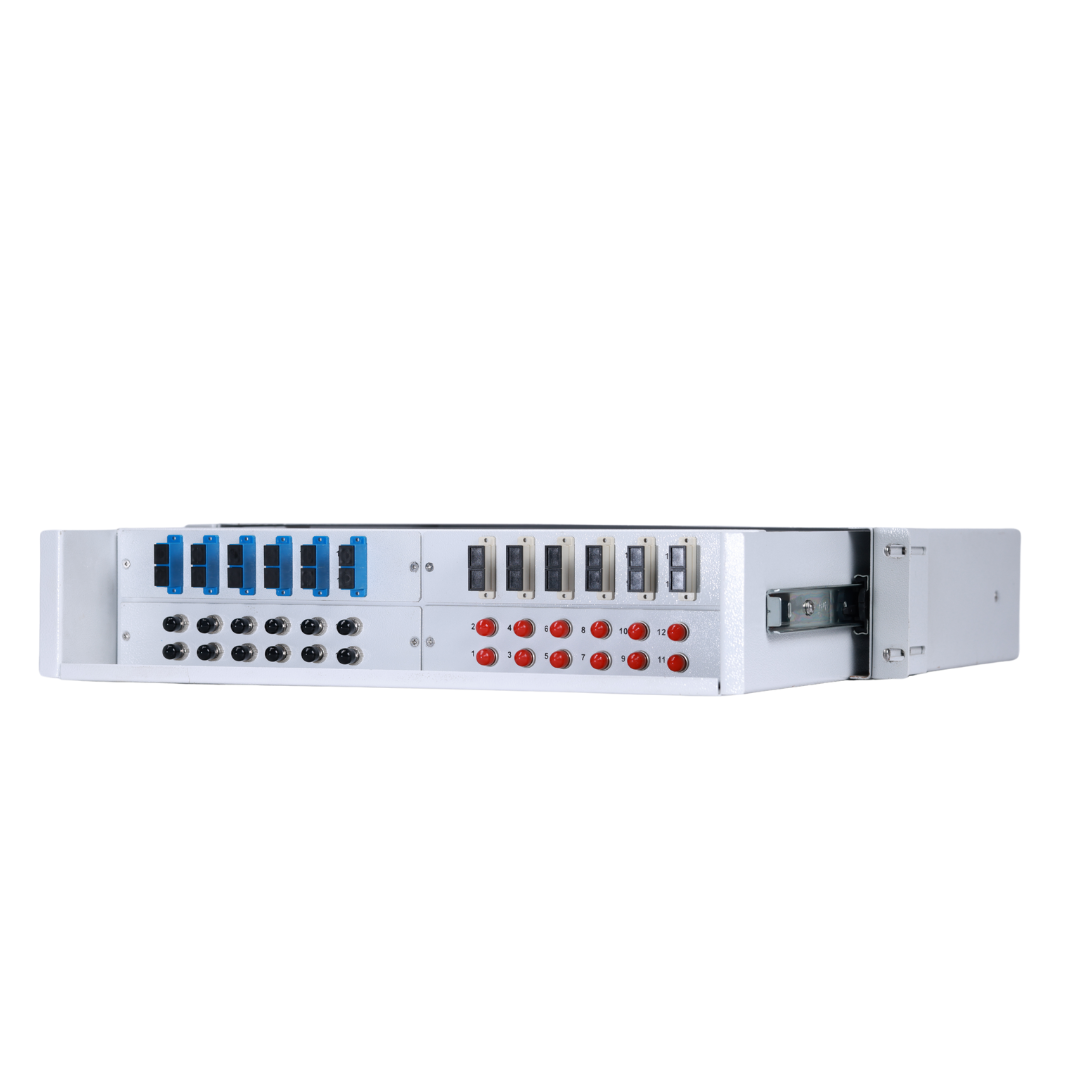
Rack Mount fiber optic patch panels are the standard solution for data centers and telecom facilities.
Engineering Design:
- 19-inch rack compatibility
- 1U to 4U configurations
- Supports high port density (up to 48 ports in 1U)
- Multiple cable entry points
UNISOL rack mount panels are manufactured using 16-gauge steel with a seven-tank powder coating process, providing:
- Corrosion resistance
- Structural rigidity
- Long operational lifespan
Fiber Management Advantages:
- Integrated fiber spools
- Dedicated splice trays
- Tool-less adapter mounting
Applications:
- Central offices (FTTx)
- Telecommunication exchanges
- Network operation centers
- Enterprise data centers
3. Wall Mount Fiber Optic Patch Panel
Wall mount fiber optic patch panels are optimized for access networks and edge installations.
Design Philosophy:
- Space-efficient enclosure
- Secure wall mounting
- Indoor and outdoor compatibility
UnISOL wall mount fiber patch panels integrate:
- Fiber splicing
- Fiber winding and storage
- Interface management
The FTTH series wall mount fiber terminal box is particularly suited for:
- Multi-dwelling units (MDUs)
- Building distribution points
- Industrial field networking
Applications:
- FTTH deployments
- Mining and military installations
- Road and rail communication
- Ship and shore connectivity

Benefits of Using Fiber Optic Patch Panels
A well-designed fiber optic patch panel delivers long-term operational benefits, including:
- Reduced signal attenuation
- Improved network reliability
- Faster fault identification
- Cleaner cable organization
- Enhanced scalability
In high-density networks, patch panels significantly reduce human error during maintenance and upgrades.
Key Features of UnISOL Fiber Optic Patch Panels
UnISOL fiber optic patch panels are engineered with a focus on durability, performance, and ease of use.
Structural Features:
- Heavy-duty steel construction
- Static powder-coated finish
- Tamper-resistant enclosure design
Fiber Management Features:
- Optimized fiber routing paths
- Minimum bend radius compliance
- Secure splice tray design
Compatibility:
- SC, LC, FC, ST adapters
- Single-mode and multimode fibers
- Hybrid connectivity solutions
Why Choose UnISOL Fiber Optic Patch Panels?
UnISOL stands out in the fiber infrastructure market due to its engineering-driven approach.
Key Reasons:
- Proven performance in industrial and telecom environments
- Flexible designs for DIN rail, rack mount, and wall mount needs
- Compliance with global fiber management standards
- Cost-effective solutions with no compromise on quality
- Long-term reliability in harsh conditions
UnISOL products are designed not just for installation, but for decades of dependable operation.
메타데이터
- post_id
- 9aa2c8f8cde2
- slug
- how-does-a-optical-fiber-patch-panel-work-9aa2c8f8cde2
- url
- https://medium.com/@ananthasasikala/how-does-a-optical-fiber-patch-panel-work-9aa2c8f8cde2
- canonical_url
- https://medium.com/@ananthasasikala/how-does-a-optical-fiber-patch-panel-work-9aa2c8f8cde2
- author_url
- https://medium.com/@ananthasasikala
- status
- ok
- fetched_at
- 2026-08-31 11:57:09




