Read All Your Favorite Magazines In One Place 2026
The Quiet Buildup of Subscriptions: Professionals juggling a stack of 10+ recurring subscriptions frequently surpass their expected annual…

Read All Your Favorite Magazines In One Place 2026
The Quiet Buildup of Subscriptions: Professionals juggling a stack of 10+ recurring subscriptions frequently surpass their expected annual spend without realizing it.
The Mental Toll: Subscription fatigue takes a real toll on productivity, driven by the effort of keeping track of multiple logins, renewal dates, and disconnected interfaces.
The Hub Advantage: Switching to a centralized platform like Arizon Network trades a handful of thin, separate subscriptions for one wide-ranging, high-value library — folding magazines, newspapers, and books into a single bill.
Easier to Find: Centralized catalogs create discovery by proximity, giving niche or smaller titles a chance to reach readers who would never have gone searching for them on their own.
The Subscriptions You Forgot You Had
Here’s how it usually happens. You subscribe to a magazine app for one specific title. Then a newspaper app, because the first one didn’t carry your local paper. Then a book platform, because neither of the first two had what you wanted to read on a flight.
None of these decisions felt wasteful in the moment. there. Individually, they’re rounding errors.
Add them up over a year, and professionals managing ten or more small recurring subscriptions routinely cross annually — a number most people have never actually calculated, because no single bill ever felt like it was worth auditing.
That’s the trap. Subscription creep doesn’t announce itself. It accumulates quietly, one reasonable decision at a time.
It’s Not Just Reading Apps
Reading subscriptions rarely arrive alone. They show up alongside a streaming service, a cloud storage plan, a productivity tool, a fitness app — each one justified on its own, each one forgotten the moment the free trial converts to a paid plan.
The pattern repeats because the decision-making is identical every time. A specific need shows up. A specific app solves it. Nobody circles back later to ask whether three overlapping tools could have been one.
This is worth naming because it means the fix isn’t really about “reading less” or “wanting fewer magazines.” It’s about noticing where genuinely separate needs have been solved by genuinely redundant tools, and where they haven’t.
The Real Cost Isn’t Just the Money
Here’s the part that’s easy to miss: the financial leak isn’t even the most expensive part.
Every extra app is another login. Another renewal date to track. Another interface to relearn. Another place your reading habits, your data, and your attention get scattered.
That’s not a minor inconvenience — it’s a real productivity drain. Switching between apps to find one article, one issue, one saved bookmark wastes time that adds up across a week, a month, a year.
Psychologists call the overwhelmed feeling that comes from tracking too many services “subscription fatigue.” It’s real, and it quietly erodes how much you actually enjoy the thing you’re paying for in the first place.
Why One Hub Works Better Than Five Apps
This is where consolidation earns its keep — and it’s the same logic serious businesses have used for years.
Large companies don’t run ten disconnected tools when three would do the same job better. They consolidate. Fewer logins. Fewer bills. A single source of truth instead of scattered fragments.
The same logic applies to your personal reading stack.
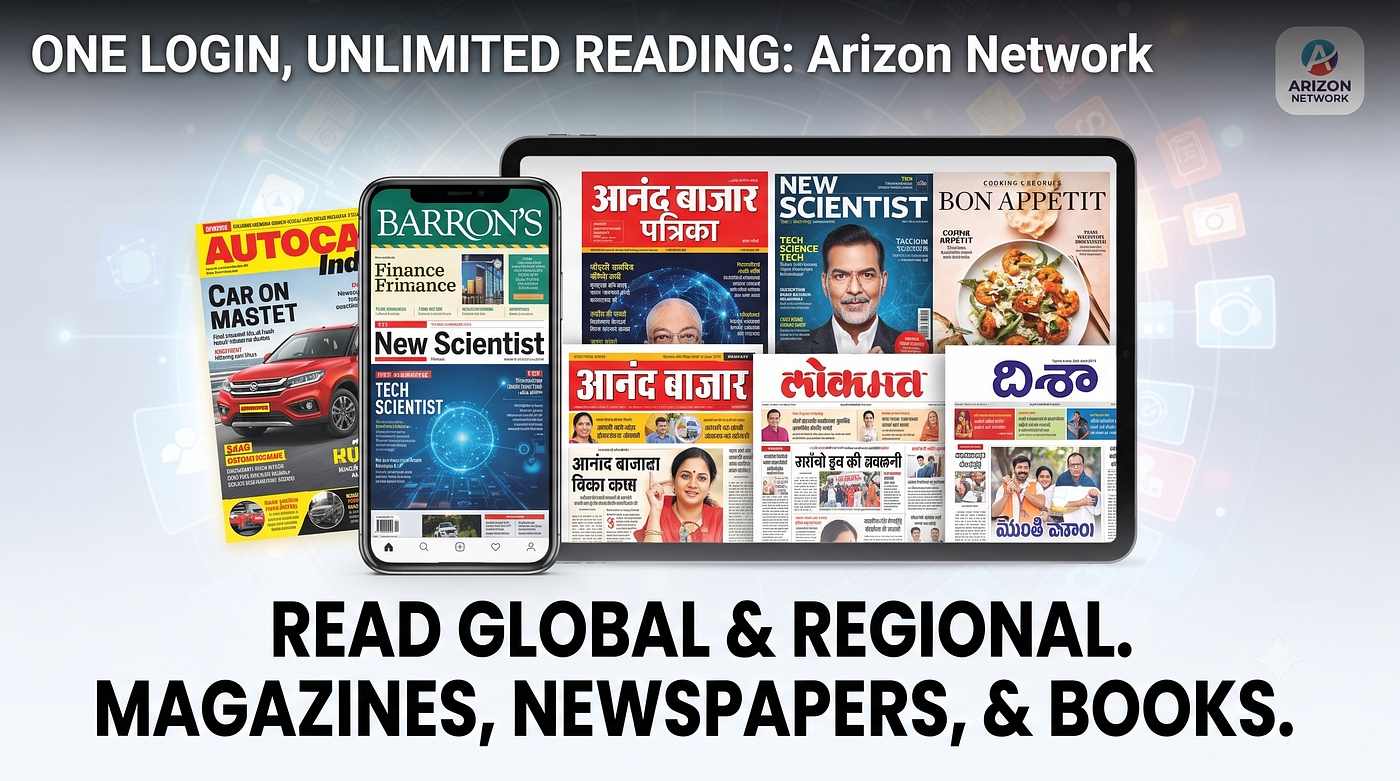
A platform like *Arizon Network *is built around that exact idea — one login, one subscription, covering magazines, newspapers, and books instead of three separate apps competing for your attention.
Magazines are really the heart of it. Whether you’re reading Autocar for the latest release, Barron’s for a market read, or a niche title in a genre you’d never find shelf space for elsewhere, having that full spread sitting behind a single subscription changes the math entirely. You stop paying for five thin slices of content and start paying for one broad, genuinely useful library — with newspapers and books included as part of the same access, not a separate bill.
Fewer Tools, Smaller Risk
There’s a quieter benefit to consolidation that rarely makes it into the pitch: security.
Every subscription is another account holding a password, a payment method, sometimes personal reading data. Spread across ten different services, that’s ten different companies with ten different security practices, any one of which could have a breach you never hear about until your inbox fills with alerts.
Fewer tools means a smaller footprint. It’s the same reason large organizations consolidate vendors — not just for cost, but because managing fewer relationships means fewer places where something can quietly go wrong.
For a personal reading stack, that’s not the headline reason to consolidate. But it’s a real one, and *it compounds with everything else.*
What Consolidation Does for Magazines Themselves
There’s a side to this that benefits more than just the subscriber’s wallet.
A magazine sitting inside a single, broad catalog gets discovered differently than one locked behind its own standalone app. A reader who came in for one title — a market read, a car magazine, a cooking guide — is now a few clicks from five others they never would have searched for by name.
That matters most for smaller or niche titles. A magazine with a loyal but small readership offline picks up a meaningfully larger discovery audience by sitting inside a catalog that’s already doing the work of attracting readers in the first place. It’s promotion by proximity — the same reason placement on a shared shelf matters more than most people give it credit for.
So when a platform consolidates magazines, newspapers, and books into one hub, it isn’t only doing the subscriber a favor. It’s doing the individual titles one too, by putting them in front of readers who’d never have gone looking otherwise.
Fewer Logins, More Focus
There’s a version of this argument that sounds like it’s asking you to give something up. It isn’t.
*Choosing one centralized hub *over five fragmented apps doesn’t limit your options — it frees up the mental bandwidth you were spending managing subscriptions instead of enjoying what they were for.
Fewer passwords to remember. Fewer renewal dates to track. Fewer moments of “wait, which app had that article I bookmarked?”
What’s left is more time actually reading, and a clearer picture of what you’re paying for and why.
Try the Audit Yourself
You don’t have to take this on faith. Pull up your own subscription list this week and add up what you’re actually spending across magazine, newspaper, and reading apps combined.
Then ask the only question that matters: is that spread of five or six small subscriptions actually giving you more value than one well-built platform covering the same ground would?
For a lot of people, the honest answer is no — and the fix is simpler than it looks.
Frequently Asked Questions
Is one consolidated subscription really cheaper than several small ones?
Usually, yes — but the bigger saving is often what people don’t notice until they add it up. Individual reading subscriptions of a month feel harmless on their own. Stack five or six of them across magazines, newspapers, and books, and the annual total regularly well past what a single broad subscription costs for the same range of content.
Won’t I lose access to specific titles I already read by switching?
That depends on the catalog, which is why it’s worth checking before switching rather than after. A platform built around breadth — spanning business, automobile, lifestyle, science, and niche categories alongside newspapers and books — is far more likely to already carry what you’re reading than a single-genre app is to expand into it.
Is it safe to consolidate my reading data into one platform instead of several?
In most cases, fewer accounts actually means less exposure, not more. Every separate subscription is another company holding your payment details and reading habits, each with its own security practices. Reducing the number of places that data lives shrinks the overall risk rather than concentrating it.
Does a shared login across multiple devices compromise account security?
Shared access is a convenience feature, not a security downgrade, as long as it’s built into the platform rather than worked around informally. A model built for multiple devices on one account is a deliberate design choice, not a loophole.
How do I know if I actually have a subscription creep problem?
Run the audit from earlier in this piece. Open your banking or card statement, search for recurring charges, and total them against how often you actually use each one. If the number surprises you, that’s usually the answer.
메타데이터
- post_id
- 9aad6dbd4cb8
- slug
- read-all-your-favorite-magazines-in-one-place-2026-9aad6dbd4cb8
- url
- https://medium.com/@CASSIANBLOG/read-all-your-favorite-magazines-in-one-place-2026-9aad6dbd4cb8
- canonical_url
- https://medium.com/@CASSIANBLOG/read-all-your-favorite-magazines-in-one-place-2026-9aad6dbd4cb8
- author_url
- https://medium.com/@CASSIANBLOG
- status
- ok
- fetched_at
- 2026-07-11 10:19:22