The Laboratory of Vision: Art, Technology, and Experimentation at MIT’s Center for Advanced Visual…
The Center for Advanced Visual Studies at Massachusetts Institute of Technology was one of the most ambitious artistic experiments of the…
The Laboratory of Vision: Art, Technology, and Experimentation at MIT’s Center for Advanced Visual Studies
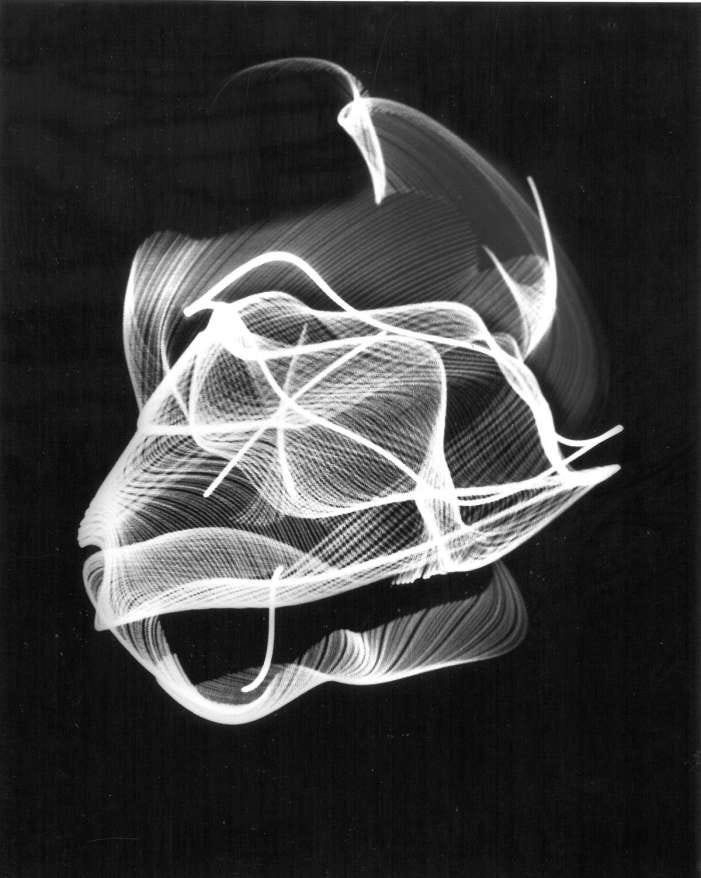
Paul Earls, Panhelion, 1975.
The Center for Advanced Visual Studies at Massachusetts Institute of Technology was one of the most ambitious artistic experiments of the twentieth century. Founded in 1967 by the Hungarian-born artist, designer, and educator György Kepes, the Center sought to transform the relationship between art, science, and technology. At a moment when universities across the world still treated art and engineering as separate intellectual territories, CAVS proposed something radical: that artists, scientists, engineers, architects, and technologists should work together inside the same laboratory culture.
More than an academic department, CAVS functioned as a living experiment. It was a place where artists collaborated with physicists, where sculptors worked with lasers and electronics, where environmental concerns entered artistic practice, and where technology became not merely a tool but a subject of philosophical reflection. During its four decades of existence, the Center helped shape the development of media art, interactive installations, environmental art, cybernetic sculpture, video experimentation, public art, and later digital culture. It became one of the earliest institutional models for interdisciplinary artistic research in the modern world.
The history of CAVS is also the history of postwar modernity itself: the optimism surrounding technology after World War II, the anxieties of the Cold War, the rise of cybernetics and systems thinking, the environmental movement of the 1970s, the emergence of video and computer art, and finally the digital transformations that define the contemporary age. The Center anticipated many questions that are central today: Can technology humanize society? What role should artists play in scientific culture? How can visual thinking reshape public space? What ethical responsibilities accompany technological innovation?
To understand CAVS is to understand a major chapter in the evolution of contemporary art and technological culture.
At the center of this story stands György Kepes, whose intellectual vision shaped the philosophy of the institution. Born in Hungary in 1906, Kepes emerged from the intellectual atmosphere of European modernism and became associated with the legacy of the Bauhaus, particularly through his relationship with László Moholy-Nagy. The Bauhaus had already attempted to unify art, design, craft, and technology during the interwar years, and Kepes inherited this interdisciplinary ambition. Yet his own contribution was distinct. He believed that visual perception itself could become a bridge between scientific knowledge and artistic imagination.
After emigrating to the United States in the late 1930s, Kepes worked in Chicago at the New Bauhaus and later joined MIT in the postwar period. At MIT he established a program in visual design that eventually evolved into the Center for Advanced Visual Studies. His influential book Language of Vision argued that visual communication possessed universal psychological and social power. For Kepes, vision was not simply aesthetic decoration; it was a means of organizing human understanding.
Kepes arrived at MIT during a transformative historical moment. After World War II, science and technology had become dominant forces shaping global politics and everyday life. Nuclear weapons, radar systems, aerospace research, and computing technologies were redefining civilization. Universities such as MIT became major centers of technological research connected to military and industrial development. Kepes believed that artists needed to engage directly with these changes rather than remain isolated within traditional studio practices.
But he also feared the dehumanizing potential of technological systems. Having witnessed the destructive consequences of fascism and war in Europe, he recognized that science without ethical or imaginative guidance could produce catastrophe. His response was not to reject technology but to humanize it through artistic collaboration. According to later reflections on CAVS, Kepes and his colleagues believed that artists could help ensure that technology served human and ecological well-being rather than destruction.
This philosophy led to the founding of the Center for Advanced Visual Studies in 1967 within MIT’s School of Architecture and Planning. The institution was structured as a fellowship program rather than a conventional art school. Artists from around the world were invited to MIT to collaborate with scientists, engineers, and researchers. The model itself was revolutionary. Instead of teaching art in isolation, CAVS embedded artistic practice within technological and scientific environments.
The Center emerged during the social turbulence of the late 1960s, a period marked by antiwar protests, countercultural movements, civil rights struggles, and rapid technological change. In this atmosphere, CAVS became a site where utopian hopes and political tensions intersected. Artists associated with the Center experimented with light, sound, movement, projection, electronics, video, cybernetics, and urban environments. Many sought to create participatory works that dissolved the boundaries between art and everyday life.
One of the defining characteristics of CAVS was its emphasis on collaboration. Traditional art institutions often celebrated individual genius, but CAVS proposed collective experimentation instead. Artists worked with engineers, programmers, architects, musicians, and physicists. The scientific laboratory became a model for artistic production. Kepes believed that modern creativity required interdisciplinary exchange because contemporary problems were too complex for isolated disciplines.
This collaborative ethos profoundly influenced the aesthetics of the Center. Many works produced through CAVS were not static paintings or sculptures but dynamic systems involving light, movement, sound, or environmental interaction. Technology was not merely used to produce visual spectacle; it became part of the conceptual structure of the work itself.
Among the early fellows were artists who later became major figures in media and experimental art. Otto Piene, associated with the German ZERO movement, became one of the most influential contributors to the Center. His work explored light, fire, air, and sky as artistic media. Nam June Paik, often regarded as a pioneer of video art, also became connected to the CAVS environment. Other artists included Aldo Tambellini, Yvonne Rainer, Stan VanDerBeek, and Muriel Cooper.
The diversity of practices associated with the Center reveals how expansive its vision truly was. Light art, kinetic sculpture, holography, video projection, environmental installations, computer graphics, electronic music, performance art, and interactive systems all became part of the CAVS ecosystem. Long before the contemporary popularity of immersive digital installations, artists at CAVS were already exploring how technology could transform human perception and spatial experience.
One particularly important area of experimentation involved light. For Kepes and many CAVS artists, light symbolized both technological modernity and spiritual transformation. Light installations blurred the line between architecture, sculpture, and environmental design. Urban spaces could be reimagined through projection, illumination, and atmospheric interventions.
This interest connected CAVS to broader postwar artistic movements exploring cybernetics and systems theory. Artists increasingly viewed artworks not as isolated objects but as dynamic systems interacting with viewers and environments. Technology enabled responsive, time-based, and participatory forms of art. CAVS became one of the leading institutional centers for these developments.
The Center’s experiments with environmental and civic art were equally significant. Many projects sought to intervene directly in public space rather than remain confined to galleries. Artists imagined large-scale urban installations that could reshape collective experience. The city itself became a canvas.
One of the most famous collaborative projects associated with CAVS was Centerbeam, presented at documenta 6 in Kassel, Germany, and later installed on the National Mall in Washington, D.C. The work combined laser projections, electronic sound, video, kinetic sculpture, and performance into a monumental multimedia environment. It represented the interdisciplinary spirit of the Center at its height. Artists, engineers, musicians, and technologists collaborated to create an immersive public artwork that merged technological experimentation with social participation.
The scale and ambition of Centerbeam demonstrated how CAVS challenged conventional definitions of art. Instead of producing discrete objects for collectors, the Center encouraged experiential environments operating at civic scale. This approach anticipated contemporary installation art and multimedia spectacle, but at the time it was remarkably experimental.
Environmental consciousness also became increasingly central to the Center’s activities during the 1970s. Many CAVS artists explored ecological themes, urban sustainability, and the relationship between technology and nature. Rather than viewing technology and ecology as opposites, they attempted to imagine systems in which technological innovation could coexist with environmental awareness. Scholars examining CAVS have noted how the Center mobilized artists, architects, and scientists to think about sustainable environments and urban ecologies.
This ecological orientation reflected larger cultural transformations of the period. The environmental movement, concerns about pollution, and anxieties about industrial expansion influenced artistic discourse worldwide. CAVS responded by integrating environmental thinking into interdisciplinary artistic research. Artists explored natural systems, atmospheric phenomena, and ecological processes as creative material.
At the same time, the Center was not free from political contradiction. MIT itself was deeply connected to military research during the Cold War and the Vietnam War era. Some critics questioned whether artistic collaboration with technological institutions risked legitimizing military-industrial systems. Kepes’s vision of humanizing technology existed within an institution heavily involved in defense research. These tensions became increasingly visible during the late 1960s and 1970s.
The contradictions surrounding CAVS reveal a broader dilemma in modern technological culture. Can artistic practice remain politically independent within institutions tied to state and corporate power? Can collaboration with science challenge dominant systems, or does it become absorbed into them? These questions remain relevant today in debates surrounding artificial intelligence, surveillance technologies, and corporate digital platforms.
Despite these tensions, the Center continued to evolve. In 1974, after Kepes retired, Otto Piene became director of CAVS. Under Piene’s leadership, the institution expanded its international profile and further developed experimental approaches to media and environmental art. Piene emphasized what he called “Sky Art,” artistic projects using the sky and atmosphere as creative space. Inflatable sculptures, projections, and aerial performances transformed the environment into a participatory medium.
Piene’s work reflected a poetic and utopian dimension within CAVS culture. While many technological systems of the twentieth century were associated with surveillance, warfare, and industrial control, Piene sought forms of collective joy and imaginative liberation. Air, light, and movement became metaphors for openness and transformation.
The Center also increasingly incorporated digital technologies during the 1980s and 1990s. Computer graphics, video synthesis, interactive media, and electronic communication became central areas of exploration. Artists at CAVS anticipated many later developments in digital art and network culture. Before the internet transformed global communication, the Center already recognized that electronic media would reshape perception, identity, and public life.
Importantly, CAVS did not treat technology as neutral. Artists critically examined how media systems influence society. During the 1990s and early 2000s, the Center shifted toward issues of geopolitics, migration, memory, identity, and social justice. Under the leadership of Krzysztof Wodiczko, the Center explored how art could respond to trauma, displacement, and political violence. Projection art, public interventions, and socially engaged installations addressed marginalized communities and contested histories.
This transition demonstrated the flexibility of the CAVS model. Although the Center was founded during the age of industrial modernism, it adapted to changing political and technological realities. The institution moved from light and kinetic sculpture toward critical media art and socially engaged practice, while maintaining its interdisciplinary ethos.
By the early twenty-first century, however, institutional restructuring at MIT transformed the Center. In 2009, the Center for Advanced Visual Studies merged with MIT’s Visual Arts Program to form the MIT Program in Art, Culture and Technology, commonly known as ACT. This merger reflected broader changes in contemporary art education, where distinctions between media, performance, design, and technological research had become increasingly fluid.
Although CAVS as a separate institution ceased to exist, its intellectual legacy continues through ACT and through countless interdisciplinary programs around the world. Today, collaborations between artists and technologists are common within universities, museums, media labs, and innovation centers. Yet when CAVS began in 1967, such collaborations were rare and often viewed skeptically. The Center helped establish the legitimacy of art-science research long before it became fashionable.
The influence of CAVS can be seen across contemporary culture. Interactive installations in museums, immersive digital environments, projection mapping, environmental media art, bio-art, AI-generated art, and technologically mediated public art all operate within trajectories that institutions like CAVS helped pioneer. The Center anticipated the idea that artistic practice could function as research rather than merely object production.
Equally important was the Center’s understanding of the artist’s social role. Kepes believed that artists should participate actively in shaping technological civilization. Rather than retreating into aesthetic isolation, artists could become collaborators in scientific and social transformation. This idea remains deeply relevant in the age of artificial intelligence, biotechnology, algorithmic systems, and planetary ecological crisis.
The contemporary discourse surrounding AI art, generative systems, and computational creativity echoes many of the questions explored at CAVS decades earlier. How does technology alter human creativity? Can machines participate in artistic production? What ethical responsibilities accompany technological innovation? Interdisciplinary dialogue between artists, scientists, and engineers remains crucial in addressing these questions.
CAVS also helped redefine the concept of artistic medium. Traditional categories such as painting or sculpture became insufficient for describing works involving electronics, projection, environment, participation, or computation. The Center encouraged artists to think beyond medium-specific boundaries toward systems, processes, and experiences.
This shift profoundly influenced later developments in contemporary art. Installation art, media art, performance environments, and interactive systems all owe something to the experimental culture fostered by institutions like CAVS. The Center demonstrated that artistic innovation often emerges at the intersection of disciplines rather than within isolated traditions.
The archival legacy of CAVS remains enormously important for researchers today. MIT has preserved extensive collections documenting the Center’s activities, including photographs, videos, correspondence, sketches, and project documentation related to more than 200 artists and fellows. Digital archives now make many of these materials publicly accessible, allowing scholars to reassess the Center’s significance within global art history.
Recent exhibitions and publications have further revived interest in the Center. Projects commemorating the 50th and 55th anniversaries of CAVS emphasized its continuing relevance for contemporary artistic and technological culture. The publication Centerbook: The Center for Advanced Visual Studies and the Evolution of Art-Science-Technology at MIT offered the first comprehensive historical account of the institution and highlighted its enduring influence on interdisciplinary practice worldwide.
What makes CAVS especially important today is not only its historical innovations but its philosophical vision. The Center insisted that technology should not be understood solely in functional or commercial terms. Scientific advancement required cultural, ethical, and imaginative reflection. Artists could provide new ways of seeing technological systems and their consequences.
In the twenty-first century, this insight has become increasingly urgent. Digital platforms shape political communication, artificial intelligence transforms labor and creativity, surveillance technologies alter privacy, and climate change threatens planetary futures. Technological systems now influence nearly every aspect of life. The interdisciplinary approach pioneered by CAVS offers a model for responding to these transformations critically and imaginatively.
Kepes once believed that artists could become “an extra eye” for scientists and engineers. This metaphor captures the enduring significance of the Center for Advanced Visual Studies. CAVS argued that technological civilization requires vision — not only technical expertise, but also cultural imagination, ethical reflection, and sensory awareness. Art was not peripheral to technological society; it was essential to understanding and transforming it.
The legacy of the Center for Advanced Visual Studies lies in its refusal to separate creativity from scientific inquiry, aesthetics from politics, or technology from human experience. Long before interdisciplinary collaboration became an academic trend, CAVS imagined a future in which artists, engineers, scientists, and citizens would collectively shape the environments and technologies of modern life.
In many ways, the world has finally caught up with the questions that CAVS asked more than half a century ago.
메타데이터
- post_id
- 9ace6e7c77f8
- slug
- the-laboratory-of-vision-art-technology-and-experimentation-at-mits-center-for-advanced-visual-9ace6e7c77f8
- url
- https://medium.com/@azha.khan.6/the-laboratory-of-vision-art-technology-and-experimentation-at-mits-center-for-advanced-visual-9ace6e7c77f8
- canonical_url
- https://medium.com/@azha.khan.6/the-laboratory-of-vision-art-technology-and-experimentation-at-mits-center-for-advanced-visual-9ace6e7c77f8
- author_url
- https://medium.com/@azha.khan.6
- status
- ok
- fetched_at
- 2026-06-29 01:02:39