(NO4) - In Search of the Origin of Dragons within Buddhism-Part 1(English version)
How Did Nāga Become the Dragon (龍) of Buddhism?
(NO4) - In Search of the Origin of Dragons within Buddhism-Part 1(English version)
How Did Nāga Become the Dragon (龍) of Buddhism?

When walking through Korean Buddhist temples, one eventually encounters a mysterious being.
It is a creature that does not exist in the real world — the dragon (龍).
From the ceilings and bracket structures (栱包) of the main halls (大雄殿), to Buddhist altars (佛壇), paintings (幀畵), and stone sculptures, the dragon (龍) appears throughout Korean Buddhist spaces.
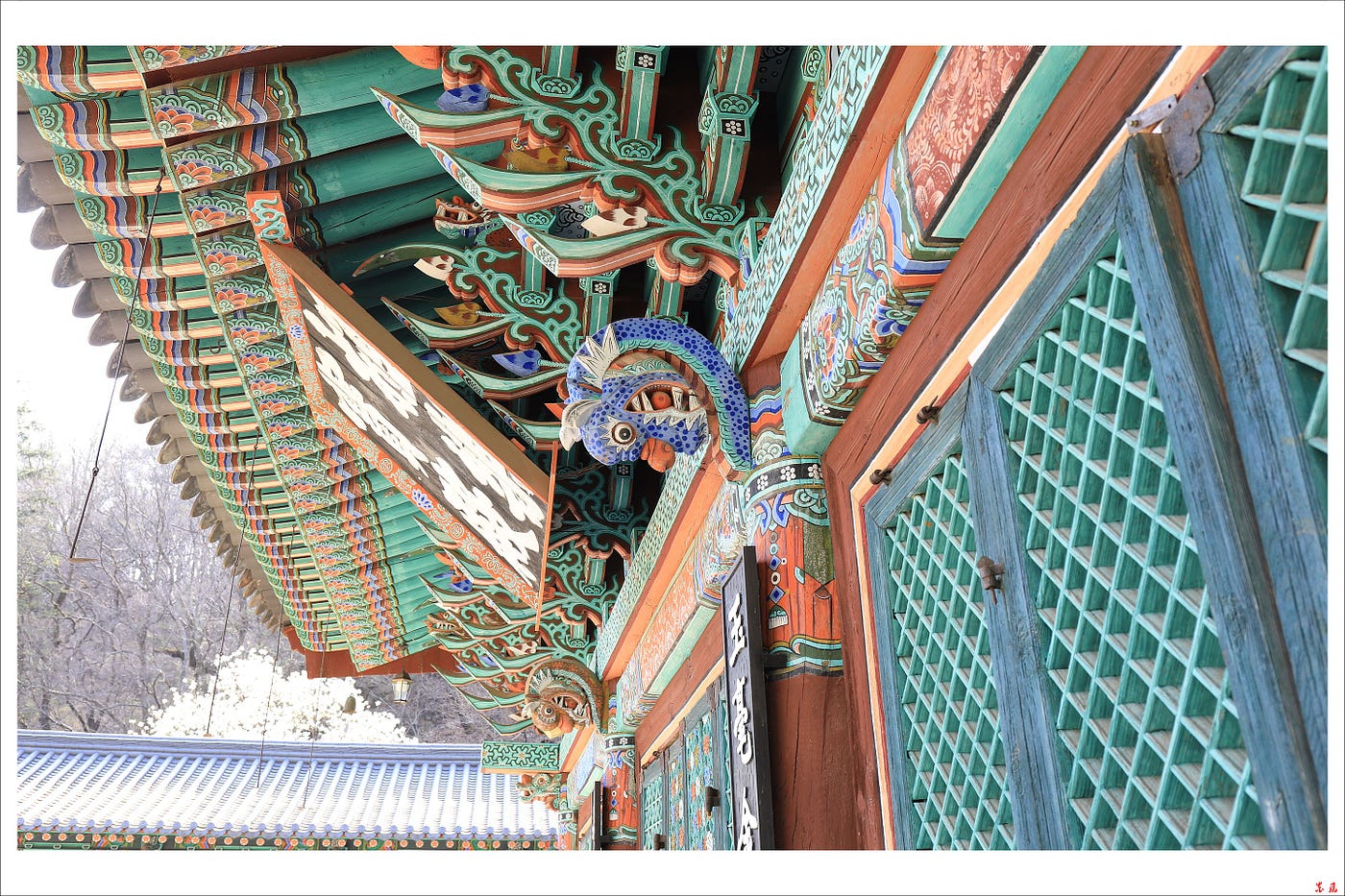
Especially in Buddhist temples of the late Joseon Dynasty, images of dragons (龍) became more diverse and elaborate.
The dragon (龍) was not merely a decorative element. It was a symbol that protected the Dharma (佛法), controlled water and rain, and connected the human world with the sacred realm.
However, one question arises.
Where did the dragon (龍) that we encounter in Buddhist temples today actually originate?
Did it come from the Chinese dragon (龍)?
Or was it the dragon (龍) mentioned in Buddhist scriptures?
Why Did Humans Create Sacred Animals That Do Not Exist?
Throughout human history, sacred creatures that do not exist in the physical world have appeared in many civilizations.
The dragon (龍) and phoenix (鳳凰) of East Asia, the Nāga of India, and the Griffin and Dragon of the West were born in different cultures, yet they share remarkable similarities.
They are not real animals.
However, for thousands of years, humans have believed in these beings, told stories about them, carved them into sculptures, and expressed them through architecture and art.
Why did humans create animals that never existed?
Humans created symbols in order to understand the immense forces of nature.
Rain and storms, abundance and death, power and the order of the universe — forces that humans could never completely control — were expressed through sacred forms.
Imaginary creatures are not simply fiction.
They are traces of humanity’s attempt to understand the invisible world.
Where Did the Buddhist Dragon (龍) Begin?
When examining Buddhist scriptures, many beings translated today as “dragon” (龍) are actually the Indian Nāga.
Nāga is a Sanskrit word referring to a great serpent or a being associated with snakes.
However, in Indian culture, Nāga was not merely an animal.
Nāgas were a mythical race possessing supernatural powers and were regarded as sacred beings connected with water, prosperity, the underworld, and treasures.
Nāgas were sometimes feared by humans, but they also appeared as protectors of humanity and as beings connecting the human and divine worlds.
Nāga in Buddhist Scriptures
With the emergence of Buddhism, Nāga gained new meanings.
In early Buddhist scriptures, Nāga appears as a being transformed through encountering the teachings of the Buddha.
A representative example is the story of Uruvelā Kassapa (優樓頻螺迦葉) and the poisonous dragon (毒龍) found in the Ekottarika Āgama (增一阿含經).
In this story, the poisonous dragon (毒龍) is a powerful being feared by humans, yet it changes before the Buddha’s enlightenment.
This shows that in early Buddhism, Nāga was not simply an evil being, but a being capable of transformation and awakening.
Nāga also appears in various scriptures, including the Dīrgha Āgama (長阿含經) and the Saṃyukta Āgama (雜阿含經).
Among the most famous stories is that of Mucalinda, the Nāga King (龍王).

After the Buddha attained enlightenment, when a great storm occurred, Mucalinda, the Nāga King (龍王), protected the Buddha with his own body.
This story later became one of the most iconic scenes in Buddhist art depicting the Buddha’s protection.
Why Did Nāga Become the Dragon (龍)?
Here a new question begins.
The Indian Nāga was originally a sacred being with the form of a serpent.
Then why did China translate Nāga as the dragon (龍)?
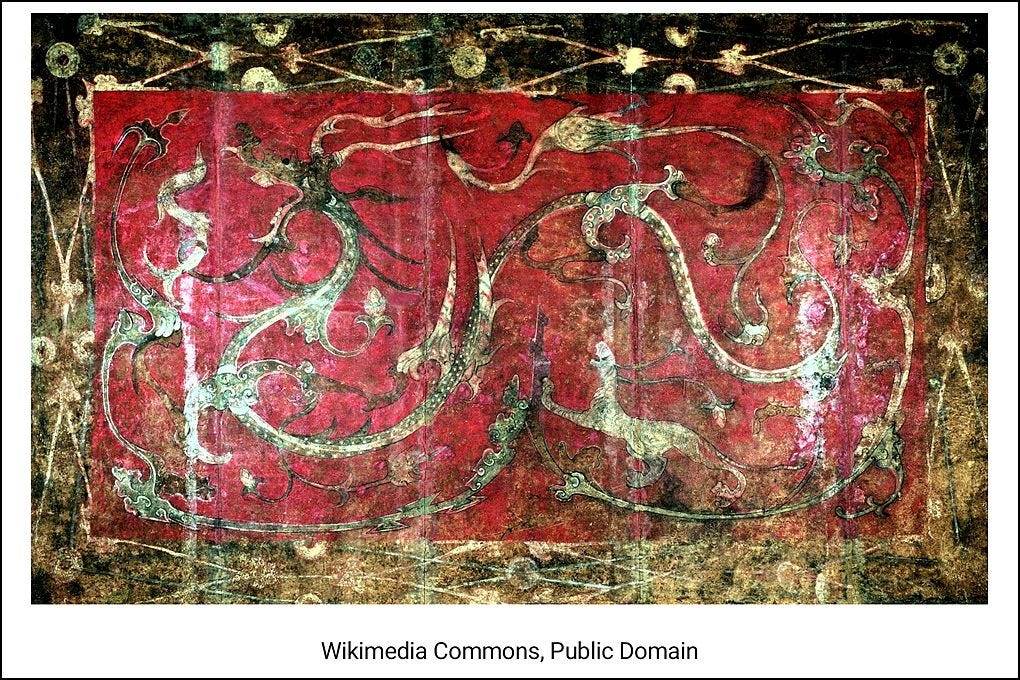
Even before Buddhism arrived in China, Chinese civilization already possessed its own dragon (龍) traditions.
The Chinese dragon (龍) symbolized rain and water, the power of heaven, imperial authority, and the order of the universe.
Therefore, Chinese people connected the Indian Nāga with their existing concept of the dragon (龍).
This process was not simply a translation of words.
It was a cultural fusion (融合) in which different civilizations encountered each other and created a new symbol.
What Is the Dragon (龍) in Korean Buddhist Temples?

Then what are the dragons (龍) that we encounter in Korean Buddhist temples today?
Are they the Indian Nāga?
Are they the Chinese dragon (龍)?
Or are they a new symbol created through the long encounter between Indian Nāga beliefs, Chinese dragon (龍) culture, and Korean Buddhist traditions?
The Buddhist dragon (龍) of Korea did not originate from a single culture.
It is a complex expression of sacred meaning created through the combination of the Indian Nāga, the Chinese transformation of the dragon (龍), and Korean Buddhist culture.
Conclusion
The transformation of Nāga into the dragon (龍) was not simply a story of translating one word.
It was a movement of culture and ideas from India to China, and then from China to Korea.
Humans created animals that never existed.
Yet these beings became some of the longest-lasting symbols in human history.
The dragon (龍) is not a real animal, but it represents one of humanity’s deepest expressions of the desire to understand nature, the universe, and the sacred.
In the next part, we will explore how Nāga transformed into the Chinese dragon (龍), and how the Buddhist belief in the Dragon King (龍王) was formed.
메타데이터
- post_id
- 9b2b6d1d13bc
- slug
- the-origin-of-dragons-in-buddhism-part-1-9b2b6d1d13bc
- url
- https://medium.com/@tpahdhkspah_72812/the-origin-of-dragons-in-buddhism-part-1-9b2b6d1d13bc
- canonical_url
- https://medium.com/@tpahdhkspah_72812/the-origin-of-dragons-in-buddhism-part-1-9b2b6d1d13bc
- author_url
- https://medium.com/@tpahdhkspah_72812
- status
- ok
- fetched_at
- 2026-08-17 01:30:46