From Waste to Worth: How Sugarcane Bagasse Tableware Is Transforming Sustainable Dining
In the fight against plastic waste, innovation is coming not from high-tech labs, but from sugarcane fields. Specifically, from the fibrous…
From Waste to Worth: How Sugarcane Bagasse Tableware Is Transforming Sustainable Dining
In the fight against plastic waste, innovation is coming not from high-tech labs, but from sugarcane fields. Specifically, from the fibrous byproduct left after juice extraction — bagasse. This once discarded material is now at the heart of a packaging revolution that’s gaining traction across restaurants, cafés, catering events, and eco-conscious brands worldwide.
Today, **Sugarcane Bagasse Tableware** has become a symbol of sustainability. It offers a viable, affordable, and scalable solution to replace single-use plastics, foam containers, and coated paperware. But what makes it so special — and why are businesses switching so quickly?
What Is Bagasse Tableware?
Bagasse is the fibrous residue left after sugarcane stalks are crushed to extract juice. Traditionally, this residue was either burned (contributing to air pollution) or left to rot. But with advancements in compostable materials engineering, bagasse has become an ideal raw material for biodegradable tableware.
Bagasse tableware includes plates, bowls, trays, cups, and clamshell boxes. These products are heat-resistant, oil-absorbent, microwave-safe, and fully compostable — a powerful combination that makes them a go-to choice for foodservice operators aiming to go green.
Unlike plastic, which takes hundreds of years to degrade, bagasse breaks down in just 60 to 90 days in industrial composting settings. Some products also decompose under home composting conditions, depending on thickness and additives.
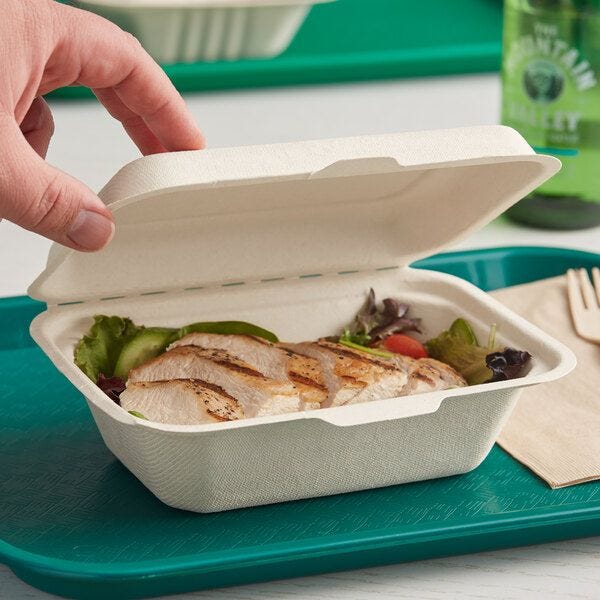
Bagasse clamshell boxes.
Performance That Rivals Plastic — Without the Waste
The misconception that biodegradable equals fragile is being shattered by sugarcane bagasse. Its durability and versatility have earned it a reputation for standing up to even the messiest meals — from curry and pasta to fried chicken and gravy.
Many foodservice professionals are especially drawn to its ability to:
- Hold hot liquids without deformation
- Resist oil and moisture seepage
- Maintain structure under steam or refrigeration
- Handle reheating in microwaves without releasing toxins
The end result? A tableware material that feels premium, performs consistently, and satisfies environmentally conscious consumers.
Product Highlight: A Versatile, Everyday Hero
One standout product in this category is the **10 Inch 3 Compartment Bagasse Plate**. Designed for versatility, it’s ideal for buffet-style dining, combo meals, school lunches, or takeout with multiple portions.
Each compartment separates food items neatly — no mixing, no sogginess. Unlike plastic alternatives, this plate is fully compostable and free from PFAS or harmful coatings. It’s a practical solution for caterers and restaurants that want to minimize environmental impact while still delivering high-quality service.

Bagasse Paper Plates
The Market Momentum: Global Demand Is Growing
Countries around the world are tightening restrictions on single-use plastics. The EU’s Single-Use Plastics Directive, Canada’s national ban, and various U.S. state-level laws are driving rapid adoption of compostable packaging. In Asia, cities like Seoul and Tokyo are piloting “zero plastic” zones in foodservice areas.
This is pushing buyers to explore compostable solutions at scale — and sugarcane bagasse is emerging as one of the most cost-effective and reliable materials available.
Food chains, catering services, and packaging distributors are sourcing bulk quantities of sugarcane bagasse tableware to meet compliance requirements while enhancing their sustainability credentials.
Environmental Benefits: Compostability and Carbon Reduction
Switching to bagasse doesn’t just reduce landfill. It also slashes carbon footprints. According to the United Nations Environment Programme (UNEP), sugarcane-based products have 40–60% lower lifecycle CO₂ emissions compared to petroleum-based plastics.
Here’s why:
- No virgin tree pulp or fossil fuel is used
- Byproduct reuse: Bagasse is a secondary product of sugar production
- Composting returns nutrients to the soil
- Manufacturing process uses less energy than plastic extrusion
By using agricultural waste instead of creating new raw materials, bagasse tableware offers a true circular economy model.
Who’s Using Bagasse — and Why?
Let’s look at real-world adoption:
- Food Trucks & Cloud Kitchens: Their high-volume takeout model demands durable, compostable containers that travel well.
- Catering & Events: From weddings to corporate luncheons, biodegradable dishes elevate sustainability without compromising on style.
- Cafés & Bakeries: For soup, quiche, or pastries, bagasse containers offer natural appeal and leak-free protection.
- International Chains: McDonald’s Japan, Starbucks India, and Pret A Manger UK have all trialed or implemented bagasse in their packaging solutions.
It’s not just about reducing waste — businesses are increasingly responding to consumer pressure. A 2024 survey by NielsenIQ found that 73% of consumers globally prefer brands with visible eco-friendly practices.

100% Compostable Paper Plates
Supply Chain Readiness: Bulk Availability and Customization
One advantage of bagasse packaging is its scalability. Thanks to growing manufacturing infrastructure across China, Southeast Asia, and Latin America, suppliers can now handle large B2B orders with:
- Custom molds and private label branding
- Food-grade certifications (FDA, SGS, OK Compost)
- Global shipping and logistics
- Cost-effective pricing for wholesale buyers
Whether you’re outfitting 20 restaurants or launching a national brand, reliable sourcing options for sugarcane bagasse tableware are now widely available.
Beyond the Plate: What’s Next?
Bagasse innovation isn’t stopping at flatware. Brands are expanding into biodegradable cup lids, soup containers, and tray lids, as well as hybrid packaging that combines bagasse with kraft paper for enhanced performance.
Even tech packaging and cosmetics brands are exploring molded pulp solutions using sugarcane fiber — proving the material’s versatility extends beyond the foodservice sector.
For brands, aligning with this movement early allows them to stand out in an increasingly crowded sustainability space.
Final Takeaway
Sustainability is no longer optional in food packaging — it’s an imperative. As governments regulate harder and consumers demand better, materials like sugarcane bagasse are stepping into the spotlight. They’re practical, affordable, and far more eco-friendly than legacy materials.
By switching to Sugarcane Bagasse Tableware, you’re not just upgrading packaging — you’re upgrading your brand’s environmental responsibility.
This isn’t just a trend. It’s the future of foodservice.
메타데이터
- post_id
- 9b3191c4ea19
- slug
- from-waste-to-worth-how-sugarcane-bagasse-tableware-is-transforming-sustainable-dining-9b3191c4ea19
- url
- https://medium.com/@sale_92537/from-waste-to-worth-how-sugarcane-bagasse-tableware-is-transforming-sustainable-dining-9b3191c4ea19
- canonical_url
- https://medium.com/@sale_92537/from-waste-to-worth-how-sugarcane-bagasse-tableware-is-transforming-sustainable-dining-9b3191c4ea19
- author_url
- https://medium.com/@sale_92537
- status
- ok
- fetched_at
- 2026-07-08 11:35:31