The Imam had already disappeared
How absence became thinkable before it became doctrine
The Imam had already disappeared
How absence became thinkable before it became doctrine
11 April 2026
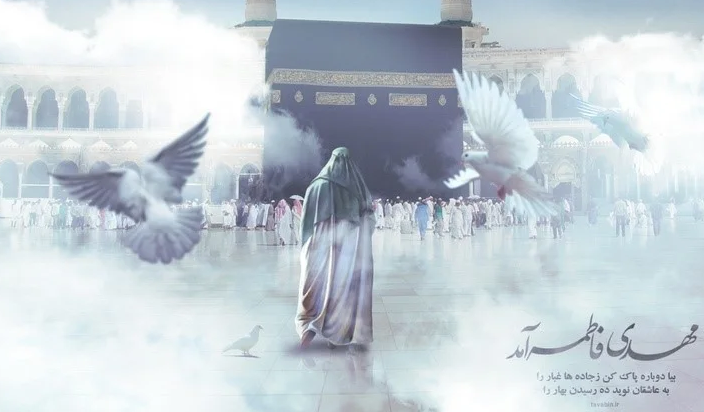
Let’s begin with a small correction to a very large story, because the story we are usually told is too clean to be the whole truth. We are told that in 874, with the death of the eleventh Imam, something unprecedented occurred, something like a metaphysical rupture in the fabric of religious authority. The line of visible leadership broke, the Twelfth Imam vanished from sight, and the community entered a new and bewildering condition called the Occultation. Presence gave way to absence, certainty to waiting, and history to eschatology, all in a single decisive moment that seems to divide the world into before and after.
Agents of the absent Imam
It is an elegant story, and elegance is often a sign that something has been simplified. Because by the time the Imam “disappears,” he has already been disappearing for some time, not in doctrine, but in practice, and not as a matter of belief, but as a matter of structure. The later Imams did not rule from open courts or preside over gatherings where believers could approach them freely and receive immediate answers to their questions. They lived under the watchful eye of the Abbasid Caliphate, constrained, monitored, and at times effectively confined, while their followers were dispersed across a wide and uneven geography that stretched far beyond the reach of direct personal contact.
This created a structural problem that could not be solved by piety alone, because the Imam remained the focal point of religious authority while being increasingly inaccessible to those who recognised that authority. The solution that emerged was not a doctrine about hiddenness, but a system of mediation that made distance workable and absence manageable without naming it as such. This system took the form of a network of agents, the wukalāʾ, who operated as the Imam’s representatives in the world, collecting money, transmitting teachings, and managing local communities in ways that allowed the Imam’s authority to function despite his physical inaccessibility.
The important point is not simply that the Imams had agents, which is obvious enough, but that they ruled through them in a way that reshaped the experience of authority for ordinary believers. Consider first the movement of money, because money is where abstraction becomes tangible and where loyalty takes material form. The payment of khums, the one-fifth tax on certain forms of income, was not merely a financial obligation but a ritual act that bound the believer to the Imam through a structured gesture of giving. To pay khums was to acknowledge the Imam as the rightful recipient of a portion of one’s wealth, and therefore as the legitimate centre of one’s religious life, but the Imam himself was not available to receive it.
Instead, the money was given to a local wakīl, a figure who stood in for the Imam at the point of transaction and who transformed a distant relationship into an immediate one. The wakīl collected funds, recorded contributions, and aggregated payments before transmitting them along a chain that led, eventually, to the Imam or to those closest to him. The believer never saw the end of this chain, and could not verify its final destination, but what mattered was the recognition of the act within the system and the assurance that the act had been properly received. Money moved, but so did legitimacy, and the two were inseparable in practice.
We have receipts!
A similar pattern governed the movement of words, because communication with the Imam was also mediated through the same network of agents. A believer with a legal or theological question would pose it to the wakīl, who would transmit it upward through layers of intermediaries until it reached the Imam, or what functioned as the Imam’s point of response. The answer would then return, often in written form as a tawqīʿ, a brief rescript attributed to the Imam and conveyed back down the chain to the original questioner. By the time it arrived, it might have travelled a considerable distance and passed through multiple hands, but it was received as authoritative because it bore the imprint of the system that guaranteed its legitimacy.
In this arrangement, the Imam’s voice is already a mediated voice, one that reaches the believer not through direct encounter but through a structured process of transmission that depends on trust in intermediaries rather than verification at the source. The believer does not hear the Imam speak, but reads a text that is said to represent his speech, and accepts it on the basis of the chain through which it has been delivered. Authority, in this context, is no longer tied to presence in any straightforward way, but is instead produced through circulation, recognition, and repetition within a network that stands between the centre and the periphery.
The wukalāʾ also played a crucial role in the governance of local communities, which means that their function extended beyond finance and communication into the domain of practical authority. They organised believers, resolved disputes, maintained networks of loyalty, and ensured that the Imam’s directives were implemented in contexts where the Imam himself could not intervene directly. For most believers, the Imam was not a figure they encountered in person, but a figure they inferred from the actions and decisions of those who acted in his name, which meant that the experience of authority was already localised and mediated long before the Occultation was articulated as doctrine.
The intensification of an already existing system.
This system had certain structural features that are worth noting because they become decisive later, even if they do not appear dramatic at the time. It was hierarchical without always being transparent, layered without always being clearly defined, and dependent on trust without offering full visibility into its operations. It functioned under conditions of partial concealment, not because concealment was the goal, but because the political environment made openness difficult and sometimes dangerous. Communication could be delayed, identities could be obscured, and verification could be incomplete, but the system continued to operate because it was embedded in social relations that sustained it.
When we arrive at 874, then, we are not encountering a system that suddenly has to cope with absence, but a system that has already learned how to function in its shadow. The death of the eleventh Imam and the claim that a hidden successor exists do not introduce mediation into the structure of authority, because mediation is already there, doing its work quietly and effectively. What changes is not the form of the system, but the interpretation of its centre, because the distance that was previously explained by circumstance is now explained by doctrine, and the inaccessibility that was once temporary becomes permanent.
The believer continues to give to the wakīl, continues to ask questions through the same channels, and continues to receive answers that arrive after delay and through intermediaries, but the justification for this pattern shifts from the contingencies of history to the necessities of theology. The Imam is no longer merely distant, but hidden, and this hiddenness becomes the framework through which the entire system is understood and sustained. The transition, then, is not from presence to mediation, but from mediated presence to normalised absence, which is a subtler but more revealing transformation.
What looks like a rupture begins to look, from this perspective, like an intensification of an already existing system, one in which the forms of authority persist even as the centre becomes less and less accessible. The network of agents does not collapse when the Imam disappears, because it has already been carrying the weight of his absence in practice, and it continues to do so by adapting its claims and consolidating its position. The structures remain in place, the flows continue, and the experience of the believer remains recognisable, even as the doctrinal explanation for that experience shifts in a decisive way.
The implication is not that the Occultation is merely a construction, but that its durability depends on the prior existence of a system capable of sustaining it. Without the wukalāʾ, without the circulation of money and texts, without the distributed management of communities, the idea of a permanently hidden Imam would be difficult to maintain in practice. With those structures already in place, however, absence becomes not only thinkable, but livable, and eventually, authoritative in its own right.
The Imam does not vanish into a void, but into a network that has already learned how to operate without him, and it is this prior learning that makes the Occultation something more than a moment of crisis. It becomes, instead, the point at which a long-standing condition is named, stabilised, and given a form that allows it to endure indefinitely, which is perhaps the most remarkable transformation of all.

Jamkaran Mosque in Qom, Iran, is a popular pilgrimage site for the Shia. Local belief holds that the twelfth Imam — the eschatological Mahdi in Twelver Shi’ism — once appeared and prayed in Jamkaran.
메타데이터
- post_id
- 9b400a7861cc
- slug
- the-imam-had-already-disappeared-9b400a7861cc
- url
- https://medium.com/@evansd66/the-imam-had-already-disappeared-9b400a7861cc
- canonical_url
- https://medium.com/@evansd66/the-imam-had-already-disappeared-9b400a7861cc
- author_url
- https://medium.com/@evansd66
- status
- ok
- fetched_at
- 2026-06-17 13:50:26