Expect Nothing, Avoid Disappointment: A Look at Luke Kennard Joining the Lakers
On the eve of the 2026 NBA trade deadline, the Los Angeles Lakers finally made a noteworthy move. They sent backup guard Gabe Vincent and a…
Expect Nothing, Avoid Disappointment: A Look at Luke Kennard Joining the Lakers
On the eve of the 2026 NBA trade deadline, the Los Angeles Lakers finally made a noteworthy move. They sent backup guard Gabe Vincent and a 2032 second-round pick to the Atlanta Hawks in exchange for Luke Kennard, the player currently leading the league in three-point percentage this season.
The most talked-about aspect of this trade is, of course, Kennard’s league-best three-point accuracy. On the surface, it appears to be a timely solution to the Lakers’ long-standing perimeter shooting woes. However, if we take a step back and calmly examine both the details of the trade and its potential impact, determining whether the Lakers truly won or lost this deal requires a more comprehensive evaluation of Kennard’s offensive and defensive influence on the team.
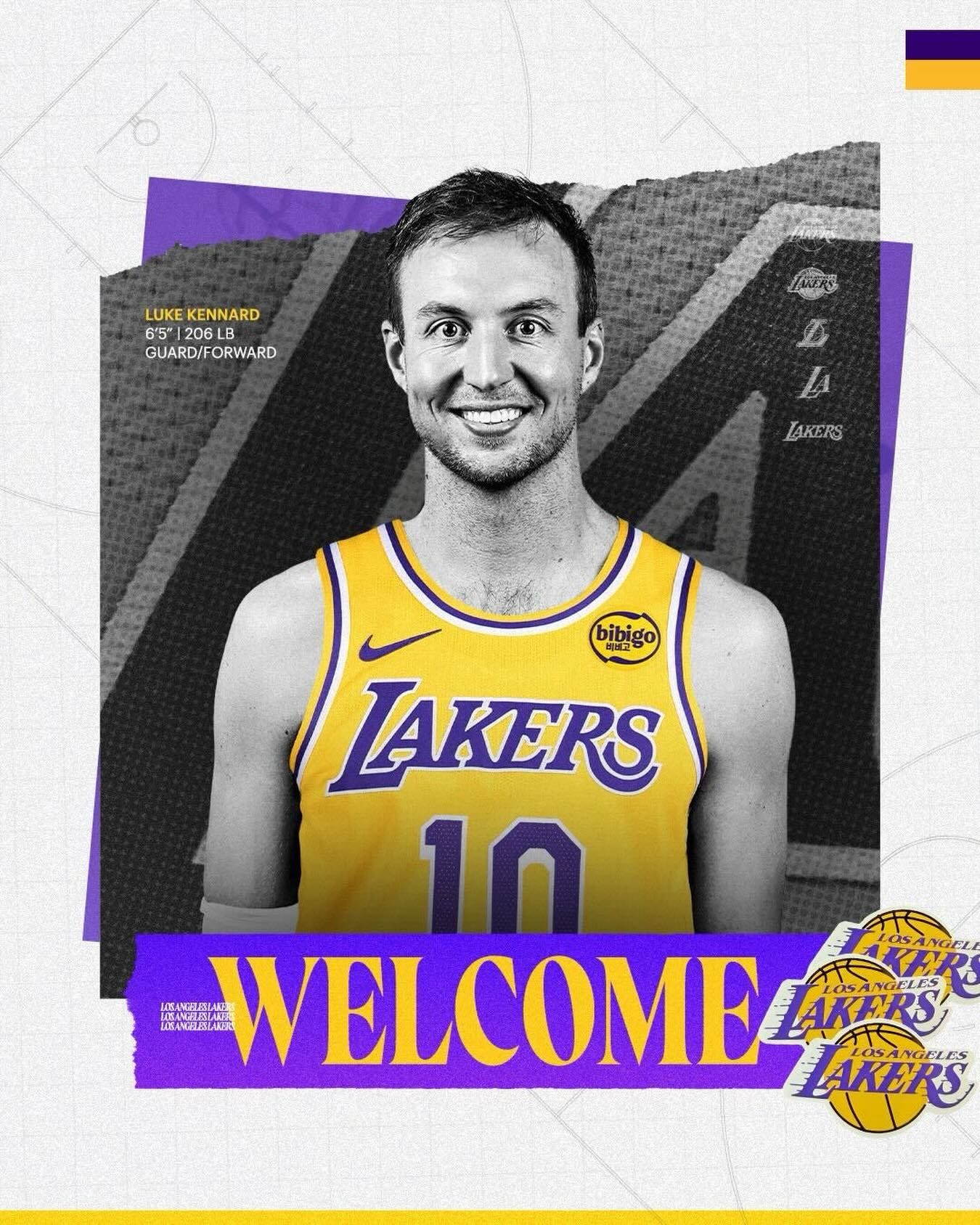
Los Angeles Lakers FB (https://www.facebook.com/losangeleslakers/photos?locale=zh_TW)
Does Elite Three-Point Accuracy Mean Real Offensive Improvement — or Just an Illusion?
This was the Lakers’ only move at the trade deadline. From a roster-construction standpoint, the intent is obvious: the Lakers are hoping Kennard can “fix” their three-point shooting problems. After all, the team’s three-point percentage this season ranks roughly outside the top 20 in the league, making perimeter shooting an urgent area of need.
The most eye-catching statistic is that Kennard, through 46 games with the Hawks this season, has posted an outstanding 49.7% three-point percentage — best in the entire league. In theory, if he can receive reasonable shot opportunities within the Lakers’ offensive system, this level of shooting should produce an immediate boost to their perimeter efficiency.
The real question, however, is whether this improvement would be structural, or merely a layer of appealing statistical decoration. A closer look at Kennard’s shot profile reveals a crucial detail: while he is extremely accurate, his shot volume is relatively low. He averages fewer than 3.5 three-point attempts per game, which suggests that his efficiency has been maintained in a controlled environment where his shots are carefully selected — rather than as a primary offensive weapon expected to carry a heavy shooting load.
This naturally leads to a core concern: once Kennard joins the Lakers and is expected to shoulder more perimeter responsibility — possibly even being forced into bailout shots when the offense stalls — can he realistically maintain his current efficiency? From a statistical standpoint, this concern is far from unfounded. When a shooter moves from a team that does not rely heavily on him for volume scoring to one that urgently needs perimeter firepower and may “force-feed” him attempts, a decline in efficiency is often the norm. This is simply regression to the mean at work.
More realistically — and perhaps more cruelly amusing for Lakers fans — the team seems to carry a certain “three-point debuff” curse in recent years. Looking back over the past several seasons, there have been numerous examples of players whose shooting percentages dropped dramatically upon joining the Lakers, only to rebound after leaving. Taurean Prince and Michael Beasley are classic cases: both struggled to shoot comfortably during their Lakers stints, yet saw their three-point percentages jump significantly elsewhere. The players who have managed to resist — or even reverse — this trend are few, with Rui Hachimura being one of the rare exceptions.
Because of this, declaring with confidence that Kennard will bring a transformative offensive upgrade to the Lakers may simply be premature.
Defensive Comparison: Who Is the Real Upgrade?
Ironically, defense may actually be the area where the Lakers most need improvement. Yet when we compare the two players, the defensive upgrade is far from obvious. Opponents shoot 42.3% effectively against Gabe Vincent — certainly not an impressive figure — but Kennard allows an even higher 50.0% effective field goal percentage. In isolation defense, Kennard gives up 1.05 points per possession, placing him in the lower-middle tier of the league, where opponents can still score with relative efficiency against him.
In fact, from a holistic defensive perspective, Vincent arguably has the edge. While he is vulnerable in isolation situations, he generally provides a baseline level of physicality and tactical discipline within team defense. Kennard, by contrast, has never been known as a defensive specialist. His lateral quickness and off-ball rotations have long been weaknesses throughout his career.
This gap may not be glaring in regular-season box scores, but in the playoffs — where defensive intensity spikes and every possession matters — missed rotations and defensive breakdowns tend to be ruthlessly exposed. By acquiring Kennard, the Lakers are gaining a purer shooting skill set while simultaneously accepting a measurable defensive risk, especially against opponents who deliberately attack weak links through pick-and-rolls or matchup hunting.
Expect Nothing, Avoid Disappointment
This trade is not without value for the Lakers, but it resembles a tactical patch rather than a fundamental solution. It may temporarily alleviate the team’s three-point shooting issues, but it offers no guarantee of overcoming their deeper offensive stagnation or defensive vulnerabilities in the postseason.
By moving on from Vincent — who had clearly failed to provide meaningful contributions — and exchanging him for Kennard, another expiring contract, the front office’s intent appears to be short-term maneuvering rather than long-term planning. Kennard’s time in Los Angeles comes with an obvious expiration date, much like Dorian Finney-Smith after last year’s trade.
Expect nothing, and you won’t be disappointed. For the Lakers, this deal may bring a short-term statistical boost, but fans should resist placing excessive expectations on Kennard. Realistically, he profiles as a second-unit shooter, not a player capable of fundamentally reshaping the team’s identity.
Ultimately, it seems the Lakers’ front office understands this well. The true battlefield is not the trade deadline — but the upcoming offseason.

Los Angeles Lakers FB (https://www.facebook.com/losangeleslakers/photos?locale=zh_TW)
Author: Frank Yang
Submitted on Feb 09, 2026, to Medium
A Moment in the Spotlight for a Little Guy: The Lakers’ Chaos Solver — Nick Smith Jr.
Midseason Observation: Los Angeles Lakers — An Unpredictable Roller Coaster
2025–26 NBA Championship Odds Top 10 Analysis: Who Has the Best Chance to Raise the Trophy?
From Advanced Metrics: Is 41-Year-Old LeBron Still an Elite Star?
Why D’Angelo Russell Has Been Unable to Help the Luka-Less Mavericks
Which great records will LeBron be chasing next year?
Top 10 Must-Watch Games of the 2025–26 NBA Season: Classic Matchups Fans Can’t Miss
The Lakers’ Alternative Reinforcement: The Deeper Implications of Re-signing J.J. Redick
Will That Day Eventually Come? Should LeBron Consider a Bench Role?
Would it be exciting if the EuroBasket champion got to challenge an NBA All-Star team?
J.J. Redick’s Poisoned Chalice, and Gabe Vincent’s Awkward Role
Chinese Blogger(中文部落格):https://frankyangsport.blogspot.com/
My author page on Sport Vision:https://www.sportsv.net/authors/frankyangsport
Facebook:https://www.facebook.com/profile.php?id=61572911911991
Fun Chinese translation:
- expect 期待
- question 問題
- Hawks 老鷹隊
메타데이터
- post_id
- 9b76c2fb916e
- slug
- expect-nothing-avoid-disappointment-a-look-at-luke-kennard-joining-the-lakers-9b76c2fb916e
- url
- https://medium.com/@yangshare/expect-nothing-avoid-disappointment-a-look-at-luke-kennard-joining-the-lakers-9b76c2fb916e
- canonical_url
- https://medium.com/@yangshare/expect-nothing-avoid-disappointment-a-look-at-luke-kennard-joining-the-lakers-9b76c2fb916e
- author_url
- https://medium.com/@yangshare
- status
- ok
- fetched_at
- 2026-07-11 22:06:18