Event-Driven Automation: The Next Evolution of Revenue Operations
How Real-Time Business Events Are Transforming CRM, Sales, and Customer Success.
Event-Driven Automation: The Next Evolution of Revenue Operations
How Real-Time Business Events Are Transforming CRM, Sales, and Customer Success.

Every interaction within a B2B SaaS company generates valuable business events. A prospect submits a demo request. A customer upgrades their subscription. A payment fails. A support ticket is resolved. A contract is signed.
Traditionally, these events required someone to manually update systems, notify team members, or initiate the next step in a business process.Today, modern organizations are moving toward event-driven automation, where systems automatically respond to business events in real time.
Instead of waiting for scheduled reports or manual intervention, workflows begin the moment an important event occurs. For Revenue Operations (RevOps) teams, this shift represents a significant step toward creating faster, more efficient, and highly connected revenue systems.
What Is Event-Driven Automation?
Event-driven automation is an approach where business workflows are triggered automatically by specific events rather than by manual actions or scheduled processes.An event can be almost anything.
Examples include:
- A new lead submits a form
- A deal moves to a new pipeline stage
- A customer signs a contract
- A payment succeeds or fails
- A support ticket is closed
- A product usage milestone is reached
- A renewal date approaches
Rather than waiting for someone to notice these changes, connected systems respond automatically.
Why Traditional Workflows Fall Short
Many businesses still rely on scheduled workflows.Reports run once each day.Customer information is synchronized every few hours.Sales representatives manually assign leads. Customer Success teams review accounts once each week.
Although these processes work, they introduce delays.By the time someone responds, valuable opportunities may already have been missed.Modern customers expect immediate engagement. Organizations that respond faster often gain a competitive advantage.
Real-Time Revenue Operations
Revenue Operations depends on timely information.Sales, marketing, customer success, and finance all rely on customer data to make decisions. When systems exchange information in real time, departments remain aligned throughout the customer lifecycle.
For example:
A prospect requests a product demonstration within seconds:
- The CRM creates a new contact.
- The lead is assigned to the appropriate sales representative.
- Marketing pauses promotional campaigns.
- A meeting invitation is generated.
- Internal notifications are sent.
- Customer information is enriched automatically.
No manual coordination is required.
Common Event-Driven Workflows
Many organizations begin with simple automations before expanding into more advanced business processes.
Common examples include:
- Automatic lead routing
- CRM record updates
- Customer onboarding
- Renewal reminders
- Support escalations
- Subscription upgrades
- Internal approvals
- Customer lifecycle notifications
These workflows reduce repetitive work while improving operational consistency. Organizations modernizing their revenue operations often start by improving CRM workflows and automation.
Benefits for Revenue Teams
Event-driven automation creates measurable improvements across every customer-facing department.
Sales
Sales teams respond to new opportunities immediately rather than waiting for manual assignments.
Marketing
Campaigns automatically adapt to customer behavior, ensuring prospects receive relevant communications.
Customer Success
Success managers receive alerts when customers show signs of expansion opportunities or declining engagement.
Finance
Billing events automatically trigger notifications, approvals, and account updates.Instead of operating independently, every department becomes part of a connected revenue system.
Building an Event-Driven Revenue Architecture
Successful implementations depend on connected business systems.
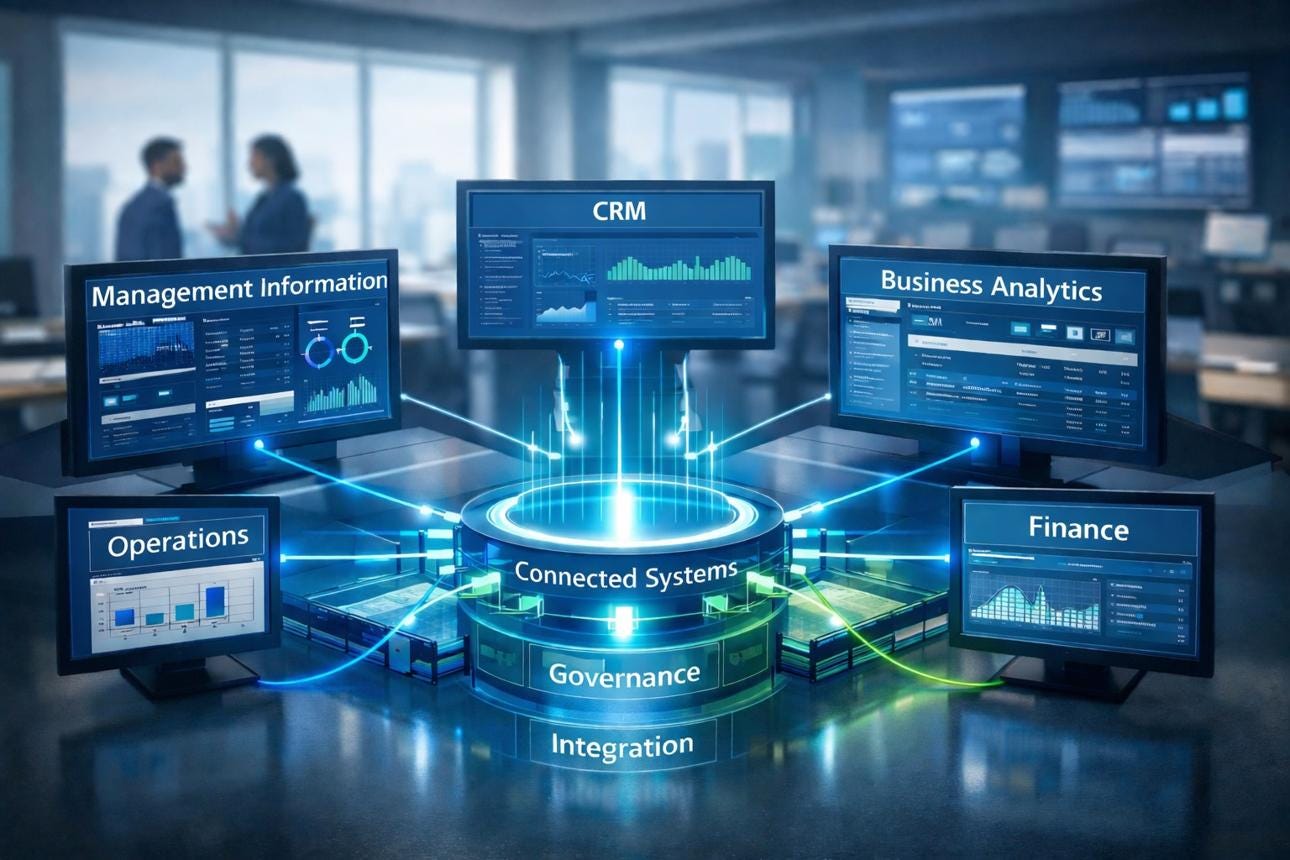
Most organizations integrate platforms such as:
- CRM
- Marketing automation
- Customer Success software
- Product analytics
- Billing platforms
- Internal communication tools
- Business intelligence platforms
Application Programming Interfaces (APIs), webhooks, and automation platforms allow these systems to exchange information in real time. The result is a unified operational environment where information flows continuously.
AI Makes Event-Driven Automation Smarter
Artificial intelligence is making event-driven automation even more powerful.Instead of simply reacting to predefined events, AI can evaluate context before deciding what action to take.
For example, AI may:
- Prioritize leads
- Predict churn risk
- Recommend follow-up activities
- Score opportunities
- Detect unusual customer behavior
- Recommend workflow actions
This creates intelligent automation rather than simple rule-based processes.
Measuring Success
Organizations implementing event-driven automation should monitor outcomes such as:
- Lead response time
- Customer onboarding duration
- CRM data accuracy
- Workflow completion time
- Forecast accuracy
- Customer satisfaction
- Employee productivity
- Revenue growth
These metrics help demonstrate how automation contributes to operational efficiency.Businesses implementing modern revenue systems often document measurable improvements through workflow optimization and CRM transformation.
Challenges to Consider
While event-driven automation offers significant advantages, implementation requires planning. Organizations should establish:
- Reliable CRM data
- Standardized business processes
- Secure system integrations
- Clear workflow governance
- Monitoring and error handling
Automation should simplify operations — not create unnecessary complexity. Starting with high-impact workflows and expanding gradually often leads to better long-term outcomes.
The Future of Revenue Operations
Revenue Operations is evolving from static reporting toward intelligent operational systems. In the future, business events will not only trigger workflows — they will also trigger AI-driven recommendations, predictive insights, and autonomous decision support.
Organizations that invest in connected systems today will be better positioned to adopt these next-generation capabilities. Rather than reacting to business events after they happen, revenue teams will increasingly anticipate customer needs before they arise.
Conclusion
Event-driven automation represents an important evolution in Revenue Operations.By responding instantly to customer and business events, organizations improve collaboration, reduce manual work, and create more responsive customer experiences.
For B2B SaaS companies, success increasingly depends on how quickly information moves between systems — not just how much data those systems collect.Businesses that build connected, event-driven revenue architectures today will be better prepared for the AI-powered operations of tomorrow.
Key Takeaways
- Event-driven automation responds instantly to business events.
- Real-time workflows reduce manual work and improve collaboration.
- Connected systems improve sales, marketing, customer success, and finance operations.
- AI enhances event-driven workflows with intelligent decision-making.
- Modern Revenue Operations depend on real-time data rather than scheduled processes.
메타데이터
- post_id
- 9b776dc2d8fc
- slug
- event-driven-automation-the-next-evolution-of-revenue-operations-9b776dc2d8fc
- url
- https://medium.com/@sailolabs/event-driven-automation-the-next-evolution-of-revenue-operations-9b776dc2d8fc
- canonical_url
- https://medium.com/@sailolabs/event-driven-automation-the-next-evolution-of-revenue-operations-9b776dc2d8fc
- author_url
- https://medium.com/@sailolabs
- status
- ok
- fetched_at
- 2026-07-30 15:14:27