CodeF(x) Indycar Report — Phoenix Raceway 2026
Authored By: Nishil Patel — Indycar Analyst/ML Engineer
CodeF(x) Indycar Report — Phoenix Raceway 2026
Authored By: Nishil Patel — Indycar Analyst/ML Engineer
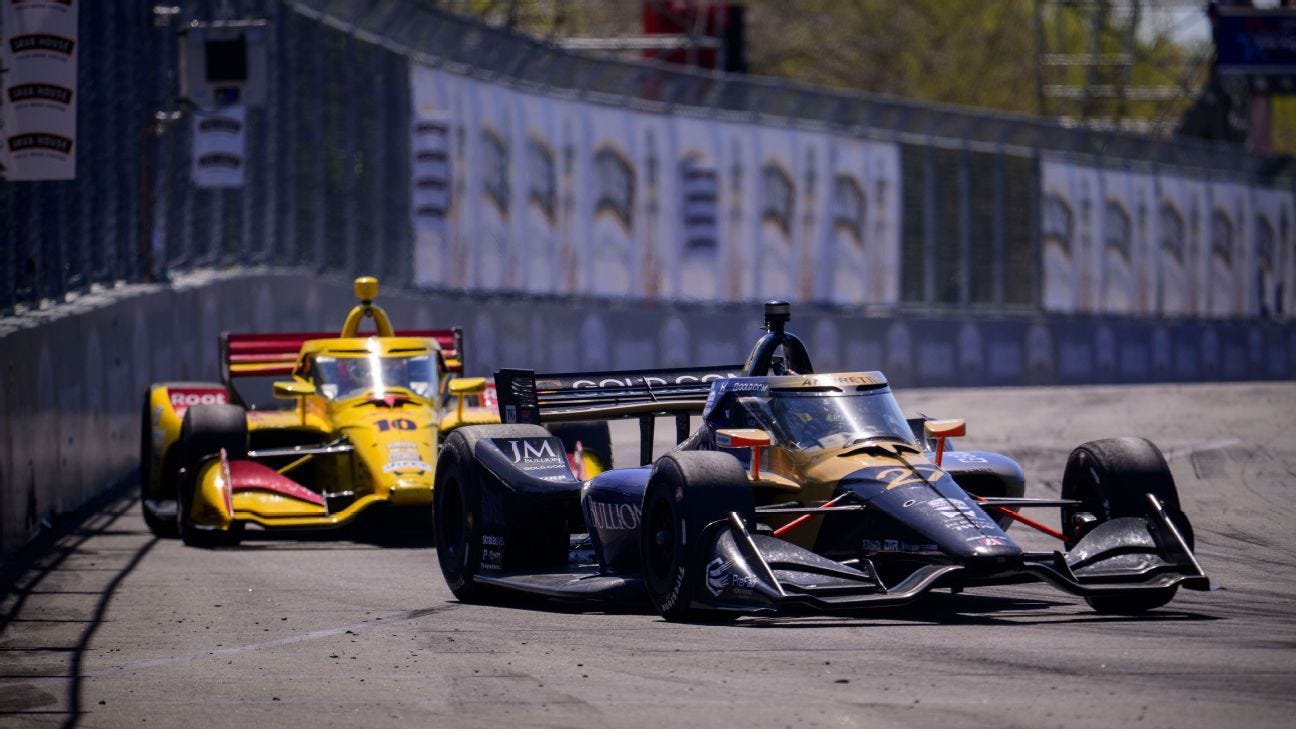
Image from: Motorsport America
What a race! An instant classic in 2026, with its mix of strategy, attrition, and good old fashioned gutsy moves. It was truly a showcase of Indycar’s best oval talent, alongside a showcase of the talented people behind the pitwall making decisions that the drivers couldn’t.
By The Metrics

Practice — Lap Speed Distributions

Based on this practice data from Friday’s post qualifying high line practice, we predicted that Rossi, Palou, and Veekay will try the high line for moves more often than not. Of the three Veekay seemed to have the most comfort, and had a great racecar underneath him until his unfortunate incident early into the race.
We also predicted that Graham Rahal, Mick Schumacher, and Santino Ferrucci would fall back through the pack and not be as racey, based on their lack of consistency and “pace floor” compared to other drivers on the high line. We suspect that Graham Rahal and Mick Schumacher may have taken a similar setup direction, as supported by the next graph.
Another notable was Scott McLaughlin, but not for the right reasons. He seemed to be off the pace all weekend in comparison to his Penske teammates, and the distribution of laps from High Line Practice displayed that all too well. Scott, as always, was very consistently getting the most out of his car. But setup wise, he never seemed to have the ultimate pace to challenge for the lead, something we’ll come back to when looking at the race speed distributions.
Practice — Average T1 vs T3 Entry Speeds

This graph shows what speeds, on average, drivers were entering turn 1 (T1) and turn 3 (T3), with T1 on the x-axis and T3 on the y-axis. As we can see, the Rahal Letterman Lanigan cars (colored in gray) are very tightly grouped, leading us to believe that they were very similarly set up. Given that Mick Schumacher and Louis Foster have a combined 1 full season of experience, we could safely assume that Graham Rahal was leading the set up charge with his 20 seasons of NTT Indycar experience.
Given both of the previous graphs, we could start to paint the picture of what cars were set up for the corners, and what cars were set up for the straights. One example is Alex Palou, who consistently had a lower entry speed to both corners, but was consistently one of the faster drivers on average speed. THis gave us an indication that his car was set up with more downforce, and thus, more drag to maximize his minimum speed through the banked corners.
Qualifying — Lap 1 Speeds vs Difference Between Laps

Qualifying was a true showcase of bravery and a testament to how much of a rocketship these now “well-seasoned” Dallara Ir-18 chassis still are. The field had an average two lap pace of 172.372 MPH.
16 drivers had a faster first lap than their second (below the red line), finishing with an average qualifying position of 9.875. On average, these drivers were 0.769 MPH faster on their first lap than their second. 7 drivers had a faster second lap than their first (above the red line), finishing with an average qualifying position of 16.857. On average, these drivers were 0.984 MPH faster on their second lap than their first.
The field showed a general tendency to have a slower and slower second lap as their first lap average speed increased (shown by the gray dashed line). To be virtually guaranteed a top 10, drivers would have to have fallen above, and ideally to the right of, the green dashed line. The only driver to go wholly against this notion was Pato O’Ward, who had a much slower second lap than his first, but due to his blistering first lap speed still qualified seventh.
Race — Lap Speed Distributions

The data supports what IndyCar told us: Will Power had the most outright pace on race day. What it also supports though, is that consistency won the race. In fact, it locked out the podium, even with a hard charging Pato O’Ward (seen in this graph with the highest pace ceiling and lowest pace floor of the top 4) trying to scythe his way through the pack towards the end of the race.
That being said, it was Pato O’Ward’s and Josef Newgarden’s race to lose after they both rolled the dice to pit for new tires under caution after Will Power’s and Christian Rasmussen’s incident towards the end of the race. And although O’Ward had the higher ceiling, Newgarden was more consistent. Looking back, this was evident even in the post-qualifying high line practice. He had shown he was capable of not only running consistently in general, but running consistently on the more uncomfortable high line, which was a necessary skill to have to make the passes he made to ultimately win the race. By contrast, O’Ward had a wider range of speeds within the race, and it seemed as if he either didn’t have quite the race car underneath him or lacked that last bit of confidence in the car in race conditions compared to qualifying conditions.
Another notable was Kyle Kirkwood. Kirkwood has put together an excellent start to the season, and his consistency is a major contributor to that. He showed that in Phoenix, with perhaps the highest pace floor of any driver in the field today. Parlay that with his higher than average pace ceiling, and he was bound to have a good day.
Final Takes
Indycar on short ovals is a perfect match. The combination of a downforce producing open wheeler and banked corners makes for spectacular racing, and gives us a real look into how engineering and guts blend together to create a great performance. At the end though, it was consistency and having a car built for racing rather than qualifying that won out. Contrast that with this week’s (as of March 11th) race at Arlington, where track position could reign supreme on this brand new street course, alongside a new pecking order. We at CodeF(x) are looking forward to seeing how it shakes out, and we’ll be back to deliver our takes and analysis!
Follow us for more: Instagram: https://www.instagram.com/code__fx/ Twitter: https://x.com/code____Fx Website: https://www.codefxmotorsports.com/
메타데이터
- post_id
- 9b82bc9dd7aa
- slug
- codef-x-indycar-report-phoenix-raceway-2026-9b82bc9dd7aa
- url
- https://medium.com/@codef1/codef-x-indycar-report-phoenix-raceway-2026-9b82bc9dd7aa
- canonical_url
- https://medium.com/@codef1/codef-x-indycar-report-phoenix-raceway-2026-9b82bc9dd7aa
- author_url
- https://medium.com/@codef1
- status
- ok
- fetched_at
- 2026-06-11 05:11:55