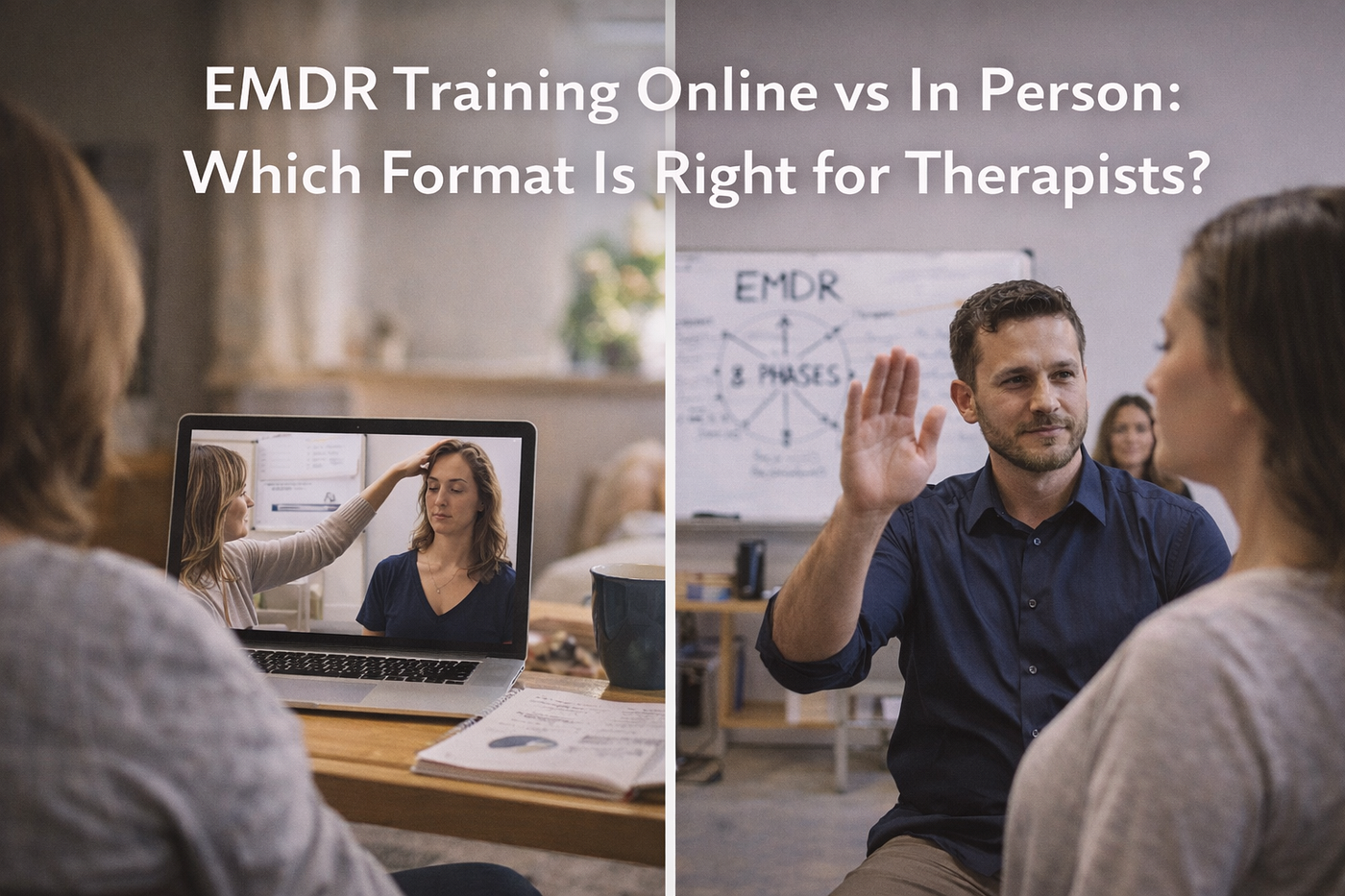
EMDR Training Online vs In Person: Which Format Is Right for Therapists?
EMDR Training Online vs In Person: Which Is Better for Therapists?
EMDR Training Online vs In Person: Which Format Is Right for Therapists?
Eye Movement Desensitization and Reprocessing (EMDR) therapy has become one of the most widely recognized evidence-based approaches for trauma treatment. As more clinicians seek specialized education in trauma-informed care, interest in professional EMDR training continues to grow nationwide.
One of the most common questions therapists ask before enrolling is:
Should I complete EMDR training online, or attend an in-person program?
Both formats can provide strong clinical foundations, but each offers unique advantages depending on your learning style, schedule, and professional goals.
This guide breaks down the key differences between online and in-person EMDR training so clinicians can make an informed decision.
Why the Format of EMDR Training Matters
EMDR is not simply a set of techniques — it is a structured clinical approach requiring:
- A deep understanding of trauma processing
- Careful adherence to the eight-phase protocol
- Ethical preparation and stabilization skills
- Supervised practice and consultation
Because EMDR involves working with emotionally intense material, the way clinicians learn the model can significantly impact confidence and competence.
What Online EMDR Training Offers
Online EMDR training has become increasingly popular, especially for clinicians who need flexibility.
Benefits of online EMDR training include:
1. Nationwide accessibility Therapists can participate regardless of location, making it easier to access high-quality instruction without travel.
2. Flexible scheduling Online formats often allow clinicians to balance training with full caseloads and personal commitments.
3. Learning from home or office Many clinicians appreciate the comfort and convenience of remote participation.
4. Expanded professional reach Online training brings together clinicians from across the country, creating broader peer learning communities.
For many therapists, online training makes EMDR education possible when in-person travel would be unrealistic.
Strengths of In-Person EMDR Training
In-person training remains a valuable option, especially for clinicians who learn best through direct interaction.
Benefits of in-person EMDR training include:
1. Real-time experiential practice Face-to-face role-playing and demonstrations can feel more immersive for some participants.
2. Immediate group connection In-person cohorts often build strong professional relationships and peer support networks.
3. Hands-on guidance from facilitators Clinicians may find it easier to receive feedback during live practice sessions.
4. Structured learning environment Being physically present can help some therapists stay focused and fully engaged.
For clinicians who prefer traditional classroom learning, in-person training may feel more natural.
Key Similarities Between Both Formats
Whether online or in person, reputable EMDR training programs share essential components, including:
- Instruction in the Adaptive Information Processing (AIP) model
- Full training in the eight phases of EMDR therapy
- Supervised experiential practice sessions
- Consultation requirements for clinical integration
- Ethical guidelines for trauma-focused treatment
The most important factor is not the format alone — it is the quality, structure, and support provided throughout the training process.
How to Decide Which EMDR Training Format Fits You Best
Choosing between online and in-person EMDR training depends on your individual needs.
Consider online training if you:
- Need flexibility with scheduling
- Want access to nationwide training options
- Prefer learning from your own space
- Have limited ability to travel
Consider in-person training if you:
- Learn best through face-to-face interaction
- Want a fully immersive classroom experience
- Prefer hands-on practice in real time
- Value local peer networking
Both formats can lead to strong clinical outcomes when supported by quality consultation and ongoing learning.
Finding the Right EMDR Training Program
Regardless of delivery format, therapists benefit most from structured programs that provide:
- Clear foundational education
- Experienced instructors and consultants
- Ongoing mentorship beyond the basic course
- A pathway toward advanced practice and certification
Clinicians exploring professional development opportunities can learn more through LK Institute’s nationwide EMDR training programs, which support therapists through both foundational training and continuing consultation.
Final Thoughts
Online and in-person EMDR training both offer meaningful pathways into trauma-focused clinical work. The best choice is the one that aligns with your learning style, schedule, and long-term professional goals.
With the right program, EMDR training can become one of the most valuable investments a clinician makes in providing effective trauma-informed care.
메타데이터
- post_id
- 9b87ffe45ee2
- slug
- emdr-training-online-vs-in-person-which-format-is-right-for-therapists-9b87ffe45ee2
- url
- https://medium.com/@emdrflagstaffpros/emdr-training-online-vs-in-person-which-format-is-right-for-therapists-9b87ffe45ee2
- canonical_url
- https://medium.com/@emdrflagstaffpros/emdr-training-online-vs-in-person-which-format-is-right-for-therapists-9b87ffe45ee2
- author_url
- https://medium.com/@emdrflagstaffpros
- status
- ok
- fetched_at
- 2026-07-26 20:10:45